SKF NOTE: I rediscovered my Keith Copeland interview transcript in July 2015. Keith and I spoke over dinner at a Centre Island, NY restaurant. I have forgotten the restaurant name. Neither do I remember how this interview came to pass. But re-reading the transcript for the first time in about 30 years, I am impressed! Keith and I had a good rapport, both asking very good questions and giving very good answers.
In this excerpt I asked Keith if he could give me a chronological list of jazz drummers who most influenced him, and what it was Keith liked most about the drummers and their drumming.
The highlights in Keith’s answer, for me, are his reflections on Thelonious Monk and Monk’s drummers, and Keith’s thoughts about Elvin Jones.
Final thought: the audio quality is not the best, but it is very audible, and Keith’s insight is well worth adding to the public square.
SKF NOTE: I interviewed Joe Morello in 1978 at his New Jersey home. My friend and fellow drummer, Chris Conrade, was with me. We three sat in Joe’s living room and Joe often played during the interview with drumsticks on his nearby drum pad.
In this excerpt Joe is looking for a simple way to describe his understanding of drum technique. If you’re listening to this excerpt you will hear Joe talk about technique and demonstrate what he talks about on his drum pad. He also talks about his “good friend” Mel Lewis’s technique, and a little bit about Buddy Rich.
SKF NOTE: Great songwriters have a special place in my heart. Performing onstage in front of an audience is often nerve wracking, but that experience for band leaders, front-men, must be scarier than it is for sidemen. When the front-man is also the band’s chief songwriter?
Then the front-man, chief songwriter, goes out on his own. His legendary band behind him, the songwriter pursues a solo career. He still loves his old songs, but recognizes his need for new songs from a new point of view.
Ray Davies‘s first Top 10 hit with the Kinks was “You Really Got Me” in 1964. He’s still writing valuable songs from his unique worldview. The songs are not Top 10 hits, but so what?
Americana: The Kinks, the Riff, the Road: The Story is Ray Davies’s book about his post-Kinks musical quest. His two albums correspond to the book: “Americana” (2017) and “Our Country: Americana Act II” (2018).
Mr. Davies’s book, “Americana” is a quite interesting introspective. The excerpt here is Davies making good points for any performing musician. Great bands are sometimes greater than the individual band members. According to Davies, the Kinks are a case in point.
In searching for new musicians, a new band, Davies finds that a roomful of virtuoso players won’t necessarily “gel as a band.”
“I was longing for those happy mistakes, those errors that make a band unique,” writes Davies. See if you can spot the “happy mistake” in the 1965 video above of the Kinks appearance on the “Shindig” tv show.
SKF NOTE: This piece was published first in the Piscataquis Observer weekly newspaper on October 29, 2018 as Who is Gary Chester?
Gary Chester, starting in the 1960s, was a top New York studio drummer. One of a special breed of musicians who music producers and artists counted on to make hit records. Mostly these musicians worked inside recording studios in places like New York City, Los Angeles, Muscle Shoals, and New Orleans.
When Gary Chester retired after 20-years as a studio musician, he had chalked up 14,000 recording sessions. If you listen to classic rock and pop music, it’s hard to go through a day without hearing Gary Chester’s drumming.
Van Morrison’s “Brown-Eyed Girl,” Ben E. King’s “Stand By Me,” The Monkees’ “I’m a Believer,” Dionne Warwick’s “What the World Needs Now,” The Chiffons, “He’s So Fine,” Petula Clark, “Downtown,” Jim Croce, “Bad, Bad Leroy Brown,” John Denver’s, “Rocky Mountain High,” and The Drifters’ “Up On the Roof.” These hits barely scratch the surface of Mr. Chester’s body of work.
The first time I heard about Gary was in a letter sent in response to my 1982 five-part Modern Drummer magazine series, “A History of Rock Drumming.” The letter, signed “Gary Chester,” patted me on the back, but wondered why I hadn’t included Gary Chester. [SKF NOTE: I later learned that letter was written by Gary Chester’s wife.]
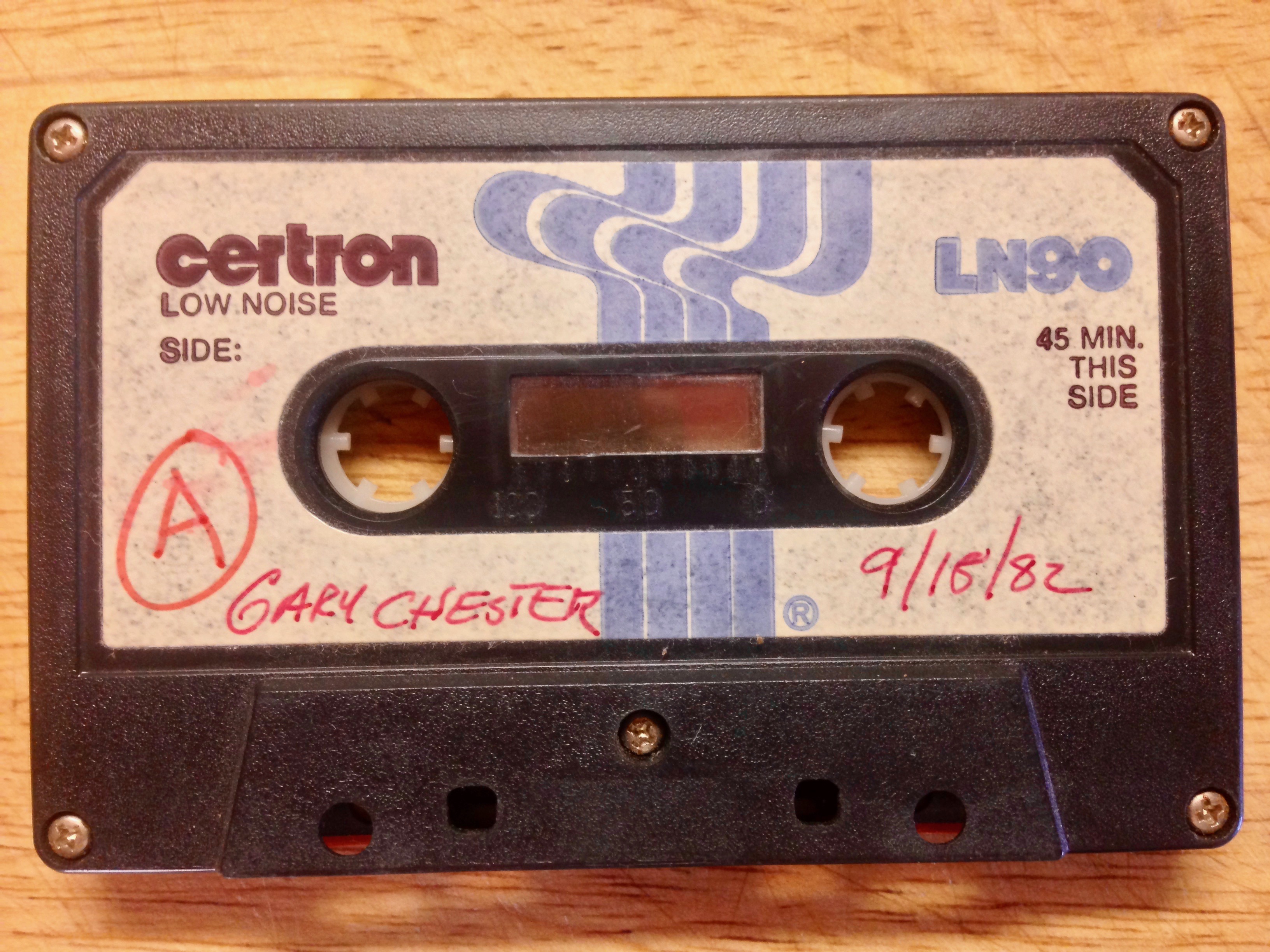
September 18, 1982, I drove 26 miles to Gary’s Suffern, NY home. I came away with about two hours and fifteen minutes of a taped interview. After editing, it was published (April 1983) as a Modern Drummer feature interview.
I also learned Gary Chester had developed a unique, useful, drumset playing method. I was stepping down as Modern Drummer’s managing editor, while the magazine was helping Gary organize his drum method into book form. Gary Chester’s “The New Breed,” published in 1985, is still in print, still a very popular drum method book.
Gary Chester died at his home, unexpectedly, on August 17, 1987. Around that time I stopped writing about drummers.
Then on April 2, 2014 I again started writing about drummers through my “Life Beyond the Cymbals” blog. My first blog post started with:
My blog is…about music mostly, about the parts of my life I would pass on to my children — if I had children. My hope? That some of these stories will be of use to someone. Maybe an aspiring musician or music journalist.
In 2015, Gary’s daughter, Katrina “Kat” Chester wrote to me. Katrina handles her father’s drumming estate. We agreed to a video chat where Kat mostly asked for my memories and impressions of her father.
Do I still have Gary’s interview tapes? she asked
Yes, I said.
Soon, Kat and one of Gary’s drum students, Tony Cruz, decided to produce a Gary Chester film documentary. I agreed to give them copies of Gary’s interview tapes.
First, I had to find the tapes. Tape C, the interview’s final 45-minutes, showed up. It includes the sound of Gary introducing me to Katrina, who was 14-year olds.
I drove to Tony Cruz’s Nyack, NY home last year, to be interviewed on video for the Gary Chester documentary. At one point, camera rolling, Tony asked me, “If Gary was here right now — what would you say to him?”
Before I could speak, I was filled with sorrow. Unexpected sadness; out of nowhere. I wish I had time to know Gary better, to interview him again. Great drummers may be great timekeepers, but, like all of us, great drummers eventually run out of time. That, in itself, is a drum lesson.
Last week, after a year searching, I found the missing Chester interview tape, digitized the full 90-minutes, sent it to Katrina. I’m looking forward to her Gary Chester documentary.
My prime motivation for interviewing drummers always was to capture their stories, to make certain, to the best of my ability, their musical contributions aren’t lost to history. Gary Chester’s interview, everything happening with Gary’s story since, seem somehow tied to all my life experience with drummers and drumming.
SKF NOTE: This excerpt, from my first of a few interviews with Ed Soph, follows earlier discussion on how best to teach students the history of jazz drumming. Ed’s idea seems simple enough: don’t bore students, make the subject interesting.
Ed’s home in Garrison, NY — upstate near Bear Mountain — was the setting for this interview. You’ll hear birds singing in the background. My friend, and Ed’s drum student, Chris Conrade, took part in the full conversation, although Chris is not heard in this excerpt.
But Chris did introduce me to Ed Soph, and I’m glad he did. Soph is always interesting to interview.


 Scott K Fish
You must be logged in to post a comment.