SKF NOTE: The internet has some excellent video of Joe Morello for all of us to study. I may be late to the party, but I don’t remember seeing this 1964 in concert clip of Joe with The Dave Brubeck Quartet playing “St. Louis Blues.” I came across it two days ago.
The camera angles are good. Several opportunities to study Morello’s hands. Also, the drummer, and pianist Dave Brubeck, engage in several minutes of the band’s characteristic layering of time signatures. The closer is a thematic drum solo by the one-and-only.
SKF NOTE: A brief reminder of an important skill. I’m not surprised Remo Belli was “the best listener.” Think of all the feedback Mr. Belli must have considered, solicited and unsolicited, while perfecting his plastic drum heads.
drummagazine.com
9 Questions With Chris Hart, Drummer Psychologist
September 27, 2018
BY PHIL HOOD
Q …Remo Belli…helped put you where you are now. What did you learn from him?
A. The best thing I learned from Remo was to listen. I wish he was here so I could thank him for that. Remo was the best listener I ever met in my whole life. He let you talk. What I learned from Remo was to listen without interrupting. He listened. He didn’t agree all the time. He let you talk. He would repeat what you said. I took that and ran with it.
SKF NOTE: Isn’t it curious how root life principles apply across the board? Therefore, the art of drumming inspires the great Japanese Samurai swordsman, Musashi, to develop his unique two sword style.
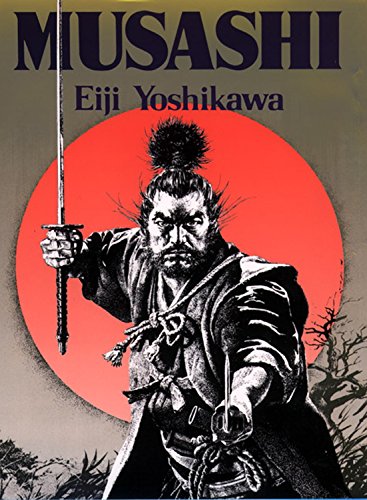
Here are a series of quotes from a chapter in, “Musashi: An Epic Novel of the Samurai Era, by Eiji Yoshikawa.” An instructive novel on several levels, I finished reading it last week.
In this scene, Musashi has taken a young student to a festival to hear the drummers performing. The student, not Musashi, was interested in drumming. But while watching and listening to the drummers, the great Samurai this a revelation:
The revelation struck like lightning. Musashi had been watching the hands of one of the drummers, wielding two short, club-shaped drumsticks. He sucked in his breath and fairly shouted, “That’s it! Two swords!”
“Two swords,” he repeated. “It’s the same principle. Two drumsticks, but only one sound.” He folded his arms more tightly and scrutinized the drummer’s every movement.
Two drumsticks, one sound. The drummer was conscious of left and right, right and left, but at the same time unconscious of them. Here, before his eyes, was the Buddhist sphere of free interpenetration. Musashi felt enlightened, fulfilled.
SKF NOTE: Long, long ago I read somewhere — album liner notes? magazine interview? jazz book? — Sidney “Big Sid” Catlett was the main influence on Max Roach’s melodic drumming style. It may have been Max’s March 20, 1958 Down Beat with Don Gold, in which Max said, “…Sid Catlett has been my main source of inspiration.”
Max composed a now famous drum solo dedicated to Mr. Catlett titled, “For Big Sid,” inspired by the opening horn riff on Louis Armstrong’s song, “Mop Mop,” a drum solo feature for Catlett.
After discovering the Roach/Catlett lineage, typical of me, I bought as many recordings as I could find with Sid Catlett on drums. To date my favorites is the live “Satchmo At Symphony Hall 65th Anniversary: The Complete Performances,” album (1947). A spectacular band playing spectacular music, including Catlett’s classic “Mop Mop” drum solo. Listening to Big Sid on this entire album is a joy, a two-hour drum lesson.
That said, I went searching for Big Sid Catlett video last night and found this old movie, “Boy! What a Girl!” Catlett appears in three scenes. The most famous is with Gene Krupa. It starts in this video at 47:39.
At 08:31, a house rent party scene, there’s we can study Sid’s right hand cymbal technique.
The swinging dance scene starting at 30:02 offers a look at Catlett and his drumset, including his front bass drum lettering telling us Big Sid Catlett was Esquire Magazine’s jazz drummer poll winner in 1944 and 1945. But he’s not playing on this number.
That changes at 39:00 with some good footage of Sid making use of his entire drumset. Granted, the instrument tracks in this movie are overdubbed, but take notice of how Catlett plays with almost no wasted motion. Amazing.
Gene Krupa enters the scene starting at 47:39. After a brief exchange with Big Sid asking Krupa, “Well, what do you want?”, Krupa plays, then returns Catlett’s sticks.
Years before, Big Sid Catlett was in Krupa’s famous drum chair with the Benny Goodman Orchestra. The album, “Roll ‘Em! Live in 1941,” is entirely Big Sid with the Goodman Orchestra.
Catlett says, “I know who you are. You’re Gene Krupa.”
“Yeah. Don’t forget, Sid, I want you to do the same for me in one of my pictures,” answers Krupa.
SKF NOTE: Once I identify the year of this interview I will let you know. As I’ve written before, digitizing my old analog drum tapes teaches me many lessons in hindsight, one of which is: Label all interview cassettes carefully and thoroughly at the time of the interview. Don’t assume some future person — interviewer included — can identify all the interview details.
I know for certain this is Neil Peart and me in the 1980s. Rather than best guess the other details now, I will keep digging and add those details later.
In this excerpt I asked Neil if there was ever a time he struggled with being a writer and being a drummer. In answering, Neil talks about his start as Rush’s lyricist, and about his writing interests moving to prose from verse. At the time of this interview, Neil realizes his prose writing goal will have to remain, for the most part, on hold as long as he remains with Rush. Rush, he says, is a 100-percent commitment.
“I think there will become a time when I’m as good as I can ever be, and I will have to say, ‘Okay, I can live on this for awhile,” [but] I have another goal,” Neil Peart said.


 Scott K Fish
You must be logged in to post a comment.