SKF NOTE: Playing straight time well, with good tone and feeling is good advice for drummers too.
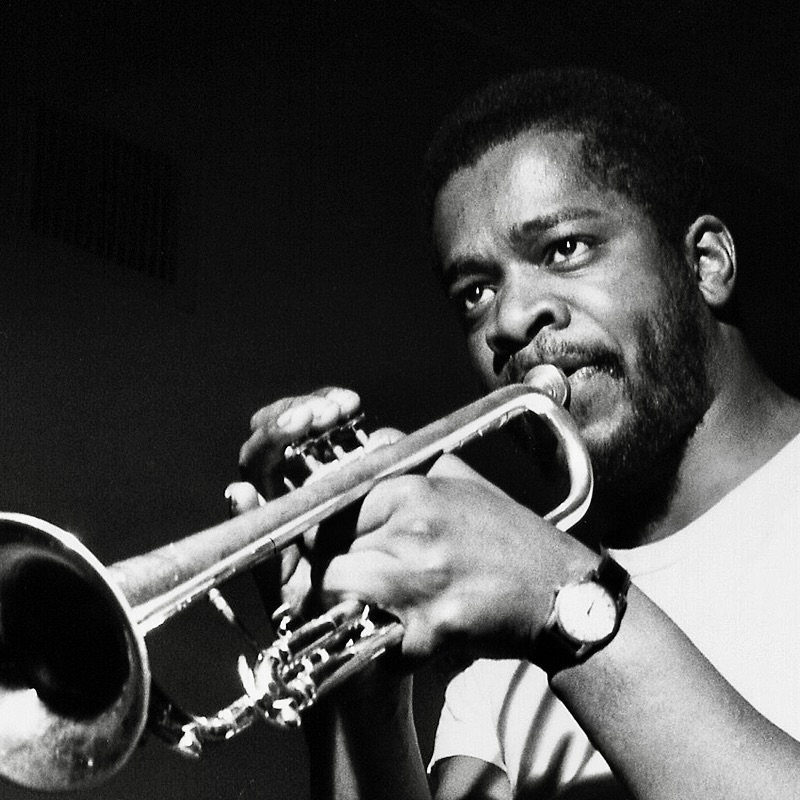
Donald Byrd once said, “After all these years of playing, I’ve come to the conclusion that one of the most difficult things to do is play a melody straight and play it well, with good tone and feeling.”
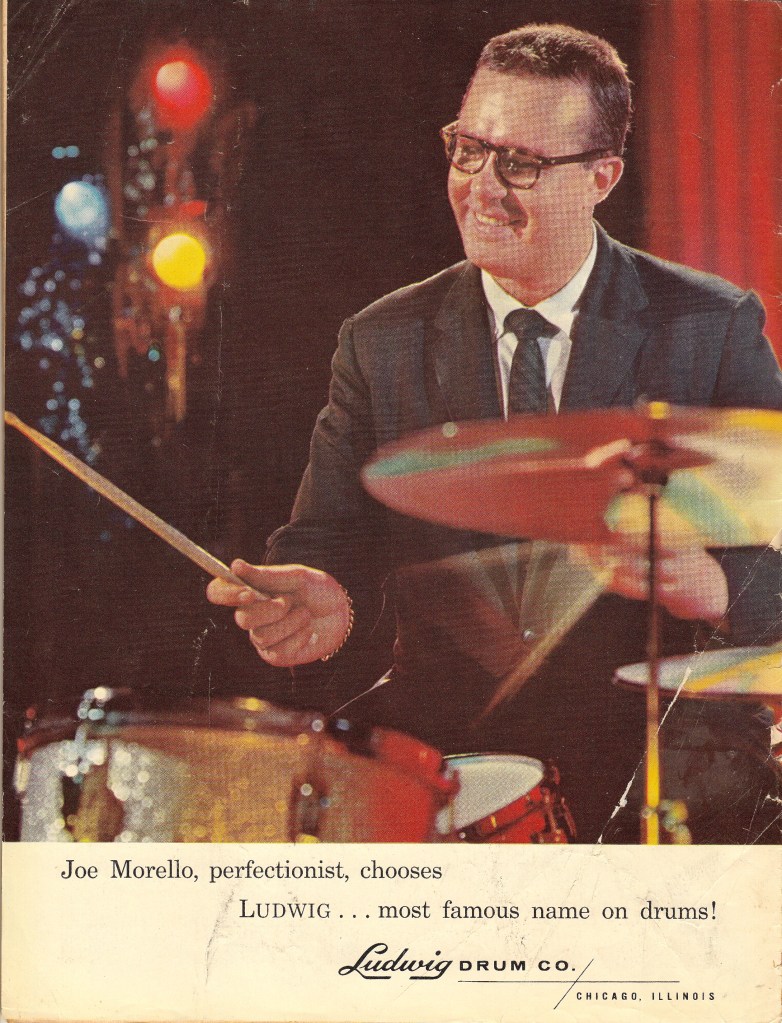
I was reminded of four blog posts posted here in 2014 with Joe Morello talking about Buddy Rich. Here’s what Joe said about Buddy’s speed. I’ve included links to all four posts for anyone interested.
=====
Joe Morello: …Buddy’s a good friend of mine. He’s always been nice. Buddy and I have always gotten along very well. And we used to fool around together with the sticks…. He’s got very good technique. It’s not as fast as you would think it is. He looks faster and he sounds faster than he is because he’s clean. Everything he does is very clean. There’s faster drummers, that’s for sure. If you want to just look at it from that. From strictly technically there are much faster drummers, so Jimmy’s faster, Louie Bellson‘s faster….
Scott K Fish: Jim Chapin is faster than Buddy?
JM: Oh yeah. Sure, but Buddy puts it together so beautifully. He builds this picture real nice, y’know.
SKF NOTE: One of the first instructions to new drum students from teachers is: “Here’s how to hold the sticks.” Once upon a time “how to hold the sticks” meant traditional grip. I suspect matched grip has caught up with or surpassed traditional grip as “how to hold the sticks.”
Holding drumsticks “properly” is followed usually by learning the 13 essential drum rudiments. Rudiments are often called drumming basics. I’ve heard it said many times: Melodic instrument players – piano, guitar, trumpet – learn scales; drummers learn rudiments.
For more advanced students, drum set education has endless exercises on playing rudiments around the drum set, and how to play rudiments among hands and feet.
New drummers have to start somewhere. Drum rudiments help with stick control, with moving comfortably around a drum set, and they are the foundation of many hip beats and solos. No question.
At a Moline, IL drum clinic years ago, Roy Burns said everything drummers play is made up of some combination of single- and double-stroke rolls.
But there’s a drum mystery.
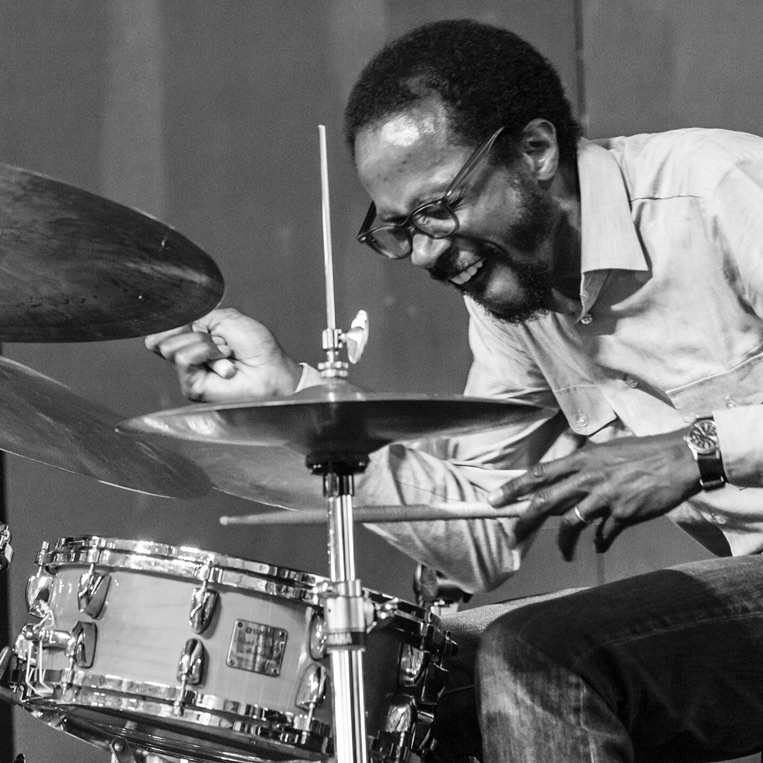
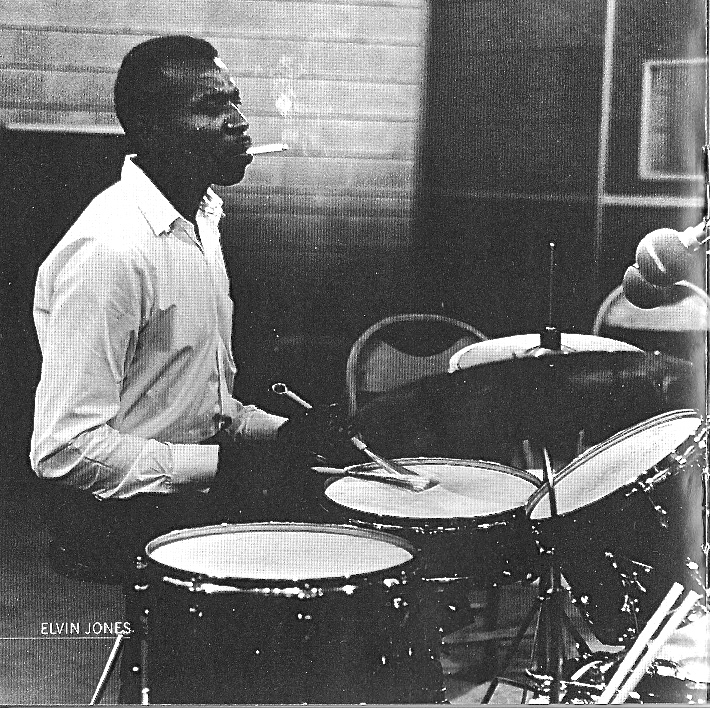
When I watch fabulous drummers like Elvin Jones, Johnny Vidacovich, Brian Blade play, there’s a disconnect from that first “how to hold the sticks” lesson, and from drum rudiments. That intrigues me.
“Not everything I play has a name,” Roy Haynes told me in 1978. That was a revelation; wisdom hidden in plain sight. I was asking Roy questions on how his style applied triplets, paradiddles, and other rudiments. The answer is, Roy’s style isn’t simply a stew of personalized drum rudiments. Rather, said Roy, “I like sounds.”
The disconnect is less clear when I’m only listening. When I’m watching, say, Brian Blade with the Wayne Shorter Quartet, I can hear the ghosts of drum teachers crying, “Cease! Desist! You’re doing it all WRONG.”
Of course, Brian Blade is not doing it all wrong. He’s doing Brian Blade.
Maybe that solves the mystery. All drummers begin at the beginning. Which is not to say all drummers begin with equal talent, aptitude, or gifts. We don’t. But we start out never having held drum sticks in our hands, never having played a drum set.
As we go forward, doing what we’re going to do with stick grips and rudiments, we ideally discover what Max Roach called our “one unique idea.” Which is then heard in everything we play.
If discovering and playing our one unique idea involves an unorthodox approach to playing a drum set – so be it.
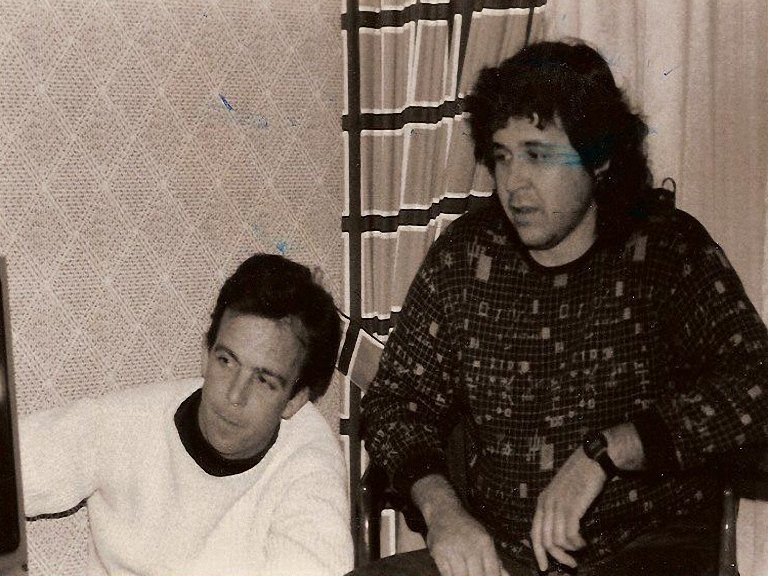
Scott K Fish, Joe English at an Albany, NY hotel circa 1980.
SKF NOTE: Joe English was tough to interview. Here’s what I wrote as part of the interview introduction in the June 1986 Modern Drummer:
“Joe English agreed to to this interview in 1980. Then he disappeared. In 1983, I got approximately three-fourths of this interview on tape, when Joe disappeared for another three years. I nicknamed him the Howard Hughes of Drumming. I had no positive proof that Joe was a bad guy. He never returned my phone calls or answered my letters, but I have two grandmothers who are guilty of the same thing, and they’re not bad people. The last quarter of this interview was, finally, taped at the tail end of 1985, and I submitted it to MD in March 1986.”
=====
Joe English: It wasn’t a choice of leaving Wings to go with Sea Level. I left Wings and didn’t do anything for a year. Then I knew Chuck Leavell, the keyboard player with Sea Level, and I had to start playing again.
I was playing drums like a truck driver. Nothing against truck drivers. But, my chops were down. My last year with Wings was a situation where I did a lot of waiting, not a lot of playing. And I just didn’t get inspired to practice in my London apartment, so my chops started to slide.
Then I took one year off with the exception of playing a few club dates with some friends.
The guys in Sea Level had been playing constantly together for two years when I went to work with them. They were playing instrumentals and progressive music. And I was with my chops down 98-percent.
I had to soak in hot water after playing with them the first week. But, it was great. It was do or die. Get your chops back together or go pick strawberries.
I did get my chops back together. And it felt really good to work with people who were playing that kind of music.
After Wings was over I had learned how to play pretty simple; that playing simple and putting good things in certain sports was an art in itself. Just like being able to play all over the place at any time is special too.
It took me six months to get my act back together. I did three albums with Sea Level: On The Edge, Ball Room, and Long Walk Off a Short Pier. Sea Level was the world’s greatest unknown band. We had followers in different parts of the country, but for the most part, peoples’ reaction was: Who’s that?
When they heard the band they’d be completely blown away. It was a great band of great musicians.
SKF NOTE: Around 1982-83 I attended an Elvin Jones drum clinic in NYC. I remember neither the exact location nor the clinic sponsor. (It may have been Elvin’s 1982 Professional Percussion Center clinic.) Former Modern Drummer Features Editor Rick Mattingly was with me. Or maybe I was with Rick.
We were both still working for MD. Attending Elvin’s clinic may have had something to do with Rick’s 1982 MD interview with Elvin.
During the clinic Q&A a boy who, I’m guessing, was around 10-years old, asked Elvin to solve a mystery.
“You’re Elvin Jones. There’s Philly Joe Jones, Papa Joe Jones, Harold Jones…. Are you all related? How many Jones’s are there?”
The clinic audience laughter quieted. Elvin looked directly at the young man. “My father was a wild man,” he answered, causing the audience to again erupt in laughter.


 Scott K Fish
You must be logged in to post a comment.