SKF NOTE: Product endorsements sometimes made it unwise for an interviewer to be fully honest with Modern Drummer readers. I’m talking about times when a well-known drummer endorsed certain drums and cymbals, but played other brand cymbals and drums in the recording studio.
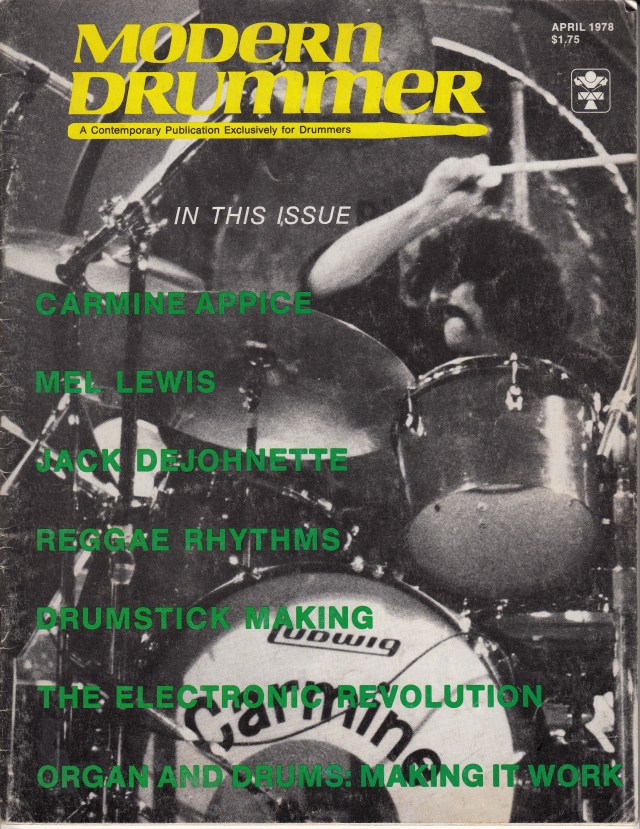
Mel Lewis comes to mind. For the longest time I loved hearing Mel’s “great Gretsch sound,” especially his snare drum, on the Thad Jones-Mel Lewis Orchestra albums. During our 1970s interview, Mel’s first feature interview for MD, he said he always used a 1920s vintage Ludwig Black Beauty snare with calfskin heads on all the Jones-Lewis studio albums.
At the time, I thought Mel’s setting the record straight was a great story. He still thought his Gretsch drums were great. He still used his Gretsch wood snare. But, in the recording studio, his Black Beauty and his famous 20″ A Zildjian sounded better to Mel, so he used them.
Today, perhaps after a drummer has died, the truth about what drum equipment they used where can be told without jeopardizing a product endorsement.
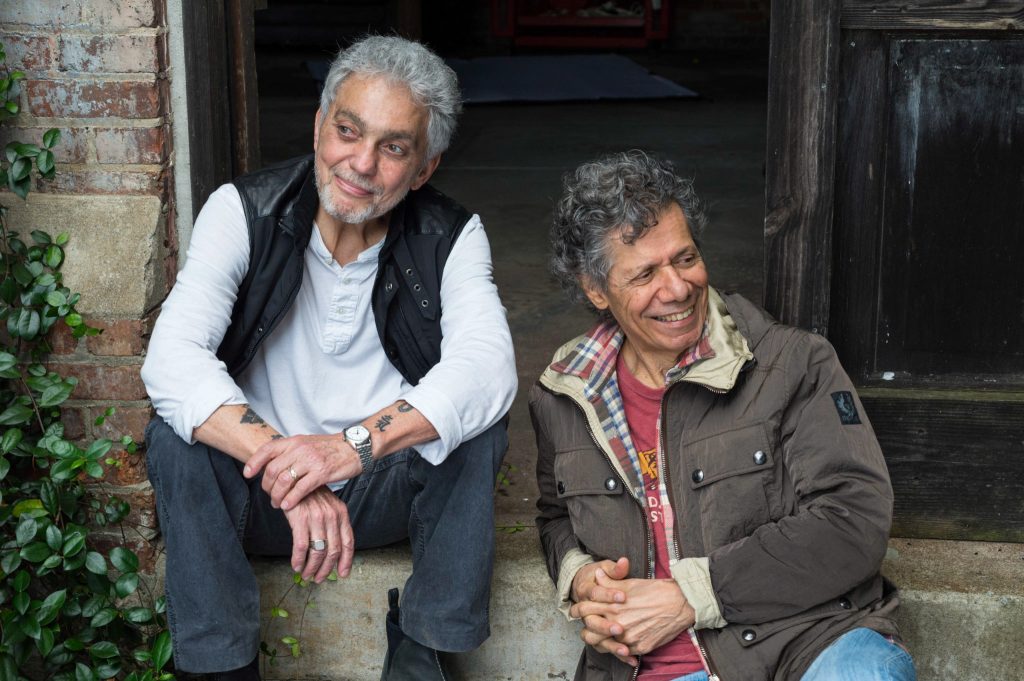
SKF NOTE: During the Moses Brown School’s “Creative Conversation” with Chick Corea and Steve Gadd, an audience member asks about their early influences. Chick asks the questioner if she plays an instrument. She tells him she is primarily a drummer. Chick, in answering her question, names for the audience member, drummers who influenced him early on: Elvin Jones, Art Blakey, Philly Joe Jones, Max Roach, Tony Williams.
Steve Gadd starts off naming Gene Krupa, Buddy Rich, Louis Bellson. He then says Chick’s list of early influential drummers came later.
Chick asks the audience member if she is familiar with any of the drummers he and Steve named. Surprisingly, she answers no. One drummer she likes, she says, is Ginger Baker.
After digging deeper into Moses Brown School, I am relieved to know it is a K-12 prep school, not a college or university. I expect college music/percussion students to be familiar with at least some of the drummers Corea and Gadd mentioned. High school students? Maybe not as much.
Thinking back to 1972, I was 20 years old during my formative time as a sales clerk at Sam Goody’s music store. I learned about plenty of jazz drummers listening to cheap LP cut-outs, and through conversations with fellow employees.
But, I’m sure before day one at Goody’s I was familiar with Krupa, Rich, Bellson, and Max Roach. Maybe Elvin. My first time hearing Elvin was on a mono version of John Coltrane’s Africa Brass album, which I’m reasonably certain I bought before I worked at Goody’s. I remember being impressed with Elvin’s press rolls and the beautiful recorded sounded of his drums and cymbals on Africa Brass.
I also remember at Sam Goody’s, after reading the liner notes and questioning jazz-head coworkers, before buying the Elvin Jones Trio’s Puttin’ It Together album. Hearing that trio album, not knowing what I was hearing, I concluded Elvin was flailing around his drums making noise. And it didn’t matter what Elvin was playing as long as he ended his noise making on time.
I had a lot to learn about jazz drummers.
I’m never surprised at non-musicians unfamiliarity with specific drummers. But I am often surprised at musicians’, especially drummers, unawareness of specific drummers. Especially the historical drummers like those mentioned by Steve Gadd and Chick Corea. Recognizing all aspiring drummers are on individual paths, I would love to see as a standard part of every drum teacher’s and school percussion curriculum, an introduction to the great jazz drummers.
It could be a system as basic as handing a student at each lesson an anonymous MP3 track at the end of each lesson. For example, give a student a single MP3 of Max Roach’s “For Big Sid,” or Steve Gadd’s “St. Thomas” from the Chuck Mangione Alive! Album. There are tons of great tracks from all eras. Ask the student to listen. That’s all. Just listen.
Ideally, the listening will prompt a discussion or a hunger to hear and learn more.
But that won’t happen if those of us familiar with our great drumming heritage don’t share it.
SKF NOTE: This morning I spotted this “Creative Conversation” with Steve Gadd, Chick Corea, and the audience at Moses Brown School in Providence, RI. I surprised myself by listening and watching the entire 50-minute video.
A very relaxed, informative Q&A session, with a several minute Chick and Steve duet.
It’s disappointing to not be able to link directly to this YouTube video, but…. Enjoy.
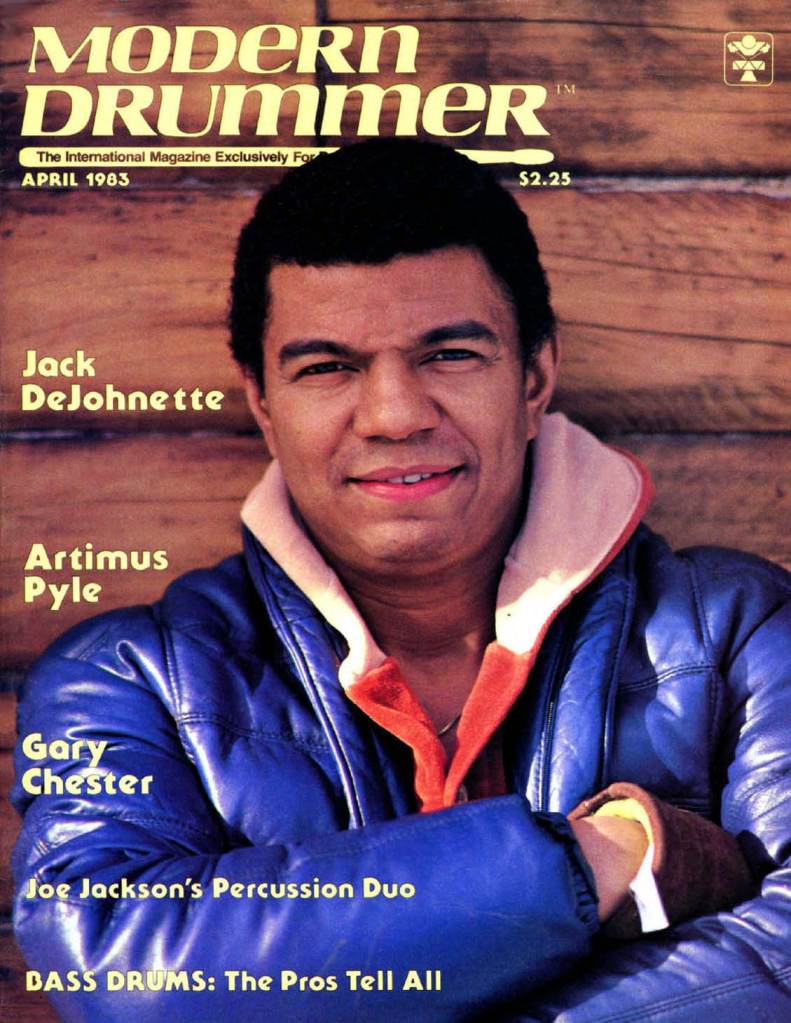
SKF NOTE: Katrina Chester let me know this morning that Modern Drummer is making available online Gary Chester’s April 1983 feature interview. Today, October 27, is Gary’s birthday.
Thinking back to first meeting Gary, to MD Founder Ron Spagnardi’s approving the feature interview – so much has happened since.
Most of all, I suppose, after his April 1983 interview, Gary went on to work with MD Features Editor Rick Mattingly, codifying his drumming method into “The New Breed” book (1986). That book, in turn, remains one of MD‘s most popular method book.
Gary’s family is handling Gary’s drum related business, including an in-progress documentary, and the emergence of Gary’s former students posting videos of how they are making use of Gary’s drum method.
You can check out all of this at any/all of these places:
It took quite a while for me to gather in one place all of my Gary Chester materials: The interview tapes, the tapes transcription, the original letter Gary sent me. All of those are now with Gary’s family to do with as they see fit.
What comes to mind most on this Gary Chester Day 2022 is the importance of capturing for posterity drummers’ stories. There is so much work to do. I’ve written a few posts on the topic. But just in re-reading Gary’s MD interview I see he mentioned studio drummers Jimmy Johnson and Al Rogers. But, a quick Google search turns up very little about either musician.
It’s possible there are Jimmy Johnson and Al Rogers interviews, columns, discographies, etc. But where? Living drummer stories are much easier to compile and verify than dead drummer stories.
Gary Chester was blessed in many ways. Having time, and using that time, to chronicle so much of his drumming knowledge and skill was a blessing for him, for us, and for all the drummers who come after us.
SKF NOTE: One afternoon, in March 1987, my Oxford, MD apartment phone rang. Paul T. Riddle was calling from South Carolina. He and I remain friends after I interviewed him in 1980 for Modern Drummer magazine.
Paul loves jazz drumming. When I walked into his Sheraton Hotel room for Paul’s interview, I expected to talk about Paul’s work as a founding member of The Marshall Tucker Band. I expected to talk about Southern Rock.
I didn’t expect to hear jazz saxophonist Sadao Watanabe and the Great Jazz Trio with Tony Williams, playing on Paul’s road stereo. But there it was.
Over the years, to this day, Paul and I touch base. Inevitably, no matter what else we discuss, we talk jazz drummers.
That sunny March ’87 day in Oxford, Paul was calling to touch base and talk about a specific jazz drummer: Buddy Rich. My wife at the time was sitting on the couch next to me while I was on the phone.
“Hey, man,” said Paul , “did you hear about Buddy?” No need to use a last name. We both knew who “Buddy” was.
I don’t remember Paul’s exact next words. He said something about Buddy Rich in the hospital with brain cancer. That Buddy may not be able to play drums again.
That news was, for the moment, incomprehensible. Buddy Rich was a constant my whole life. Through all the twists and turns of striving to earn my living as a professional drummer-there was Buddy. On records, tv, in magazine interviews, and in concert. Always an inspiration.
When Paul told me Buddy was so sick – terminally, as it turned out – and may not be able to play again – I was just sobbing. Involuntary, uncontrollable weeping. Part of me felt like an idiot. Talking to Paul was impossible. I tried, but I was crying so hard I couldn’t catch my breath. Every time I tried saying something, I started choking up.
I couldn’t even utter “goodbye.” I simply hung up on Paul without saying anything. After pulling myself together, I did call Jim Keltner and then Joe Morello to confirm – hopefully deny or have a more positive variation – what Paul said.
But no, both Morello and Keltner confirmed what Paul told me. They were more accepting of the news. Sad, but not devastated. Both men had, I suppose, a more realistic view of life. And death.
And I was able to return Paul Riddle’s call and finish our conversation.
Where did my strong emotions come from? I don’t know. I suspect the sad Buddy news reopened older sad drum-related news, such as the death, when I was 14-years old, of the family member who introduced me to drumming, my Uncle Bob. But, I’m just speculating. I don’t know the source of the sadness that enveloped me that March ’87 day.
Maybe it was the enormity of life as I always knew it coming to an end. Buddy Rich was always there – until he wasn’t.



You must be logged in to post a comment.