Scott K Fish, Drummer Interviewer, Back in the Saddle Again

Roy McCurdy

I have revisited a handful of albums, for inspiration and/or pleasure, all my adult life. A handful of albums I’ve owned first as vinyl LP’s, then as audiocassettes, then as CD’s, and now in MP3 format. Something about the feel of the music on these albums is always positive, inspiring.

Two examples: Nat Adderley’s “Live at Memory Lane,” and the Art Farmer/Benny Golson Jazztet’s “Here and Now.” Roy McCurdy plays drums on both dates. Every time I listen to Roy McCurdy’s drumming on those albums I smile, shake my head in wonder, feel inspired.

Here’s my 2004 Amazon review of “Live at Memory Lane.”:

live_memory_lane

About 30 years ago I bought a cutout vinyl copy of “Live at Memory Lane” from a drug store. I didn’t know Nat Adderley at all, but this is one of my all-time favorite records. The band is superb – Roy McCurdy on drums and Joe Zawinul on a slightly-out-of-tune acoustic piano are especially good. Just a great album of great musicians making great music.

Mid-November of last year I came across an MP3 version of “Here and Now” and bought it right away. While listening, I thought, “I wonder what happened to Roy McCurdy?” I did a web search and found he is an Adjunct Professor in the Jazz Studies Department of the Thornton School of Music at the University of Southern California in Los Angeles, California.

I sent Roy McCurdy email on 11/17/14 that said, in part:

Dear Professor McCurdy:

I’m writing to thank you for giving me decades of inspiration through your drumming. Just yesterday I found on Amazon the Art Farmer/Benny Golson Jazztet’s “Here and Now” album. I had that on vinyl for years and years, but lost it somewhere along the way.

Also, your playing on Nat Adderley’s “Live at Memory Lane” remains a favorite. Crisp, musical – you play great.

I was managing editor of Modern Drummer magazine (1980-83). I never lost my love of drums and drumming, even when  my career path took different turns. I always played and I always kept listening.

here_and_now

Well, Roy McCurdy wrote back. Turns out there is no Modern Drummer Roy McCurdy interview. So tonight I am interviewing Mr. McCurdy. He and I will make his interview public either as a text interview, a podcast, or both. I’m using Google Voice to record with for the first time. I can’t vouch, at this writing, for Google Voice’s audio quality.

I am excited about this interview – my first drummer interview in about 30 years. Roy is probably best known for his work with Cannonball Adderley. It will be fun seeing where our conversation takes us.

If anyone has questions they would like me to ask Roy McCurdy, please feel free to post them here or email them to me at ScottFish422@gmail.com .

end

Posted in SKF Blog | Tagged , , , , , , , | Leave a comment

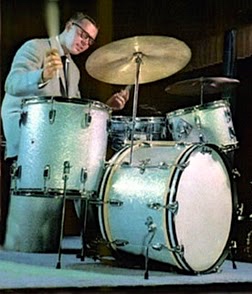
Frankie Dunlop: Gene Krupa’s Kindness to an Upcoming Drummer

Frankie Dunlop
Frankie Dunlop

SKF NOTE: I was hanging out with friends outside Clark Tuthill’s house in Centerport, NY in the late 1960s. Clark’s record player was outside too. He was listening – as was often the case – to a Thelonious Monk album. At one point, my attention was fully drawn by the sound of Monk’s drummer: the crisp snare and deep toms and bass drum were tuned to perfection. The drummer was on fire, swinging, and musical.

This was my introduction to Frankie Dunlop. The double album was “Two Hours with Thelonious” on the Riverside label – a reissue of two single albums, “Thelonious Monk in Italy,” and “Thelonious Monk in France.”

By the time I was working full-time at Modern Drummer, I had listened to Frankie Dunlop on most of his Monk dates. Some of them, I think were no longer in print. I heard a few tracks of Frankie with Maynard Ferguson. And Mel Lewis, who grew up with Frankie in Buffalo, NY, was also a great help. There wasn’t much in print on Frankie at the time – two Down Beat pieces, I believe. Mel helped by suggesting questions I might ask Frankie.

My interview with Frankie took place in New York City at my former in-law’s apartment, and also, at my home in Washington, CT. I’d have to look at the dates on the audiotapes. We may have had two sessions in NYC.

Frankie was easy to interview. My one lament is this: Frankie was a first-class impersonator. During the interview, when he was quoting Thelonious Monk, Frankie became Monk. When he was quoting Sonny Rollins, he became Rollins. And he became Mingus. If I get a chance to digitize the audiocassettes, the public can hear what I mean.

I am honored that author Robin D.G. Kelley quotes from Frankie’s MD interview in Kelley’s book, “Thelonious Monk: The Life and Times of an American Original.” It seems mine is the only known full-length Frankie Dunlop interview. I’m glad I was able to do it. I’m glad Frankie agreed to do the interview.

Here’s a snippet. Caveat: At the start of this interview Frankie said, “My earliest influence was Gene Krupa.” Enjoy.

Frankie Dunlop: When I came to New York and was playing with Maynard’s band, we played a couple of gigs in Great Neck, Long Island. And Gene Krupa was on the bill with us.

Maynard’s band played two or three numbers, and Gene Krupa was behind the curtain watching me. I wasn’t aware of it.

After the set was over, Gene said to Maynard, “Does your drummer like Slingerland drums?”

Now, I had just come to New York. I’d worked with several small bands, but I hadn’t worked with any large bands – and that was a challenge. Maynard’s band was a challenge. At that time, any drumset would have been an improvement. If it was a good drumset I didn’t care what kind it was.

But Gene Krupa was still on the Board of Directors of Slingerland Drum Company. That’s what the scene was. And they were looking for guys to advertise for the company.

And Gene said to Maynard, “I like your drummer. Budd Slingerland is looking for guys to advertise. He wants to get guys who can play and be exciting. He’ll get a set every year. We’ll take pictures.”

My drums were these little rattletraps that I’d brought from Buffalo. And Maynard said, “Hey, Gene Krupa’s over there. He wants to talk to you. He likes the way you play. Do you think you can deal with a set of Slingerland drums?”

That did me more good…. First of all, Gene said to me, “I think you play great.” I would never have expected that. So for him to say that to me, plus saying that he wanted me to advertise for Slingerland – I think that was the biggest turning point for me.

The compliment was great, and so was the fact that I was going to get a new set of drums and advertise for Slingerland. I needed that. I could never have continued to play with Maynard on the rattletraps that I was playing.

end

Posted in SKF Blog | Tagged , , , , , , , | 7 Comments

Joe Morello on Melodic Playing

SKF NOTE: This is the fifth post on this blog from my early 1980’s interview with Joe Morello. The full back story of that interview is here

joe-morello.jpg?w=260&h=238Joe Morello: When I say “melodic” playing I don’t mean you have to have a million tom-toms. I still use the old drumset.

Maybe I could put it better by saying I like “thematic” playing. More theme. Theme development and recapitulation.

Then again, if you start talking that way it’s gonna seem contrived — and it’s not.

If you start something (thematically on the drumset) you can sort of get into it. It just develops while you do it. There’s no mystery to it. You just do your drums. You can’t please everybody. Who cares? The world’s a big place. There’s room for everybody. The guy that tries to please everybody — that’s the secret to failure.

end

Posted in SKF Blog | Tagged , , , , | Comments Off on Joe Morello on Melodic Playing

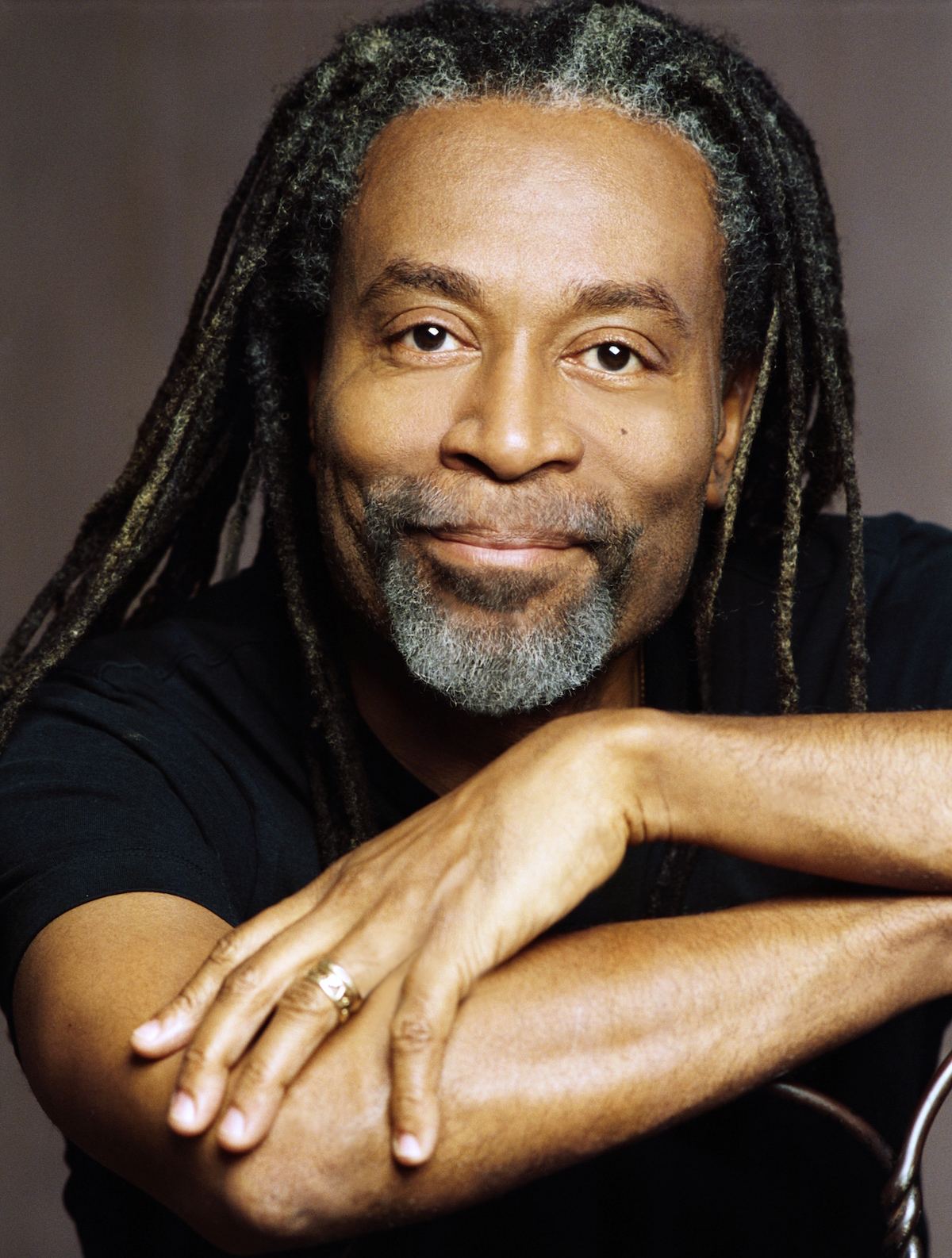
Bobby McFerrin: Simply Doing It

Bobby McFerrin

Bobby McFerrin

“I loved [Keith Jarrett’s] attitude toward the piano, just sitting down and playing, just to see what would come out. Whether it worked or didn’t work wasn’t the point. It was simply doing it.”

Source: Bobby McFerrin, The Voice, by Michael Bourne, Down Beat, May 1985

Posted in SKF Blog | Tagged , , , , | Leave a comment

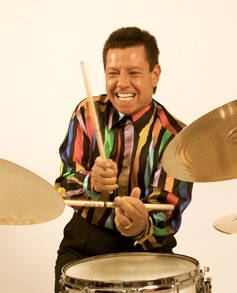
Les DeMerle on The Greatest Four-Bar Drum Break Ever Recorded

Les DeMerle

Les DeMerle

Les DeMerle‘s interview appears in the October 1984 Modern Drummer. Les was an interesting musician who maintained a good balance between the business and artistic sides of drumming. At one point during the interview I ask Les, “It’s intriguing that you can remain so active in concerts, in teaching, in clinics, in seminars, in recordings, and in other areas of the music business – like owning and operating your own night club – and still grow on your instrument. How do you find the time to do all that?”

Les answers, “You have to make time for it. I openly admit that I’m totally dedicated to drumming and to music. Never in my life have I had to do anything other than play drums to make a living,” adding, “In other words, I keep enough things going so that if one falls through, the other one happens.”

I came across the transcript for this interview a few weeks ago. I’m sure it has been 30-years since I last read it. Les and I had good discussion. Here’s one part of it:

Scott K Fish: Fred Gruber told me that he once asked Buddy Rich what questions he would ask in an interview. And one of the questions Buddy asked Fred was, “What’s the greatest four-bar drum break ever recorded?” I’ll ask you the same question.

Les DeMerle: I would pick a four-bar break that Art Blakey does on the original recording of “Blues March.” I’m not even sure what album that’s on. The note placement gives me chills. Right where Art put the time is right where it should be.

There’s a live recording that Buddy did with Sammy Davis, Jr. Buddy plays a four-bar break on “Ding, Dong the Witch is Dead” that kills me too. But, as a favorite, I would say the Blakey one.

end

Posted in SKF Blog | Tagged , , , , , , | 5 Comments