[Miles Davis’s] mind was always active — he absolutely loved seeing new things and observing human behavior in its infinite variety. People and how they expressed themselves piqued his curiosity. It was one of the things that kept him going.
Once, after finishing a rehearsal at Studio Instrument Rentals in midtown Manhattan, we left in a limo and drove by the old Ed Sullivan Theatre, now the home of David Letterman’s show. At that time there used to be a character who hung out in front of the theatre every day, playing the street with drumsticks. People were accustomed to him, and many would slip him a buck, even though he wasn’t begging. He was usually dressed in the same black raincoat, and he would stand in front of the marquee, bent over at the waist, as he tapped out solos on the pavement, the sidewalk sewer caps, the fire hydrants, and the curbstones.
I was surprised Miles had never seen this guy before, but he hadn’t, and he ordered the driver to pull over so that he could watch. He was fascinated, and I saw his face become childlike with interest.
“He here all the time?” he asked.
“I’ve seen him many times, though not in the winter,” I said.
“Doesn’t his back hurt, bent over like that?” Miles wondered.
“I suppose so,” I replied. “Maybe he’s used to it. Maybe his mind is elsewhere, in the drumming, maybe.”
Miles shook his head slowly. He felt sorry for this guy, and yet he respected his obsession. We watched a good long time before heading home.
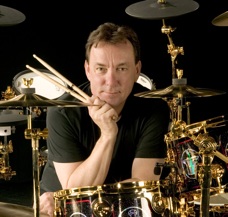
SKF NOTE: This is the last of my Trading Fours exchanges with Neil Peart. My friend and music writer par excellence, Chip Stern, had a very good, albeit short-lived, idea for a drummer’s magazine. I did some writing for Chip’s magazine, but I don’t know that any of it saw the light of day.
Leonard Feather had a longstanding Down Beat magazine feature called Blindfold Test. Feather’s concept: play a handful of unannounced recordings for a musician and get their objective reaction.
Chip Stern
Chip used the Blindfold Test concept, calling it Trading Fours, as part of his drummer magazine.
Recently I found an August 1989 manuscript of a Trading Fours I did with Neil Peart. I think this exchange took place in Neil’s home.
The YouTube version of M’BOOM’s Epistrophy below is the same arrangement I played Neil, but not the same cut. The cut Neil listened to is on M’BOOM’s first album — recorded in the studio.
Neil Peart: Here’s the kind of music that I can understand why people want to make it, but I can’t understand why anyone would ever want to listen to it (laughs).
Scott K Fish: Why do you think people would want to make this type of music?
NP: Oh, it would be a lot of fun. Just for that reason alone. If you were down in the basement, a couple of guys with their vibes and drumset and tympani could have a good time! I’m trying to think of every human circumstance under which music can contribute to the mood. And I can’t quite find the one for that (laughs). Unless it’s while you’re smashing up your house.
SKF: Do you have any idea who it was?
NP: No.
M’BOOM’s first album
SKF: That’s Max Roach’s percussion ensemble M’BOOM.
NP: Ah! I almost said that, but I thought it was too Western. I thought their idea was to incorporate traditional African.
SKF: This was a Thelonious Monk composition. Epistrophy. The neat part was Warren Smith playing the melody and improvising on tympani.
NP: I listen to it and I smile because I think that would be a lot of fun to do. But, then I smile because: Who wants to listen to it (laughs)? It’s like the answer to the question that nobody asked. That’s my favorite quote lately.
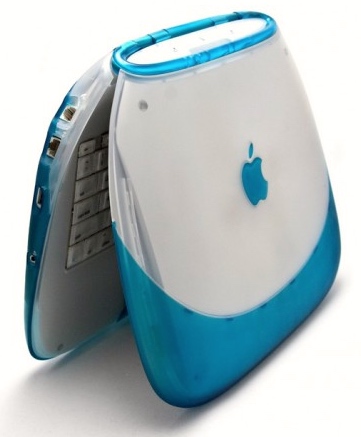
SKF NOTE: Last night I dreamed I was sitting on a stool, in someone’s apartment, practicing with a pair of wire brushes on the bottom of a blue-and-while Apple clam shell iMac. At first, playing on the hard plastic, confined to such a small playing area, was challenging.
I remembered Max Roach talking about playing the brushes without ever lifting them off the snare drum head. That’s how I played on the iMac and soon, I was playing a nice sounding, soft, even, slow tempo pattern.
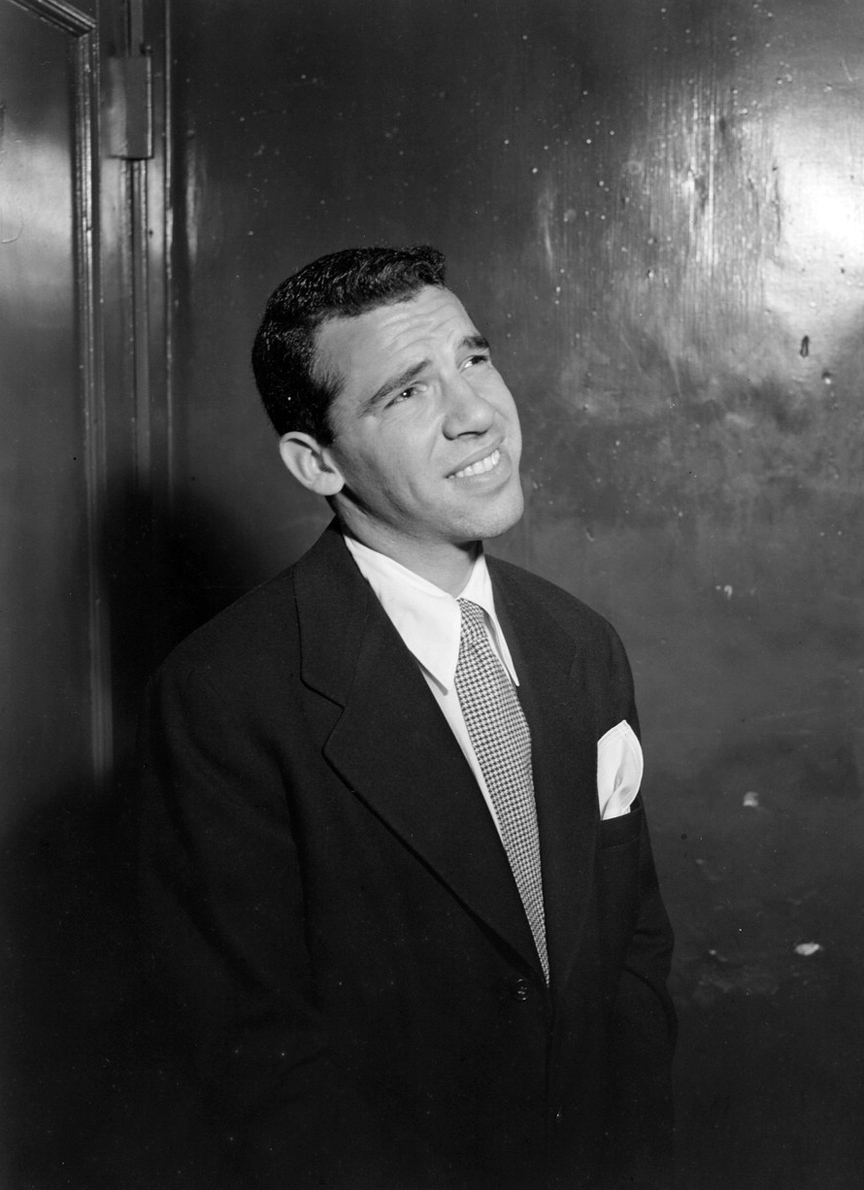
Buddy Rich walked into the room and sat down while I was mastering the iMac. When I acheived my even brush pattern I stopped, looked over at Buddy and laughed. “Brushes are fun to play. Don’t you think?” I asked.
Buddy Rich
He stood up, walked over and – for a brief moment – took the brushes from my hands. I couldn’t understand what he was saying at first, but Buddy was showing me how he holds the brushes. His hands were very small and somewhat deformed. As if they were receding as Buddy got older.
Then the brushes were back in my hands and Buddy was showing me how he holds the brush between the thumb and index finger, and finds it best to rely on his middle finger for control on top of the brush. He showed me how he “use to have Cathy,” his daughter, exercise that technique by holding her left hand open, then closing just the middle finger into the palm of the hand. As if making a middle finger fist.
That was the second time I can recall having a conversation about drums with Buddy Rich in Dreamland.
SKF NOTE: My friend and music writer par excellence, Chip Stern, had a very good, albeit short-lived, idea for a drummer’s magazine. I did some writing for Chip’s magazine, but I don’t know that any of it saw the light of day.
Leonard Feather had a longstanding Down Beat magazine feature called Blindfold Test. Feather’s concept: play a handful of unannounced recordings for a musician and get their objective reaction.
Chip used the Blindfold Test concept, calling it Trading Fours, as part of his drummer magazine.
Recently I found an August 1989 manuscript of a Trading Fours I did with Neil Peart. I think this exchange took place in Neil’s home.
In honor of Tony Williams’s birthday, I thought this would be a perfect time to post Neil’s thoughts on Tony’s classic song, Fred.
Song Title: Fred. Drummer: Tony Williams. Album Name: Believe It. The New Tony Williams Lifetime. Columbia PC 33836. Released: 1975
Scott K Fish: [During our listening Neil asked if it was Billy Cobham.] Why did you think it was Billy Cobham?
Neil Peart: The first explosive fill reminded me of Billy. And the type of rhythmic feels too. But, wonderful drumming, for a start. It’s spectacular. The kind of stuff that always blows my mind. And the flaws in it just kind of humanize it; to make you feel closer to it. You don’t feel so intimidated by incredible, superhuman perfection.
SKF: Do you think you know who it was?
NP: Tony Williams was my second idea — just because of the sprawling fills. I’m not a big student of that music because of not being such a big fan. But one thing I always thought with Tony Williams is that he could make a fill sprawl all over the place time-wise, and then (snaps fingers) come back in. Which is enormously effective, from a drummer’s point of view, to hear that pulled off.
There’s so much rhythmic intricacy in that that really impresses me. He has so many different feels to pull out of the same pocket. I really admire that. It gets tedious in any field of music to hear the same feel applied to the same rhythmic subdivisions all the time. And he’s got a lot of different little triplet inflections there; different ways of pulling the beat around between hand-and-foot syncopation which are really, really a joy to hear.
Tony Williams
SKF: How did you enjoy the sound of his drums and cymbals?
NP: I wondered what the era of that was — recording wise.
SKF: The mid-Seventies.
NP: So it was quite modern then. But, a bit of a harsh sound, subjectively speaking. I prefer to hear a smoother tonality. The drumming is so spectacular that it kind of negates any of those subjective viewpoints. You wonder which point of view to listen from. Again, I’m a bit hypercritical now, just being in the process of making a record. I tend to put myself in the producer’s chair and think, “Well, if I was producing these guys, what would I tell them to do?”
NP: I’m very surprised. A couple of things were very reminiscent of Alan. But then he just got into all that 16th note noodling which, melodically, to my mind, is beneath him. He’s capable of so much more.
Alan Holdsworth is one of my number one favorite guitar players for his ability to phrase. He phrases so often like a saxophone — which I love. I think taking that approach of phrasing to another instrument — in the same way that Sinatra did it in vocals. He took a wind player’s phrasing and applied it to vocals so effectively.
The same thing with Alan Holdsworth. I love his sense of melody. The tone of his guitar is usually much sweeter than this too. The tone seemed so shallow. His is usually so rich and deep. It’s not a performance of his that I would be impressed by compared with others.
SKF: Do you think this was a live performance?
NP: Live off the floor, certainly. Yeah. Just because of the flaws. They learned the arrangement, but I don’t think they rehearsed it that many times (laughs).
SKF: No click tracks?
NP: Definitely no click tracks. But that’s not relevant in this kind of music.
Tony nails down the feel. No problem. There was no wandering in that. There was just a few minor flaws — as you pointed out while we were listening. Tony crashed a cymbal a little ahead of where he was supposed to. That’s natural enough.
It was the same on the Joe Morello piece where his sticks clicked. I’ve left things like that in our records in live performance.
In the context of this, where you’re hearing so much virtuosity from Tony Williams, to hear a flaw like that — or with Joe Morello — to hear a tiny little flaw really humanizes it. It doesn’t detract at all from the incredible virtuosity of the instrument that’s demonstrated there. They’re kind of nice to see. It reduces us all to the same plane.

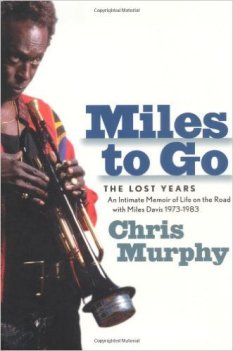 [Miles Davis’s] mind was always active — he absolutely loved seeing new things and observing human behavior in its infinite variety. People and how they expressed themselves piqued his curiosity. It was one of the things that kept him going.



 Scott K Fish
You must be logged in to post a comment.