SKF NOTE: Yesterday I came across my monthly column written for the December 2011 Bangor Metro magazine. The column topic was, Who Got You Into Politics? I wrote, “Kindness from strangers 25 years ago was exactly the encouragement I needed to pursue a career in politics. Without the kindess of Natalie and Gerald Sirkin to a letter-writing stranger, I doubt my political career would have come to pass.” I was the letter-writing stranger.
Also yesterday I read a comment in DrumForum.org from a drummer who said of a personal encounter with Philly Joe Jones: “I also met him in the early 60’s and talked about lessons. He scared me away after a 2 minute conversation. Will never forget it. Who knows how I would have turned out ???”
Both incidents remind me that even in passing, through brief encounters, how we treat people, what we say and how we say it, can have a lifelong impact. Positive or negative. I think of that especially when I have conversations about drums and other music with Connor (age 9) and Brandon (age 12).
Connor expressed an interest in drums which, for now, has become cello lessons. When Connor first said he wanted to play drums I gave him a practice pad, a pair of drumsticks and offered to give him lessons. That didn’t work out. Which was a bit of a letdown for me. But who knows where Connor’s music path will lead him. If he sticks with cello and becomes proficient? Great! If is interest circles back to drumming, his drumming will only be the better for his cello lessons.
Meanwhile, I enourage his every interest in music, drumming or not.
SKF NOTE: If you have read any of my Modern Drummer History of Rock Drumming backgrounder interviews on this blog, you need only know that this interview with drummer Clifton James is another backgrounder interview. It, as with all the others, is published here for the first time.
If you have not read any other of these background interviews, the back story is here.
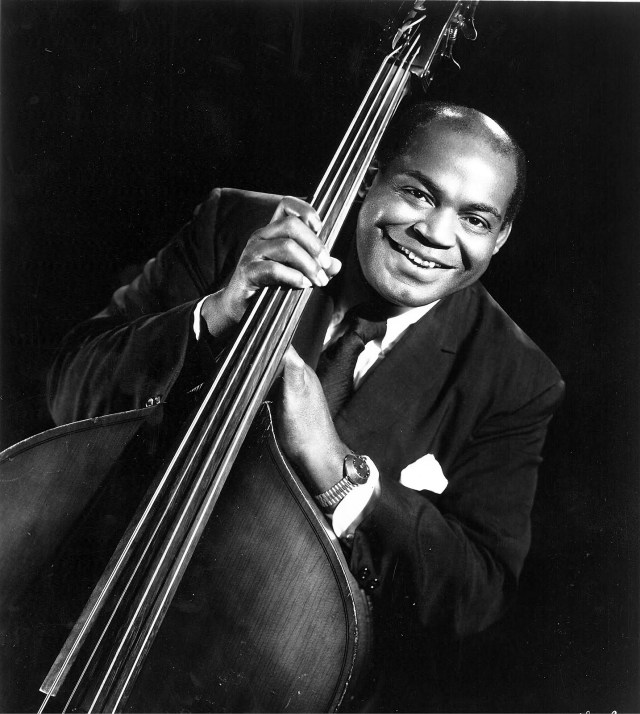
In the early 1980’s I was having a very tough time identifying the drummer on Bo Diddley’s rock classics. I found out doing another background interview with Blues giant Willie Dixon.
Somehow I was able to get Clifton James on the phone from his workplace in Chicago, the Ace Hose & Rubber Company.
I always hoped, while conducting them, these background interviews would yield new information about the History of Rock Drumming. Like mining for gold or buried treasure. Mr. James mentions two blues musicians I have not heard to this day: L.C. McKinley and McKinley Mitchell.
Clifton James was not very talkative. His answers were polite and direct, but giving minimum information. He had been off of the music scene for awhile, with little — almost no — interest in playing again.
But, thank you, Clifton James filling in several historic blanks for me. You will always remain in the top tier of my favorite rock and blues drummers.
Scott K Fish: You were the drummer on the Bo Diddley stuff, right?
CJ: Yeah, I’m his original drummer. We started out together. I’m the one that gave him that beat.
SKF: Now, that’s what Willie Dixon told me. How did that beat develop?
CJ: I don’t know. It just came to me. Well, before I started messing around with him, I was at home and I was just beating out something. That’s all. I met Bo and we started playing together in clubs and things, around here in Chicago, in different places, for little or nothing. Matter of fact, it was nothing! Five and six dollars. Crap like that.
SKF: Willie Dixon told me that you were very much into tuning your drums to get a melodic sound out of them.
CJ: Yeah. Well, I do.
SKF: He said you had no hi-hat on those recordings.
CJ: Yeah, I’d use it sometimes. I’d use it.
SKF: But at the time nobody else was playing that that tom-tom style. Was that your idea?
CJ: Yeah. On that particular tune — Bo Diddley and Pretty Thing — and quite a few numbers, I did like that. Then Dee Clark came out later on with his Hey, Little Girl in the High School Sweater.
SKF: You played Killin’ Floor with Wolf, didn’t you?
SKF: Frank Kirkland get most of the credit for the Bo Diddley records. What was his role? Wasn’t he the drummer on the road with Bo?
CJ: No. Well, I was at first, then I quit. I left Bo because things wasn’t right. But he would always wind up calling me back. Things still didn’t work out.
SKF: Do you think that’s where you got a lot of the melodic ideas that you were playing?
CJ: I don’t know. I had my own ideas, you know.
SKF: Are you from Chicago originally?
CJ: Yeah. Originally I am.
SKF: That’s a classic beat.
CJ: Thank you.
SKF: Willie Dixon though you might have been on some of Chuck Berry‘s hit records.
CJ: One, I believe. I can’t remember what it is. It’s been so long. They didn’t put your name on any records then. They just started that not too long ago.
Also, I did some things with Little Wolf, Jr. Little Wolf. That’s what they called him. I’ll be playing with him Saturday night at the Dallas Club with Albert King. He’ll be on the show too.
I had really stopped playing. I don’t play no more, really. But he asked me would I do this.
SKF: You kind of got out of music for a while, huh?
CJ: Yeah. Period! About two weeks ago I worked on a show with Bobby “Blue” Bland at the same club. They’re trying to ease me back into it, but I don’t think I’ll go. The money’s not right.
SKF: Well, I’m hoping this article will spark some interest. I mean, just the fact that you created the Bo Diddley beat. I mean, that was more your beat than Bo’s, right?
CJ: Yeah, in a sense. You might as well say that. There’s been a couple of tunes that I recorded with him and I never did get no money from the sessions. I mean, I got my session money but I didn’t get any royalty money from the records that I wrote. So this is what kind of turned me off too.
SKF: How was it working with Jerome Green in the studios?
CJ: Oh nice! That was our maraca player. And Billy Boy Arnold. He was playing the harmonica. And a fellow we called Buttercup during that time was on guitar. And James Bradford was playing bass.
SKF: Did you just get together with Jerome in the studio?
CJ: No. He was playing with us all the whole time when we was making them little four and five dollars a night. That was the original band. We called ourselves then, Ellis McDaniel and the Hipsters. That was our name.
SKF: Did you work out stuff between yourself, the bass, and Jerome?
CJ: Well, sometimes we’d just fool around.
SKF: How was it different working with Howlin’ Wolf and Bo Diddley? Did you have to change the style of your drumming?
CJ: Yeah. Most definitely. I had to get more funkier with Wolf. ‘Course, we had quite a few numbers too that we played that were real funky too. The old Jimmy Reed theme and stuff.
SKF: Do you remember what Wolf stuff you recorded?
CJ: Hey, there was so many of them. Also, with Sonny Boy Williamson. I made quite a bit of tunes with him.
SKF: It’s hard to hear on some of those records. Were you using cowbells too?
CJ: At times. Yeah. I did a little bit. Not much.
SKF: Do you remember the drumset you played on?
CJ: Yeah. WFL. It was four pieces. I use to do a lot of brushwork too. Like on one particular tune: “You don’t love me / You don’t care / You just want me….” I forgot the name of it. All those records from then got stolen from me though. When they broke into my house.
SKF: They took your record collection?
CJ: Yeah. All the ones they didn’t break. They had broke them all up on the garage floor and out in the yard.
SKF: Why?
CJ: I don’t know! Just stealing, you know. A lot of pictures I had. Newspaper clippings.
SKF: Did the drummers ever sit around and kick around ideas?
CJ: No. The only ones we would talk to most would be me and Below. He was my favorite though.
SKF: He was something, huh?
CJ: Oh yeah. That’s my partner, man. All the way.
SKF: Did you ever trade licks?
CJ: When we would do that mostly is when I’d meet him, like up in a club or something like that, where he’d be playing. Then we would exchange questions. Sometimes in the studio.
SKF: Did you work together in the studio sometimes?
CJ: No. At different times.
SKF: Did you know Odie Payne at all?
CJ: Oh yeah.
SKF: He came after Below and yourself, right?
CJ: No, it was around the same time, because he use to work with Elmore James. I use to kick around with a lot of the cats playing.
SKF: So are you thinking about getting back into playing again?
SKF: If you had to describe your style of drumming, how would you describe it? What made you different from everyone else?
CJ: I would have to say: Myself. ‘Cause I never really did want to play like nobody else. Because if I did that, then that wouldn’t be me. If you play like somebody else, then it’s not you. I wanted my own thing. My own style of playing.
SKF: Do you remember any other drummers that played on Chuck Berry’s records?
CJ: I think Al Duncan played on a couple of them. I’m not sure.
SKF: Somebody mentioned a drummer named Eddie Hardy.
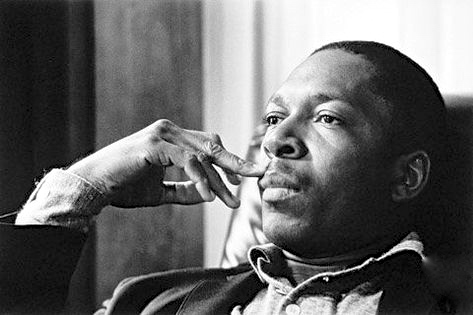
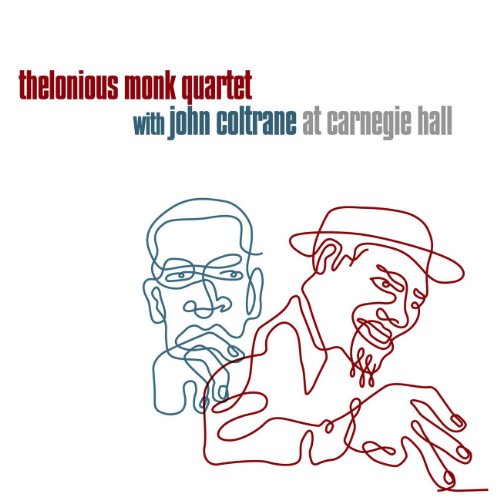
SKF NOTE: Somewhere — among my magazines, I think — there is a John Coltrane interview in which Coltrane’s how-to-listen-to-albums idea helps my ear training and gives me great joy. Maybe it will do the same for you.
John Coltrane told his interviewer if you really want to hear an album, listen to it once for each musician on the album so “you can hear what each man is doing.”
The one Milestones cut that is must listening for drummers is Billy Boy. The track is a trio date: Garland, Chambers, Jones. No horns. For as long as I can remember, this version of Billy Boy has been a model for trio drumming, for brush playing, and for creative drum soloing.
And not that Tony Williams’s opinion on what is at the apex of hard bop albums needs my agreement, but Milestones is a killer.
Now, I was reminded by two photos recently posted on The Great Drummer’s Group Facebook page of something that amazed me when I first studied the same photos, years ago, in the Milestones CD booklet.
These photos were taken during the Milestones recording session. They show Philly Joe on a three-piece drumset with just one ride cymbal and a hi-hat. A music stand is positioned where his small tom and crash cymbal would be.
Did Philly Joe really record the apex of hard bop albums with that three-piece drumset and one ride cymbal? I think so. I’ve re-listened to the album and come to that conclusion. Maybe an audio expert can prove otherwise.
But, I think what listeners hear on Milestones is the drumset shown in these photos. Take a listen to Billy Boy and see what I mean.



 SKF NOTE: Somewhere — among my magazines, I think — there is a
  For example, the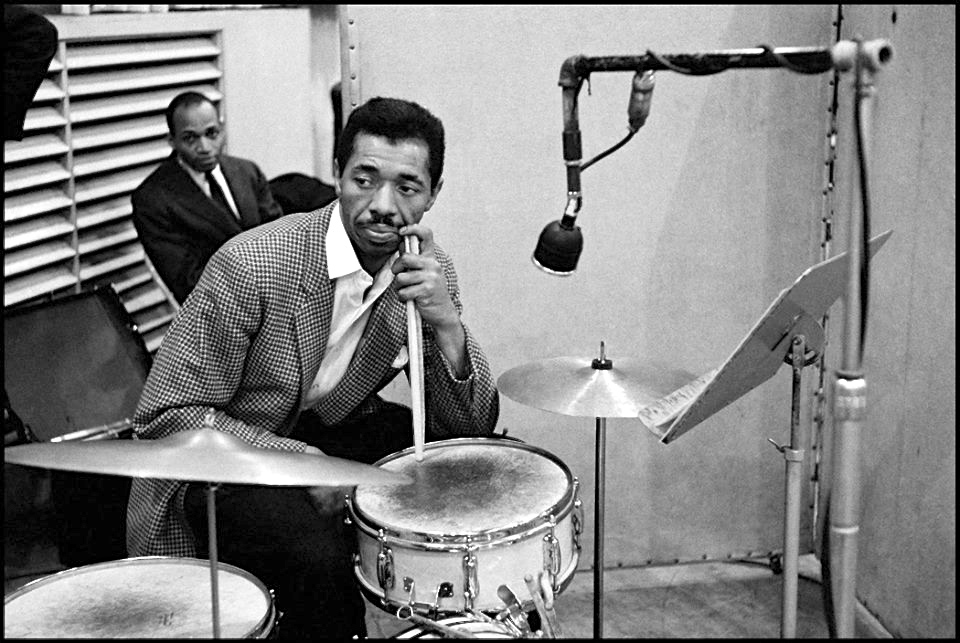

 Scott K Fish
You must be logged in to post a comment.