Jimmy Webb: Retiring Ringo’s ‘Sgt. Pepper’ Drumset

SKF NOTE: This story is from the full typed transcript of my interview with Jimmy Webb somewhere between 1980-83. I edited the interview for a short piece in Mix magazine, which the magazine editors, unfortunately, edited again, changing the entire tone of the story.

Reading the transcript last night I came upon Jimmy Webb’s story about his part in causing Ringo to retire the drumset Ringo used on the Beatles’ Sgt. Pepper’s Lonely Hearts Club Band album.

Scott K Fish: You got to meet the Beatles when you were in England, didn’t you?

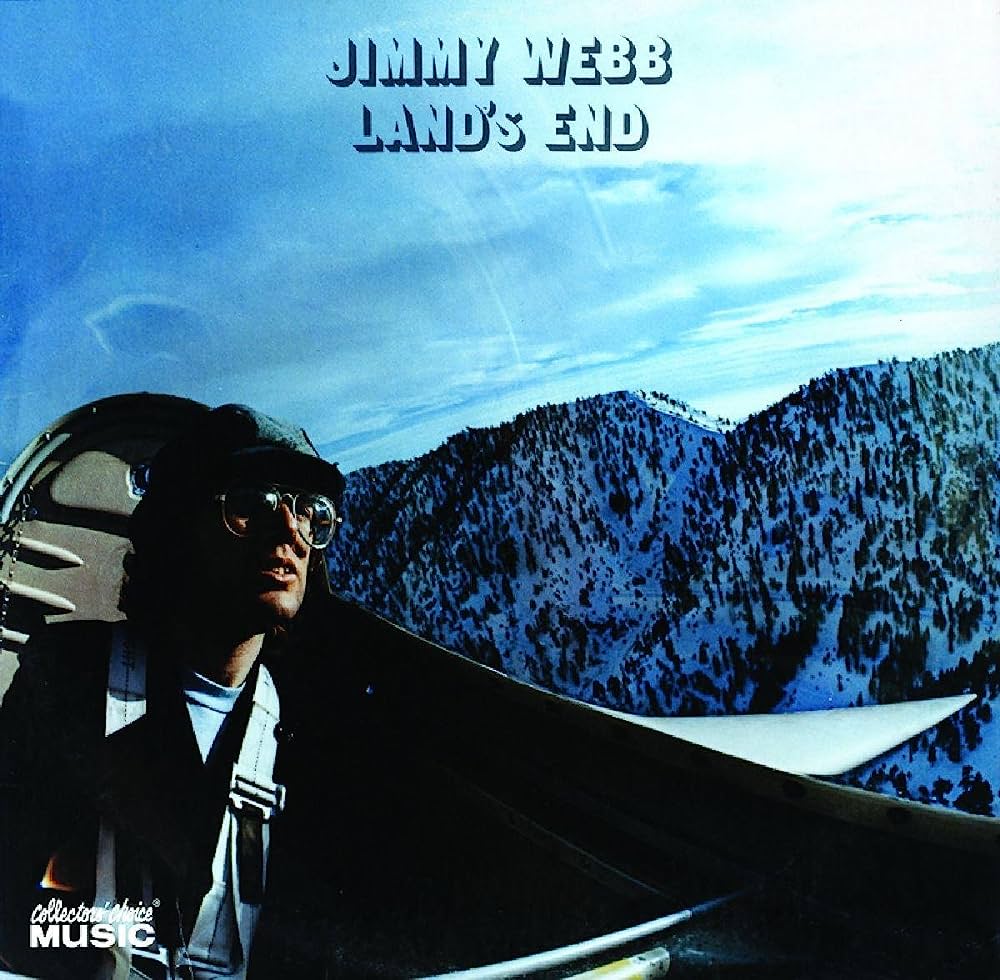
Jimmy Webb: Yeah. I met them when they were working on The White Album at Trident [Studios]. I’ve run into them occasionally for years. Off and on. Odd ones of them. I spent more time with Ringo than anybody else because of Harry [Nilsson]. Ringo played on my album, Land’s End.

I remember one time in the studio I was real excited because Ringo brought in the drumset he’d played Sgt. Pepper on. His old drumset was there.

We had an engineer — I won’t mention his name — who was having some trouble with his hearing. [Let’s] just put it that way. He had Ringo tuning his drums, I think, for two days. [Ringo] just kept hitting the drums and hitting the drums. He just seemed to get tireder and more frustrated with the fact that he couldn’t play. We weren’t playing anything! [Ringo] just kept hitting these drums.

Finally [Ringo] said, “Well, you get the assistant engineer to hit the drums, because I’m not going to hit the drums anymore.”

So then the assistant engineer went out and started hitting the drums. He hit the drums for a couple of days. This is a real strange creative process we were involved in. Then, I think, the third day or something we finally got around to playing.

Ringo was playing great. He was playing wonderful. He was playing with him and Nigel Olsson. And it sounded really great. [Yet] the engineer/producer kept complaining about the drum sound.

I think finally we got a take.

But I heard later from Harry Nilsson that Ringo was so frustrated by this that he took these great drums that he had played all these records on — and he put them in the back of a garage somewhere — and he didn’t play for, like, a year. I’ve always felt really terrible about that. That I was involved in that much frustration for the guy [Ringo] that he would actually retire a drumset. Even temporarily.

end

Posted in SKF Blog | Tagged , , , , | 1 Comment

Bobby McFerrin: A Simple Thought Came Into My Head: Why Don’t You Sing?

mcferrin_bobby

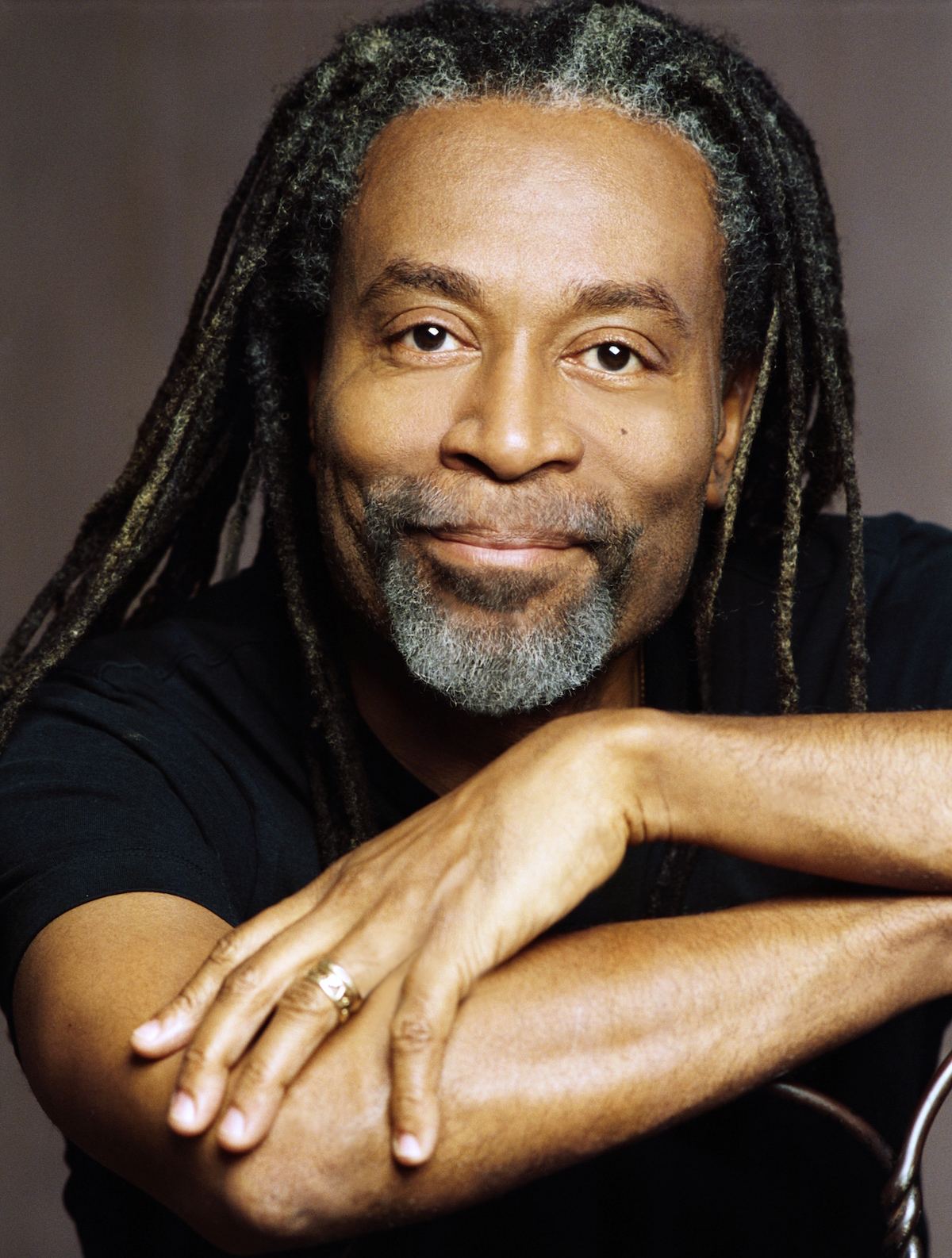
Bobby McFerrin

“I was in a quiet moment when a simple thought just came into my head: ‘Why don’t you sing? It was as simple as that, but it must have had some force behind it because I acted on it immediately. I wasted no time. That very day I called up the Salt Lake Hilton and made an appointment for an audition. I auditioned the next day and I got it.”

Source: Bobby McFerrin, The Voice, by Michael Bourne, Down Beat May 1985

Posted in SKF Blog | Tagged , , , , , | Leave a comment

One Night Watching Sonny Greer and Papa Jo Jones Trading Fours

SonnyGreerModernDrummer

SKF NOTE: Reading again my memories, written in 1982, of one night at New York City’s West End Cafe watching Sonny Greer and Papa Jo Jones trading fours with wire brushes. I’m thinking about a phone conversation with Chip Stern about the great musicians we had had interviewed and/or seen performing live. Chip said we were “blessed” to be alive at this time, and he’s absolutely right.

My feature interview with Sonny Greer was published in the November 1981 Modern Drummer. To my knowledge, Sonny is the only drummer MD paid for an interview. I will save that story for another post.

This post is three versions of the MD obituary I wrote for Sonny Greer. I took the liberty of rewriting the published version of this obituary where I thought I could do a better job of making my original points.

I am also posting here yellowed copies of my original MD manuscript. Typed using a manual typewriter! MD founder Ron Spagnardi wrote the handwritten “NICE!! R” in the upper left corner of page one. The other edits are mine.

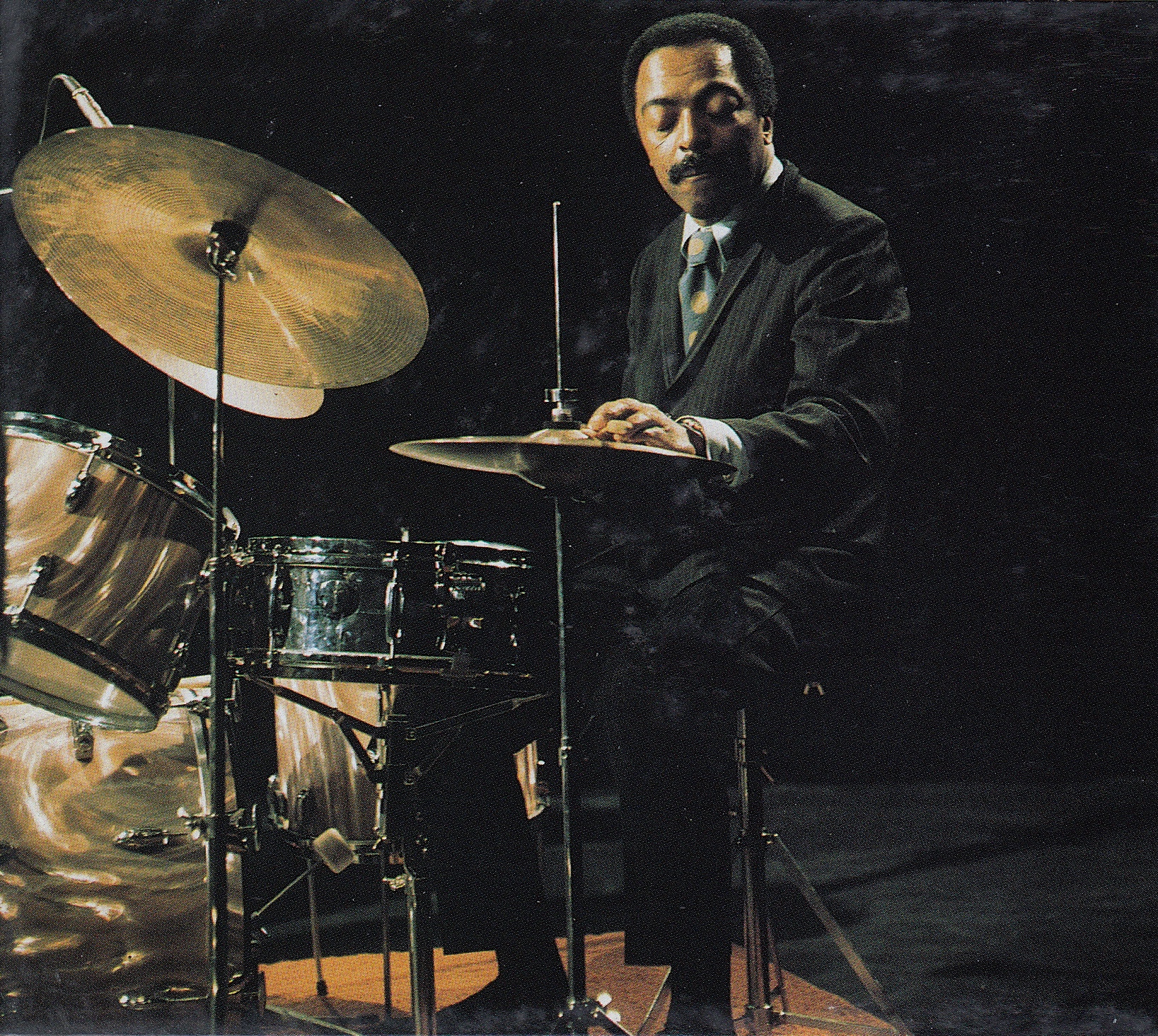
Finally, I am including a copy of Sonny Greer’s obituary as it appeared in Modern Drummer. The photo shows Sonny and the drumset he was playing at the West End Cafe.

====

In Memoriam [Rewritten by SKF June 8, 2016]
Sonny Greer

Drive uptown on Broadway in Manhattan on a Monday night. The streets are all lit up in yellow, and there are New York University students milling about. Park your car and walk cross the street to the West End Cafe. When you get inside, you feel like you’re in the wrong place. This is supposed to be a jazz club, but to your left is a cafeteria counter. To your right is a circular bar. Walk across a hardwood floor between the counter and bar, head towards two pinball machines and a cigarette machine, and make a quick left into the jazz room.

All of a sudden the cafeteria noise is filtered out while your eyes adjust to the darkness. There are rows of booths on either side of this room and tables scattered in the middle. At the far end of the room is a bandstand with a baby grand piano and the gaudiest drumset ever. It’s just a bass drum, a snare, and a floor tom, covered in small square mirrors — like a globe hanging from the center of a dance hall ceiling, bouncing light around the room.

A small, fragile looking old man climbs onstage with the piano player, sits down behind the set, picks up a pair of brushes and begins to play. You’re watching history. This man has been playing jazz from the beginning. His wire brushes wisp across a well-worn snare head, moving to the large floor tom, or dusting one of two large cymbals.

This is Sonny Greer. I judge a musicial performance good if it moves me emotionally. Sonny makes me smile. I lean forward, elbow on my knees, chin cupped in my hands, concentrating on Sonny’s hands and brushwork. “This guy is a master,” I’m thinking. And there’s Sonny’s vaudevillian-like showmanship. For example, grabbing the right lapel of his sport coat to flip open his coat — as if flashing the audience — in unison with bass drum accents.

But the key to it all are Sonny’s eyes. The body of an old man with the eyes of a child, eyes that dance and laugh, and study the people who have come to see this famous drummer who’s been all around the world performing before kings, queens, presidents, and millions of common folk.

Papa Jo Jones walks in with a newspaper folded under is arm, and struts up to just stage left of Sonny, and sits in a booth. Jo puts the paper out flat before him and takes a pair of wire brushes out of his coat pocket. The next thing you knowo, Jo and Sonny are trading fours. Sonny on his drumset, and Jo Jones on his newspaper, the table, even the wooden slats of the blinds that half cover the window behind the bandstand.

When that song is over, Sonny (over ten years Jo’s senior) sits staring at Jo. “Sonny,” says Jo. “I hope you never get as old as I am.” Sonny — expressionless — continues to stare at Jo. Finally he opens his mouth and in complete deadpan says, “Aw, you ain’t that much older than I am.”

Sonny Greer died on March 23, 1982 in New York City. He was 86. He had been with the Duke Ellington Orchestra from 1923 to 1951. And more than that, he was a pioneer, an original drummer. He will be missed, but more than he should be missed, he should be an inspiration for carrying on until he was 86, for his energy, for his contribution to music and drumming, and because he spent his life making a lot of people smile.

modern_drummer_soph_greer_0001
modern_drummer_soph_greer_0002

–end–

Posted in SKF Blog | Tagged , , , , , , , , | 4 Comments

Haynes with Coltrane: No One Was Dependent on One Person

roy haynes outoftheafternoon cd

SKF NOTE: Between 1961 and 1965 Roy Haynes, subbing for Elvin Jones, made some classic recordings as part of the John Coltrane Quartet, including a live 1963 recording at the Newport Jazz Festival. The Haynes/Coltrane recordings were released in 1978 on a double LP called To The Beat of a Different Drummer. I listened to that album many times, especially the song, Impressions, which lasts 23-minutes. For about half the song, McCoy Tyner (piano) and Jimmy Garrison (bass) drop out. The remaining Roy Haynes/John Coltrane duet is, dare I say, impressive.

Roy’s 1963 appearance with the Coltrane Quartet is now available on My Favorite Things: Coltrane At Newport.

On November 15, 1978 I asked Roy Haynes to tell me what it was like working with the Coltrane Quartet.

Roy Haynes: Even on a ballad. When they played a ballad the intensity was up there. I liked that feeling. Everyone was doing their thing. No one was dependent on one person, man, the way it could happen with some groups [where] a lot of people are depending on the drummer. There, man, it was equally distributed.

Even though you couldn’t always hear [Jimmy] Garrison the way you should — don’t let him stop playing. Because you would definitely miss him! The feeling was there.

The intensity of McCoy and ‘Trane. Oh, man! That was really a love supreme.

Scott K Fish: Elvin said that what made the Coltrane Quartet so special was that all the members were friends.

RH: It was there on that bandstand. I felt it. And it was no easy thing at that point to replace Elvin. At that point it was not easy.

It was easy, in a sense, to play with ‘Trane. But that whole group as one thing — each one of them was so important. And to step in there — it was a serious thing. It was probably one of the most serious projects to be involved with, that I was involved with, at that point.

Another thing about ‘Trane: He set it up where a lot of drummers could sound good. But they might not make him feel comfortable.

I get that feeling with certain bands Basie had. When Thad Jones and all those guys were with the band — that band could play without a drummer. ‘Trane could play without a drummer. Miles could. Gene Ammons could play without a drummer. And make it happen!

I could name a lot of people that can’t, and they’re suppose to be great.

That’s what jazz is to me. If you want to use the word jazz. There’s not too many jazz players around today. Very few.

coltrane_newport
Posted in SKF Blog | Tagged , , , , , , , | 1 Comment

Jazz Toilets and Hallowed Ground

elvin one down one up half note cd.jpg

SKF NOTEJazz toilet. Who coined that phrase, I don’t know. It refers to small, noisy, crowded, smoke-filled bars and clubs where most of our great jazz musicians worked at one time or another.

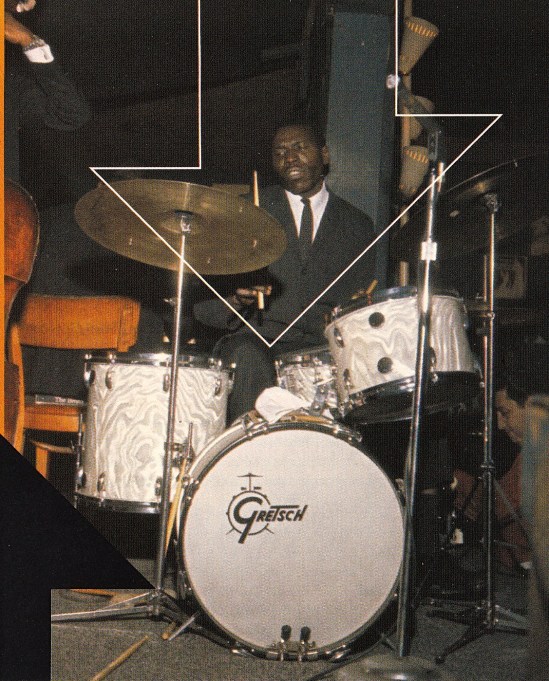
This photo of Elvin Jones, included in the John Coltrane Quartet’s One Down, One Up: Live At The Half Note CD, makes the point. Elvin is shown on the bandstand at The Half Note club in New York City.

Pianist McCoy Tyner‘s is at the piano, behind and to Elvin’s right. Jimmy Garrison‘s left arm and the side of his bass are also visible to Elvin’s right. To Elvin’s left, head about level with Elvin’s snare drum, is a Half Note bartender at work.

Based on other photos in the Half Note CD booklet, this photo is taken from where John Coltrane stood on the bandstand while playing.

I am grateful to club owners for providing venues for jazz musicians to perform and record. Even seeing musicians perform in NYC at The Five Spot or The Village Vanguard, for example, I was struck simultaneously by the jazz toilet aspect and the sense of being on hallowed ground.

And yet, when first seeing the photos accompanying the Coltrane Quartet’s One Down, One Up: Live At The Half Note CD, I had trouble believing what I was seeing. While I am glad the Coltrane Quartet didn’t look at the Half Note stage and say, “Forget it,” I would not have blamed them for doing so.

end

Posted in SKF Blog | Tagged , , , , , | Leave a comment