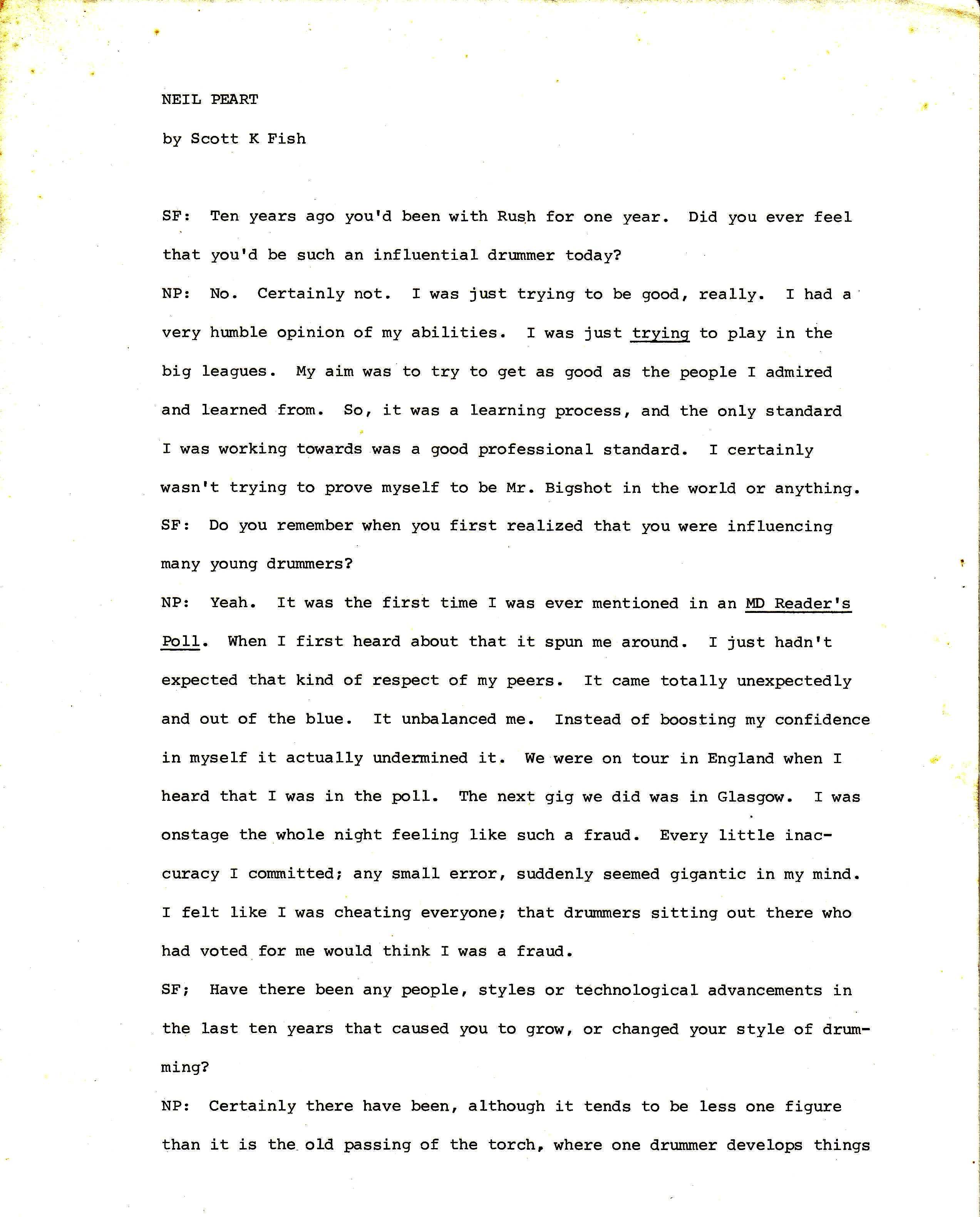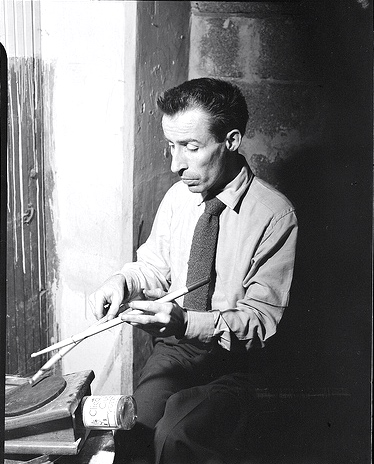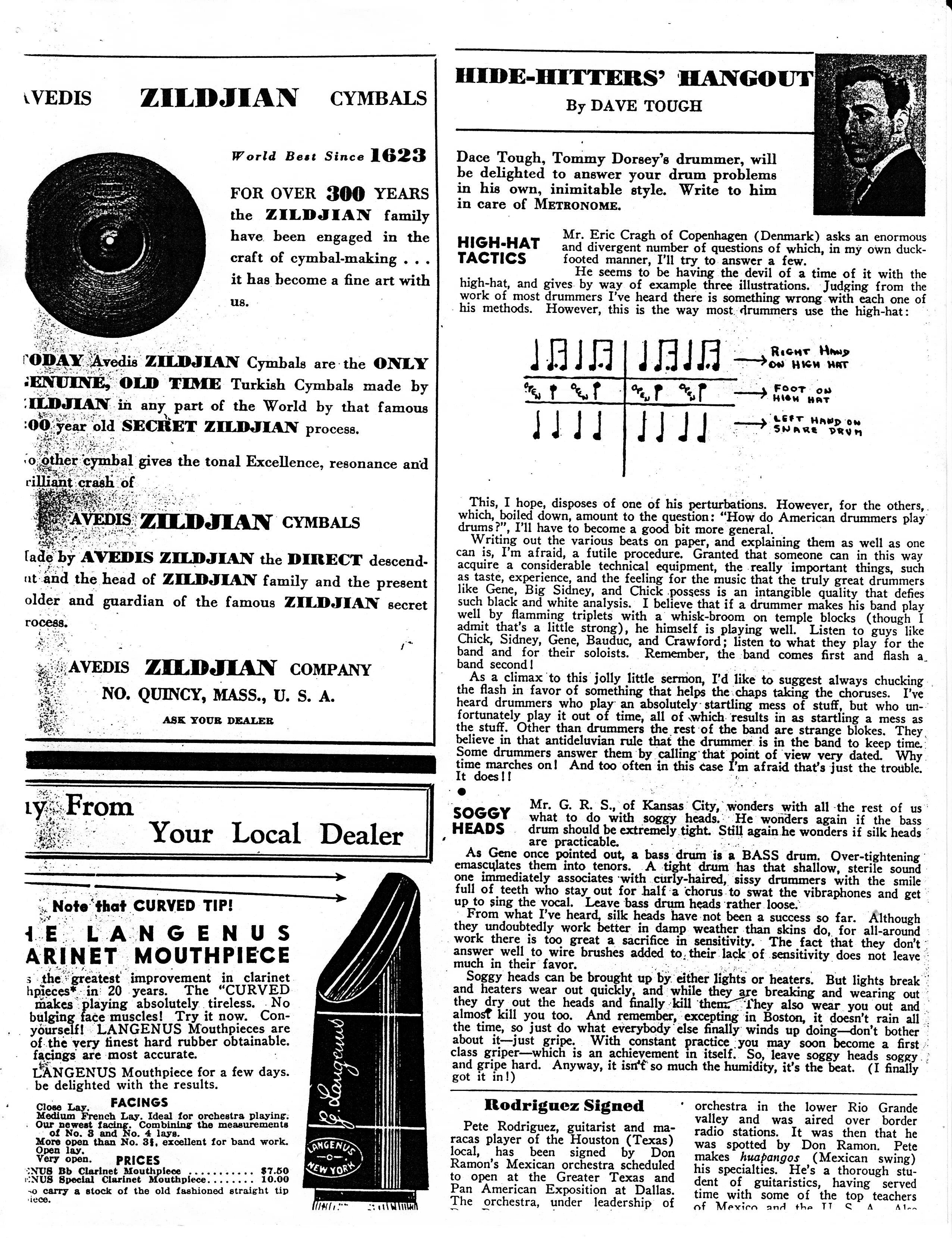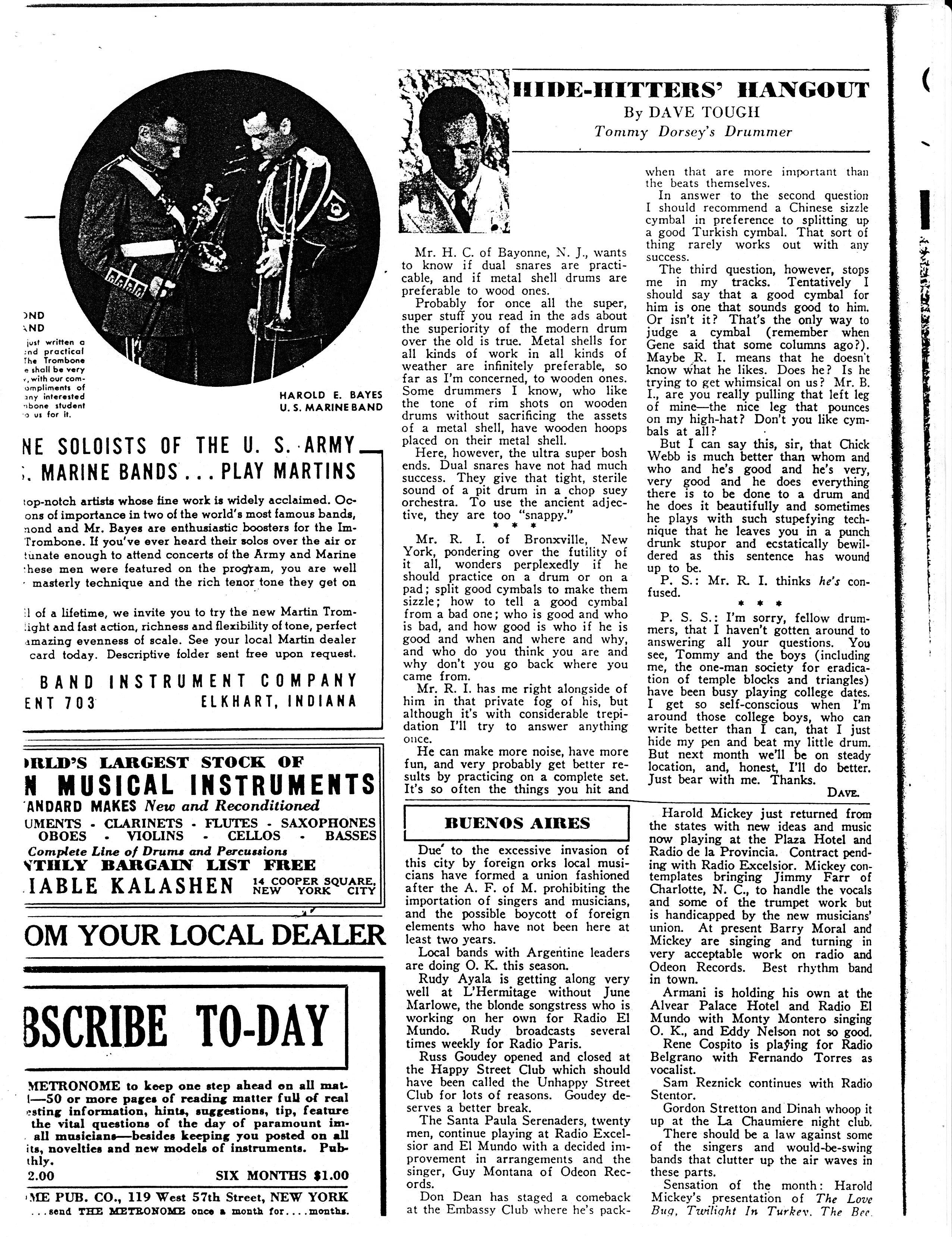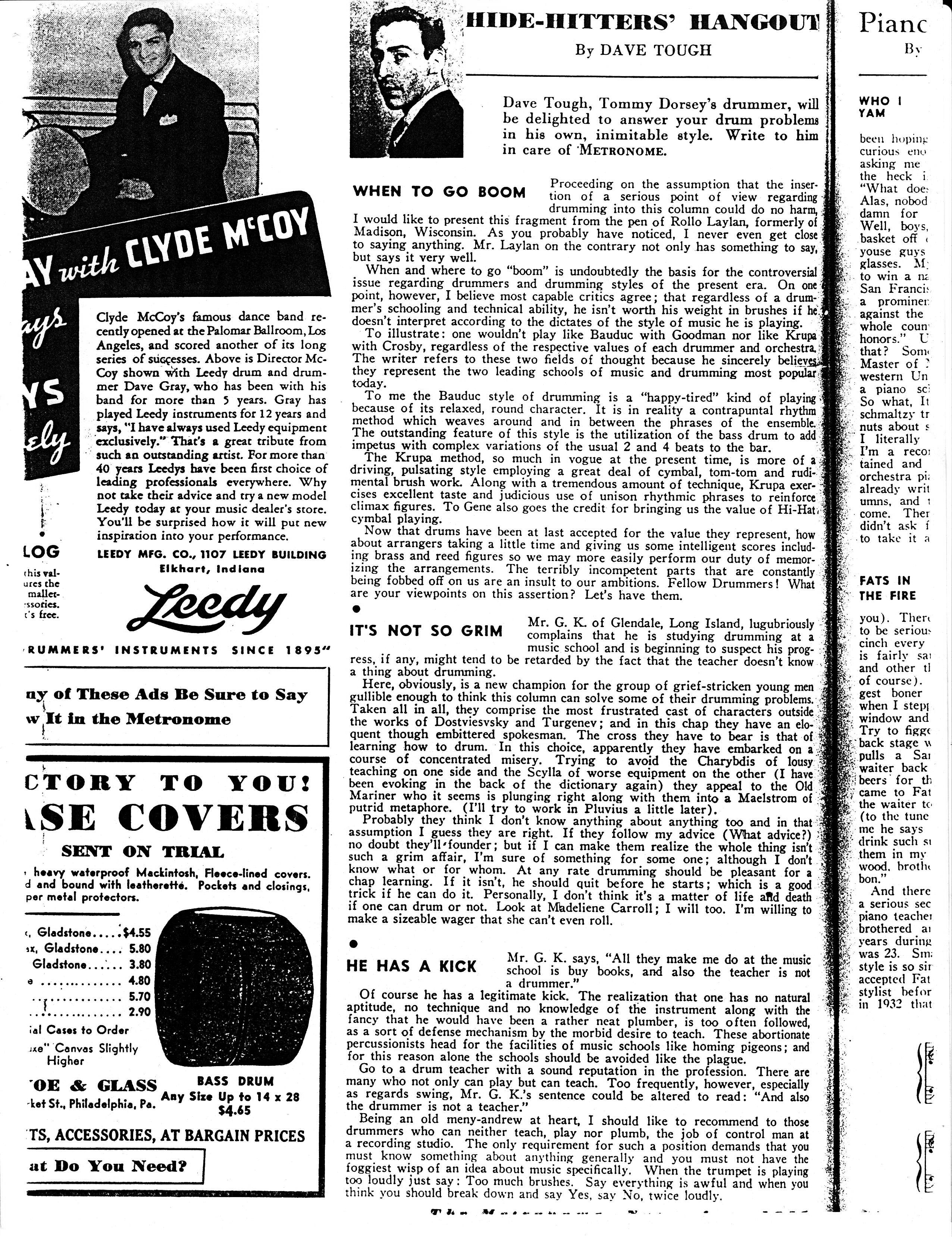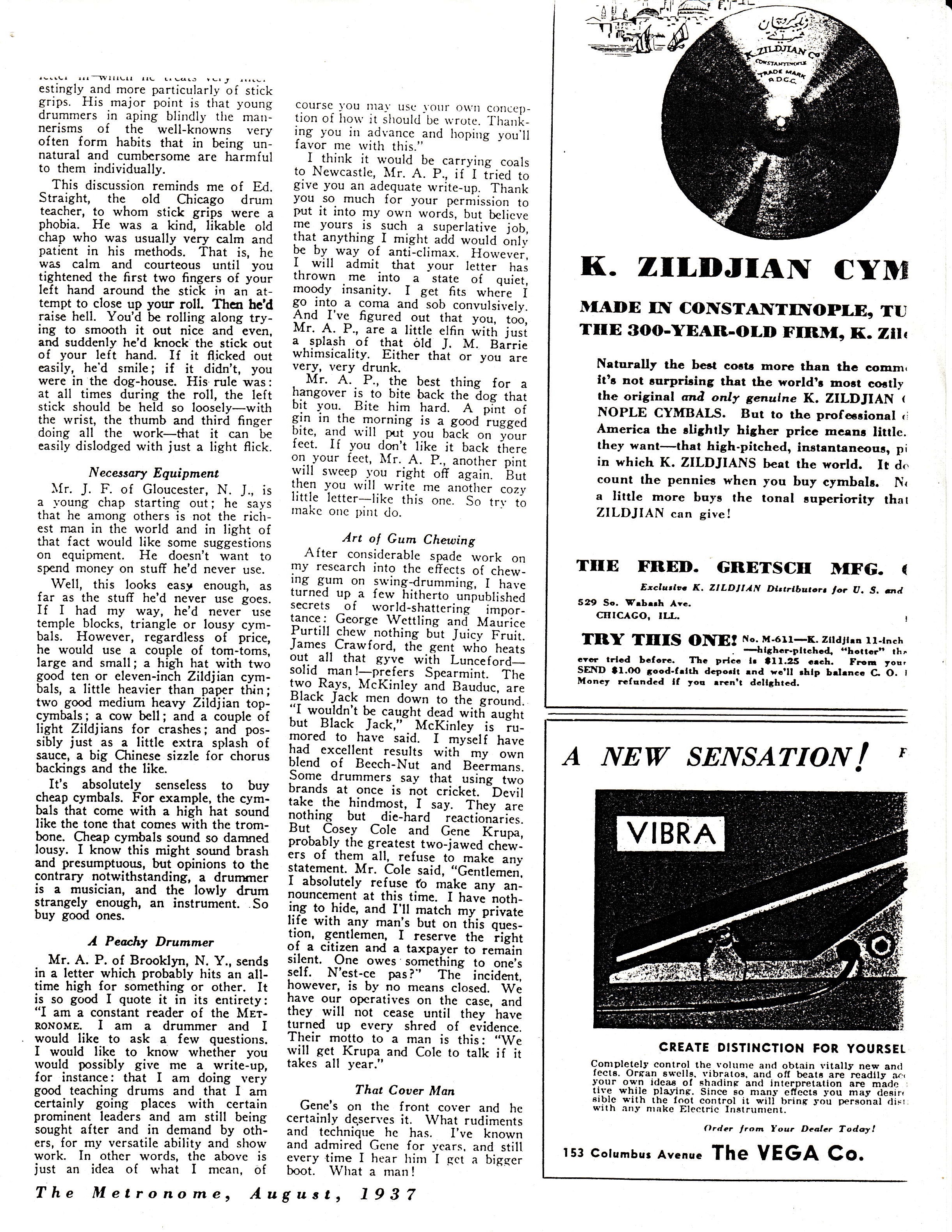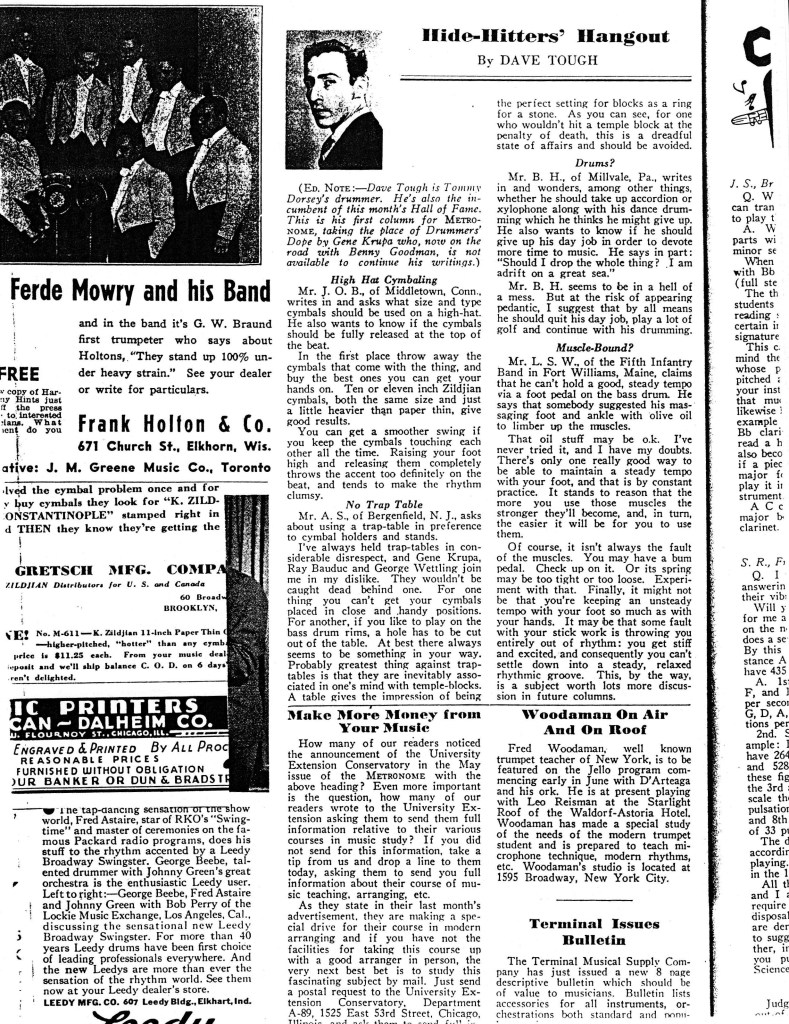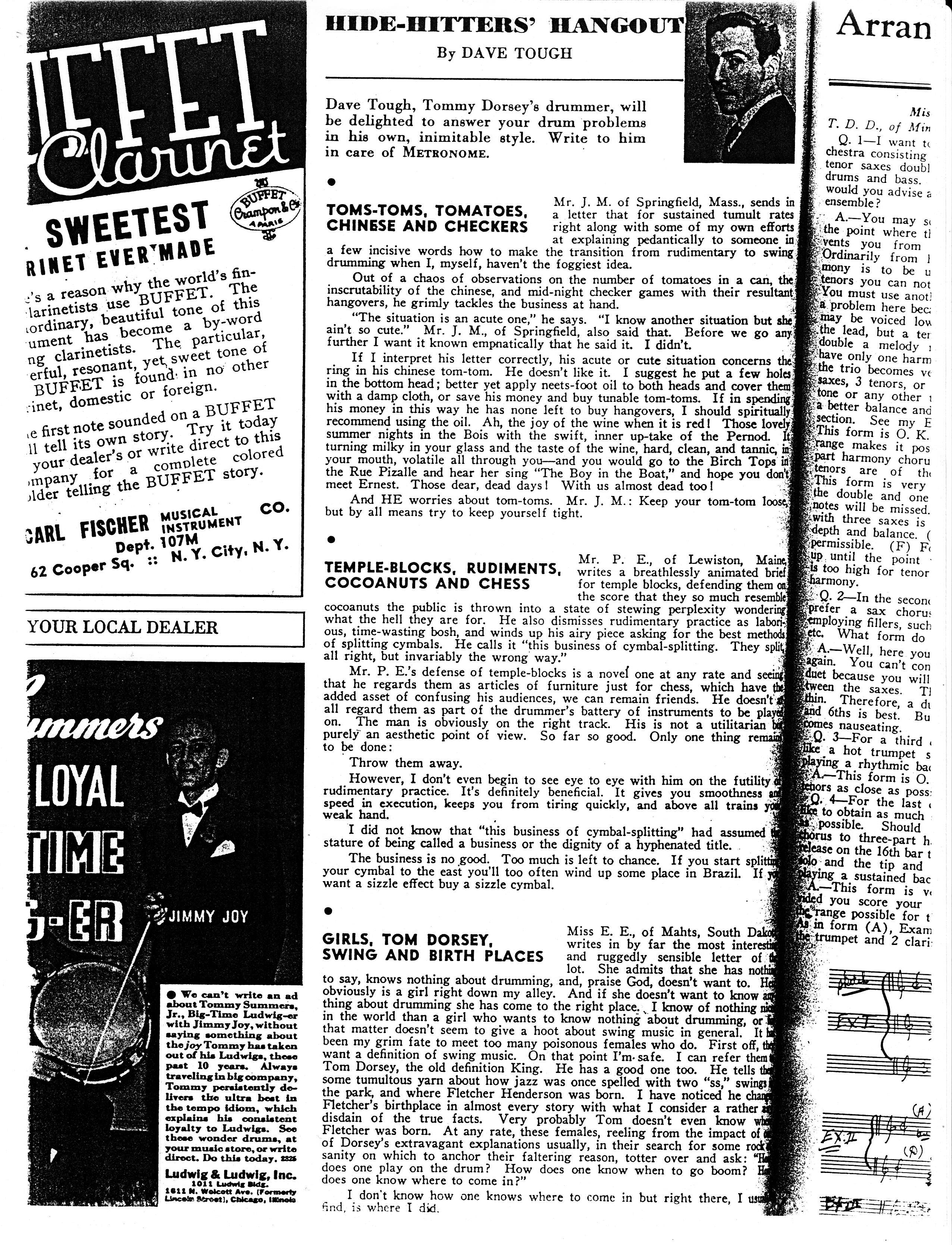
Drum Ads That Never Grow Old

SKF NOTE: This is a random collection of drum ads I scanned from old Down Beat magazines.

Am I the only one who never lost his enthusiasm for studying these old photos?

Posted in Drum/Music News, SKF Blog | Tagged , , , , , , , , | Leave a comment

Michael Shrieve Pt 1 of 2

SKF NOTE: This interview starts with Michael Shrieve’s quick “no” response to my question, “Do you ever think about playing drums (or drum solos) with the fluidity of a saxophone player?”

But then Shrieve tells us how he does approach playing drums. “I see it as a flow of energy. Let’s say the rhythm I play contains a flow of energy that isn’t locked to the rhythm,” he begins.

In this first of a two-part interview, Shrieve talks about lessons learned from drummer Pete Magadini, such as, “One of the things about white drummers is they always try to play too much. They don’t feel confident enough to just let it sit. Let the magic of the groove happen.”

Shrieve talks about, “Sustaining a rhythm. Like jazz drummers do, but in a pop context.”

We cover Shrieve meeting all “his heroes” at a young age. “It’s good to meet your heroes because then there’s nowhere else to go but with yourself. After awhile you find that music is so transparent and so naked (in) how much it reveals the person. What you play is what you are,” he said.

At about 10:07 we paused recording to collect our thoughts.

The remainder of this part of the interview focuses on “drum questions.” Shrieve’s studio drums vs live drums: drum heads, tuning, bass drum pedals, cymbals (a 24″ crash cymbal????).

We talk a bit about Shrieve working Santana percussionist Chepito, and about how Shrieve might approach staging drum clinics.

This recording has a few spots or glitches where moments of our conversation were cut. Maybe the sound at those spots disappeared during background noise removal. Or, perhaps they are casualties of age. This interview was digitized from a cheap 45-year old cassette tape.

At any rate, none of the glitches break the flow of the conversation here. And I want to thank my friend, Jason J. Carey, for his great work in cleaning up this sound file.

Michael Shrieve was easy to interview. He was a very likeable human being.

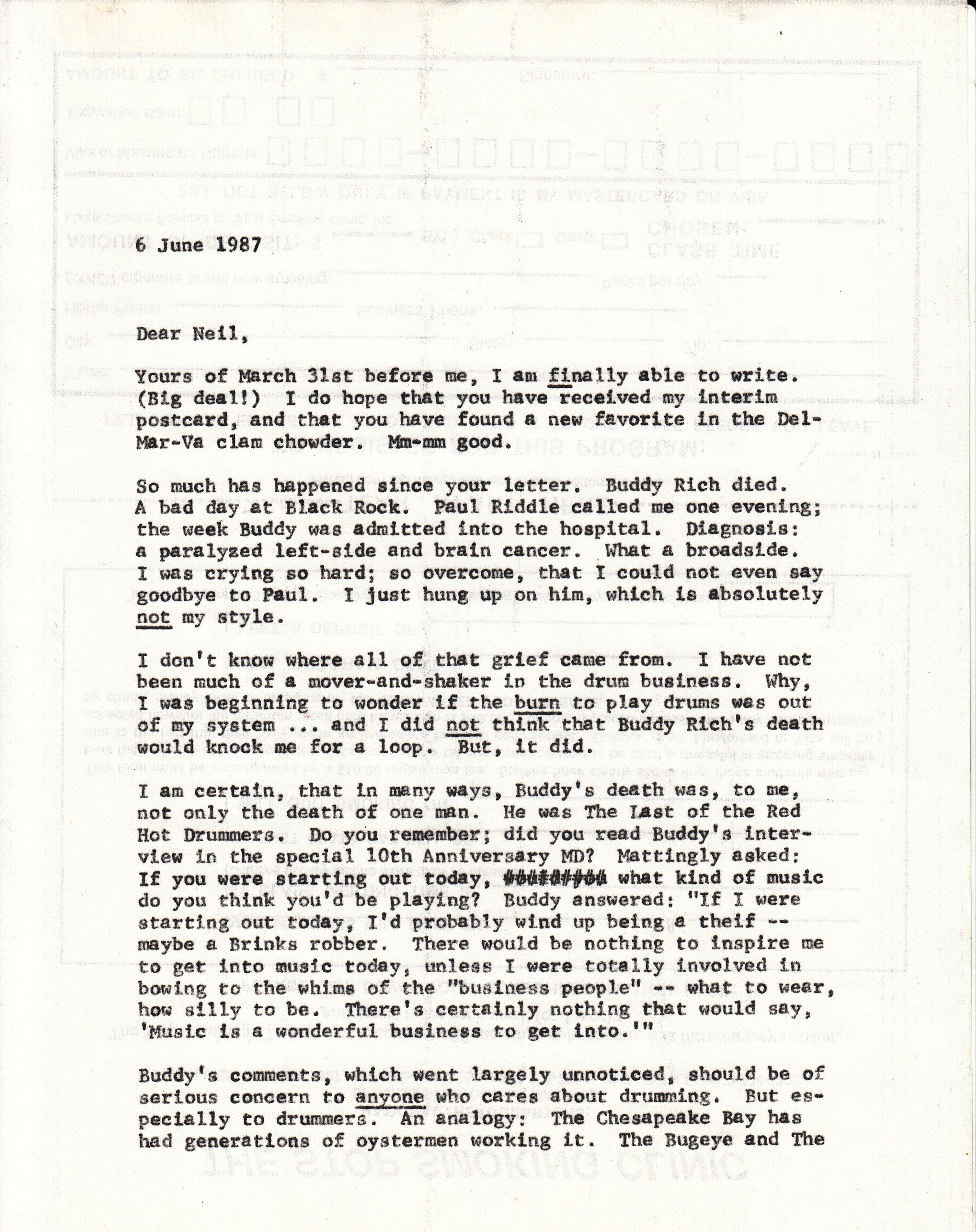
However, the Modern Drummer feature interview we were creating was not easy to finish. Remember, this was pre-internet. So the lag time between when MD interviews happened and when they were published was often many months.

We met after Shrieve launched his pop group Novo Combo. I think we met three times to button up Shrieve’s MD interview. This interview took place in a NYC restaurant. Shrieve had been in-and-out of his group Automatic Man. Also, he was no longer with his amazing band, Go, with Stomu Yamashta, Al DiMeola, and others.

Michael Shrieve’s heart, it seemed to me during our interviews and private conversations circa 1981, was more comfortable with more experimental musics. His music with percussionist/keyboard player Stomu Yamashta is a case in point.

Shrieve introduced me to music healing, of the relationship of sound and color. He introduced me to New Age musician/author Steven Halpbern.

And so, Michael and I would finish an interview, and then the music project Shrieve was working on at the time of our interview would be replaced by a new project, prompting an amendment to our initial interview.

My Shrieve interview came out – finally – in the July 1983 Modern Drummer.

Posted in Audio, Backgrounder Interviews, SKF Blog | Tagged , , , , , , , , , , , , , , , | Leave a comment

Mel Lewis and Friends (Audio)

Mel Lewis and Friends Side 1
Mel Lewis and Friends Side 2

SKF NOTE: This is a wonderful small group album led by Mel Lewis on the too long defunct Horizon label. Recorded in 1976. Released in 1977.

My cherished copy, which I had with me in 1977 when I interviewed Mel Lewis for Modern Drummer is autographed by Mel.

Ron Carter (bass), Gregory Herbert (alto sax), Freddie Hubbard (trumpet), Michael Brecker (tenor sax), Hank Jones (piano), and Cecil Bridgewater (trumpet) round out the album players.

The entire Horizon catalog, which includes Thad Jones/Mel Lewis Big Band albums, is well worth hearing. Hopefully the Horizon catalog will once again be made available at least digitally.

Posted in SKF Blog | Leave a comment

My Biggest Interviewing Lesson: Shut Up

SKF NOTE: Listening back this morning to one of my recorded 1980s Michael Shrieve interviews, I remember lessons learned about interviewing.

My biggest lesson, I think, was learning to shut up. Ask a question. Then while the person being interviewed is answering – shut up. Llet them answer. Don’t finish their sentences. Don’t step on their answer to ask a follow-up question.

Have a follow-up question? Make a note of it. Ask the question when the interviewee stops answering the current question.

Shut up means also eliminating all unnecessary “y’know’s,” “um’s,” and other utterances interjected while the interviewee is talking.

Shutting up is especially important when recording interviews to be broadcast as audio/video interviews.

It’s easy enough, although time consuming, to leave out utterances from print interviews.

Not as easy cutting utterances from audio/video interviews. Sometimes it’s impossible. I learned that working on video projects with videographers Dean Gyorgy and Scotty Heidrich.

My worst offense, I learned, was making sounds while the interviewee is talking. In those cases it is impossible to separate the two sounds – my utterance from the interviewee’s voice – for the audio or video interview.

“God gave us two ears and one mouth. We should use them in that proportion,” is a good rule for interviewers.

I would actually modify that rule for interviewers. “God gave us two ears, two eyes, and one mouth,” and we should use them in that proportion.

Posted in SKF Blog | Tagged , , , , , , , , | Leave a comment

My First Stop-Me-In-My-Tracks Moment with Alan Dawson

by Scott K Fish
September 14, 2014

I first heard Alan Dawson on at least one of his many sideman dates for Prestige records. I heard it said Mr. Dawson was an in-house drummer for Prestige – which, according to Dawson during my interview with him, isn’t true. He was just the first choice drummer on many recording sessions. He drummed on so many dates it seemed as if he was Prestige’s house drummer.

But my first stop-me-in-my-tracks memory of Mr. Dawson is the 9/8 Indian Song on the Dave Brubeck/Gerry Mulligan Mexican concert Columbia album, Compadres. As of this writing, that album is not readily available in any format. Someone was kind enough to post the track on YouTube. See above.

Dawson plays a great drum solo on Indian Song. But listening to the album only, no visuals, what really grabbed my attention was the maraca playing during the solo. It was smack dab in sync with Dawson’s drum solo. I could not figure out if one of the other band members and Dawson had worked out this routine. That didn’t make sense. It didn’t sound as if Dawson was shaking the maraca and, with one hand, playing the intricate drum solo. Had some blistering Mexican percussionist been invited onstage noncredited on either the LP or the liner notes? It all remained a mystery.

Fast forward to the early 1970s. Living in Iowa, I attended an Alan Dawson drum clinic at a forgotten Iowan college or university. Dawson focused on the importance of learning drum rudiments and of using them musically, demonstrating each spoken example on his four-piece drumset. One example I’ve used since was a double-paradiddle used as a Latin beat. For right-handed drummers, the double paradiddle was played with a triplet-feeling, right hand on the bell of the ride cymbal, left hand starting on the snare, but also moving between snare and tom-toms. Dawson learned it from a young drum student who discovered it following Dawson’s advice to use the drum rudiments musically.

And at one point in the clinic, Dawson solved the Indian Song mystery. He played the song using a maraca in his right hand, a drumstick in his left! As soon as I saw him do that I thought, “Of course!” But, I was not able to solve the riddle relying on my ears alone. I had never seen another drummer use a maraca as a drumstick substitute. It just didn’t cross my mind as an answer to what I was hearing on Indian Song. Drummers who grew up with internet access may be unable to appreciate my dilemma.

In the last couple of years I was once again awed by Alan Dawson’s playing in two places. First, on Booker Ervin’s album, The Freedom Book.

Second, on a series of YouTube videos of Dawson playing in Sonny Rollins’s trio. Holy smoke! Totally relaxed, in command, always musical, sounding great.

-end-

Posted in SKF Blog | Tagged , , , , , , , , | 2 Comments