SKF NOTE: Already familiar with the original release of guitarist Kenny Burrell’s On View At The Five Spot Cafe, news of Blue Note releasing On View At The Five Spot Café: The Complete Masters is exciting news. Any chance I get to listen to newly released Art Blakey, I’m there. After listening to a few of this album’s remastered tracks, Blakey’s drums sound very alive.
Blakey remains essential listening, especially for drummers who’ve never before heard Blakey. His talent for driving bands of all sizes, loudly and softly; Blakey’s unique way of treating drumset rhythms melodically, his signature press roll and hi-hat playing; Blakey’s use of sticks, brushes, and mallets – modern drummers have much to learn from Art Blakey.
This album is an excellent place to start. I look forward to listening to the entire album.
Here’s some of Blue Note’s album announcement.
=====
On View At The Five Spot Café: The Complete Masters, a special Tone Poet Vinyl Edition of guitarist Kenny Burrell’s 1959 hard bop summit with drummer Art Blakey, is out now! The expanded 3-LP, 2-CD & digital sets present the complete recorded performances for the first time including 6 previously unissued tracks.
Produced for release from Rudy Van Gelder’s original master tapes.
Burrell had already achieved rising star status with several stellar Blue Note albums to his name when he entered the storied NYC jazz club The Five Spot Café on August 25, 1959, for his first live recording date as a leader. The band Burrell assembled for the gig was stacked with top talent: Blakey on drums, Tina Brooks on tenor saxophone, Roland Hanna & Bobby Timmons on piano & Ben Tucker on bass. The mood was relaxed & soulful, but the music was red hot & the grooves were deep on that steamy summer evening of hard bop bliss.
SKF NOTE: I remember hours of learning how to play big band figures. But a week ago, drummer/bandleader/teacher Sherrie Maricle posted this valuable video short for drummers on how to think about setting up big band figures.
I don’t ever remember anyone talking about setting up big band figures/hits. Sherrie here is giving us a missing piece of the puzzle. A very important piece of the puzzle: How do you kick a big band?
Maricle says, “This is an introduction to some basic kicking concepts. In addition to creating a great groove/feel, it’s one of the most creative, exciting, musical, and fun aspects of drumming.”
SKF NOTE: Paul T. Riddle, co-founder/drummer and Grammy Award winner of the original Marshall Tucker Band (MTB), formed The Toy Factory Project in memory and celebration of MTB co-founder Toy Caldwell and his songs.
Paul is a longtime friend. Forty-five years ago he was my first feature interview as Modern Drummer magazine’s Managing Editor. We maintained our friendship from then on.
During our phone calls over the years I listened to Riddle talk about his dream of recording an album of Toy Caldwell’s songs. I knew when Paul was choosing musicians for his project, including Derek Trucks and Vince Gill.
Then, awhile ago, Paul told me his dream album was complete.
Time passed and passed again. No album release.
Finally, a couple of weeks ago, Paul sent me an advance copy of The Toy Caldwell Project album.
He explained the music he was sending me “hasn’t been mastered. Basically live in studio. Many first takes. Never played anything more than 2 or 3 times.”
Paul added to his text, “I always get so nervous sending you stuff!!! Love you Fish. Hope you approve.”
If Paul gets nervous sending me stuff (music), you can imagine how nervous I get agreeing to listen to Paul’s’ stuff and agreeing to provide my honest feedback.
Honesty is a hallmark of the Riddle/Fish relationship. It started when we first met. I saw the MTB in concert somewhere (maybe Hartford, CT) and the band played great. They were firing on all cylinders. And that’s what I told Paul.
Later I saw the MTB at an outdoor concert in Holmdel, NJ. The stage was crawling with cameramen recording the show for television.
After the concert, Paul asked me what I thought. I told him the band was good, but not as good as the last time I saw them in concert. It seemed to me, I said, the constant presence of the camera crews short-circuited the band members’ interactions.
Paul was surprised, I think, by my candor. But he agreed with what I said about the camera crew.
I never glad-handed musicians, no matter how famous they were. Did I offer my unsolicited opinions of their music? No. But if a famous musician asked for my opinion, I always gave them my honest opinion.
But back to Paul T. Riddle’s new album. After listening to just seven of the album’s ten tracks on my MacBook Pro laptop speakers, I texted Riddle this message:
“What a great album. The word that keeps coming to mind is HONEST. Every song has great players playing from the heart honestly. Love it. Guitarists will go crazy. I only met Toy a couple of times, but if your tribute isn’t making Toy smile – I’ll eat my hat! Get this album out, please.”
It is important to note, The Toy Factory Project is NOT a MTB tribute band in the normal sense of tribute bands. Not by a long shot.
Most of The Toy Factory Project players are new to me. But, holy smoke! They are a new generation of Southern musicians, great players and singers, who grew up on Caldwell’s songs who, with Riddle’s blessing, interpret these songs in their own unique way.
This is a band of giants honoring Caldwell’s music.
In addition to Riddle, The Toy Factory Project is:
Grammy nominated lead vocalist/guitarist Marcus King (The Marcus King Band)
Grammy winning bassist Oteil Burbridge (Dead & Company, The Allman Brothers Band, Oteil & Friends)
Lead vocals/guitarist Charlie Starr (Blackberry Smoke)
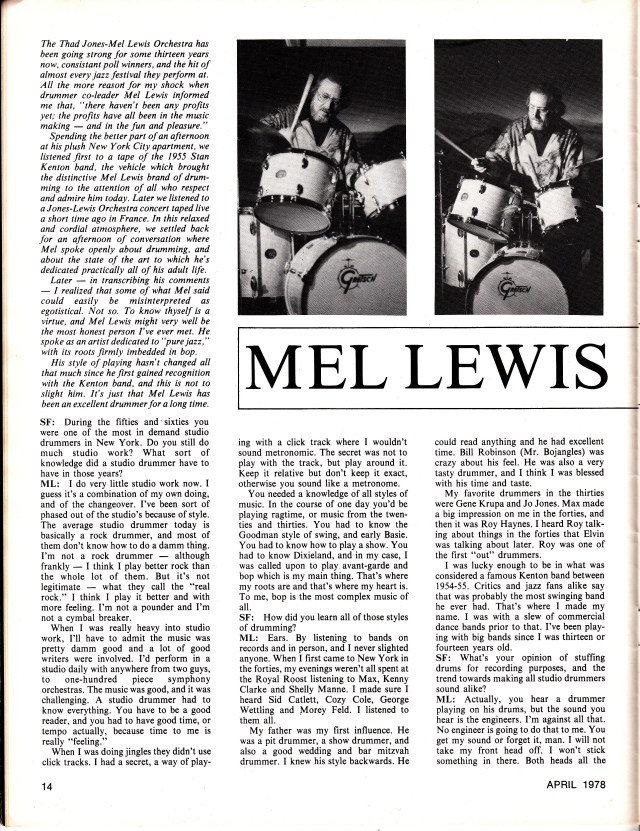
Page 1 of my 1978 Modern Drummer interview with Mel Lewis.
SKF NOTE: Remembering my phone conversation with Mel Lewis when he was explaining to me his cancer diagnosis.
Mel said the cancer was a result of his playing while holding his right stick wrong all those years. The butt of his drumstick, Mel told me, consistently press against the palm of his right hand. Over time that movement prompted a cancer in his hand lymph nodes or vessels.
Holding his right stick that way, said Mel, was “wrong.” But, continued Mel, it was the way he played.
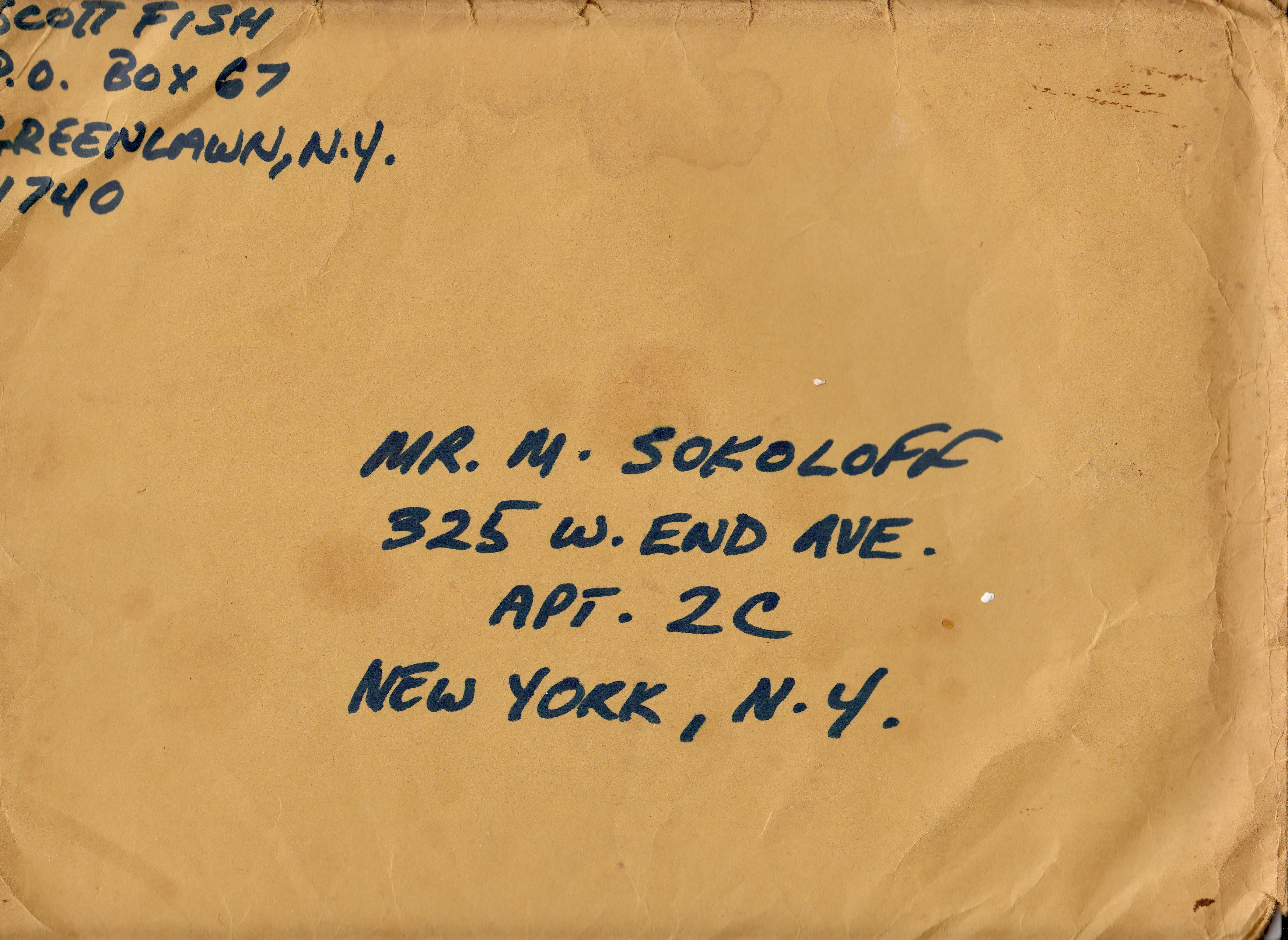
SKF NOTE: This is a photo of the envelope I used to send Mel Lewis his first Modern Drummer interview transcript. The glued postage stamp is long gone.
It reminds me of when I started freelancing writing about drummers, before submitting my interviews for publication, I would send my finished manuscripts to interviewees for approval.
Early on, Levon Helm, Jaimoe Johnson, and Butch Trucks told me about interviewers inventing quotes and stories in their published pieces. As a freshman freelancer, hearing about such unethical practices was appalling. I couldn’t imagine making up quotes.
Sometimes drummers would make small changes to the manuscripts I sent them. But they really appreciated the gesture. And my policy ensured no surprises when the interview was published.




You must be logged in to post a comment.