Bob Berryhill: The Story of ‘Wipe Out’

The Surfaris
The Surfaris

SKF NOTE: In the early 1980’s, when I set out to write a feature series, The History of Rock Drumming, I thought it would be mostly a cut-and-paste project. That is, I thought most of the drummer research must already be in books, i.e. The Rolling Stone Encyclopedia of Rock & Roll. But that was not so. And the reality of what I was setting out to write really hit home when I kept coming up empty trying to find a source or a person who could answer the question, “Who’s the drummer on Wipe Out?”

If there is one Rock drum song everybody knows it’s Wipe Out.

Somehow I found Bob Berryhill, original rhythm guitarist with The Surfaris. Nice guy. The Surfaris, with some original members, had been back together for about a year. Here is my transcription from my recorded conversation with Berryhill. I was in my Modern Drummer office. Berryhill was at his California home. The transcript is not in Question-and-Answer format. That is, I didn’t transcribe my part of our conversation. Since I was transcribing on a manual typewriter, knowing ours was purely a backgrounder interview on Wipe Out and the drummer who played Wipe Out, my best guess is I left me out to save transcribing time.

It was disappointing not to be able to find drummer Ron “Ronnie” Wilson. But neither Mr. Berryhill nor anyone else I spoke to knew how to reach Mr. Wilson.

On the plus side, Mr. Berryhill was kind enough to tell me how Wipe Out came to be. 

Bob Berryhill: Ronnie [Wilson] went to Charter Oak High School and was a drummer in the marching band. Ronnie got his start, I guess, making drum cadences for the marching band. So, Wipe Out is essentially a drum cadence for a marching band that he never gave to a band to use. But he made it up there on the spot as a cadence. That’s what he was good at doing. Wipe Out just happened to be a pattern that he came across. I don’t know if he’d worked on it before or not. But, I know that he just came up with the cadence right there in the studio. So, it was written right in the studio.

He was a senior in high school. I don’t know if he was the leader of the drum section or not. But, I know that the drumming director would ask him to come up with new cadences for the band to march to. That was his flair and he loved to do that. It just naturally slipped into what Wipe Out came to be.

We went in to record Surfer Joe — the song that Ronnie had a dream about a few weeks before. After we recorded Surfer Joe, and we needed a B side for the record, we said, “Let’s come up with an instrumental.” We just started kicking it around and came up with Wipe Out in about 10- or 15-minutes.

Ronnie liked to surf. And one evening he just had a dream. It was a dream that came to him at night, and he wrote everything down. And the next day he bought it in to us at one of our practice sessions. We sat down with him and worked out the words a little better, got a few organizations down, and he already had, bascially, a melody. We just put it into some kind of an ABA thing and came up with it.

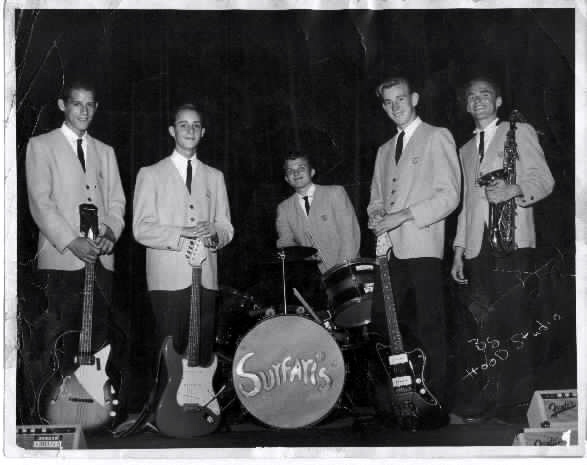
Wipe Out was a group effort. It was Ron Wilson [drums, vocals], Jim Fuller [lead guitar], Pat Connolly [bass], and myself [rhythm guitar]. Us four were at the studio at that time and we said, “Hey, we’ve got to have a B side.”

We just started playing around and came up with this song. And I said, “Why don’t we kind of make it like Bongo Rock with a little bit of the breaking there.” So Ronnie could do a solo.

Because that was the key to surf bands in those days. [It] was to have lots of drum solos. And Ronnie was a perfect showman. Or, a ham, let’s say.

We said, “Well, let’s just make a drum solo out of it and we’ll just throw a few break chords in there.” And Jim Fuller played the melody.

Dale Smallen, who was our original manager, was producing the record. [He] used to do witches’ laughs and things like that for his own documentary films. He came up with the laugh after we decided on having Wipe Out as the title. We broke some old cement plasterboard over a microphone and [Dale] let out with his witch’s laugh. And it became Wipe Out.
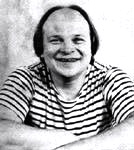
Ron Wilson
Ron Wilson

We were only 15-years old. Ronnie was the oldest and he hadn’t even graduated from high school yet.

We recorded that somewhere around December of ’62. It was a number one hit in June of ’63. It went rather fast. We were overnight, I suppose. We’d only been playing since, like, October of ’62 together as a group. It was just like a natural thing because we’d already won several Battle of the Bands contests that we used to have at the teen centers. We already played with The Beach Boys because they used to come to our teen center and play there. So it was kind of a progression.

I don’t know if Ronnie had ever played in a band before. He’d only done the marching band for the high school. He wanted to be in a band, but never was, to my knowledge.

Jim Fuller and Pat Connoly called me on the phone about 10 o’clock on a Saturday and said, “Hey, would you like to get together and practice today?” They came over to my house. We all plugged into my one Bandmaster amplifier and we played for about four hours.

Then they said, “Hey, I’ve got a dance tonight. We’re going to meet a drummer at Pomona Catholic High School.” We got together and played our first dance and had never even been with Ronnie. We played a whole four-hour dance with four guys that had never seen each other hardly before. We played things like Ramrod, Bulldog — the stuff that The Champs had written, The Ventures had written, The Tornados had written. It was a lot of simple blues. Just hard-driving kind of guitar sound. So it wasn’t too hard. It was just basically three-chord blues in a rock fashion, I suppose.

We went to Japan, Australia, New Zealand, and stayed mostly on the West Coast here, and went on various outings in Southern California. I think our first away gig we went to Fresno and played with The Righteous Brothers. That was when Little Latin Lupe Lu was their first song. We were the backup band for them. We played the Cinnamon Cinder’s when they were just getting started. I had pneumonia that night. I spent most of my time in the shower with a steam bath inbetween concerts. We did four nights in a row there.
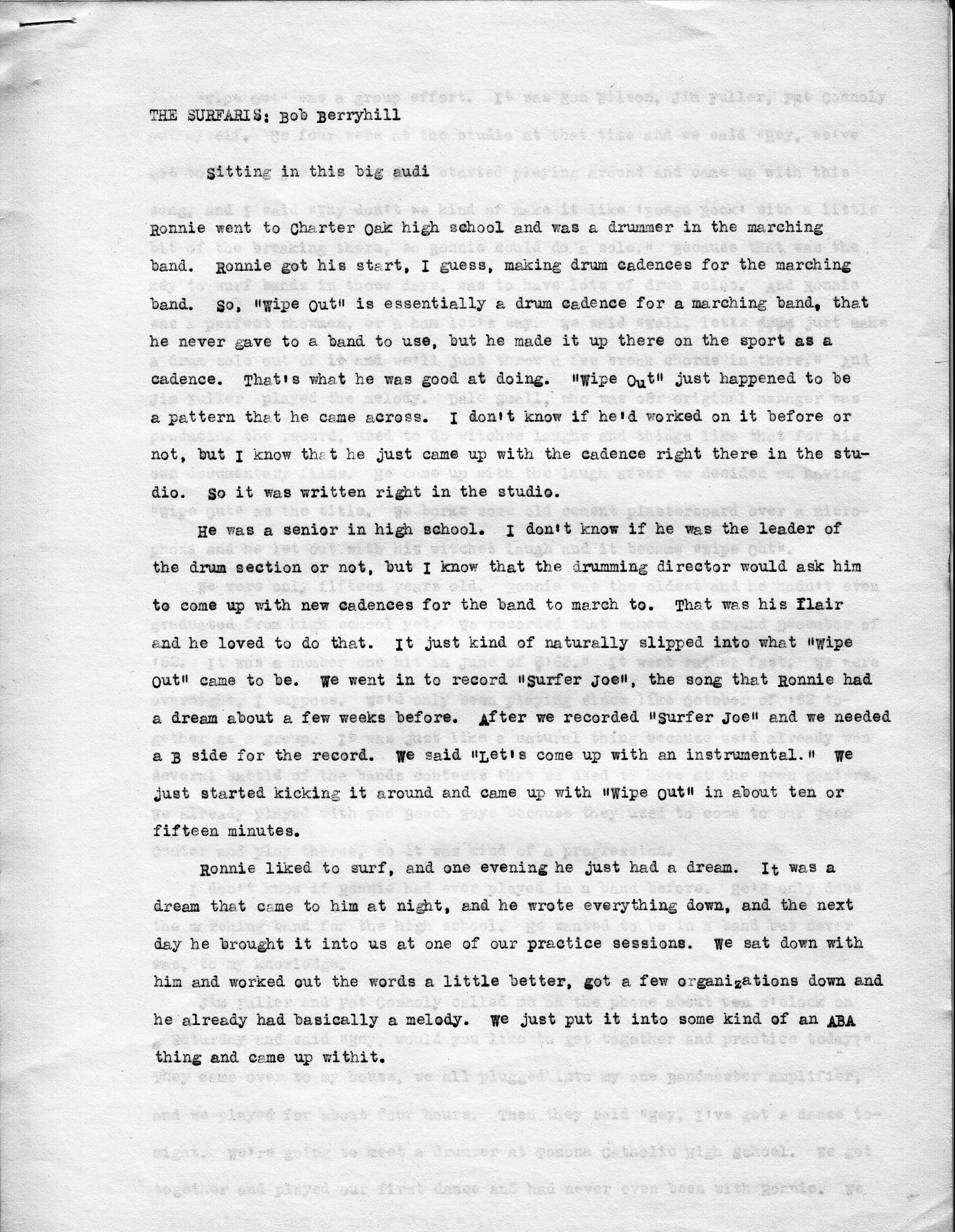
Page 1 of Scott K Fish's Bob Berryhill transcription
Page 1 of Scott K Fish’s Bob Berryhill transcription

We played together from about ’62 to ’66 and then we basically broke up. The original group. Jim Pash [Surfaris saxophonist] kept the group on and got some other people together and played and recorded.

We’ve gotten together again last year. This is our one-year anniversary. We got together a year ago. Right now we have Jim Pash (sax), Jim Fuller is playing bass. I’m playing rhythm guitar and lead. Then we have Kelly Lammers — who was a devotee of ours back in the early days — started playing about 1966 with us.

We’re using Don Murray on drums. He was the original drummer with The Turtles. He was in a group before that called The Crossfires, which was a surf band, which turned into be The Turtles. We’re doing a pretty good sound right now.

I believe Ronnie’s playing around the ‘Frisco area. I heard that he had a group for a while there that he was trying to get going. I think it’s a rock group of some nature. I’ve never heard it. But according to our lawyer, who [Ronnie] had sent tapes to, said it isn’t too good. But that could be just because of the guys he’s with. I think it’s called Red Dog or something like that.

I know he just kind of hangs around there in central California and does things. He’s really into Rennaisance Fairs and stuff like that. He’s always been kind of crazy about kilts.
record_player

I think Rodney Bingenheimer, who’s a disc jockey down her on KROQ, calls Wipe Out the Garage Anthem. It’s just one of those kind of songs where a bunch of guys got together and said, “Hey, let’s come up with a song.” And just sort of hit it, you know? Comes out to be a classic that is remembered forever.

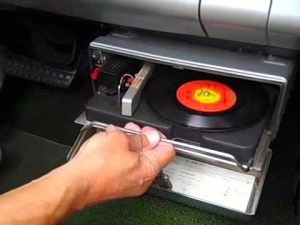
We used to play Sacramento — which was a big area then. It was a Corvette Club who brought us up there. In those days, they didn’t have 8-tracks, but they had record players in their Corvettes. And they’d cruise this drive-in and just play Wipe Out as loud as they could.

It was kind of nice.

end

Posted in Backgrounder Interviews, SKF Blog | Tagged , , , , , , , , | 5 Comments

The Max Weinberg Modern Drummer Cover Photo That Got Away

152108_weinberg_max_tired

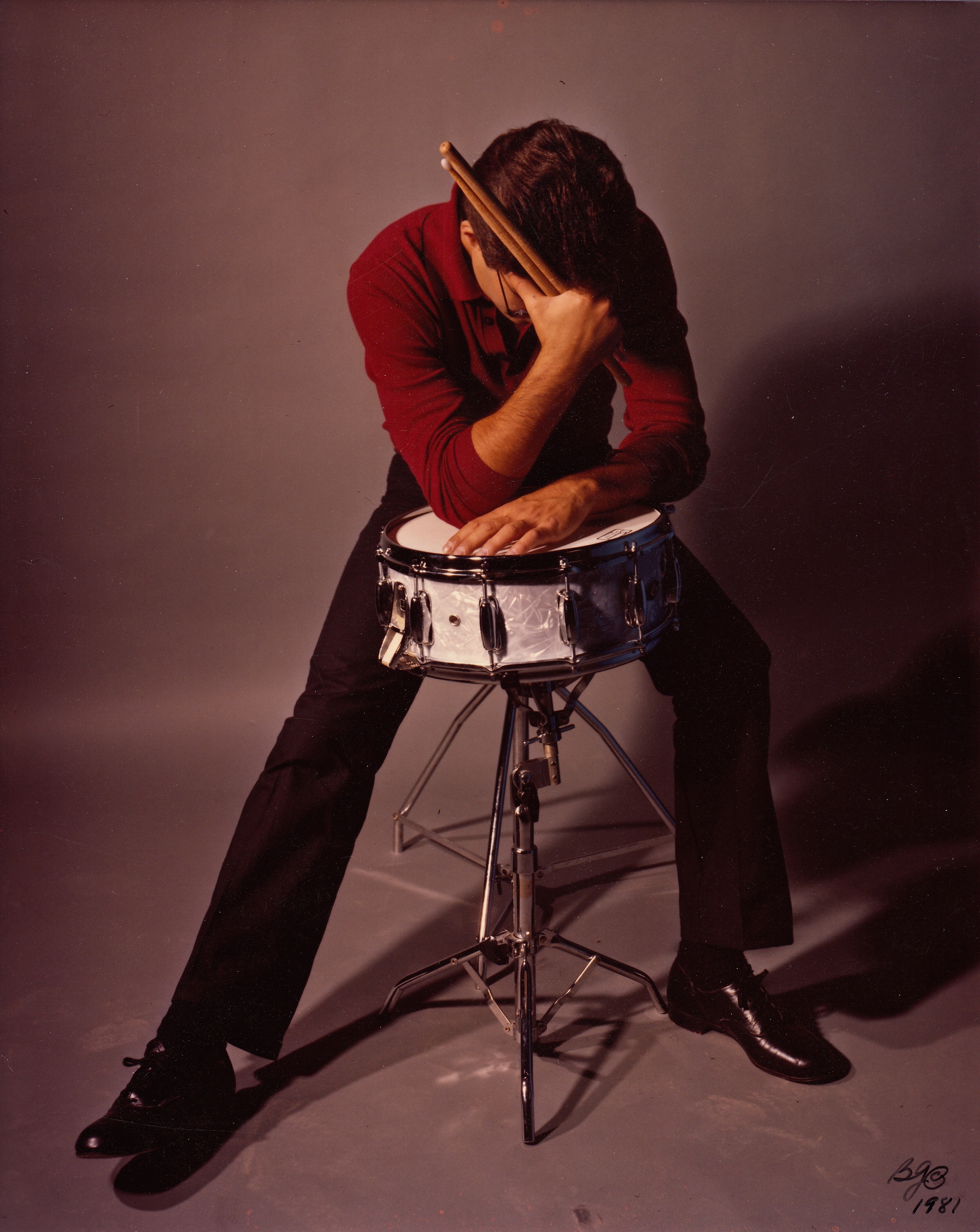
SKF NOTE: When either I remember or someone tells me this photographer’s last name — I will credit him. And I apologize in advance for not remembering his full name. I met him twice, as I recall. Very nice guy and very good photographer. New Jersey based photographer Barry (???) took a series of photos of Max Weinberg for Max’s April 1982 Modern Drummer cover story.

I love this photo of Max. It is not a posed photo. The photographer caught Max resting during the photo shoot. Max was, and probably still is, a meticulous guy. He wanted the photos for his first MD cover story to be as good as possible. I made my best case at an MD editorial meeting to use this photo as the cover photo.

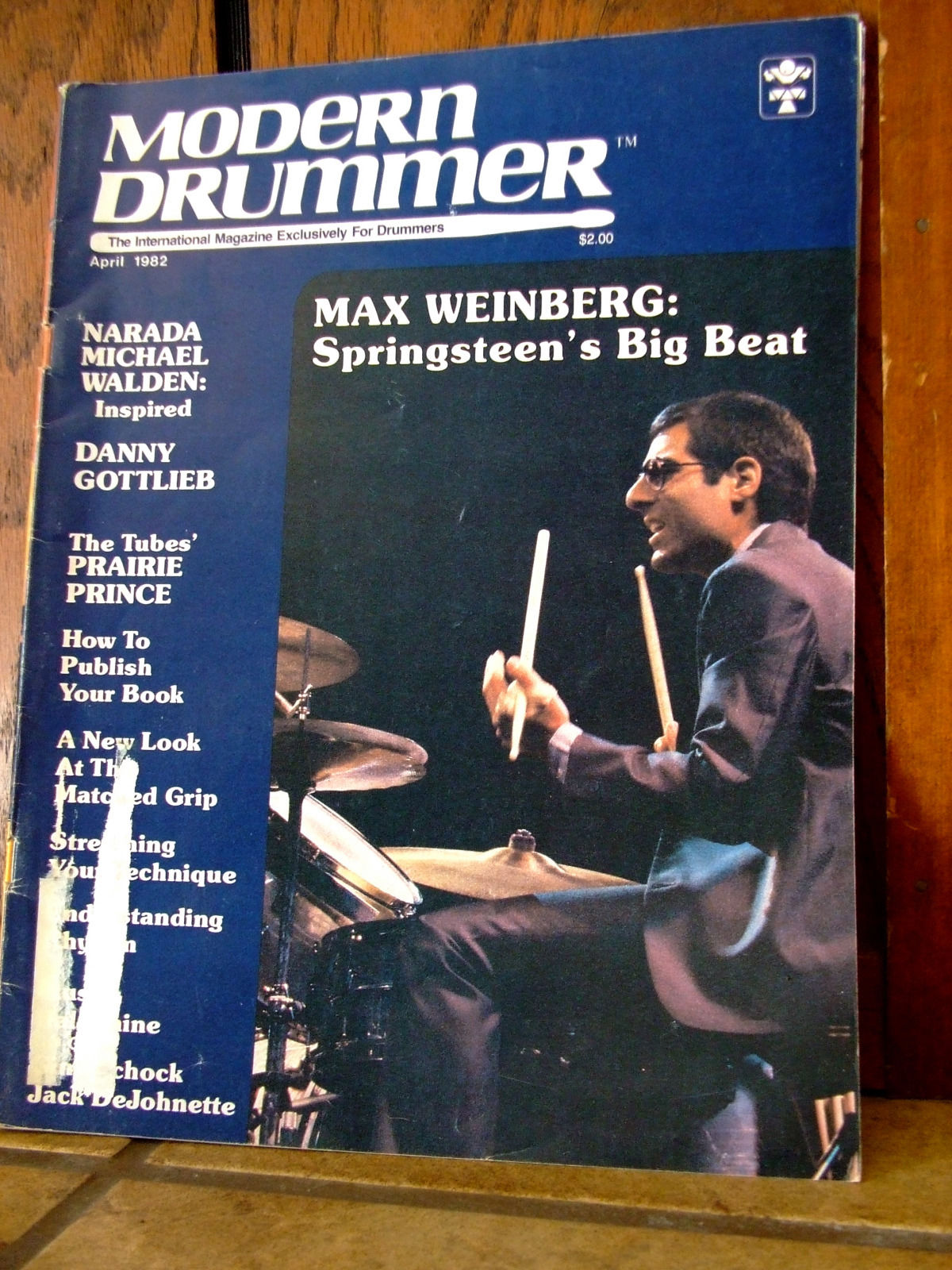
Long story short: I lost the argument. The April 1982 MD cover created instead is posted below.

I still love this photo. Barry and Max gave me an 8×10, signed by the photographer, and I just came across it in a file folder yesterday.

weinberg_max_april_1982
Posted in SKF Blog | Tagged , , , | Leave a comment

Sandy Nelson – Just Follow Your Heart

SKF NOTE: I recently found transcripts of a group of short interviews I did in the early 1980’s when I was gathering data for my five-part Modern Drummer series, The History of Rock Drumming. It is probably hard to believe today, but back in the early 1980’s there was precious little written about the history of Rock drummers. The good news? Most of the drummers were still living and willing to talk.

This is a phone interview with Sandy Nelson done on May 13, 1982. I was in my MD office. Sandy was at home in California. My recollection is Sandy was reluctant to be interviewed, that he was a private person who wasn’t thrilled taping a phone Q&A with a stranger. I ran into that reaction from a few other drummers. The icebreaker was always that I wanted to talk with them about drums. Period.

Notice in this interview, when I ask Sandy the name and location of the club where he was appearing regularly — he didn’t want to tell me. That’s the opposite reaction of most musicians.

Toward the end of this interview I hint at having Sandy do a feature MD interview, telling him we receive letters from MD readers asking why we haven’t done a Sandy Nelson feature. Sandy was glad to hear that, but he never said, “I’m ready anytime you are.” 

There’s some good historical info here. Caveat: Carmine Appice had a solo album out at this time. In promoting the album Carmine was making the Sandy Nelson connection in a major way. Sandy shoots down some of Carmine’s claims. I said nothing about that at the time. In retrospect it’s good to correct the record [no pun intended] for the history books.

Finally, this is the first time this interview is seeing the light of day. Enjoy!

Sandy Nelson

Scott K Fish: Could you tell me how you came to record all the great records you did — and the concept behind them?

Sandy Nelson: Sure. In ’58 I was with a little rock and roll band with Bruce Johnston, and somehow we fell into a demo job for a record. I think it only paid ten dollars. That sort of got me into recording for other people, and publishers, and singers for demos and things.

Then I started doing sessions. A few. I saw everybody around me making records and I thought, “Why don’t I do one myself?” Because Cozy Cole did a great job. And I thought there could be room for one more drum record.

[SKF NOTE: Drummer Cozy Cole had a hit record with Topsy Part 2, a drum feature.]

So I tried to make a beat that was danceable and, believe it or not, I got the idea for the feel of the beat from Battle of New Orleans. That is, for Teen Beat. Not many people realize that, but if you listen to both records, they both have the same feel.

Then I thought of the title from looking at the record charts. I saw Teen Angel and I thought, “How can I work that into drum or tom-tom?” Then I though of beat. Most of the companies turned the idea down.

As a matter of fact, the guy that did do it was Art Laboe on his label. I remember Preston Epps coming into the control room and saying to Art, “Well, that’s just a march!” And Art said, “I don’t care what it is as long as it sounds good. And that’s my first lesson in the record business: Just follow your heart. Whatever sounds good.

[SKF NOTE: Preston Epps was a percussionist who also recorded on Art Laboe’s label and had a hit song called Bongo Rock.]

SKF: Your concept was so unique and it has really never been done since — where a song that is essentially a drum solo or a drum feature has become a Top 40 hit.

SN: After that was a hit all the fellows in the recording industry out here would sort of kid me and say, “Well, you were lucky. It was a fluke. It could never happen again.

Then I went on the road with The Ventures for a few months and I got real depressed. I thought, “Damn it! I want another hit record.”

SKF: You were the drummer with The Ventures for awhile?

SN: Yeah, for a short time.  I think their drummer had had an accident. His neck was broken. Howie Johnson.

Anyway, I got a little bit dismal and I thought, “Gee, this is alot of work getting out here on the road trying to earn a buck. If I just had one more hit.” Because I really didn’t have an artist’s contract with Teen Beat. And I’d had a few flop records with Imperial Records and they were ready to drop me. But they gave me one more chance on Let There Be Drums. And so I fooled everybody and had anther hit. And that one I got paid on, of course.

I stole alot of licks from dear old Cozy Cole on Let There Be Drums. Just the other day I was listening to an album of his — the one that has another version of Topsy and Ol’ Man Mose. He did Let There Be Drums on it and he was trying to copy me copying him! It was like several carbon copies.

SKF: So Cozy was the main influence in creating that style?

SN: Yes. I think the greatest influence to me, in general, was Earl Palmer — a session drummer out here. I saw him last year playing at a small club. He likes to play in person just for fun once in awhile. Alot of the record producers say, “Oh, he’s got a dated sound.” Then they try other people, but they always go back to Earl.

Earl Palmer

SKF: I heard you were one of the first to play single-headed drums.

SN: Actually, on the road in 1959…no. No, in 1963. I had remembered that a tour I was on in ’59 in the Middle West [when] Johnny and the Hurricanes’s drummer –I forgot his name. He said that Dickey Doo and the Don’ts drummer had the head off the front so he could put part of his traps inside.

So in ’63 when I went out on the road in the Middle West again, I remembered that idea so I — with a razor blade — sliced off a round circle of the skin of the front head so I could put some of the hardware inside the drums.

I guess over the years people have gotten used to the sound and now I guess it’d be hard to go back to the other sound.

SKF: Did you use the same drumset on all those records?

SN: Yeah, I only basically had one set in those days. I wasn’t like the other session men where they had two or three [drumsets]. I had a Ludwig silver sparkle. I’m still usng it now but I’ve painted it black. In the place I’m playing it looks good. It’s just the old Ludwig drums. I bought them in 1962. But I have to admit — the drum world would understand this — that I’m not using the Ludwig bass drum. I’m using a Gretsch. It punches through a lot better.

Primarily, Let There Be Drums was two small tom-toms, then the regular floor tom 16″, and nothing special about the snare — just a regular standard Ludwig snare about 1962 vintage. I don’t have that snare anymore. I wish I did. But, I have one like it that’s a little deeper. I think it’s 8-inches. It’s still an oldie too.

SKF: I had wanted to get in touch with you because those records were so great and you were such an influence on so many drummers.

SN: I really appreciate that. I love the magazine [Modern Drummer] and everytime I read an article on a drummer I feel like the drummers never mention me because it’s not fashionable. Because I’m out of date.

SKF: Did you hear about Carmine Appice?

SN: I heard he wants to do Let There Be Drums.

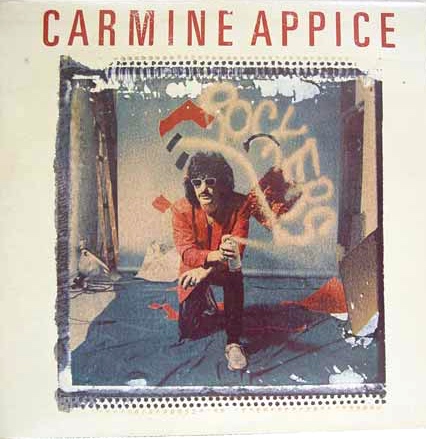
SKF: He just came out with a solo album [Carmine Appice] that he recorded in the same studio where you recorded all your records.

SN: Well, actually that wasn’t really the same studio. They had moved. But the Podolor’s — they like to shuck people. [SKF NOTE: Carmine’s album is produced by Richard Podolor.] I’ve had a 20-year feud with them. The “stage door mother” syndrome with Ritchie the guitar player. It’s the usual thing in the business, I guess.

SKF: Carmine said he’s using one of the drumsets you recorded with on Drums, Drums, Drums on his LP.

SN: That wasn’t used on any of my records though. That’s a blonde wooden set. I think it’s a Ludwig. I’m not sure. Three Dog Night‘s drummer, Floyd [Sneed], used it quite alot on records. But I’ve never used that on any of my records.

SKF: How many albums did you do altogether?

SN: Around 38. Nowadays they’re repackaging the old tunes for Europe.

SKF: Do you hear drummers today playing things that you feel you started?

SN: Oh yes! I’m really delighted. Just the other night I was at a little party and they played Adam and The Ants. My gosh, I really felt good because every track was based on something I’ve done before. I’ve heard they’re real wild in person, but I sure like them on record. They come across real good. That’s one of the groups I like of the best of the new stuff.

Other than that, what else is going on — I don’t know. I don’t listen that much. I listen to a little jazz.

SKF: Were you coming from a swing music background?

SN: In the Forties I listened to — when I was pretty small — I’d listen to Benny Goodman, Illinois Jacquet, Duke Ellington. I think that was more or less implanted in my soul over my lifetime, because now that’s the kind of stuff I’m playing in a small situation like a piano bar.

I just have a ball because I don’t have to take the drums all over creation. And the owner lets us play what we want. We’ve been creating some things I’d like to put on record soon.

SKF: Where are you playing now, Sandy?

SN: Oh, I can’t mention that. I don’t want to mention…. Just say around the west LA area. I have a record on my own label that I had wanted to do just my own way without producers telling me how to play or what to do. Of all the things, I titled it A Drum is a Woman, but I got so much flak from a few disc jockeys….

SKF: Because of the Ellington tie? [SKF NOTE: Duke Ellington has an album, A Drum is a Woman.]

Ellington’s “A Drum is a Woman” LP

SN: Well, I never thought of that, really. But they misconstrued it as something to do with beating a woman. It upset me because I had no intention of that. I was thinking of drums as being very sexy or sensual and should be treated like a woman.

Duke Ellington said something like that. A drum is a lady, did he say?

SKF: No. He said, A Drum is a Woman.

SN: Anyway, I changed the title. [The song is] something like Let There Be Drums except that it has a synthesizer lead.

I bump into young drummers once in awhile that say they want to try to get my old sound. They miss the boat primarily, most of the time, because they feel it’s in the heaviness of the sticks or the microphones. But the only thing I thing I could come across well with a drum solo is on a tom-tom with the dynamics.

I’m trying to say that I think most rock drummers, when they try to do a drum solo, they get so excited and they overplay, and they play fast, and they play one volume: LOUD! There’s no dynamics.

One example of that was Cozy Powell. Everything he played he’s just pounding as hard as he can. Then they wonder why they can’t get that old Birth of the Beat sound on the tom-toms. You’ve go to treat a drum like a woman!

SKF: Were you using pretty light sticks?

SN: Nowadays you wouldn’t believe it. I’m using 7A‘s. I can get just as much volume and I don’t like to play that loud anyway.

SKF: What were you using on the old records?

SN: If I remember, they were the Japanese oak Speedfire sticks. I think it was the professional model of Speedfire.

SKF: Were you using calfskin heads on those records?

SN: I think Teen Beat was calf heads. But from, like, 1961 on would be all plastic. You just couldn’t find the calf heads anymore.

SKF: Is your new record released?

SN: Sort of. It’s just a small operation. The only place that it’s really released — if you want to say that — is in England through a magazine called The New Gandy Dancer. I just ship a few hundred records to the fellow that runs the magazine and he sells them through the magazine. It’s an instrumental rock magazine that’s sort of coming up. It’s in Newcastle, England.

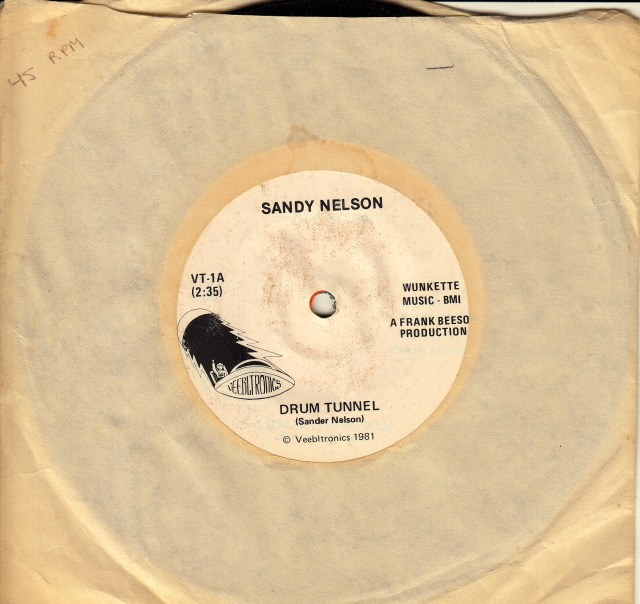
I’m going to change the record title to Drum Tunnel. I can’t get in any trouble with that unless they say it’s Freudian. Then I’m going to give up for sure.

SKF: Can I ask how old you are?

SN: 43.

SKF: You’re just getting started!

SN: Yeah, that’s true. Actually, I’m sort of in my second childhood. I’m enjoying drums just like I did when I was about 18. I went through a number of years with a drinking problem and then I stopped five years ago. And being spoiled with record royalties, I didn’t study drums or take them seriously for quite a long time.

About four years ago I finally got arund to studying with Murray Spivak to loosen up my hands. That’s another thing! I always wondered why he’s never mentioned by drummers, and yet, alot of drummers take from him.

SKF: We get a lot of letters from readers asking MD why they haven’t done a Sandy Nelson interview.

SN: I’m glad to hear that. I really appreciate that. Is my number in the Union book out there?

SKF: No. I got your number from local Los Angeles information.

SN: Yeah. There’s about six Sandy Nelson’s and they’re all women around west LA. I get these guys calling for them and I’m tempted to say, “Oh, she’s in the shower.” But I shouldn’t do that.

I’m trying to think of something to write either as a small drum book or whatever based around something I didn’t really invent. As you probably know from the drum world — being a drummer yourself — you don’t really invent anything. It’s really usually just the same old something from way back.

My thing is called a Foonadiddle. It’s a very good exercise: RLLRLLRLL — but it has a few other things in it.

SKF: We’re coming out with a book by Airto.

SN: Oh God! I’m loking at an album right now with him playing with Deodato. He really kicks that bass drum and really has a lot of feel. I could never tell if he plays regular trap drums. Every time I ask somebody what he plays they say, “Everything!”

There was another drummer with Bola Sete. I think he’s dead now. He did Black Orpheus in concert. A bunch of African rhythms. Anyway, I think he played with Bola Sete. I heard it at my piano player’s friend’s house.

He has such a sense of humor. About a year went by and I said, “Hey, I want to come up and borrow your Bola Sete.” He said, “A bowl of what?”

SKF: Well, thanks for spending the time to speak with me.

SN: It’s sure nice talking to you. You brightened my day.

end

==========

SKF NOTE: I found the transcript from an interview with Carmine Appice circa 1981 where Carmine talks about using Sandy Nelson’s drums. So, here is what Carmine said verbatim.

Scott K Fish: For your solo album, Carmine Appice, you went back to a studio and a mixing board that is 20-years old. Do you miss the sound of the drums the way they were recorded back then?

Carmine Appice: No. I went back to that particular studio because the producer that I worked with owned the studio. And he produced all of Sandy Nelson’s stuff.

On Drums, Drums, Drums on my album, I used Sandy Nelson’s drumset. It was the first open-bottom Ludwig drumset to be made in ’61. It was a five-piece set. Two mounted toms: a 12″ and a 13.” And then, I think, a 16″x18″ floor tom and a 22″ bass drum. I used my own snare drum.

It was a good sounding maple wood set. If you listen to Let Their Be Drums or Teen Beat, and then put on my record, Drums, Drums, Drums, you’ll hear the similarity in tone. I used the same sort of skins that were on there.

end

Posted in Backgrounder Interviews, SKF Blog | Tagged , , , , , , , , , | 3 Comments

Mark Mondesir: No Fear of Failure

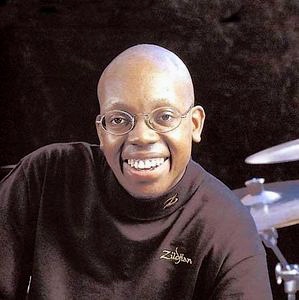
SKF NOTE: I penciled a bracket and made a note around this story in the left margin of my Ed Soph interview transcript. The note is: “Good story. Include elsewhere.” It’s Ed telling me 30-years ago about a 12-13 year old drummer. To this day, I had never heard of Mark Mondesir, but I discovered — also today — he is, as Ed Soph predicted, tearing it up and doing very well both as a pro drummer and as a Yamaha clinician.

Mark Mondesir

Mark Mondesir

Ed Soph: Not everyone who picks up a set of sticks is going to be a drummer. Just like, not everyone who picks up a wrench is going to be a plumber. He can try. Maybe a half-assed plumber. But, he’s not going to be a plumber other plumbers come to learn from. And there’s nothing wrong with that.

The idea is that people who are meant to play are going to play. I’ve seen so many kids come up through adversity and make it.

The last time I was in England I ran into this little kid who comes from one of those ghettos over there where they stick the West Indian folk. He’s so poor that he doesn’t even own a drumset. Can’t afford a teacher. He knows other kids who are taking lessons and he cops lesson sheets from them.

He’s poor. But, man, this kid is just going to tear it up. He and the instrument are the same. He has natural movements behind the instrument. And the most beautiful thing of all is that he has no fear of failure. No fear of making a mistake.

Ed Soph

Ed Soph

He’s playing in his combo and he tries to pull something off and he drops about six beats all over the floor. He just turns to me and gives me this great big smile, shrugs his shoulders and says, “Next time.” The next time comes — and he kills!

Mark Mondesir is his name. He’s 12- or 13-years old. His brother plays bass. Some big English rock star gave them scholarship money so that they could come to the clinics.

Posted in SKF Blog | Tagged , , , , | Leave a comment

Girl Scout Shows Girl Drummers How to ‘Stick To It’

Beating the drum for girls in percussion
Drew Bracken 12:03 a.m. EDT August 19, 2015

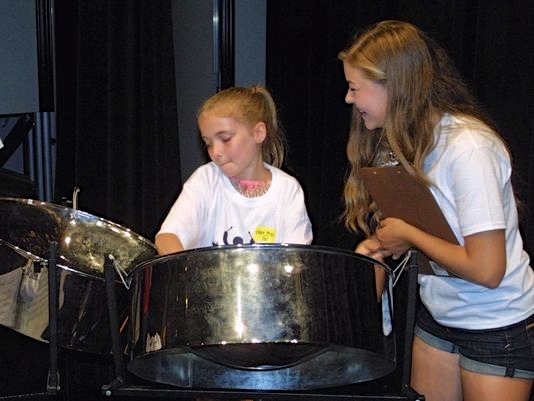
morrison_eliseGRANVILLE – The sounds of drums, xylophones, steel drums and more filled the air in the Granville High School Performing Arts Center.

[I]ncoming GHS senior Elise Morrison… brought about 40 younger students together as part of her effort to bring more girls into the percussion realm while earning a…Girl Scout Gold Award.

Morrison, 17, said.., “Currently, I am one of two female percussionists in the entire high school percussion ensemble.”

The Gold Award for Girl Scouts is much like a Boy Scout earning an Eagle Scout award.

[Morrison] put together 25 volunteers for the program, created a video, had T-shirts made for those in attendance that said Stick To It, and after her team taught percussion instruments to the girls for two hours she plans to create another video that will ultimately go onto YouTube.

“…I wanted to make a difference and encourage more females to…get involved with music and percussion,” she said. “I’m hoping a lot of girls are really inspired by it.”

GHS Assistant Band Director Andrew Krumm said.., “Right now percussion is a predominantly male field…. I’m really hoping this will bring some girls to my groups.”

…Morrison’s older brother Jayden…introduced her to the percussion world.

Morrison concluded: “It makes me proud I could potentially change these girls’ lives. [T]here are 40 girls coming and I just hope I can really touch these girls’ lives.”

Full Story 

Posted in Drum/Music News | Tagged , , , , | Leave a comment