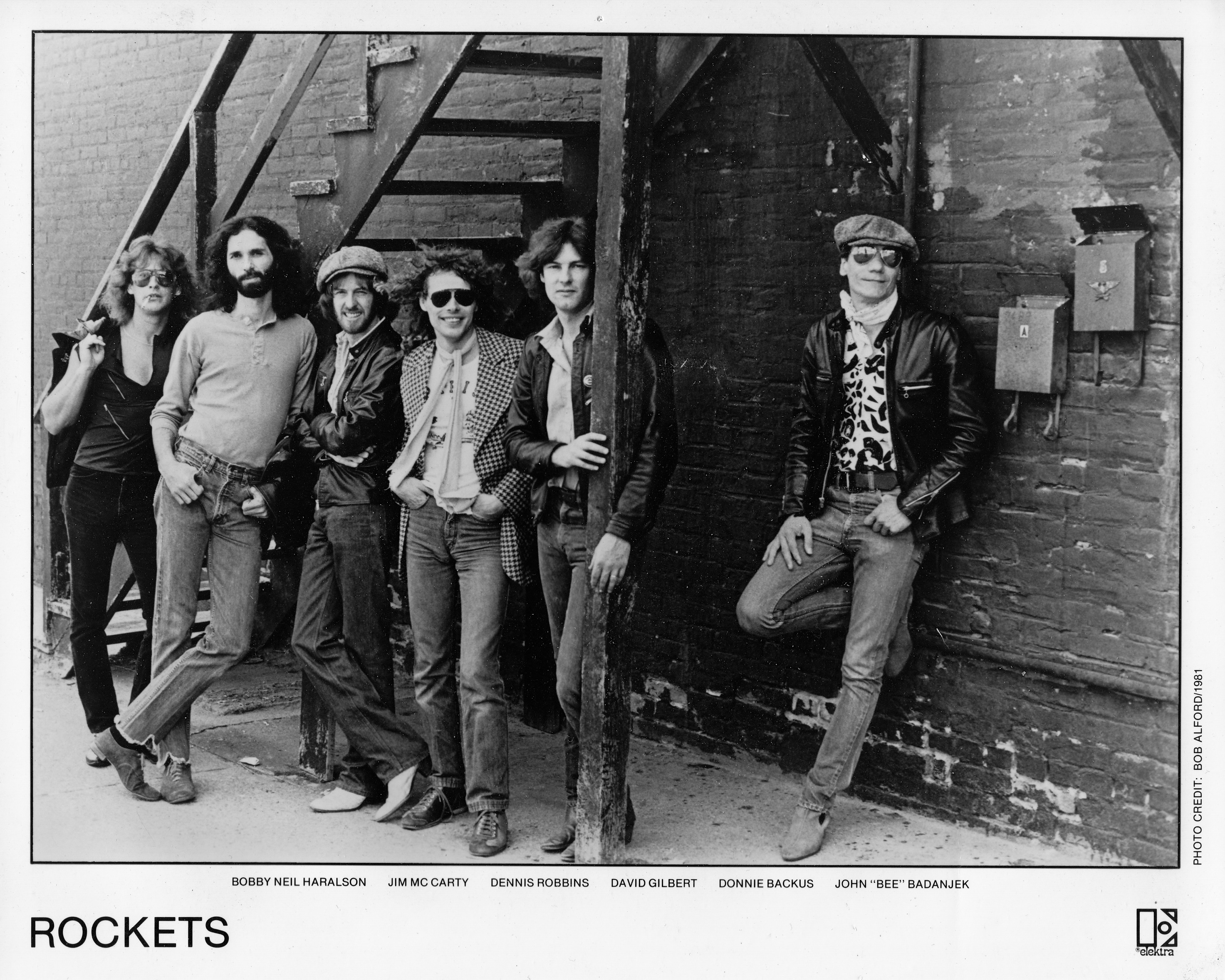
SKF NOTE: Here is an early 1980’s publicity shot of the Rockets with John “Bee” Badanjek on drums. Johnny Bee was — and still is — one of my favorite drummers. Ever since age 15, when I heard him play Devil With the Blue Dress On with Mitch Ryder and the Detroit Wheels — I was hooked.
A quick web search tells me Johnny Bee is still active with the Howling Diablos. Good news!
SKF NOTE: In 1989 I sat with Neil Peart, played him a few of my favorite drummer records without telling him anything about the song or the drummer. Our exchanges were meant for a music publication Chip Stern was creating. You can read the back story here.
Neil refers throughout this exchange to being in the studio working on an album. I’m not sure what album it was. This exchange took place in August 1989. Maybe someone can use that date to best guess the Rush album Neil is talking about.
I need to correct something. I tell Neil in our exchange Shortnin’ Bread was recorded in “the Sixties.” It was, in fact, recorded 1959. My Special Edition LP was released in the early 1970’s.
Also, in 1997, eight years after this exchange, Joe Morello accepted Neil Peart’s invitation to be a part of Neil’s Burning for BuddyVol. 2 project.
Also, you can hear Neil’s and my Blindfold Test conversations on my YouTube channel. Start here.
=====
Neil Peart August 21, 1989 “Trading Fours”
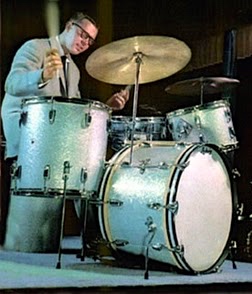
Song Title: Shortnin’ Bread. Drummer: Joe Morello. Album Name: Gone With the Wind. The Dave Brubeck Quartet. Columbia (Limited Edition) LE 10013. Released: 197?
Neil Peart: The first thing I noticed is the beautiful sounding drums. The tuning of them. It’s really sweet. I wonder if it was a more modern recording because more of the tonality seems to come through.
Scott K Fish: The Sixties.
NP: Yeah. Nice playing. But ironically, the first couple of times that the drums and piano play together, they’re out of time with each other. I tend to blame the piano because he’s just not sitting well with the groove the drummer’s putting down. From a modern, metronomic point of view, where all records are made to mathematical perfection….
SKF: So, if they had been working with a click track….
NP: It’s just selective listening, I guess. I would think the piano player would pick up his groove from the drummer.
SKF: Do you have any idea who the drummer is?
NP: No.
SKF: Joe Morello.
NP: Oh, really! Well, lovely sounding drums. And very delicate touch which, of course, he’s famous for.
SKF: His bass drum always sounded great. I believe he used a wooden beater on a 22″ Ludwig bass drum.
NP: I’d wondered about the tom sizes too. So, that’s just a four-piece set.
SKF: Yeah. 9″ x 13″ and 16″ x 16″ toms.
NP: Is that a recording with Brubeck?
SKF: Yeah.
NP: [Neil laughs. He seems a bit embarrassed to know we’ve just been criticizing Dave Brubeck’s timekeeping ability.] It’s just because I’m in the middle of making a record. I’m so conscious, with overdubs, that we all respond to the groove when the drums are done.
I can mess with a click track pretty well. At this point I really know how to push it or pull it; and lay back with and give the feeling of ritard over top of the click — and still stay in with it.
So I get my groove laid down. When the others overdub it, it’s important that they have to sit [SKF NOTE: fit?] into my conception of the groove.
So when you hear previous records in any field of rock or jazz, where rhythm sections and other instruments are working together, you hear how different it was then; how much less demanding timekeeping was. It was what I’ve heard jazz musicians call “average time” — where you keep good time overall, but everyone sort of played with it a little bit. If a bit sped up or slowed down — it was entirley acceptable. Which it is. I’m not arguing or finding fault. It’s just ironic to look back now, to hear top musicians of the day on a simple groove like the one we just listened to, and they’re not quite congruent. They’re not hearing it the same way.
SKF: It could’ve been a first take.
NP: No doubt it was. And they’re both playing their part right. But they’re not sympathetically clinging.
SKF: A quarter note subdivided into four sixteenth notes is counted “one, e, and, uh.” The one, the down beat, can be subdivided into two sixteenth notes counted “one, e.” A musician playing right on the beat will hit on one. A laid back musician will hit on “e.” Both musicians will think they’re hitting right on the down beat, the one. That sixteenth note difference in hearing can really effect the feel of a song.
NP: That’s very true in rock too. The big down beat gets pulled back so far. Or you can sit right on top of the beat, and seemingly push it forward. There have been times when I’ve put down a drum track and people will swear that it’s speeding up in a part. They just listen to it against a click….
SKF: And you’re right on the money.
NP: Sometimes I’m just learning forward — sometimes purposely — to give it that effect. Or pulling back to see how far back I can pull and still stay in time. Phil Gould from Level 42 is a master at that. Sometimes you can be tapping along with his beats, just about breaking your hand trying to come down as late on the beat as he does. And the timekeeping is perfect. Feels great.
There’s two different sets of terminology too. Perfect timekeeping and great feeling timekeeping aren’t necessarily the same thing. Modern music demands both. Apart from drum machines and all that, real drummers who are trying to work with modern music, are trying to make metronomic time feel human and impure. That’s certainly the mark of what a modern drummer must do.
SKF: Have you listened to Joe Morello before?
NP: My drum teacher use to play them all for me. Rightly or wrongly, my perception of Joe Morello was always: a Master Craftsman. A Master Technician of drums. And he was the Rudimentary King of the Universe! (laughs)
SKF: Do you recall listening to Joe on any specific records? Take Five, for example?
NP: Take Five I certainly remember to this day. That’s a phenomenal tune.
SKF NOTE: My friend and music writer par excellence, Chip Stern, had a very good, albeit short-lived, idea for a drummer’s magazine. I did some writing for Chip’s magazine, but I don’t know that any of my writing was published. I’ll have to talk soon with Chip. He can refresh my memory.
Leonard Feather had an ages long Down Beat magazine feature called Blindfold Test. The concept was: play a handful of unannounced tunes for a musician and get their objective reaction.
Chip took that idea and used it for a part of his drummer magazine he called Trading Fours.
This week I found a manuscript of a Trading Fours I did with Neil Peart in August 1989. Again, as dim-witted as it may sound, I don’t remember where this exchange took place. It could have been a weekend I spent at Neil’s home.
Anyway, here’s a look back 26-years at Neil’s reaction to Louie Bellson’s Skin Deep. I’ll post the other Trading Four exchanges with Neil Peart up the road.
Neil Peart August 21, 1989 “Trading Fours”
Song Title: “Skin Deep.” Drummer: Louie Bellson. Album Name: “Hi-Fi Ellington Uptown. Duke Ellinton and his Orchestra. Columbia CL-830. Released: 1953
Neil Peart: Well, my first response: Great to listen to. Really exciting. Dynamic. Some of the same daring and rhythmic abandon as Gene Krupa’s drumming, although I’m pretty sure it’s not him. Smokin’! That’s my overall analysis. Is it Louie?
Scott K Fish: Yeah. What tipped you off?
NP: Oh, the bass drums.
SKF: The double bass drums.
NP: Yeah.
SKF: That was Skin Deep with Duke Ellington and his Orchestra. A song that really put Louie on the map.
NP: Great title for a drum solo.
SKF: What did you think of his drum sound?
NP: Ah! The classic tonality of the period, I guess. That classic sound of big band drums. Very nice. The solo was obviously built with a format and story construction. The fills in the early part of the song put me most in mind of Gene because they’re really daringly awkward. That’s the kind of stuff that Gene pulled off a lot. Something that shouldn’t feel good, but they manage to make it work.
SKF: Louie wrote Skin Deep. He may have arranged it too.
NP: I always think that those kind of arrangements must be so much fun for a drummer to play when you really know them well and you’re not having to read it. Feeling the accents and driving. A brass section in front of you like that is kind of pulling the trigger; when you get the big bass drum accent — or something — and the gun — which is the brass section — goes off. That must be a great feeling of power and control when it’s perfectly timed.
SKF: Have you heard much of Louie Bellson?
NP: Just in my beginning years when my drum teacher use to play me Buddy and Gene. Other than that? No.
NP: Only indirectly. I think it was an influence just because Louie Bellson did use them. By the time I was playing, other people were using double bass drums also. So his influence had become diffused.
SKF NOTE: In my Life Beyond the Cymbals post interview with Motown songwriter Brian Holland, I tell the back story of how tough it was, in the early 1980’s, for me to find information — especially reliable information — for my History of Rock Drumming series for Modern Drummer. That was especially true for Motown which, again, I spell out in my intro to Brian Holland’s interview.
My goal was straightforward: Who were the drummers on Motown’s records? Period. Today that info is well chronicled, although there may be missing pieces to the Motown puzzle. With that in mind, I decided to post verbatim, transcripts of my research intervews about Motown with key people. Maybe some Motown historian willl discover a new fact or the answer to a longstanding riddle.
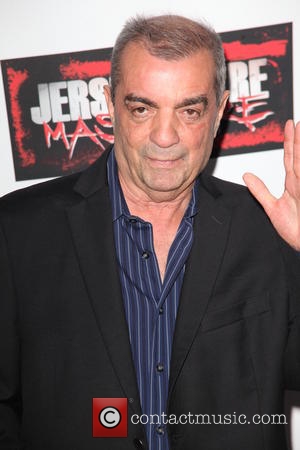
This is my interview with recording engineer Tony Bongiovi. According to Mr. Bongiovi’s web site bio, “At the age of seventeen, while conducting experiments with equipment in his Raritan, New Jersey home, Tony Bongiovi discovered the secret to duplicating the well-guarded audio formula for the Motown Sound. After contacting Motown, his abilities so impressed Motown President Barry Gordy that Tony was flown between New Jersey and Detroit on a regular basis to engineer records for Motown greats such as Stevie Wonder, Gladys Knight and the Pips, Diana Ross and the Supremes, The Temptations, and other leading artists.”
In this interview, Bongiovi tells me, “I was at Motown from ’67 to ’70.” And he shares some great insight into Motown drummers, especially Benny Benjamin.
I admit I’ve forgotten how Tony Bongiovi and I connected for this interview. He designed and founded Power Station recording studio in New York City. I was spending a decent amount of time with drummer Max Weinberg when Bruce Springsteen was recording Born in the USA at the Power Station. In fact, I attended a couple of recording sessions with Max. I don’t remember meeting Tony Bongiovi, but it’s very possible Max — who loved the Motown drummers — deserves credit for my interview with Mr. Bongiovi.
Final note: This is a verbatim transcript. I may have left out some of my questions. That is, I might have asked to clarify something said. In the interest of time — because I always transcribed my own interviews — if I could leave out one of my questions without interrupting the flow of Mr. Bongiovi’s answers — I might have done so. That wasn’t always my practice. But it was sometimes. Also, this transcript has a Bongiovi reference to a Motown song, Agent Double-O Cool. As of this writing I cannot find that song. Maybe Mr. Bongiovi had the wrong song title or maybe I misunderstood him.
I thank Tony Bongiovi was sharing his knowledge with me.
Tony Bongiovi: The drummer who did the main stuff, most of the Supremes hits, and the records that they were famous for like Reach Out, and Smokey Robinson records, Ooh, Baby, Baby, and Can’t Hurry Love — the guy’s name was Benny Benjamin. He’s dead.
My stay at Motown was rather brief because I was working mostly on the production of records. I worked with the producers so I didn’t attend that many sessions. But I know there was Benny Benjamin, and then there was Uriel Jones, who played the stuff from the later 60’s. We did Love Child with Uriel. And a fellow named Pistol [Allen]. He played on Uptight. They’re all around there except for Benny.
When they played they used the traditional grip. One thing that was interesting about Benjamin, if you listen to the records, the drums have a pretty amazing sound — and it wasn’t because of the engineering at Motown. It was because of the way the drummers’ played.
If you walked about ten feet away from Benny, you couldn’t hear him anymore. He played accents, and he knew all of his rudiments. He applied all that knowledge — and he could read music. All of them could read music. All of them played with the Detroit Symphony at some point. They all had an amazing feel, and Benjamin had an amazing foot. He was the best around.
He played sort of backwards. He was a right-handed drummer and instead of leading with his right hand, he’d lead with his left hand. That’s why all the fills and stuff sound like they come in at weird times. That’s the style that he did.
He didn’t play very loud. None of them played real loud, but they played with a certain snap. When they use to hit the back beat, they would crack it in there. And they weren’t loud. None of them played overhead like today’s guys do. They bounced more. Today’s guys, from what I’ve seen in the studio, they lay into the beat more. They just whack it real hard. But those [Motown] guys sort of snapped it in. You could tell the difference.
Even when I was working out there [Detroit] and I use to come to New York. You know, who played like that too was Buddy Saltzman, who played all The Four Seasons records. He played the same same way as they [Motown’s drummers] did.
They didn’t have the muffling like they do today. And the drummers controlled the way it sounded themselves. We just stuck the microphone right in front of the bass drum and, depending on how he hit it, that’s what gave it that sound.
Scott K Fish: I’ve heard about West Coast players doing Motown sessions.
TB: They weren’t doing the original…. I’ll tell you right now. All the records that were done, the majority of hits that we know, were James Jamerson on bass, Uriel Jones, Earl Van Dyke, Robert White, James Giddens, and whoever played percussion just showed up. There was a vibes player from the Detroit Symphony who use to play.
What the California guys did were like special album projects for…. Like, The Temptations‘ In a Mellow Mood. That was out in California.
I use to go into the tape library and pull the tapes and I know where the stuff was cut because it was written all over the tape. I know in New York they use to cut the discs here in the beginning, and then they got…. RCA in Chicago ultimately ended up cutting all the discs that came out. The mastering of the discs. One of the engineers from RCA helped them [Motown] build their studio in Detroit.
The musicians in Detroit were on some kind of a retainer. I know that. Most of the hits — like Mr. Postman and all those early records that were smashes — they were all cut in Detroit. Even Cool Jerk and Agent Double-O Cool [?] and The Platters’ record With This Ring — they were all cut in Detroit.
Bob Babbitt played bass on some of those records. There were a lot of hits where a lot of session players at Motown were moonlighting at a placed called the Golden World. It was the same rhythm section on those records too and it was all done out of Detroit. Some were done at Golden World.
But, I don’t believe this California bullshit. I just don’t, because I was there and I actually lived it. I wasn’t there that much, but I saw and I had access to all the tapes in the library. I use to go and pull some of the Mary Wells stuff. And it would say, Universal Recordings, Detroit, right on the box. Three track. Some of the stuff was four track.
I would pull the tapes and listen to them and see what they’d do on the earlier stuff. I’d be very skeptical of what they tell you in California. Even in New York, for that matter.
But New York, I would tend to think, would be a little more honest about it because they…. There wasn’t too much done here other than I remember The Supremes overdubbing in New York. And we did a Gladys Knight and the Pips record in New York live. But most of the serious records were done right there in Detroit.
When Benny died the rhythm section fell apart. I know Uriel Jones is selling aluminum siding or something like that. I was at Motown from ’67 to ’70. I use to pull the tapes and I could recognize different drummers right away. They all sounded different.
The Junior Walker records weren’t made with his band. That’s all Benny Benjamin. He was about 40 years old when he started doing this stuff. I guess he was in his 50’s when he died. He was a heroin addict. He died poor as shit.
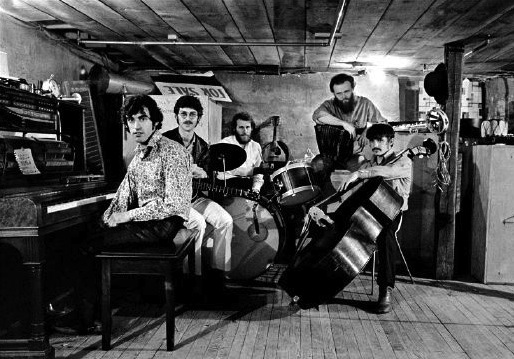
SKF NOTE: I liked everything about The Band from the moment I first heard The Weight on some student’s record player in my high school cafeteria. The gist of The Band’s bio was, these were accomplished musicians in upstate New York, renting, living, and writing songs in a house they called Big Pink .
At the time, 1968, theirs was my dream scenario. I was usually in one band or another with high school friends, but our groups never stuck together. I learned early that a band is as good as its weakest member. Just one uncommitted player will, sooner or later, cause our bands to disband.
The Band, it seemed to me, were strong musicians individually. They all played several instruments very well, and they all sang great. Each musician was unique. When you heard them play or sing you knew who they were.
When The Band released their second album — called The Band — I loved it. The songs were great, and the photos inside the album jacket reinforced my dream scenario for the musical life. One photo taken inside Big Pink showed guitarist Robbie Robertson sitting on a chair, holding a Fender Telecaster guitar with drummer Levon Helm behind a Gretsch bass drum, a snare drum, and a hi-hat. They’re rehearsing!
There were photos of The Band’s in-house studio — cool! — and Levon Helm with what looked to be an antique Ludwig drumset with wooden drum rims! Like young drummers everywhere, I suppose, I wondered if those old Ludwig‘s were the secret to Levon’s great drum sound on record.
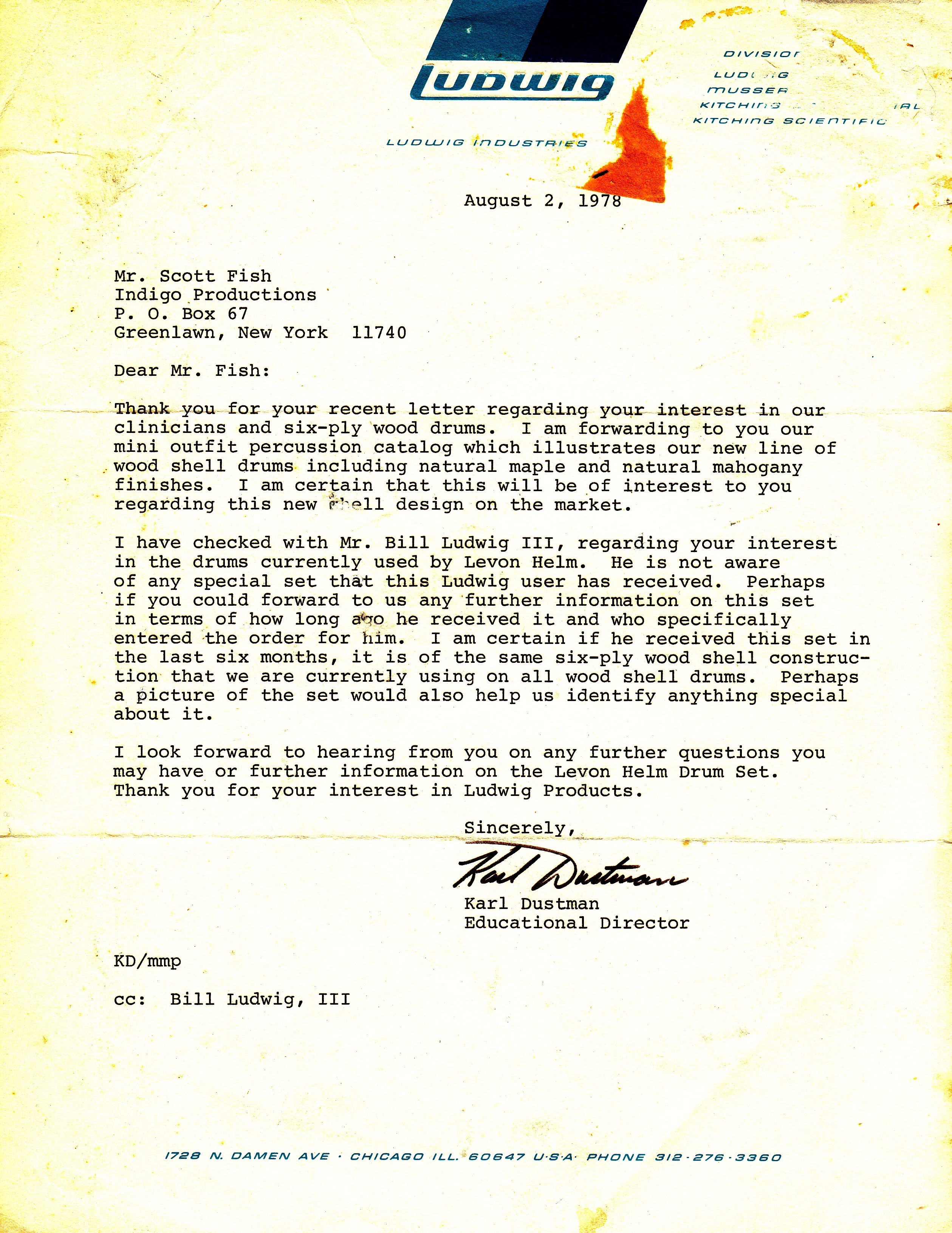
So in 1978 I wrote the letter posted here to Ludwig Educational Director Karl Dustman. I’m guessing my letter was preparation for a Levon Helm interview for Modern Drummer.
Karl’s answer is disappointing. I remember expecting someone at Ludwig would have a pretty good idea, if not exact knowledge, of Levon’s drumset: “We don’t know for sure, Scott, but it looks like the drums Ludwig was making circa 1935.”
In his defense, Karl makes a good point: “Perhaps a picture of the set would also help us identify anything special about it.” Of course, I remember wondering why no one at Ludwig was either aware of Levon’s set or apparently unable to get a hold of The Band to look at it.
Just over two years later, when I started at Modern Drummer, Karl and I developed an excellent working relationship. He was one of the industry good guys. And when I left MD to work for Gretsch, Karl was at Gretsch before me. We worked together there for about one year.
Finally, I remember a conversation up the road with Karl about our written exchange about Levon’s drums. My thinking in 1978 was: Maybe Ludwig can again start making drumsets like Levon’s. If not, why not use Levon’s wooden hoop Ludwig‘s in advertising? Karl’s response? Ludwig is not going to advertise drums it doesn’t sell.


 This is my interview with recording engineer



You must be logged in to post a comment.