SKF NOTE: I first learned about Gallaudet University from a young lady enrolled in my smoking cessation program at Sibley Memorial Hospital. Both Sibley and Gallaudet are in Washington, D.C. My quit smoking enrollee was deaf. I was amazed that she was able to take part in my class with no special assistance. She relied on her lip reading skills and, I suppose, her powers of observation.
I have forgotten her name, although I remember her. She was a Gallaudet student. I was intrigued with her stories of a University for the deaf and hard of hearing. And I invited her to become a smoking cessation class teacher. But she said no.
Fast forward to a recent sports page story about the University of Maine football team playing Gallaudet University’s football team. My girlfriend, Eileen, asks, “How do Gallaudet football players hear the calls?”
Good question. I have a new friend, Tammy, who is a former Gallaudet student. I ask her Eileen’s question. Tammy answers, “There is a large drum they bang . The players can feel the vibration of that. The coaches use sign to the players as well.” You can see the drum in use in the video below.
Another great story from Gallaudet University. Giving new meaning to the term talking drum.
SKF NOTE: Live and learn. Drummers playing while standing is not new. Slim Jim Phantom of Stray Cats comes to mind. What is new to me is a standing drummer first influenced by “Tony Williams, Elvin Jones, Don Moye, Hal Blaine, Jo Jones, Ed Blackwell, Roy Haynes, Ringo Starr,” but didn’t find his drumming passion until he heard Maureen (Mo) Tucker with The Velvet Underground. Go Mo!
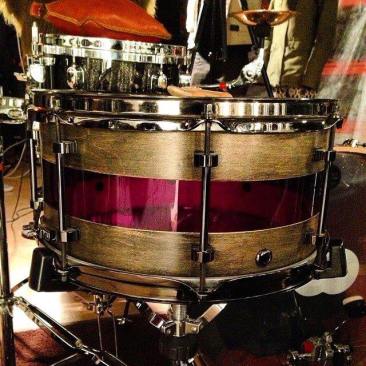
The Maureen Tucker video at the close of this post is part of longer interview available on YouTube. The still shot is of the unique drumset Victor DeLorenzo used while recording his latest album.
Showoff with Victor DeLorenzo Confessions of a stand-up drummer
Published Nov. 27, 2015 at 10:33 a.m.
When I started to play the drum set some 40-odd years ago…all the drummers that I admired sat down behind their [drumsets] to guide and power some of the most exciting bands….
My favorites included…Tony Williams, Elvin Jones, Don Moye, Hal Blaine, Jo Jones, Ed Blackwell, Roy Haynes, Ringo Starr and so many more masters of time and taste.
Then I heard the music of The Velvet Underground and the gender bending earth shattering drumming of one Maureen (Mo) Tucker! She played fierce, driving beats on a snare drum, batter side turned up bass drum, and big cymbals, usually with the aid of mallets instead of sticks. Although she used such an unorthodox setup, she played with such a conviction that never let you think that there was something lacking in the drum department.
Mo’s playing was peppered with a dramatic freedom and a primitive growl that whipped and slashed through melody and lyric. Her drums and her style gave me some things that every young drummer comes to realize sooner or later: “Economy is king, and simple is best!”
Oh, and yes … she was standing up.
I wanted to be “the Keith Moon of stand-up comedy drumming,” and then some.
SKF NOTE: I have neither heard nor played Hogchain drums. Still, I enjoy stories of niche drum makers succeeding.
Local Creates Custom Drums
Published November 27, 2015
By Kaitlin Mullins
The story of Brookhaven native Brodie Davis and his custom drums illustrates that success in business is sometimes only a buy-product of the pursuit of happiness. …Davis and his niche business, Hogchain Custom Drums, have proven they can compete with the best of them.
“Over the years as I got better at drums I became more picky about the gear I used.
Davis, who just turned 30, started building when he was about 24. Hogchain Custom Drums has 27,001 followers on Facebook.
He…developed a relationship with powerhouse instrument company Orange Amplifiers out of Atlanta, and built some themed snare drums for them. Working with Orange just about tripled his business, Davis said.
Most of his orders are for snare drums, though he does entire drum kits as well. His drums are 100 percent handmade..of usually walnut, maple, or both, and are hand-stained. [M]usicians may order drums to their exact specifications, any size and any color.
“And it’s all American-made. I will not touch hardwood that isn’t grown in America, nor will a piece of metal go on it that isn’t made in America,” [Davis said.]
SKF NOTE: This brief interview from the early 1980’s with legendary record producer and engineer, Jack Clement, is the verbatim transcript of a backgrounder interview for my Modern Drummer History of Rock Drumming series. It is published here for the first time. It, as with my other backgrounder interviews for the Rock Drumming series was not meant to be published as an interview. This is the transcript of a phone conversation, a phone interview.
I’ve included at the very end of this interview a scan of my original typed transcript (manual typewriter!) with my red pen editing intact.
My goal was to find out as much as possible about the drummers on those records, i.e. D.J. Fontana, J.M. Van Eaton, W.S. Holland. As I’ve said in my intros to other backgrounder interviews – there wasn’t a great deal written about these drummers at the time. Re-reading this and other transcripts I wish I had known much more than I did, and I wish I had asked better questions.
I was disappointed Mr. Clement hadn’t more stores about Sun drummers and recording sessions. No doubt if I had better questions, Clement would have provided the answers.
Still, I was, and am, grateful for Mr. Clement’s several interesting insights on recording drums, recording music in general, and recording studios.
Final Note: There is some language here readers may find offensive.
Jack Clement
Scott K Fish: Do you recall exactly which [Sun Records] sessions you engineered?
Jack Clement: Well, I engineered most of Jerry Lee’s [Lewis] stuff. Did a lot of stuff with Johnny Cash. Did a lot of stuff with Sonny Burgess, Roy Orbison, Charlie Rich.
SKF: Just about everybody?
JC: Well, I didn’t do a lot with Carl Perkins. I did a session or two with him, then he left. And I never did anything with Elvis [Presley]. He had already gone when I got there. I was there from June of ’55 ’til about February of ’59.
SKF: Do you remember how you set up to record drums back then?
JC: Oh yeah. I remember it. How could I forget it? (laughs). You know, you got the drums sitting over there to the far left, and you stick a mic somewhere up above them. If you’ve got two mics, then you stick one down close to the snare. Then if you happen to have three [mics], you can put one on the bass drum.
Most of the time I had to do it with two. Sometimes one. Well, we could only use five mics at a time, see. And you pretty well gotta have one for the lead vocal.
J. M. Van Eaton
Now, sometimes you can put a couple of guitar amps on one mic. If you’ve got some guys that know how to set their levels properly. Which we didn’t! (laughs) Usually we didn’t have but one guitar — which was electric. Now, if the singer played rhythm, we’d try to get that through the same mic. Sometimes we’d get to put a mic on it, but when you only got five mics….
Now, we did do a certain amount of overdubbing with vocal groups and that sort of thing. And sometimes we’d overdub something like a cannon. But not usually. [SKF NOTE: I wrote in my transcript a question mark next to the world “cannon.” That means I wouldn’t swear in a court of law that Jack Clement said “cannon.” But that’s my best guess after our phone interview and transcribing the audiotape.] Mostly the overdubbing was just for the vocal groups. ‘Cause it was all mono. So when we overdubbed it was mono to mono. Sometimes mono to mono to mono! (laughs). Having a little more tape slap back at you as you go and so on. So that the end result sounds like shit. But it’s very musical — you know? — and people like it, and I like it, and everybody likes it. And away we go!
SKF: To record drums now is like Project X. Back then did you pretty much just stick a mic on whatever drumset the musician happened to have?
JC: Well, first of all, they didn’t have all them fucking tom-toms, you know. It was just a bass drum and snare; a cymbal or two; top-hat. Maybe one tom-tom. They’d bring out a tom-tom every once in a while.
But, see, it was a pretty live room. And we didn’t use any baffles or anything. There was always leakage. And it was always a fight to keep the drums out of the vocal mic on some of that stuff. But, then, that’s really what gave it its charm. With all that leakage. Really.
SKF: I know. All the stuff that they try to eliminate now, right?
JC: See, the recording studio is the worst place in the world to make a record. Right now. All recording studios are just wrong. Right now.
SKF: Why is that?
JC: Well, hell. They’re not musical. First of all, recording studios sound different than any other room you make music in. Right?
SKF: Right.
W.S. Holland
JC: Well? There’s your answer right there! I mean, you gotta remember that the room you’re in is really part of the musical instrument. So you got to bounce it off, bank it off the walls a few times there, you know? Then into the mic.
Well, if everything hits a dead wall — nothing comes back. Don’t sound right to the ear. The guy that’s playing. If it don’t sound right to him, ain’t no way he’s gonna play it really right. That is, up to his particular speed.
I don’t like earphones. When I record I still do it the old way. I let them stick a bunch of mics on the drums, but I’m gonna gradually cut that back.
SKF: No earphones at all? Just everybody listening to each other?
JC: Yeah.
SKF: No baffles?
JC: Sometimes. I got some sliding baffles. You can get them totally out of the way, or totally in the middle. I can make a wall there in three seconds. And then I got a couple of little ones we use that sit in front of the drums sometimes.
But I keep eye contact. Everybody hears it. I mean, I have had a lot of trouble getting these people to do that. But, I got Johnny Cash doing it. And he’s the main one I’m producing in my attic now. Him and Vic Damone.
SKF: But, getting back to the Sun sessions. It was no big deal? Just one, two or three mics?
Jerry Carrigan
JC: Well, see, everybody wasn’t drum happy. The drums played with the band. If the tempos moed, the drums moved, of course. I mean, this all bullshit to me with letting the drummer have the tempo. You let everybody have the tempo. If they want to change it — change it. Pick it up. Hell, yes.
Now, J.M. Van Eaton, see, he inspired a lot of drummers, session guys around here today. Well… one I know of one: Jerry Carrigan. He’s one of the top session drummers here. But he told me years ago he learned to play the drums them them ol’ Sun records. And when J.M. Van Eaton would speed up — he’d speed up. That’s the way you’re supposed to do it. Well…it is.
SKF: I know.
JC: (laughs) You see, when everybody’s got on the earphones you can’t change the thing while you’re cutting it. That’s what I can’t stand about it. And everybody plays at different volume levels as soon as they put them things on. And nothing’s ever in tune.
Fuck all that shit.
‘Cause I’ve had a fight on my hands trying to get these boy engineers around here to leave them earphones off. They keep wanting to stick ’em on ’em, you know. Get that Nashville Sound. Fuck the Nashville Sound. It ain’t happened yet. It’s going to, though. I think. It might happen pretty soon.
SKF: So, in your studios you try to set it up like the old recordings?
JC: Yeah.
SKF: That’s great.
JC: I don’t try. I do it. Excepting I let them use a bunch of mics on the drums. I’m going to stop that. I don’t set the mics up. I’m too lazy to do that anymore. But, I’m going to get back to it.
SKF: Given a choice, right now, how many mics would you stick on a drumset?
JC: I’d have two on top and one on the bottom.
SKF: That’s it?
JC: That’s it. I mean, the drummer has got to aim that snare drum. He knows where the fuckin’ mics are. Put that sound, balance that sound. I don’t believe in close miking. That’s what screws everything up. But then you got to have a band in the first place. I don’t mean a bunch of studio guys. You got to have a band.
SKF: There’s not too many bands now.
JC: I’m still trying to get one up. Been working on it since I was about 13. Still looking for that magical bass player.
SKF: Nobody wants to spend the time that it takes to put a good band together.
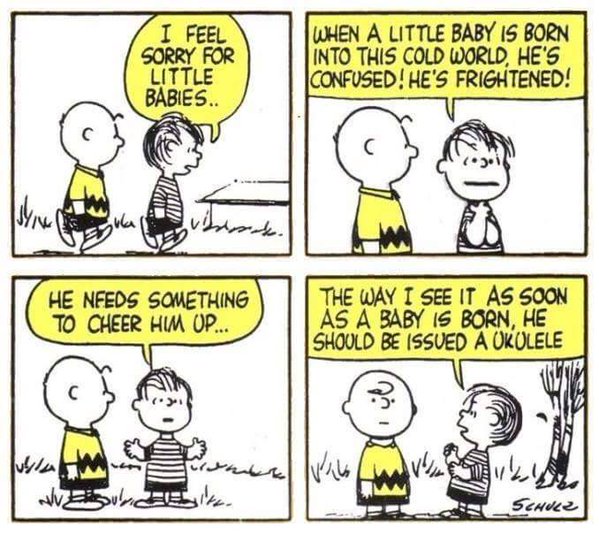
JC: Well, I’ve been working on it really actively now for about three years. I guess I’e spent about $300,000 and I still ain’t got a band. I got a couple. Me and a ukulele player. That’s about it.
But my favorite bass player is a girl named Rachel.
SKF: In Nashville?
JC: Yeah.
SKF: Is she a studio player?
JC: Well, she plays here. She plays on my records. I mean, there is no righteous bass player that I know of. But, Rachel [Peer-Prine] is the closest. And I’ve had bass players in here from England and everywhere else.
We brought this guy over here from England. Herbie Flowers. He’s the world’s greatest bass player, excepting Herbie’s played too many sessions. And Herbie knows the tempo is supposed to move, but he won’t go with it. I can’t shake him out of his tree. I’m going to take my big Gibson guitar to England one of these times, shake Herbie out of his tree.
But, he’s a great guy. He is a great player. It’s just that he can’t fucking let go of the tempo!.
SKF: It loses some of the humanness.
JC: These guys play too many sessions and they’ve got to be recycled a little bit or something.
SKF: Well, I sure appreciate your time.
JC: Well, see, we had five mics and sometimes I didn’t need but three or four of them. But then I probably always used all five. If I had vocal and a piano, I’d probably put about three on the piano. So, I had five mics. And when I overdubbed I had them same five mics again.
SKF: What kind of mics were they?
JC: Well, we had three RCA 77-DX’s. And we had some nice Shure mics. I don’t remember the numbers on them. And we had an Electro Voice. And we had a power mic. It was an early condenser mic. An Altec. But nobody knew enough to put a pad on it, so sometimes it sounded good if you didn’t get very close to it.
It would distort. We use to use it on Johnny Cash sometimes. That’s how it would sound distorted. Using that condenser mic it was hitting the board too hot. Had this little box on the floor. I got to tinkering with it one day and shocked the shit out of myself. Leave that thing alone.
SKF: Did you get it on tape?
JC: No. We had a couple of other mics around there. But if t was a big day we got them three RCA 77’s. Really sounded good.
Original page one of Scott K Fish transcript of Jack Clement interview







You must be logged in to post a comment.