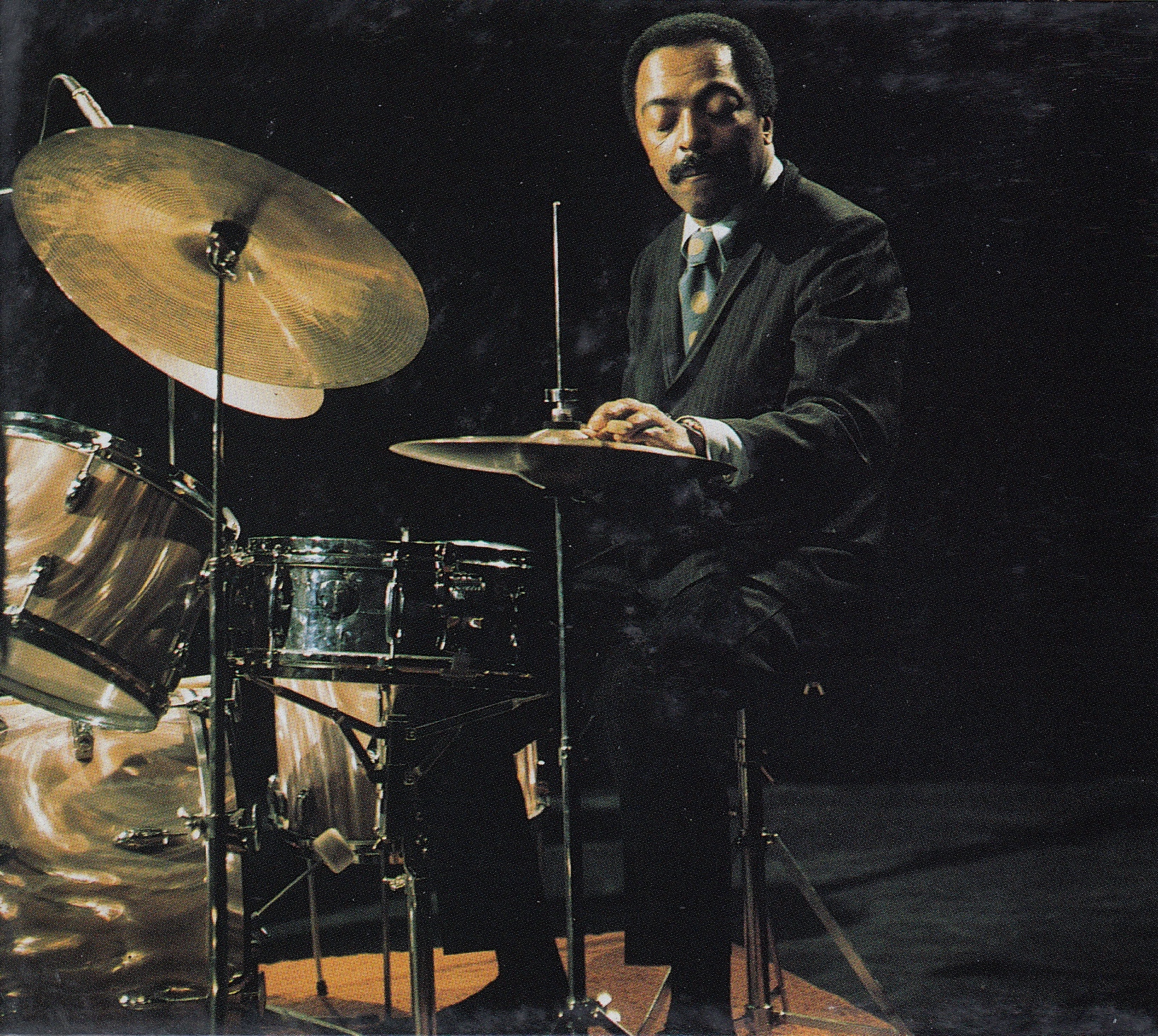
Haynes with Coltrane: No One Was Dependent on One Person

roy haynes outoftheafternoon cd

SKF NOTE: Between 1961 and 1965 Roy Haynes, subbing for Elvin Jones, made some classic recordings as part of the John Coltrane Quartet, including a live 1963 recording at the Newport Jazz Festival. The Haynes/Coltrane recordings were released in 1978 on a double LP called To The Beat of a Different Drummer. I listened to that album many times, especially the song, Impressions, which lasts 23-minutes. For about half the song, McCoy Tyner (piano) and Jimmy Garrison (bass) drop out. The remaining Roy Haynes/John Coltrane duet is, dare I say, impressive.

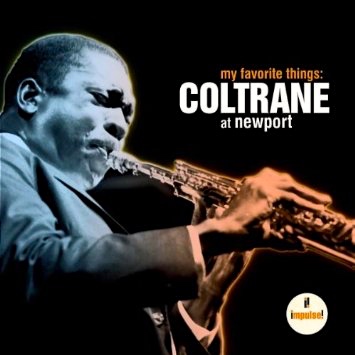
Roy’s 1963 appearance with the Coltrane Quartet is now available on My Favorite Things: Coltrane At Newport.

On November 15, 1978 I asked Roy Haynes to tell me what it was like working with the Coltrane Quartet.

Roy Haynes: Even on a ballad. When they played a ballad the intensity was up there. I liked that feeling. Everyone was doing their thing. No one was dependent on one person, man, the way it could happen with some groups [where] a lot of people are depending on the drummer. There, man, it was equally distributed.

Even though you couldn’t always hear [Jimmy] Garrison the way you should — don’t let him stop playing. Because you would definitely miss him! The feeling was there.

The intensity of McCoy and ‘Trane. Oh, man! That was really a love supreme.

Scott K Fish: Elvin said that what made the Coltrane Quartet so special was that all the members were friends.

RH: It was there on that bandstand. I felt it. And it was no easy thing at that point to replace Elvin. At that point it was not easy.

It was easy, in a sense, to play with ‘Trane. But that whole group as one thing — each one of them was so important. And to step in there — it was a serious thing. It was probably one of the most serious projects to be involved with, that I was involved with, at that point.

Another thing about ‘Trane: He set it up where a lot of drummers could sound good. But they might not make him feel comfortable.

I get that feeling with certain bands Basie had. When Thad Jones and all those guys were with the band — that band could play without a drummer. ‘Trane could play without a drummer. Miles could. Gene Ammons could play without a drummer. And make it happen!

I could name a lot of people that can’t, and they’re suppose to be great.

That’s what jazz is to me. If you want to use the word jazz. There’s not too many jazz players around today. Very few.
coltrane_newport
Posted in SKF Blog | Tagged , , , , , , , | 1 Comment

Jazz Toilets and Hallowed Ground

elvin one down one up half note cd.jpg

SKF NOTE: Jazz toilet. Who coined that phrase, I don’t know. It refers to small, noisy, crowded, smoke-filled bars and clubs where most of our great jazz musicians worked at one time or another.

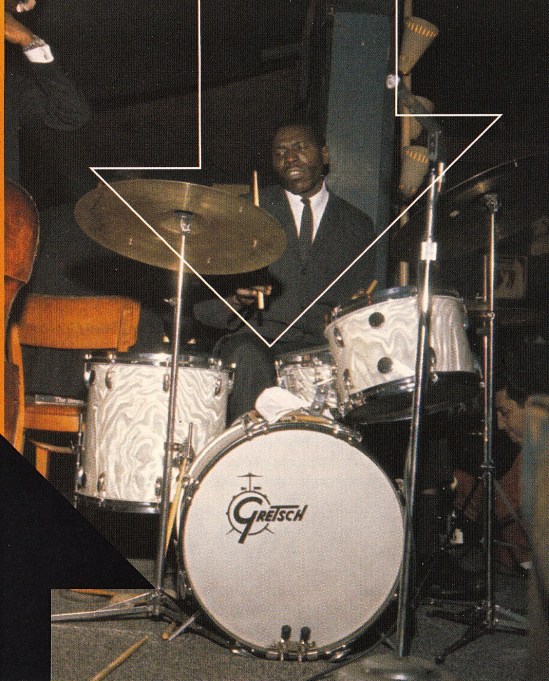
This photo of Elvin Jones, included in the John Coltrane Quartet’s One Down, One Up: Live At The Half Note CD, makes the point. Elvin is shown on the bandstand at The Half Note club in New York City.

Pianist McCoy Tyner‘s is at the piano, behind and to Elvin’s right. Jimmy Garrison‘s left arm and the side of his bass are also visible to Elvin’s right. To Elvin’s left, head about level with Elvin’s snare drum, is a Half Note bartender at work.

Based on other photos in the Half Note CD booklet, this photo is taken from where John Coltrane stood on the bandstand while playing.

I am grateful to club owners for providing venues for jazz musicians to perform and record. Even seeing musicians perform in NYC at The Five Spot or The Village Vanguard, for example, I was struck simultaneously by the jazz toilet aspect and the sense of being on hallowed ground.

And yet, when first seeing the photos accompanying the Coltrane Quartet’s One Down, One Up: Live At The Half Note CD, I had trouble believing what I was seeing. While I am glad the Coltrane Quartet didn’t look at the Half Note stage and say, “Forget it,” I would not have blamed them for doing so.

—end—

Posted in SKF Blog | Tagged , , , , , | Leave a comment

Kenny Clarke & The Musicians Well of Inspiration

SKF NOTE: DrumForum.org member, “Wheresmyroadie?,” posted an excellent, new-to-me, video of Kenny Clarke with a big band playing the song, Bebop. Access to such footage — especially free and easy access — started happening about 50 years after I had been researching and writing about drummers. When excellent videos of classic drummers appear online I am:

  • Delighted someone thought enough to shoot the video and preserve it, and
  • Someone thought enough to make the video available to the public

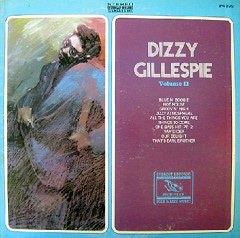
gillespie_things_to_comeI enjoy watching how, say, Kenny Clarke does what he does. My first hearing of Mr. Clarke — long before I knew of his place in drum history — was on record with the original Modern Jazz Quartet. Clarke’s playing with the MJQ worked well with that group. But when I began reading accounts in books/magazines about Clarke’s being fired from big bands for his innovative bass drum accenting (aka, dropping bombs) — I hadn’t heard that side of Kenny Clarke.
Then I bought a budget label Dizzy Gillespie album that included Kenny Clarke on Dizzy’s 1946 big band recording of Things to Come. Hearing that tune was a real WTF? moment for yours truly. I remember thinking, “How is it possible to play drums that fast, that well, while driving a big band?”

Years later, I bought a Bud Powell album, Live at the Blue Note Cafe, Paris 1961, with Pierre Michelot on bass and Kenny Clarke on drums. Unlike his laid back playing on the MJQ album, and not-so-hot sound on Things To Come, I was happily surprised with the Blue Note Cafe album. It is well-recorded and Kenny plays busier than I had ever heard him play. The Blue Note Cafe album remains one of my favorites.

Now, with the advent of historic video of Clarke, Powell, and other musical greats, the Musicians Well of Inspiration grows deeper. Hopefully more and more musicians will have the wisdom to draw from that Well, and perhaps adding their creativity to it from which future musicians can draw.

—end—

Posted in SKF Blog | Tagged , , , , , | 1 Comment

Bill Evans: To Understand Music, Listen Well

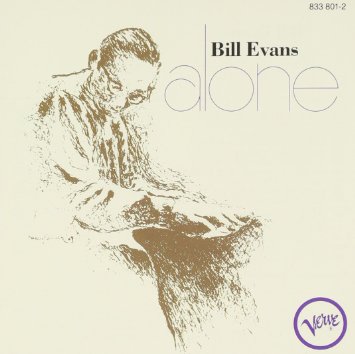
evans_bill_alone“Perhaps the hours of greatest pleasure in my life have come about as a result of the capacity of the piano to be in itself a complete expressive musical medium.


“In retrospect, I think that these countless hours of aloneness with music unified the directive energy of my life.

“At those times when I have achieved the sense of oneness while playing alone, the many technical or analytic aspects of the music happened of themselves with positive rightness which always served to remind me, that to understand music most profoundly, one only has to be listening well.”

Source: Bill Evans: Alone, Liner Notes written by Bill Evans, Verve CD 833-801-2

Posted in SKF Blog | Tagged , , , , | Leave a comment

Morello: ‘You’re Everywhere. Like Tapeworm’

Joe Morello

SKF NOTE: “Scott Fish?” Joe Morello said, shaking my hand. “You’re everywhere. Like tapeworm.” It was 1979-1980. As a freelance writer I interviewed Joe Morello in 1979 for a Modern Drummer feature interview, later moving to Saratoga Springs, NY.

It was a tough transitional time in my life, personally and financially. I had given up on my lifelong dream of earning a living as a professional drummer and I had no backup plan. Age 28, starting life over.

So when I read in a local newspaper Joe Morello was playing in Schenectady, NY, I scraped together the money to go. The venue might have been the still existing Van Dyck Lounge.

An indication of my state of mind at the time, I can’t be sure if Morello had a trio or a quartet. Neither do I recall anything about Joe’s drumset except for his natural wood snare drum. I was surprised to not see Joe playing his signature Ludwig 400 Supra-Phonic snare drum.

When Morello’s group took a break, I went up and re-introduced myself. “Hi Mr. Morello. Scott Fish. I interviewed you for Modern Drummer a while back.”

Shaking my hand, cocking his head to one side, Joe said, “Scott Fish? You’re everywhere. Like tapeworm.” I asked Joe about his snare drum. He said it was an Eames snare drum and he asked how it sounded.

“It sounds a little choked,” I said. Joe was making adjustments to the snare several times during his group’s first set. To my ears, the drum did not sound as open and crisp as Morello’s Ludwig .

Joe nodded, telling me it was a new snare drum built for him by a “a kid,” I learned later  was Joe MacSweeney.

“How does the group sound?” Joe asked me. “It sounds good,” I said. “You could bring the mic on the acoustic piano up just a bit. It’s hard to hear when he solos. The volume is fine when he’s comping, but not when he’s soloing.”

I went back and rejoined friends at my table. A few minutes later, Joe Morello is standing at my table with the club owner. “This is Scott Fish,” Joe says, introducing me to the club owner. ” Joe asked me to repeat to the club owner what I said about the piano mic volume. So, I did.

It seemed to me the club owner was not pleased with this meeting, not sure why he should care what Scott Fish thought about the club sound system levels. Had Joe Morello not been standing there, my sense was the club owner would have told me to get lost.

“Just a little bit,” I assured the club owner. “It sounds great, but instead of being able to enjoy the whole group while the pianist is soloing, I have to strain to hear the piano solos. And that takes away from hearing the group sound.”

During the second set the piano volume was indeed a bit louder. Just right.

Looking back, that Schenectady night was a unique convergence in the world of drumming. Not long after, I was offered and accepted the newly created Managing Editor’s spot at Modern Drummer. Joe MacSweeney went on to a great career building legendary Eames drums and drumsets. And Joe Morello’s career continued expanding as a performer, a teacher, and as one of the Last of the Red Hot Drummers.

— end —

Posted in SKF Blog | Tagged , , , , , | 1 Comment