Stanley Turrentine: “I tell [young musicians], ‘If you don’t love it, forget it.’ [M]y father…said: ‘Once you feel you can’t learn anything off this instrument, I would suggest that you take it to the nearest river, throw it in – and follow it!’”
Source: Stanley Turrentine, The Blue Notes of Mr. T, by Gene Kalbacher, Down Beat, May 1985
There was a drugstore near the original Birdland where musicians would sometimes hang out. This writer remembers seeing [Thelonious] Monk there one cold winter night in the late fifties surrounded by a few admirers as he very carefully pulled on a pair of knit gloves, a finger at a time.
As he was about to put on a second pair of leather ones, he was asked why the knit ones also? He thought for a minute, then solemnly announced, “These are my hand sweaters.”
SKF NOTE: May 19, 1961, Miles Davis and the Gil Evans Orchestra performed their legendary concert at Carnegie Hall. In 1998 Columbia/Legacy released a 2-CD package of the entire concert with extra songs not included with any earlier releases of the concert.
The 1998 CD booklet includes a photo of the Miles Davis Quintet with the Gil Evans Orchestra onstage at Carnegie Hall. The liner notes list all the musicians onstage that night. Except there is a mystery. Elvin Jones is not among the musicians listed in the ’98 CD booklet. Yet, the CD booklet photo by Vernon Smith shows Elvin in the upper left of the photo sitting in the percussion section, a pair of maraccas in hand.
Last night I came across the Miles Carnegie Hall CD again while going through a box of CD’s hauled up from my basement. Renewing my quest to solve this mystery, to give Elvin credit where credit’s due, I found my answer. This time, 18 years since buying the CD, 55 years — almost to the day — since Miles’s Carnegie Hall Concert — I found the official Miles Davis web site credits Elvin Jones as a percussionist.
Has Columbia corrected their Miles Davis at Carnegie Hall CD booklets? Or will the photo mystery continue a while for future CD buyers?
As the 12- and 16-bar blues format became a pop music staple, the drumming lost the subtleties of the Chicago blues innovators. In pop music, blues drumming quite often is played balls-to-the-wall with a simple 12/8 beat on the ride cymbal, and a heavy snare backbeat on beats 2 and 4.
Some drummers in pop bands kept alive the dynamics of the best blues drumming: Levon Helm with The Band, John Bonham with Led Zeppelin, and Phillip Wilson with The Paul Butterfield Blues Band.
In my experience, the Butterfield Blues Band’s 1966 East-West album helped many baby-boomer listeners transition to jazz from rock. East-West has all jazz’s key elements: the blues song forms, jamming, and three unique soloists willing and able to stretch out: Paul Butterfield on harmonica, and both Mike Bloomfield and Elvin Bishop on guitars.
Billy Davenport plays drums on East-West very much in the Chicago blues drumming tradition.
In December 1967 the BBB released The Resurrection of Pigboy Crabshaw with an added horn section and drummer Phillip Wilson. In my view, Phillip Wilson’s playing on Pigboy Crabshaw and the group’s 1968 follow-up album, In My Own Dream, took the innovations of the great Chicago blues drummers to a new level.
Mr. Wilson blazed a trail in a direction opposite his plodding, balls-to-the-wall blues drumming contemporaries. Listen to his playing on the opening song on Pigboy Crabshaw, Last Hope’s Gone — which was my first exposure to Phillip Wilson. Wilson used his drums and cymbals to dance his way through these songs, slipping and sliding, singing, joking, and when need be, digging in.
Phillip Wilson was a first-class listener. His interaction with his team mates on these two albums is superb. Re-listening to these albums yesterday I had trouble picking just two songs illustrating Wilson’s transitional drumming. Also, the Butterfield Blues Band — especially these two albums — were such a part of my musical life in high school. My musician friends and I listened to these albums countless times, playing several of the songs — Drunk Again, Born Under a Bad Sign, Driftin’ and Driftin’ — as part of our Neighborhood Blues Boys repertoire.
One day, walking in New York City’s Washington Square, I saw Phillip Wilson walking my way. “Are you Phillip Wilson?” I asked. He hesitated a moment before saying he was. I don’t remember exactly what I said, but I remember telling Phillip Wilson how much I liked his drumming. He said thank you.
I am glad our paths continue to cross musically, and I am glad I was able to thank Phillip Wilson, in person, for inspiring this young drummer, opening my ears to new musicial possibilities for blues drumming and beyond.

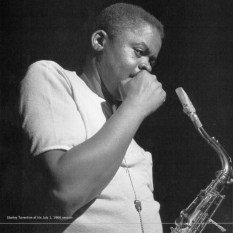 Stanley Turrentine: “I tell [young musicians], ‘If you don’t love it, forget it.’ [M]y father…said: ‘Once you feel you can’t learn anything off this instrument, I would suggest that you take it to the nearest river, throw it in – and follow it!’”
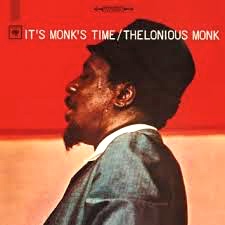 There was a drugstore near the original Birdland where musicians would sometimes hang out. This writer remembers seeing [


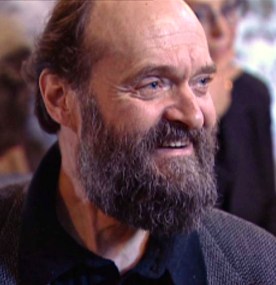 In his liner notes to this recording [





You must be logged in to post a comment.