Bill Maxwell: I Used To Think Record Companies Were Crooks (1982)

maxwell_bill_russell_leon

L-R Leon Russell & Bill Maxwell

SKF NOTE: Drummer/producer Bill Maxwell stopped by Modern Drummer on August 17, 1982 for a feature interview, published in August 1983. Andrae Crouch, The Winans, Freddie Hubbard, Koinonia — Bill Maxwell’s work as drummer and producer is among the best. I said in my previous Bill Maxwell post — Bill had many valuable things to say about music, drumming, and life.

Here’s Bill Maxwell on drummers knowing about the music business. That was a key interest of mine. As often as possible, I asked interview questions about “the business.” Of course, the world of digital music hadn’t arrived yet. Some of the details here about record companies is dated.

But some of what Bill says holds true. Understanding the music business still makes good sense. And readers can sense in this exchange some record industry pressure spots that, once digital recording and distribution was in full swing, exploded.

Scott K Fish: How did you learn about the business end of music?

Bill Maxwell: I remember I took a course in high school on business law and business math that made sense. The first record contract I ever signed — I was about 17. I remember reading that and getting the legal jargon.

Then when I got hired at the record company three-and-a-half years ago to be Director of A&R — I had already started learning this — but, I got to go in and be privvy to where every cent goes in records.

The record business is a thing of pennies. At that time you could buy a record for $6.00. So many pennies go into that.

When you break it down to the fact that the store buys [a record] for half of retail cost, or about $3.00. Then you’ve got a [record] distributor. Now you’re talking about $2.50.

You’re talking about pennies by the time you pay for the album covers, artist royalties, promotion, operating costs of your business. I learned how every bit of it worked, how it went.

I used to think record companies were crooks, that they were all out to cheat us out of our money. But you’d be real shocked when you break it down that simply.

The only questionable area is how some companies operate in their expenses, or why their overhead’s high.

But if I had a million dollars, and I was going to invest in something, a record company would be about the last thing. It’s just not in a profit ratio.

SKF: Are [music] videos hurting records?

BM: A lot of things are. I think the first thing is that the music’s not happening. The second thing is, a lot of money’s been spent on video games. There’s a lot of addiction to that that we didn’t have before.

There’s the accessibility of movies in homes, accessibility to concerts over television. But, first and foremost is that there’s not that much new being done.

Posted in SKF Blog | Tagged , , , , , , , | Comments Off on Bill Maxwell: I Used To Think Record Companies Were Crooks (1982)

Steve Gadd Meets Gene Krupa: ‘He Was Great’

SKF NOTE: Thank you, John Shand, for this story about Gene Krupa meeting Steve Gadd. I did not know those two great musicians had met. I remember someone noticing how often great drummers who came of age after Krupa were touched my an encounter with, a kindess from, the man who put drummers on the map.

The Sydney Morning Herald
December 8, 2016

Steve Gadd: The drummer everybody wants
by John Shand

1481164898848

Gadd began rubbing shoulders with superstars early. His father regularly took him to the Ridge Crest Inn in Rochester, New York, to hear a stream of top-shelf jazz musicians. Among them was the great swing drummer Gene Krupa, with whom Gadd, still too small for a full-sized kit, played when he was about eight.

“We’d sit right next to the bandstand, so I could watch the drummers,” he recalls. “My parents took me into this place a lot, so we knew the lady that ran it, and got introduced to Gene Krupa. I’d brought my little set of drums in and we played together, and then he played my little drums. He was great.”

Full Story

Posted in Drum/Music News, SKF Blog | Tagged , , , | Comments Off on Steve Gadd Meets Gene Krupa: ‘He Was Great’

Dave Weckl – ‘Up And Coming’ Profile 1984

SKF NOTE: When posting the complete transcript of my 1983 interview with Dave Weckl for Modern Drummer, I mentioned MD had published a much shorter version of the interview in April 1984 as an Up and Coming profile of Dave Weckl, which I am posting here. Here’s the back story of how Dave and I first met.

Dave Weckl was age 23 when we met for this interview, living in Bridgeport, CT getting ready to go on tour with Simon and Garfunkel  — arguably the first major gig that put Weckl on the map.

[SKF NOTE: 6/17/17 – Dave Weckl’s profile interview is now available on MD‘s Archive Page.]

Posted in SKF Blog | Tagged , , , , , , , | Comments Off on Dave Weckl – ‘Up And Coming’ Profile 1984

The Drum Thing: Photojournalist Portrays Drummers as Human Beings

the_drum_thing

SKF NOTE: So far, so good. That’s my first impression of Deirdre O’Callaghan’s newly published book of her photos and “personal conversations” with 100 drummers, The Drum Thing.

In my February 2016 Life Beyond the Cymbals post, What Makes a Music Photographer Good?, I wrote about photographers I worked with as Modern Drummer‘s managing editor, summing up my admiration with, “A picture is worth 1,000 words. As much as I love writing, I have always admired photographers and cartoonists with the gift, the skill, of capturing a whole story — or endless stories — in one image.”

This morning an online New York Times story about The Drum Thing grabbed my attention. I bounced to Ms. O’Callaghan’s Twitter page, to The Drum Thing page on Amazon, then to her web site, her Facebook page, and finally, to The Drum Thing on book publisher Prestel‘s web site — all in an effort to learn more about O’Callaghan’s book treatment of drummers.

Prestel’s introduces O’Callaghan’s book:

The drummer is usually the least well-known member of any band. Yet behind every frontman is the person keeping the beat, and often acting as the music’s driving force. In these portraits, Deirdre O’Callaghan places drummers…in their private rehearsal spaces and residences—from studios, bedrooms and basements to garages and gardens—allows her to capture the true essence of their personalities and lifestyles.

From what I’m seeing and reading this morning online, Dierdre O’Callaghan’s photojournalism here nails it. Her photos of drummers are quite good, often superb, with moving surprises in her use of drummer’s personal inanimate items — broken

drumsticks, handwritten notes pinned to cork boards — always with an eye toward helping readers understand drummers as musicians.

Finally, Ms. O’Callaghan’s treatment of drummers, in her photography and writing, first as human beings, is a valuable contribution, perhaps especially to upcoming drummers raised with a steady stream of musical image without substance.

I leave you — hopefully with Dierdre O’Callaghan’s blessing – of a glimpse of The Drum Thing through my edited words segment of her portrait of Steve Gadd.

Steve Gadd

Back in the ’70s no one thought that drugs were ever going to be a problem — we all found out different later on. I was getting called to do work with people who were my idols; if it was a choice to try and stay awake or go to sleep, I’d want to stay up and play music. And part of my life was falling apart. I started using so I could work and then at some point I was working to use, and I didn’t even know what had changed. It was a subtle change.

Music was the only thing I could get lost in and still feel like I was able to give something good to somebody because, in a lot of other areas in my life, I wasn’t able to keep it together. I held on to music for dear life because that’s the only thing that made me feel that I was still connected.

Posted in Drum/Music News, SKF Blog | Tagged , , , , | Leave a comment

Joe Henderson: A Song Intro that Tricks Your Ears

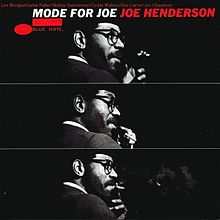
henderson_joe_mode_for_joeSKF: Joe Henderson’s A Shade of Jade is a track to add to the growing list of songs that trick the ears. DrumForum.org has popular, periodic threads on songs from many styles of music that trick our ears. The Doobie Brothers’ Minute by Minute is another trick opening song. You hear the piano intro, start tapping your feet in time — or so you think! When the full band kicks in, some listeners find they are not even close to tapping their feet in time.

In another post here I talk about the same phenomenon, suggesting the beats, the time feel we create during song openings — while our ears play tricks on us — are often worth keeping, not dismissing as wrong.  Certainly, our different conception of time is fun to experiment with, to open our ears more.

Thank God for Blue Note records. “It didn’t matter which one you bought. You knew it was going to be good,” Paul T. Riddle said to me one time about buying Blue Note albums when we were kids. I had to chuckle. Paul is exactly right.

Joe Henderson’s 1966 Mode for Joe album is a case in point. The band is Lee Morgan (t), Curtis Fuller (trom), Joe Henderson (ts), Bobby Hutcherson (vib), Cedar Walton (p), Ron Carter (b), Joe Chambers (d).

The whole album is a keeper, but at least listen to the song intro on A Shade of Jade. Your ears will thank you.

Posted in Audio, SKF Blog | Tagged , , , , , , , | Comments Off on Joe Henderson: A Song Intro that Tricks Your Ears