SKF NOTE: I look forward to the day it is standard practice in the recording industry to make sure musicians are paid for using their sampled sounds. That this is still an unresolved issue is heartbreaking.
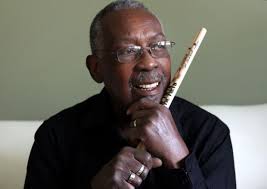
Drummer Clyde Stubblefield, comes to Ardmore Music with James Brown Dance Party
DECEMBER 27, 2016 — 1:36 PM EST
by A.D. Amorosi, FOR THE INQUIRER
These days, [Clyde Stubblefield] drums live whenever he feels the funk. The one thing that gets his goat, though, is the hip-hop sampling of his famed signature pulses, without payment to him. It’s said that Stubblefield may be the most sampled man in hip-hop — and the last one to get his financial due. “I can dig that others try to do what I do, and am happy when people try to play what I play,” he says, “but I do not appreciate not getting paid.”
The release of Savory Collection Vol. 2 has all the elements of my favorite jazz discoveries. At first blush we have 22 first time releases of Count Basie’s big band (1938-1940) with the exemplary rhythm section of Count Basie (piano), Freddie Green (guitar), Walter Page (bass), and Papa Jo Jones (drums).
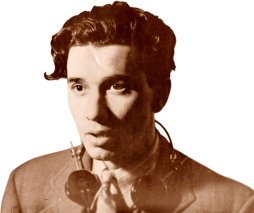
These are live radio broadcasts preserved on aluminum discs by Bill Savory. His is a new name to me. But from what I’ve read of Mr. Savory in the Wall Street Journal, the New York Times, and The Jazz Museum in Harlem — he was a brilliant, audio engineer with a love for great jazz. I look forward to learning more about him.
Most of Bill Savory’s recordings were kept private for 60 years — and were almost lost through neglect. Savory’s son sold the bulk of his father’s recordings to Founding Director and Senior Scholar Loren Schoenberg of the National Jazz Museum in Harlem.
Bill Savory (Courtesy New York Times)
According to the NYT, “Because of deterioration, converting the 975 surviving discs to digital form and making them playable is a challenge. Mr. Schoenberg estimates that ’25 percent are in excellent shape,’ he said, ‘half are compromised but salvageable, and 25 percent are in really bad condition,’ of which perhaps 5 percent are ‘in such a state that they will tolerate only one play’ before starting to flake.”
That’s another concern of mine, especially for existing audio and/or video interviews with great drummers. What’s going to happen to those archives when the interviewers are gone?
I look foward to hearing this music and learning more about Bill Avory, and also, the yeoman’s work by audio engineer Doug Pomeroy in restoring this music.
radio.com Grateful Dead’s Mickey Hart on Returning to Planet Drum He’s reissuing his classic 1991 solo album, but he also talks about playing with John Mayer, Walter Cronkite and President George H.W. Bush.
December 16, 2016 10:25 AM
By Brian Ives
Q. What’s the secret to playing with another drummer?
Mickey Hart: It’s trust. It’s a certain kind of love you have to have to give yourself up to a common beat. You have to listen deep, that’s the most important thing: to listen. Deep listening. You have to try to come up with a unified sound. If you don’t really listen, you’re just beating stuff up. It won’t work. A lot of drummers can’t play with each other because they’re egocentric, or they’re not really listening and hearing what the other person is doing. Or they’re not trying to add to it and become a giant organism, to breathe together.
…I love [Grateful Dead drummer Bill] Kreutzmann, and we have a great conversation going over all these years. We made it work, it’s special. We don’t exactly know how we do it, and we never sit down and analyze it, we don’t talk about it. Ever. We just do it. We give each other signals, a wink, a nod, but we’re also telepathic. It feels great when it works.
SKF NOTE: If I were a rich man, I would certainly own and listen to the new 36-CD Bob Dylan: The 1966 Live Recordings boxed set. Bob Dylan going electric. Bob Dylan and The Band’s early collaboration — except Levon Helm. Levon had more than enough abuse from audiences during this tour’s early dates.
So we have multiple CD’s of historic music with drummer Mickey Jones with Bob Dylan, Robbie Robertson, Rick Danko, Richard Manuel, and Garth Hudson. Thank you, Houston Chronicle Entertain Writer Andrew Dansby for helping restore Mickey Jones’s historic legacy.
=========
Bob Dylan. 1966. The drummer from Houston Mickey Jones and that mythical tour By Andrew Dansby December 15, 2016
“Bob Dylan: The 1966 Live Recordings,” that enormous new boxed set, shows that the year 1966 was a big one for Dylan. In 1965, he’d issued “Bringing It All Back Home” and “Highway 61 Revisited“; in ’66, “Blonde on Blonde.” Then, when he went on the road, he counfounded audiences by playing a set of solo acoustic folk-inclined music before returning with his band to fry eyebrows with a loud, electric set.
It’s a glorious interlude in a curious entertainment career — that included drumming for both Dylan and Kenny Rogers….
Jones…grew up in Dallas, where he hooked up with musician Trini Lopez for four years. Jones jumped from Lopez’s band to Johnny Rivers. And that’s how he ended up at the Whiskey a Go-Go…with Bob Dylan in the audience.
“He said, ‘You’re my favorite drummer and I’d love to record with you,'” Jones recalled.
Six months later [Jones] got a call. Dylan had been playing with the musicians who would go on to become The Band. Drummer Levon Helm had to drop out of the tour, so Jones was hired as his replacement at $750 a week.
He found himself at the center of a tour that has become mythical.
Jones was in many ways an outsider on the tour, the sole member of Dylan’s band that hadn’t spent years playing with the others.
[Levon Helms’s] biography…was dismissive of Jones — “He called me a clubber….”
But the release of dozens of shows from that 1966 tour serves as a reminder….
It was, Jones said, “the greatest rock ‘n roll tour in history.”
SKF NOTE: This is the first audio excerpt of my phone interview with William “Smokey” Dacus over 35 years ago. Smokey Dacus was the first drummer to play in a country band. Legendary bandleader Bob Wills had the idea, in Smokey’s words, to add oomph to Wills’s fiddle band. “So he hired me,” says Smokey.
In August 2015 I published the full interview transcript. It should be available to music historians and drum historians — especially, but not exclusively, to country music historians.
Smokey went from working in bands and orchestras where everything he played was written, to Bob Wills and the Texas Playboys where nothing was written. Plus, Smokey had no role models. No other drummer was asked to do what Bob Wills asked Smokey to do. How Smokey adapted is a key piece of drumming history.
In this first audio excerpt from our phone conversation, Smokey is telling me about the moment he became a professional drummer. It happened while Smokey was in college.

 SKF NOTE: I look forward to the day it is standard practice in the recording industry to make sure musicians are paid for using their sampled sounds. That this is still an unresolved issue is heartbreaking.




You must be logged in to post a comment.