Music Interviews and the ‘Me Too’ Syndrome

morelistening

SKF NOTE: These last few weeks I’ve started digitizing my drummer interview audiocassettes. That is, I’m recording copies of the interviews to my MacBook from a cassette deck. As I do so, I’m discovering, or reminding myself, of interview “do’s” and “don’ts” that may help upcoming music writers.

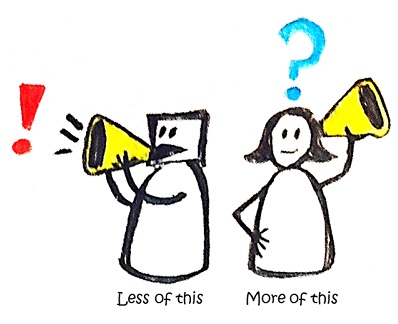
Sometimes, either by my invitation, or because of circumstances, other people took part in my interviews with drummers. When a guest adds to the conversation, the interview — it’s wonderful. But when a guest talks more than me (the interviewer) and/or the drummer I’m interviewing — the whole mood sours.

A chronic “me too” syndrome, is one example. That’s where the drummer I’m interviewing shares a story like, “One of my best drum teachers was a local piano player nobody ever heard of: Thomas Kraft. Well, Thomas Kraft had a lot of on-the-job experience. He taught me about what other muscians like and don’t like in drummers. That helped me tremendously.”

Immediately, a guest with the “me too” syndrome pipes up with a similar — sometimes not so similar — story about himself. “Me too” stories almost always add nothing of value to interviews. Instead, “me too” stories waste time, kill momentum, and in extreme cases, force the interviewer to ask the “me too” guest to stop interrupting.

Interruptions always make transcribing interviews much harder. Trying to hear an accurate quote while two people talk at once, or while a “me too” guest habitually finishes the sentences of the musician you’re interviewing.

With the advent of digital sound, I’m finding “me too” guests make it very difficult, in some cases impossible, to create digital sound bites from audio cassettes.

Given the chance to go back in time and do over drummer interviews with “me too” guests present? I would make it clear, upfront, that the purpose of this interview session is to hear what the drummer has to say. My job is to help the drummer tell his or her story. If the “me too” guest can do that too — great. Otherwise, stay home, please.

To be clear, I’ve had people with me on drummer interviews who, by their knowledge, maturity, ability to listen to other people, and knowledge of the drummer being interviewed, made the interview much, much better.

Photo Courtesy of Business Critical Learning
Posted in Revisiting My Life in Music, SKF Blog | Tagged , , , | Comments Off on Music Interviews and the ‘Me Too’ Syndrome

Levon’s Drums: Sliding to a Different Tonality

Robbie Robertson: I wrote The Weight in late 1967 in a house I was renting in Woodstock, N.Y.

The Band…had already written enough songs for Music From Big Pink. But I wanted one more as a fallback, just in case.

Our drummer and singer Levon Helm had just returned after spending nearly two years away from the music business. I wanted to write a song that Levon could sing better than anyone in the world.

As the song’s words came to me, I wrote them on my portable typewriter. I got used to typing lyrics from Bob [Dylan]. I never saw him write anything with a pen or pencil. He’d make little corrections on his typed pages, but everything he wrote initially went through his typewriter.

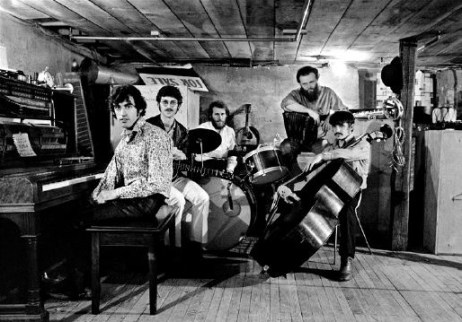
The-Band-at-instrumentsThere was no magic to this process. It was just that Bob knew how to type. He had taken typing in school.

When the Band got together to rehearse at Big Pink in late ’67, I had a basic chord structure, a melody and words. I taught that to everybody. At some point during rehearsals, I stumbled across Levon adjusting his drumheads and the sounds they made. I had him loosen the heads so when he hit them, the sould would slide to another tonality.

We recorded The Weight in early 1968 at New York’s A&R Studios. We set up in a circle. We couldn’t record in isolation booths with headphones — we needed  to look at each other and lock in. We were used to sitting around playing together in Big Pink’s living room and basement, and hearing everybody at once.

Source: The Weight by the Band’s Robbie Robertson, by Marc Myers, Nov. 29, 2016, Wall Street Journal

Posted in Drum/Music News, SKF Blog | Tagged , , , , , | Comments Off on Levon’s Drums: Sliding to a Different Tonality

Newly Released Photo: Jaimoe & Butch 1982

820012_jaimo_butch_md_endorse_pic-copy

SKF NOTE: Allman Brothers drummers Jaimoe and Butch Trucks said yes to being part of my idea to tweak Modern Drummer magazine’s Who Reads Modern Drummer? in-house ads. Noted drummers were asked to provide MD a photo and their statement about MD. The magazine would combine the photo and statement into a full-page MD ad.

No arms were ever twisted. No special promises were ever made. We were grateful for the public thumbs-up from the professional drummers. And it’s safe to assume those drummers would not have worked with us if they didn’t think well of Modern Drummer.

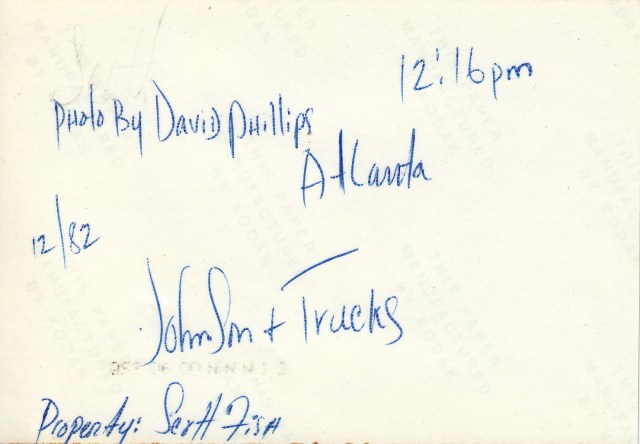
In December 1982, Butch and Jaimo sent me this snapshot of the two of them holding an MD with Elvin Jones on the cover. The flip side of the snapshot has the photographer’s credit. The handwriting, I believe, is Jaimoe’s. I love the photo, but snapshots rarely reproduced well in the magazine. We used snapshots only when we had no other choice.

When I find Butch and Jaimoe’s actual Who Reads Modern Drummer? ad I’ll add it to this post. But I know we did not use this photo.

820012_jaimo_butch_md_endorse_pic_0001-copy

— end—

Posted in SKF Blog | Tagged , , , , | Comments Off on Newly Released Photo: Jaimoe & Butch 1982

Why a Snare Drum & Sticks, Little Drummer Boy?

SKF NOTE: From a drummer’s perspective: Why do most recordings and performances of The Little Drummer Boy (aka A Carol of the Drum) assume that 2,000 years ago, the little boy who played drums for Jesus in the manger, used a pair of drumsticks and a snare drum?

— end —

Posted in Audio, SKF Blog | Tagged , , , , | Comments Off on Why a Snare Drum & Sticks, Little Drummer Boy?

Revisiting Chris Smith’s Bio of Mel Lewis

51fjnztzhnl-_sx331_bo1204203200_SKF NOTE: Mel Lewis biographer Chris Smith has some new to me photos and music he’s sharing on Jon McCaslin’s Four On The Floor blog. I especially like the 7-minute live, unrehearsed duet between Mel Lewis and tenor saxophonist Bob Mintzer. Mel’s spoken intro alone is worth a listen.

Jon’s photo of Mel having a conversation with Gene Krupa is also excellent.

In revisiting Chris Smith’s Mel Lewis bio, The View from the Back of the Band: The Life and Music of Mel Lewis, I notice he writes in the book’s Preface:

Several informative interviews with Mel have previously been published in Modern Drummer, Crescendo, and DownBeat magazines. He also did a series of three lengthy interviews with Bob Rusch for Cadence magazine in 1989. These interviews are now out of print….”

I wanted Mel Lewis and Chris Smith fans to know my 1978 Modern Drummer Mel Lewis interview, referenced in Mr. Smith’s book, is available for reading right here on Life Beyond the Cymbals.

—end—

Posted in SKF Blog | Tagged , , , , | Comments Off on Revisiting Chris Smith’s Bio of Mel Lewis