Gil Evans: The Answer to All Musical Problems

GIL_Evans_CarolFriedman

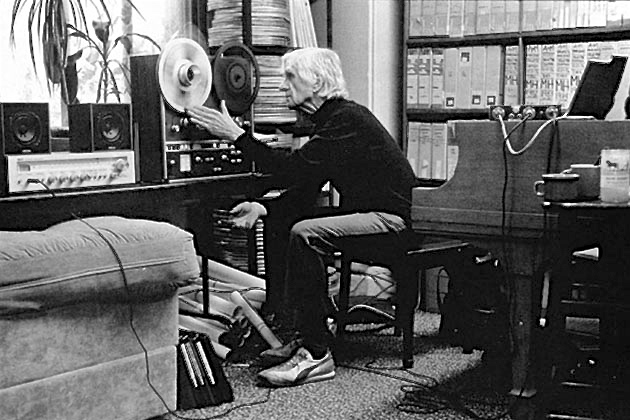
Gil Evans photo by Carol Friedman, 1978. http://bit.ly/2vffwzr

SKF NOTE: This weekend I re-read Gil Evans‘s 5/20/76 interview with Down Beat contributor Arnold Jay Smith, on the cusp of synthesizers’ broad use in jazz and other musics. Evans, creator of unique, acoustic sounds, was an early proponent of synthesizers. He was also a musical adventurer, never stuck in one style.

To my ears, Gil Evans’s records were not always home runs. But that didn’t matter. His were also records I would buy without hearing them first, because I knew I would learn something from them.

“The synthesizer’s like any other instrument. They’re all the same You simply find out their capabilities and use them,” Gil told Arnold Jay Smith.

Mr. Smith, comparing the acoustic musicial instruments in Evans’s bands with the electronic instruments asks, “How do you know when to use the electronic gear?”

Gil Evans has a great deal to learn about what synthesizers can and can’t do, about what works and what doesn’t, he tells Smith.

“That’s the answer, of course, to all musical problems: sit down and do it,” said Evans.

I love Gil’s spirit.

At one point in a conversation about capabilities of synthesizers, Evans mentions wave forms, and in defining “wave form” for Arnold Jay Smith, Evans reinforces Max Roach‘s comments on great jazz musicians Max played with.

“The wave form is the sound that you recognize when you hear something played. Coltrane, Miles, Hawkins, Armstrong – that personal sound they had is their own private wave form,” said Gil Evans.

Great stuff!

Posted in SKF Blog | Tagged , , , , , | Comments Off on Gil Evans: The Answer to All Musical Problems

Dancing to a Flexible Beat

scottkfish_lifebeyondthecymbals_2017

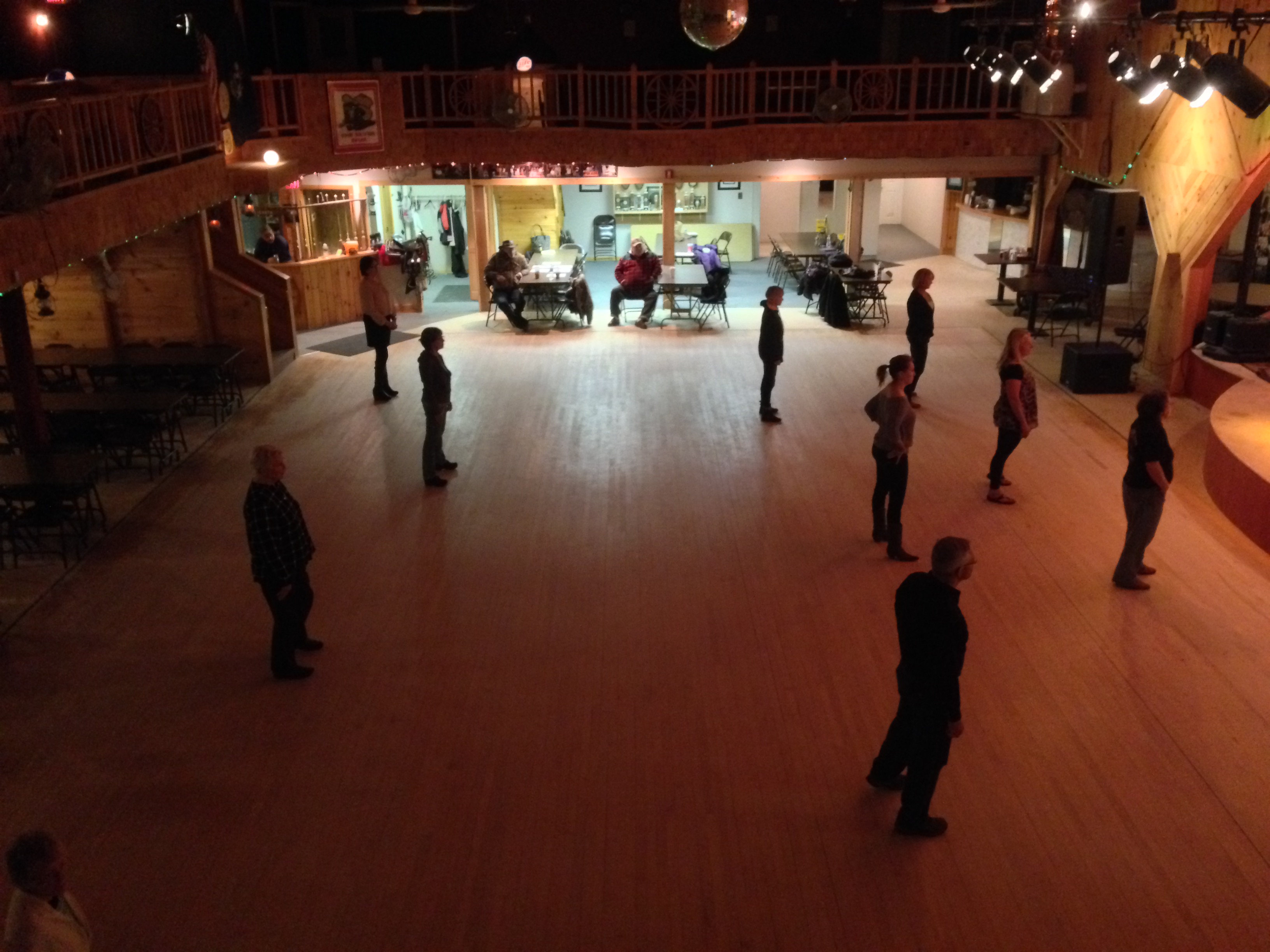
SKF NOTE: Last night I realized a line dance class with 40 amateur adult dancers is a perfect place to study how differently people can dance out of unison with each other – and still be dancing in time. That is, keeping the beat, with some dancers pushing the beat, others falling smack dab in the middle of the beat, and still others – like me – almost behind the beat.

And I was reminded of how larger musical groups of any style — marching bands, to big jazz bands, to orchestras — have to rehearse, to discipline themselves, to give-and-take until the whole group is hearing the beat the same.

The line dancing class is also a fun place — for me, at least — to experiment with the beat without losing the beat. I tend to think of my feet, while dancing steps, the same as if I am accompanying the dance songs on a drumset.

Sometimes, on purpose, I hold back placing my feet down (equivalent to playing an accent on a drum) until the very last second. And when I’m simply dancing for myself, not trying to sync up with a the entire class, if I focus too long on the feet of a dancer who is right on top of the beat — it can throw me off.

In small bands, musicians playing slightly out of sync can create a nice tension to the overall sound. But there will always be times when band members need to hear as one, otherwise they sound sloppy.

I am reminded of that every Monday night line dancing.

Posted in SKF Blog | Tagged , , , | Comments Off on Dancing to a Flexible Beat

Ed Thigpen Endorsement Letter (198?)

ed_thigpen_endorsement_letter

SKF NOTE: This is Ed Thigpen’s statement for his Who Reads Modern Drummer? ad. The background story on that ad series is here. The signature on this page is Ed Thigpen’s. The editing/proofreaders marks, and the twice underlined handwritten Save, belong to the magazine founder/publisher Ron Spagnardi.

The final statement used in Mr. Thigpen’s ad was:

Whether I’m reading the latest issue, or re-reading an earlier one, I never fail to learn something of value from Modern Drummer Magazine.

Thank you, Bernhard Castiglioni at Drummerworld.com for this instructive video of the always musical Ed Thigpen.

Posted in SKF Blog | Tagged , , , | Comments Off on Ed Thigpen Endorsement Letter (198?)

Smokey Dacus – Studio Drum Recording with Bob Wills

SKF NOTE: Smokey Dacus said he is the first drumset player to play with a country band. The full transcript of our interview is available on my blog here. The start of this tape is clipped because I had switched cassettes during this phone interview, missing a few seconds of Smokey talking.

But, Smokey is talking about a young recording engineer, around the time of this interview, who is puzzled Smokey is using so few drums in the studio. Smokey tells the engineer, “You don’t need alot of drums to play rhythm.” And to prove his point, Smokey sets aside his snare drum, and records the date using hi-hat and bass drum only.

Finally, Smokey shares some historical information on how he muffled his bass drum for studio recordings starting in 1935!

Posted in Audio, SKF Blog | Tagged , , , , , | Comments Off on Smokey Dacus – Studio Drum Recording with Bob Wills

A Shared Moment Can Last a Lifetime

Joe Morello - RCA 9784-4-RB Bluebird

SKF NOTE: I write a weekly column for the Piscataquis Observer newspaper, usually on ideas, policies, to make rural Maine a more viable place to live and work. My July 14th column, however, was about Joe Morello.

=====

A Shared Moment Can Last a Lifetime
Scott K. Fish, Special to the Piscataquis Observer • July 14, 2017

Sometimes, not often enough, I remember to ask professional and semi-professional musicians why they play their respective musical instruments.

To the friend who plays with the Bangor Symphony Orchestra, “Why the clarinet?”

The woman playing background Christmas music in Portland’s Victoria Mansion, “Why the harp?”

And a violinist in Dave Mallett’s band, “Why the violin?”

Think about that. Of all the musical instruments in the world, the pro- and semi-pro musicians I’ve met devote their time and energy to just one. Oh, they may play more than one instrument. Piano, for example. Reed players may play a few reed instruments. String players may play a few string instruments.

But in my experience, pro- and semi-pro musicians favor one instrument over all others. And every time I’ve asked musicians why they play the instrument they do, I’ve never gotten the profound answers I hoped for. The answers have usually been along these lines: “There was a violin in the house when I was growing up. When I first thought I’d like to play a musical instrument, that was the musical instrument we had.”

But once in a Japanese restaurant with drummer Levon Helm, Levon spoke of the great drummer, Joe Morello, as playing the drumset with the sensitivity of Jascha Heifitz playing the violin.

Levon’s observation about Joe Morello was profound in this way: When I first met and interviewed Morello in March 1978 and asked him, Why drums?, Morello said, as a kid, he was studying violin. Then Morello heard Jascha Heifitz play, got discouraged, quit studying violin, and began studying drums. Morello, who was legally blind, said his “old man” gave him bad eyes, but a great pair of ears. 

It is impossible, I suppose, for many (most?) people to appreciate the artistic level at which Joe Morello performed on the drums. Best known as a member of the popular Dave Brubeck Quartet, Morello — who died at age 82 in 2011 — is simply one of the greatest drummers ever. 

And those of us who play drums, I think, have an even better appreciation of how unique and demanding Morello’s artistry truly was.

I am among the generations of drum writers who knew many of the great drummers. As a younger man, I welcomed every chance to speak with, or read stories by, people who knew my musical heroes. In the same way, I hear from drummers curious about Joe Morello and other drummers I knew who are no longer alive.

My recollections are more so about drummers as human beings first.

One evening in New Jersey Joe and his wife, Jean, were visiting at the home of friends. I was there too, but don’t remember why. What I do remember, are the three concrete steps down to the walkway from the Morello’s friends’ home front door. Joe had a wee bit too much to drink. Enough to make him unsteady.

As we were leaving, approaching that first step down, Joe took my arm for support, and held it down the steps and walkway — asking me the whole time how close was the next step, how far down would he have to step — until we reached the Morello’s car.

For me, a 30-something drummer/writer — that was a powerful few moments: the contrast in Joe who could find his way around a drumset with blistering speed, with Joe who couldn’t find his way down three steps. His grace and utter selflessness in just taking my arm. And the honor I felt – and still feel – that he trusted me enough to choose my arm at that moment still brings tears to my eyes.

Posted in SKF Blog | Tagged , , , | Leave a comment