SKF NOTE: I do not own the copyright to this track and I will gladly remove it. This is track 1, Side 1, of a vinyl LP I bought called Billy Eckstine Orchestra 1945. The graphic here is from the album cover. I dubbed my LP onto a high quality cassette years ago and digitized that cassette just days ago.
This track is the first time I heard Art Blakey with a big band — and to borrow a phrase from the song title, I was blown away. Nothing here is ultra-slick, but to my ears, Blakey is playing perfect.
SKF NOTE: I first heard John Von Ohlen on Stan Kenton’sStan Kenton Today: Recorded Live in Londonalbum. And, son of a gun, I happened upon a YouTube video of the 1972 Kenton band in concert in London — and John Von Ohlen is set up front and center. Nice!
I thoroughly enjoyed my October 12, 1974 interview with John. He was as genuine a human being as he was a drummer. Straight ahead.
Reading through the unedited interview transcript I find gems all over. Here’s John with insight on Woody Herman’s love of drummer Davey Tough.
=====
Scott K Fish: Did you ever have the desire, or the chance, to speak to Woody [Herman] about any of the classic big band drummers that worked with him?
John Von Ohlen: He loved Davey Tough. That was his favorite. He wouldn’t downtrod anybody else — because he had some great drummers — but, Davey Tough was the magic in his eyes. Always was.
There’s a three- or four-record set called The Thundering Herds. Davey’s on a couple of those [tracks]. He’s playing a closed hi-hat and nothing else. The band is smoking on these fast tempos, and if you listen real close, Davey’s playing on the closed hi-hat. But it’s burning.
I’m not saying he played that way all the time, but he was just going at it on the closed hi-hat — and it was really going.
But I never nitpicked Woody’s head too much. Not like I did with Stan Kenton when I was in his band.
But, I know Woody loved Davey Tough, Don Lamond, and Jake Hanna. He loved all those guys.
What are schools for? Scott K. Fish, Special to the Piscataquis Observer • June 21, 2019
In junior high school, and high school, two “guidance” counselors told me I should drop out of school. I was never going to make it to graduation, they said. Failure was inevitable. Why not just hasten the process and drop out?
Those counselors came to mind this week, ironically, in situations where I was learning new or revisiting favorite ideas about improving education in 2019 and for the future..
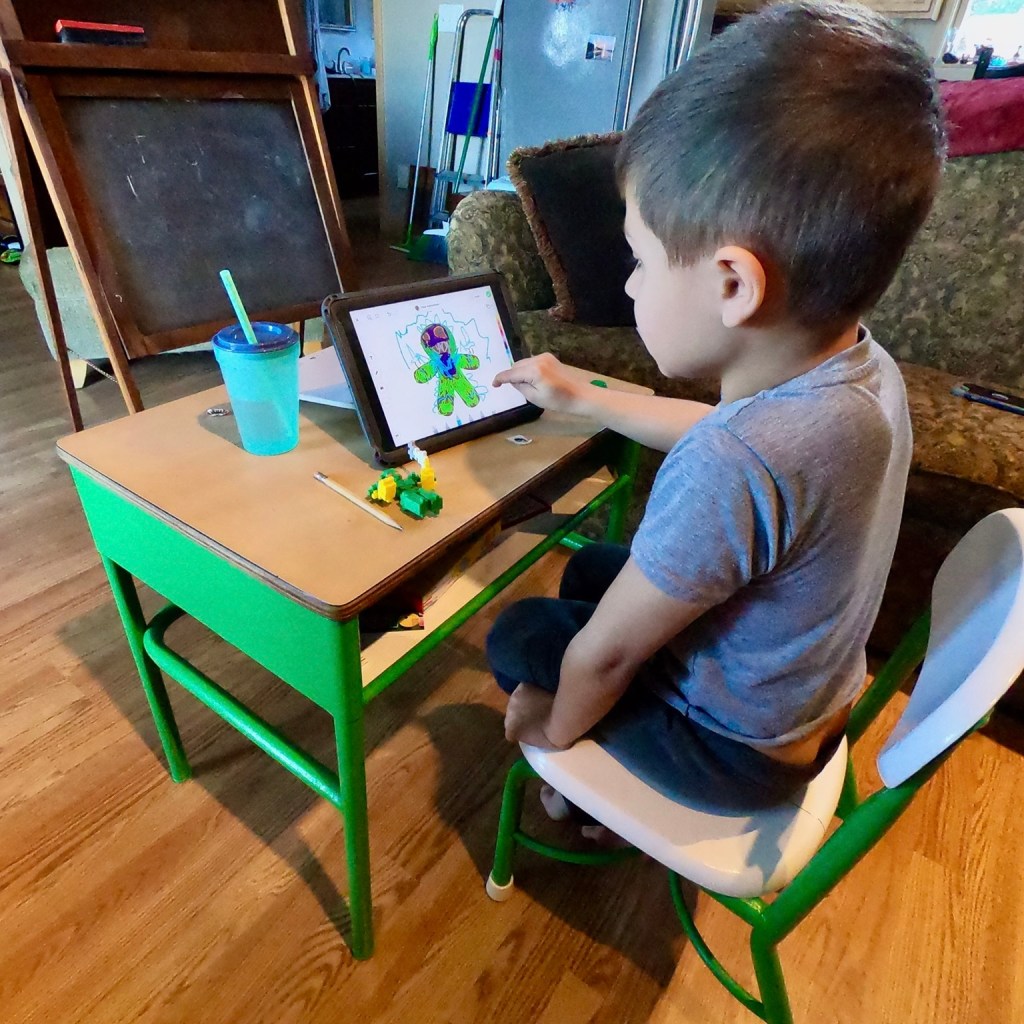
My grandson, Grafton, is five-and-a-half years old. He is in pre-school now. The several times I’ve walked his school halls and glanced in on the classrooms enroute to picking up Grafton, I often think of my school experience and wonder what will be Grafton’s school experience?
My root frustration with school was I knew early on, starting when I was just a few months older than Grafton, what I wanted to do with my life. I wanted to be a drummer. There was no encouragement for that at school, and not much at home either.
While some may dismiss my desire as the fanciful wishes of a kid, I did become a professional drummer. And I later combined my musical skills with a second desire to be a professional writer, by working as a music journalist.
Grafton is starting school at a great time in history. He can have what author Seth Godin calls a “precise focused education instead of mass batch stuff.”
Godin has written a number of insightful books about marketing and the internet. Recently, Godin launched his Akimbo podcast. This week I am re-listening to Godin’s “Stop Stealing Dreams” podcast episode, in which he invites us to examine, “What are schools for?” Then Godin gives a mini-history of US public education. During the Industrial Revolution the push for public education was not to train kids “to be the scholars of tomorrow.” School was used “to train factory workers, to teach obedience, and to train us to fit in,” Godin said.
Today, argues Godin, we are at a cultural crossroads. “We say the only thing we care about, the only place we’re willing to cross the street to go, the only thing we’re willing to buy, the only person we’re willing to vote for, the only stuff we’re willing to talk about, is interesting. Is art. Is new. Will touch us. It is valuable.
“And then we spend all of our money and all of our [school] time teaching people not to do that,” Godin said.
With internet technology tossed into the education mix, Godin tells us, “for the first time in history we do not need a human being to stand next to us to teach us to do square roots. Because the internet connects us all.”
Godin outlines eight aspects of education that will change when we ask and answer the question: What are schools for?
The changes include: Students having homework during the day, and watching world class lectures at night on any subject available to anyone with an internet connection. During the day students sit with a teacher, ask questions, do their work, explore.
“It’s stupid to have the same lecture, handmade, given ten thousand times a day across the country when we can get one person to do it great for the people who want to hear it,” said Godin.
Have open book, open notes all the time. Godin believes, “There is zero value in memorizing anything ever again. Anything worth memorizing is worth looking up.”
Measure student experience instead of test scores, said Godin. “Are we asking our kids to collect dots or connect dots? You can only teach kids how to connect dots by putting them in a situation where they can fail.”
Godin says, “Grades are an illusion. Passion, insight are a reality.”
Lucky Grafton. Now is an exciting time for education for people wise enough to make the best of it.
SKF NOTE: This excerpt is from my interview with Ed Soph on May 19, 1978 at his home, a rental cabin, in the woods of Garrison, NY near West Point. It was my first time meeting Ed. A few years later we were both living in Connecticut and got to know each other better. Soph was a delight to interview. Always thought provoking and thoughtful.
Our conversation opens here with me mentioning how Mel Lewis notes the dropoff in drummers who can swing. A phenomenon Mel attributed to up-and-coming drummers listening mostly, or solely, to straight eighth-note feel music — such as rock music.
Soph agrees and we define the issue, then offer some alternative ways in which young drummers can be taught how to swing. As usual, good thoughts and advice from Ed Soph.
CAVEAT: The language here is graphic in a few spots. Anyone thinking of playing this for minors may want to listen first, then decide.
Chris Conrade was the common denominator here. Chris and I shared an apartment at the time, and Chris had studied drums with Ed Soph. Ed’s voice and my voice are heard most here, but Chris is the third voice you hear.
SKF NOTE: Listening to my copy as I write. Great band all around. Roy Haynes burns.
“Getz At The Gate” is a previously unreleased 1961 live recording from the historic Village Gate in New York City. This release features an all-star, rarely heard quartet with pianist Steve Kuhn, bassist John Neves and drummer Roy Haynes (aka ‘The Boston Band’). Includes extensive liner notes by Boston jazz historian Bob Blumenthal.

 Scott K Fish
You must be logged in to post a comment.