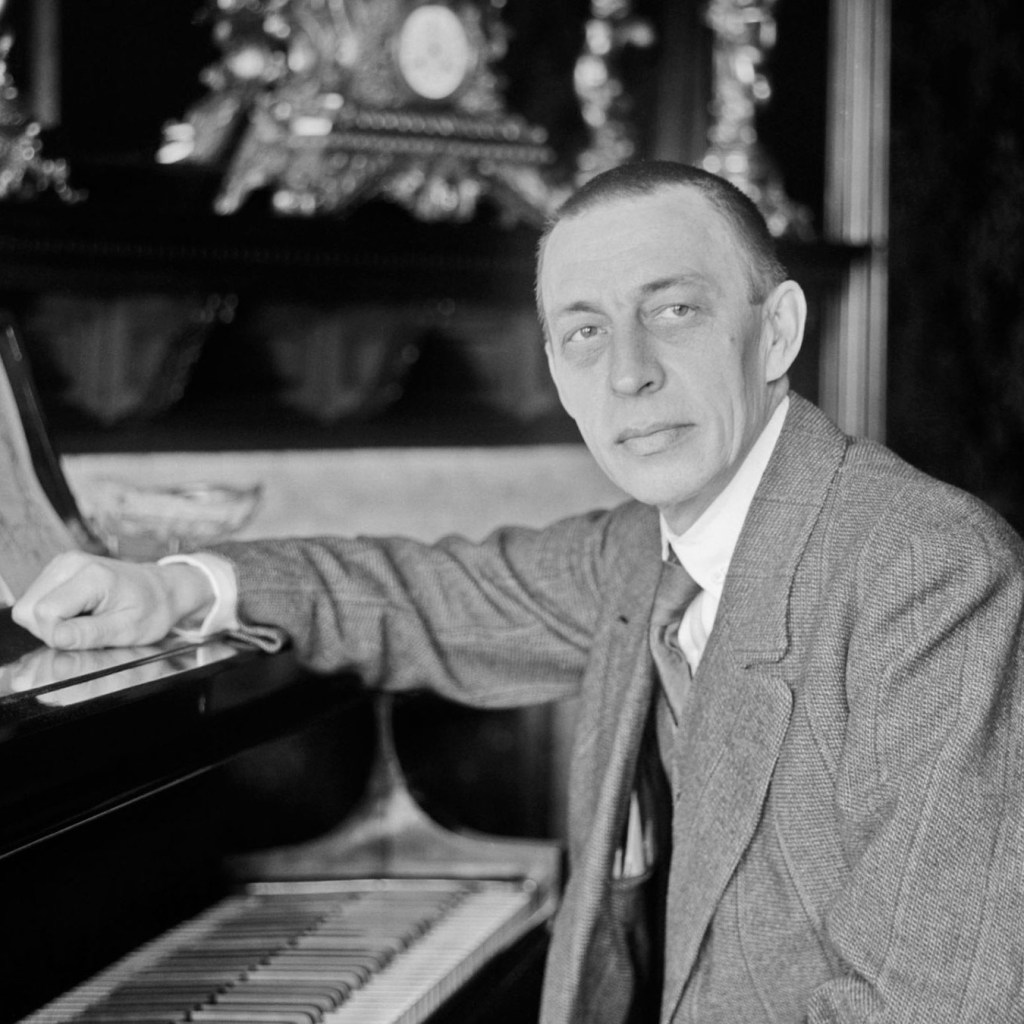
SKF NOTE: Here’s a bit of universal wisdom from the great pianist/composer Sergei Rachmaninoff from a book I’m reading:
If we are to have great music we must return to the fundamentals which made the music of the past great. Music cannot be just color and rhythm; it must reveal the emotions of the heart.
Source: Sergei Rachmaninoff: A Lifetime in Music, by Sergei Bertensson (Muriwai Books 1956)
SKF NOTE: More than 50 years later I still can’t believe there are no outtakes to the 1966 album, The Avant Garde, by John Coltrane and Don Cherry. This album, which I picked up as a cut-out, was my introduction to drummer Ed Blackwell. At that time, Max Roach was my favorite drummer. Blackwell’s playing on The Avant Garde sounded to me like he had taken Max’s melodic drumming concept to a new level.
Wickipedia tells us, “The album was assembled from two unissued recording sessions at Atlantic Studios in New York City in 1960.” Five songs. Just shy of 34 minutes of music. I know recording sessions have produced less music than that. Sometimes promising sessions produced no music.
But, I keep the dream of a release of new music from this session alive. Heck, I’d love to hear club or concert recordings of this group. The two sessions had different bassists – Charlie Haden and Percy Heath – but they were both very good.
Earlier this week I downloaded the Ed Blackwell Trio’s Walls-Bridges album. The download was botched and I’m trying to re-download the full album. Looking forward to listening.
Meanwhile, if you’ve not yet heard Ed Blackwell’s drumming — please do. The Avant Garde is a good place to start.
SKF NOTE: Regret comes at solitary times; driving a car long distance, or at my computer searching for a blog post topic. Sometimes, like now, I remember opportunities to interview drummers, to capture their stories, lost.
When I was at Modern Drummer (1980-1983), Cozy Cole was still alive. He died on January 9, 1981 before we interviewed him. I was about to write “before we had a chance to interview him.” But that’s not true. While Cozy was alive we had opportunity to interview him. Our opportunity was lost when Cozy died.
I’m not casting blame on the MD editors, myself included. The list of drummers to interview was long; the available publishing space per MD issue was short.
I called Swan Song Records to request an MD feature interview with John Bonham about 15-minutes after Swan Song knew Bonham died. Lost opportunity.
As with Cozy Cole, unexpected death is, by definition, unexpected. The lost opportunity is regrettable, but not caused by malice, oversight, or neglect.
One drummer I chose not to interview was Charles “Keep A-Knockin'” Connor, known best as Little Richard’s performing band drummer. The precise timing on this event is blurred. I remember being sent a press kit by someone working at a radio station where Mr. Connor worked at the time.
The press kit included a photo of Connor onstage with Little Richard, a bio, and a 45-rpm record Connor made that sounded, as I recall, like Little Richard’s music.
I was almost certainly writing my five-part History of Rock Drumming at the time. The first two parts may have already been published. I had already spoken with drummer Earl Palmer who played on most of Richard’s hit records. Palmer said, with few exceptions, he played on Little Richard’s studio dates, while Connor did Richard’s live appearances.
The History of Rock Drumming was about the recorded history of rock drumming. When I was interviewing drummers who played on an artist’s records and concerts – we’d talk about any overlap. But uncovering and writing about the history of rock drummers who played on live dates was beyond the scope of my project.
So, I passed on interviewing Charles “Keep A-Knockin'” Connor.
Now, and for a number of years, I regret that. Even if I wasn’t able to use his story in the History of Rock Drumming, I should have, at the very least, grabbed the opportunity to record Mr. Connor’s story for posterity.
I’m sorry, Mr. Connor, I didn’t. I’m glad someone else did.
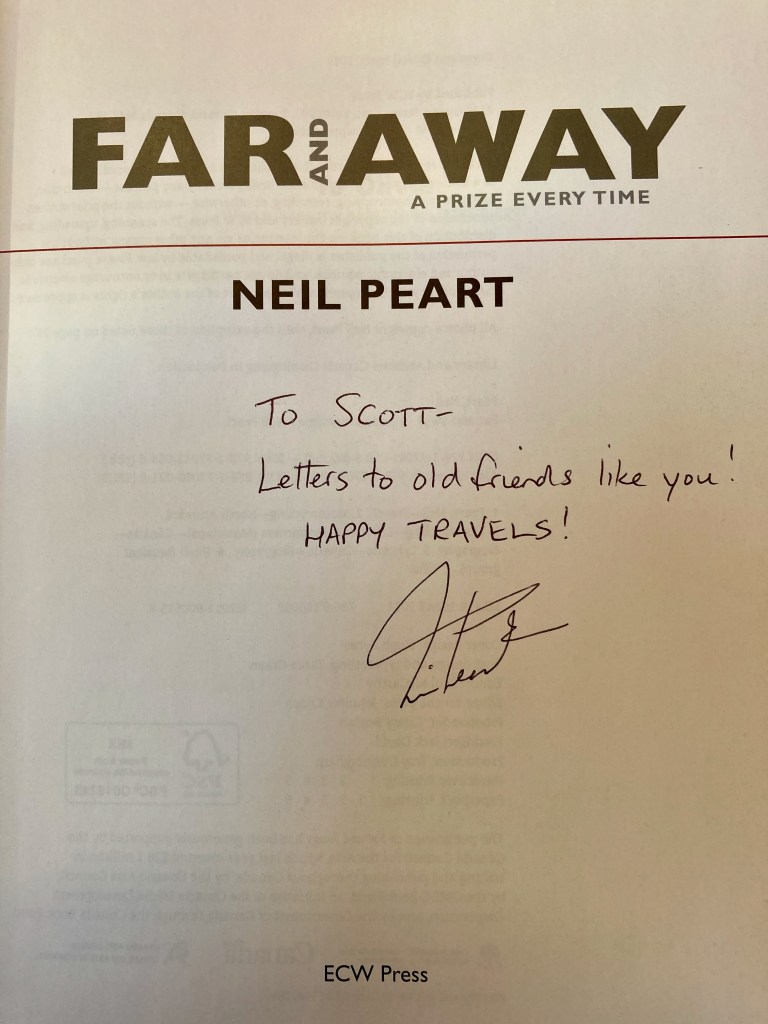
SKF NOTE: Earlier this week I pulled Neil Peart’s Far and Away: A Prize Every Time from my bookshelf, where I placed it, half read, months ago. Time to finish. For no reason, everytime I read Neil’s book I am taken by how good a writer he was.
On page 136, for example, Neil writes:
“Appreciating the moment is not a passive endeavor, at least for those who want to appreciate as many moments as possible.”
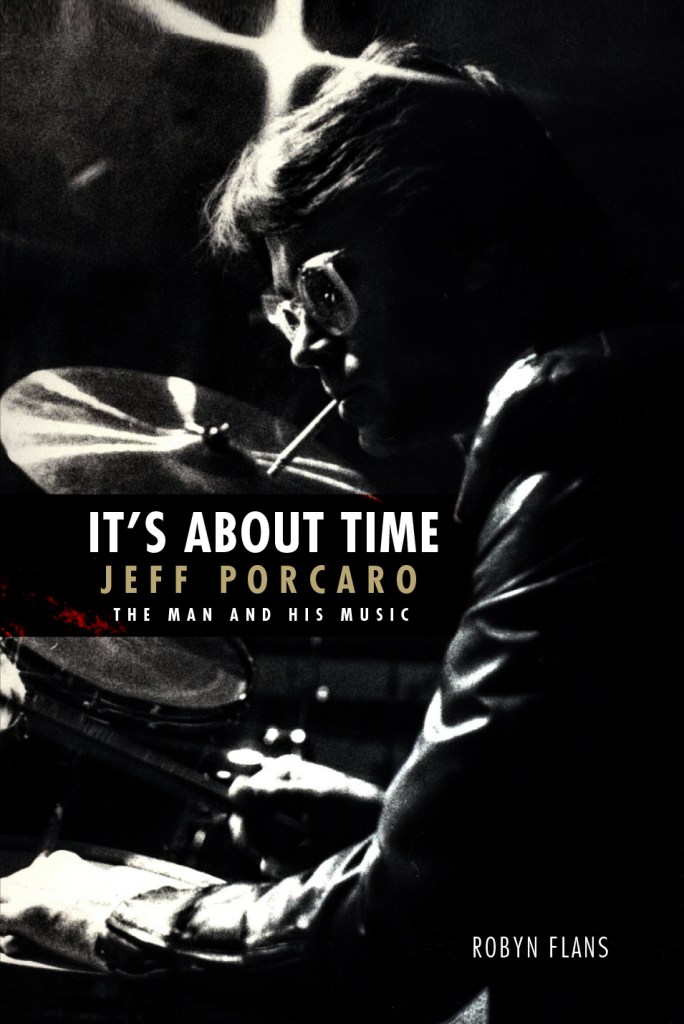
SKF NOTE: Last night I finished reading Robyn Flans’s book, Jeff Porcaro – It’s About Time: The Man and His Music. Robyn and I first met in the 1980s when I was Managing Editor of Modern Drummer and she was one of MD‘s prolific freelance writers. I remember from conversations with Robyn during those years how much she liked Jeff Porcaro as a person and drummer.
Her book, then, is exactly what Robyn said it is. It’s a biography of Jeff Porcaro as a human being and the music he created. Other than a glossy insert with Jeff’s handwritten drum part for Toto’s song, Rosanna, this biography stays mercifully clear of music notations. Several times Jeff uses words to describe drum parts or concepts. But this book is not written for someone primarily looking to learn Jeff’s licks.
Robyn Flans is close to the Porcaro family. That’s clear throughout this book. That familial relationship with Jeff, his family and friends really works to Robyn’s benefit as a writer, and to our benefit as readers. The people interviewed here trust Robyn. For an interviewer that makes all the difference in the world.
I didn’t know Jeff Porcaro. While he was not a drummer I followed, I recognized myself in Robyn’s book as one more person, on a long list, drawn to Jeff’s drumming whenever it comes around.
So, thank you, Robyn, for this book. It’s a good read sure to stand the test of time.

 Scott K Fish
You must be logged in to post a comment.