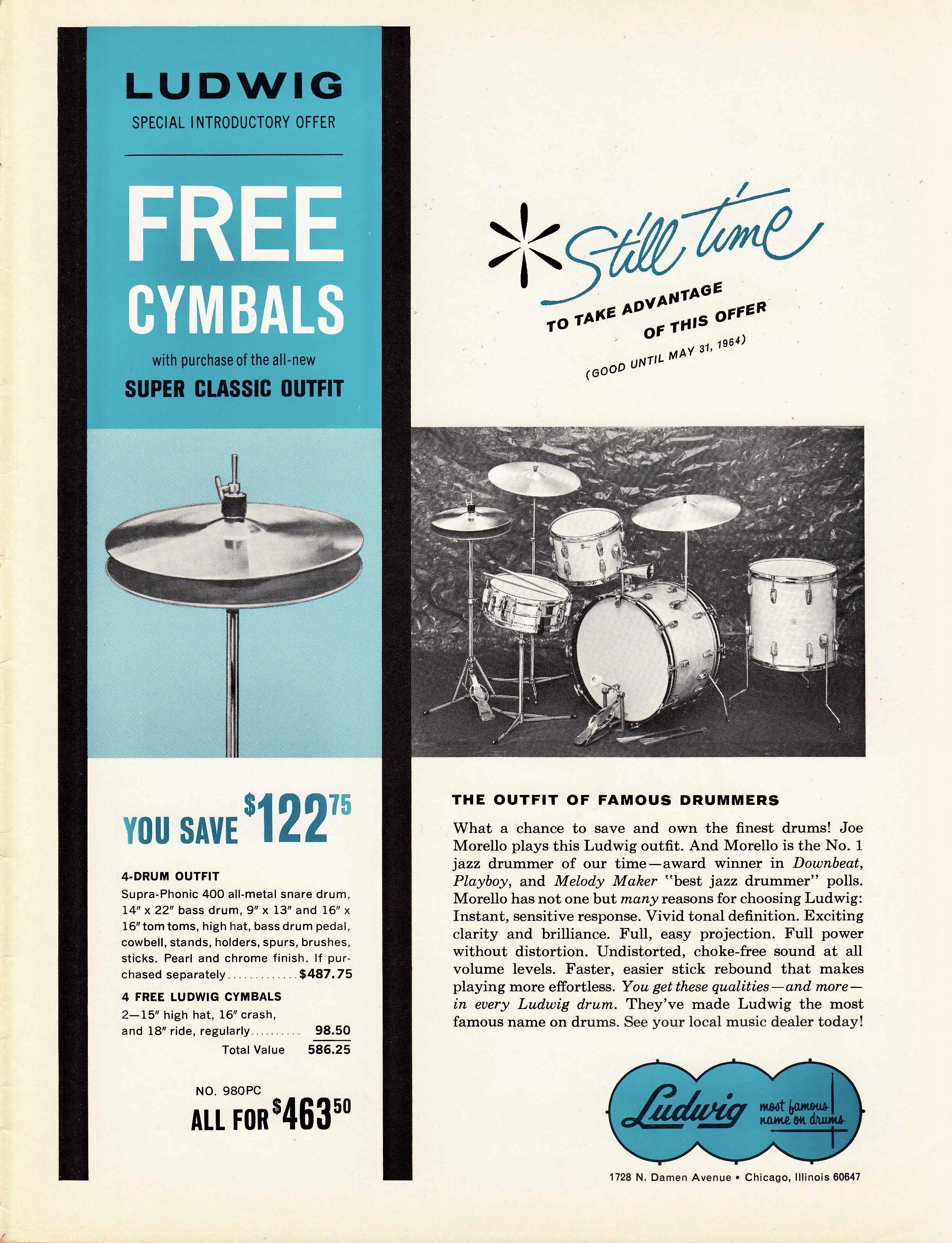
SKF NOTE: I never owned a Ludwig drumset, but in 1964 this full-page magazine ad was a dream builder or me. I wouldn’t own a drumset for another five years, and my first set was a mutt kit of Gretsch and no-name Japanese drums.
Interestingly, this $464 drum package (drums and cymbals) would cost $4,173.04 in 2021. The cumulative rate of inflation since 1964 is almost 800-percent.
SKF NOTE: Jimmy Davis was a grade or two behind me at Harborfields High School in Greenlawn, NY. He was a quiet kid, shy, with a good sense of humor.
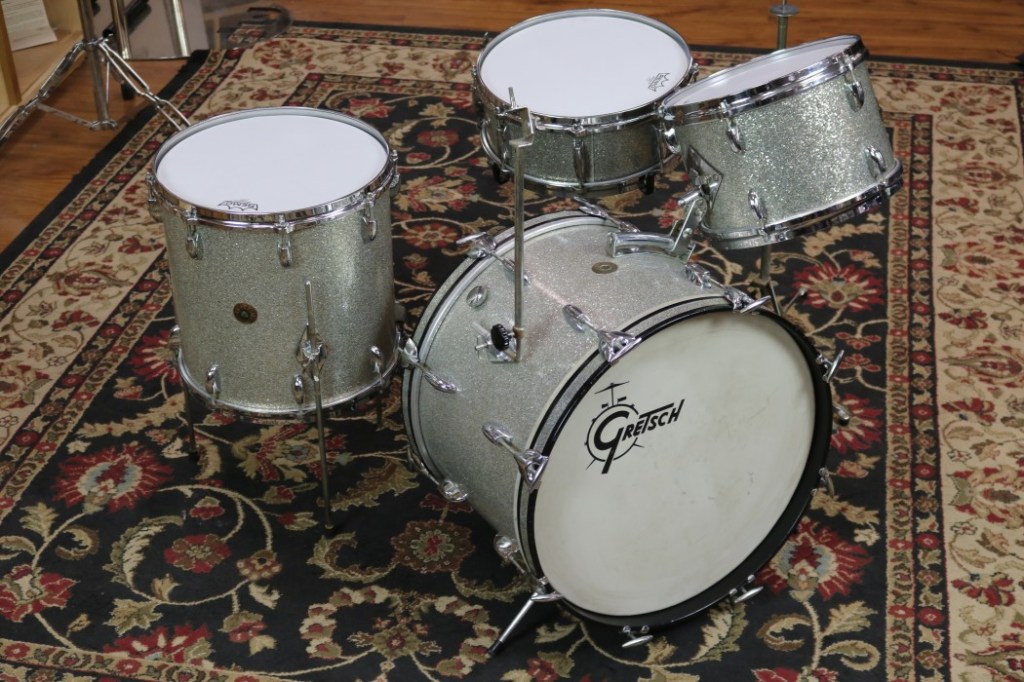
He was also an outstanding drummer with deep jazz roots who loved Tony Williams. Jimmy’s drumset, like the Gretsch four-piece post here, was modeled after Tony’s signature drumset with Miles’s Second Great Quintet.
Around 1969, my friends/garage band members and I invited Jimmy to try out with our band as a replacement for our regular drummer who had just quit.
Knock on Wood is the only song I remember rehearsing in my parents’ garage that day. Instead of the song’s stock tap-tap-tap-tap break, Jimmy played a blistering drum interlude that absolutely dispirited our guitarist. While removing his guitar and putting it back in its case, the guitarist said, “I’m going to have to get a lot better if I’m going to play with that guy.”
And that was that. What began as a trial for a new drummer ended up with the total break-up of the band.
My sister, Maribeth, texted me today looking for Jimmy Davis. She’s part of a committee looking to notify all the members of Maribeth’s high school graduating class of an upcoming class reunion.
I told her the last time I saw Jimmy Davis he was living upstate New York in a town whose name I can’t recall. And I told her I’d see if I could find him.
So, Jimmy, if you read this blog and you have an interest in your high school reunion – please send me an email through this blog.
SKF NOTE: Excerpt from our January 13, 2022 interview. Barry Keane has been drumming with Gordon Lightfoot on record and onstage for 46 years. Here he shares the story of how the classic song, Wreck of the Edmund Fitzgerald, was recorded in one take.
SKF NOTE: Ten years ago, preparing to move out of a house I’d owned for 30 years to a much smaller place, I had to let go (sell, donate, gift) lots of accumulated “stuff.” In the end, except for about 20 LP’s, I parted with my large vinyl album collection and cassette collection. Mostly I was listening to either digital music or CDs.
Another ten years has passed and I’m contemplating another move to a smaller place. I don’t see how I can bring with me all my CDs and books. I’m wondering how, as painlessly as possible, I can reduce my collection to its essentials.
My age is a consideration in my winnowing process.
See this box of music CDs? Have you digitized them?
Yes.
Good. Have you made digital backup copies of all your music?
Yes.
Then the only part of the CDs you’d really part with are the accompanying liner notes, not the recorded music. For me, the liner notes are a big deal. Historical information. Mini music books.
The one element for losing music and books I cannot guard against is Old Man Time.
The books in my collection I’ve already read? Will I read them again? And those books I bought to read someday? Will I ever read them? Finally, my reference library books. Will I continue relying, now and into the future, on the internet for references? Or am I likely to crack open at some point these old reference books?
My music CDs? I still buy and listen quite often to new music. That is, music new to me. Even if I wanted to listen again to every CD in my collection, and to every digital album I own, I’m not sure I’d live long enough.
Maybe acknowledging my time constraint is what makes it hard to say goodbye to my music and books. If I don’t respond to the time constraint, maybe it will go away? Nah.
Fortunately, I don’t have to decide today. Soon. But not today.
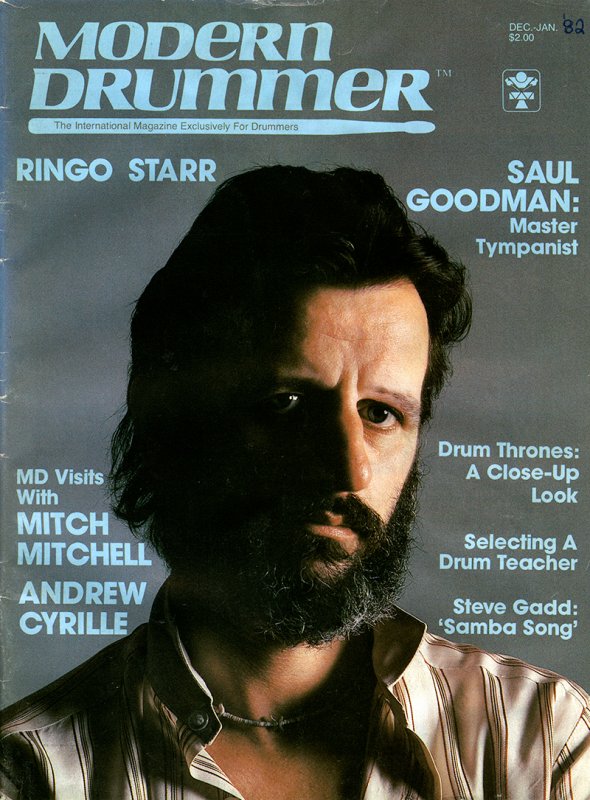
SKF NOTE: I haven’t thought of it in awhile, but when I was managing editor at Modern Drummer magazine I wanted to write a feature story on The Drummers of Bob Dylan. At the time, the early 1980s, Jim Keltner was playing drums with Dylan in the studio and onstage.
One of my favorite characteristics of Bob Dylan, based on my listening to his albums, and seeing him perform on tv, was that he often changed how he presented his songs. He’d sing different lyrics. A ballad would be reborn as a reggae tune.
Because of his treatment of his songs, I imagined playing in Dylan’s band required a jazz spirit. Big ears and the ability and willingness to change in an instant. Keltner had that jazz spirit.
So did the drummer in Dylan’s band for his Rolling Thunder Review tour (1975-1976): Howie Wyeth. Earlier this week I was reminded of how much I liked Wyeth’s drumming when, for the first time in a long time, I listened to Dylan’s live Hard Rain album. Recorded during the Rolling Thunder Review tour, Wyeth goes for it right from the album’s opening tune, Maggie’s Farm.
Wyeth’s drums always sounded a bit boxy – but he sounds like he’s having fun, and his drums work perfect with Dylan and the rest of the band. When Wyeth lays into his Chinese cymbal, the sound is enormous. Listen to Howie’s cymbal crash on Hurricane, a song on Dylan’s Desire album.
Finally, you can enjoy Howie Wyeth on The Bootleg Series Vol. 5: Bob Dylan Live 1975, The Rolling Thunder Revue.
You must be logged in to post a comment.