SKF NOTE: Driving, listening, minutes ago to a live trio album. The musicians, all famous jazz musicians, shall remain nameless.
The 1968 performance includes one of my very favorite drummers. But, as often happens, there are moments on this album when the drummer doesn’t quite pull off what he had in mind.
In fairness, unless I ask the drummer, I can only surmise what he meant to play. Based on my experience as a listener and a player, there are times the drummer misses the mark. Sometimes it seems to be a lack of technique. Other times it’s a physical glitch. Maybe the drummer misses a drum, or snags the tip of his stick on a drum rim while attempting to move between drums.
Both examples offer drummers an opportunity to improve. We can practice moving between drums. And we can figure out and master the technique necessary to execute the idea we flubbed.
More often than not when I hear a drummer stumble on an idea, it tells me the drummer is taking chances. For me, that’s much more rewarding and fun than listening to a drummer who never takes chances.
SKF NOTE: Driving about an hour ago, listening for the first time to Charles Mingus’s Jazz in Detroit – Strata Concert Gallery – 46 Selden album. This is a live album. Mingus’s band is Roy Brooks (drums), John Stubblefield (tenor sax), Joe Gardner (trumpet), Don Pulled (piano), and Mingus himself on bass.
The opening track is Mingus’s Pithecanthropus Erectus. A familiar tune from listens to many other Mingus albums and concert performances. But on this drive I’m hearing this version, and this Mingus quintet, for the first time.
My right hand is tapping time on my steering wheel. But then there is a moment, a few seconds, when the band enters the controlled chaos (my term) section of Pithecanthropus Erectus. I’m still keeping time. Or am I? No one in the band is keeping strict time. I fight off the self-doubt of, “Maybe you’ve dropped the time! When the chaos ends and the band is back to normal swing time – you’re going to be lost. The time you’re keeping on your stupid steering wheel won’t be anywhere near the real time.”
There were times – many times – I had the same doubts on a bandstand. But, lo and behold, when Mingus’s band moves into swing time I’m right there with them. Phew!
That’s a good lesson, a good drumming skill. Always know in your heart and head where the time is. That way, when you and/or the rest of the band is in free form, you will remain centered.
SKF NOTE: After first interviewing Barry Keane in 1981 for Modern Drummer magazine, I had no idea we would do it again in 2022. We’ve stayed in touch over the years. When I asked Barry if I could interview him again he said yes.
This time, I wanted to interview Barry from his perspective as a working drummer for 46 years with one of the world’s great singer/songwriters, Gordon Lightfoot. That’s a dream job for almost any drummer. Hopefully Barry’s story will help smooth the way for any drummer who wants to follow a similar career path.
We talk here about Barry’s schedule, the recording studio, rehearsals, staying fresh, his interaction with his fellow band members, and, of course, with Gordon Lightfoot.
Barry’s not a gear head. If his drums, cymbals, and percussion instruments sound good – that’s the essential point. Manufacturers, weights – all that stuff is secondary.
This interview took place by phone on two days in January 2022. Barry was home in Canada. I was home in Maine.
SKF NOTE: Memories of Modern Drummer magazine co-founder Isabel Spagnardi make me smile. Isabel was MD publisher Ron Spagnardi’s wife. I don’t, and didn’t, know the specifics of Isabel’s work at MD. My impression is, and was, that she, as wives often do, took care of the nuts-and-bolts of MD‘s business while Ron focused on creating each MD issue.
Isabel was something. I liked her very much. She, I think, liked me and my work. But I think I puzzled her. I was a bit of a riddle, even though I never meant to be. Isabel, in turn, sometimes surprised me with her reactions to my actions.
My managing editor salary was $12,000 a year. I lived in one room with no cooking facilities in a New Jersey rooming house. The other tenants were mostly transients, guys working temporary jobs who needed a place to stay for their job’s duration.
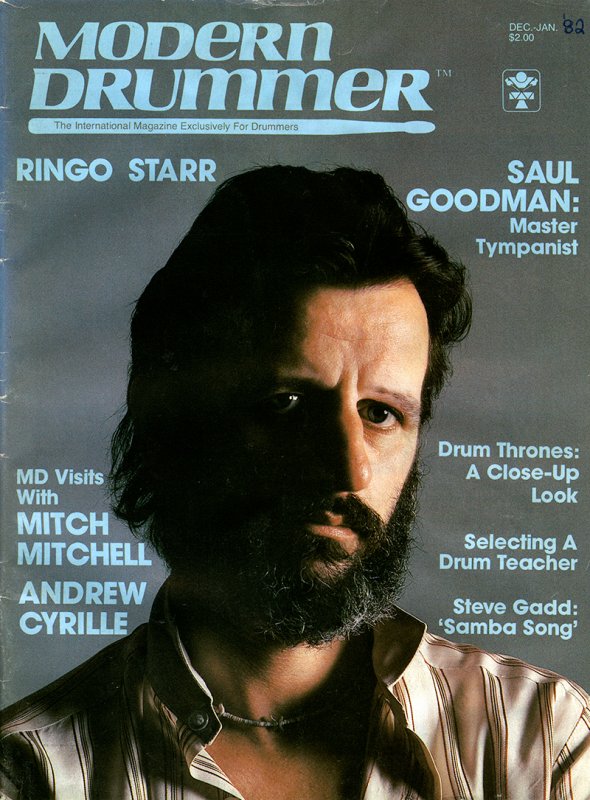
I called Ringo at his Los Angeles home from the black wall payphone in the rooming house hallway. In those days I could charge after-hours business phone calls from that payphone to MD. This was the early 1980s. Pre-smartphones. I was calling Ringo at the time I was asked to call.
A gentleman answered the phone in LA. I identified myself and explained my reason for calling. The gentleman asked me to please hold.
A moment later Ringo came to the phone. I think I did okay trying to sound normal. In truth, I felt out-of-place speaking to the guy who, by his Ed Sullivan Show appearances and Beatles records, was a major influence on my life starting when I was age 12.
Ringo and I had a short, cordial talk. I focused on the task. I was just doing my managing editor job, making sure Robyn Flans would be all set for her exclusive Ringo interview.
Days later, when Isabel received MD‘s monthly phone bill, she asked me why I’d placed that night call to Los Angeles.
I explained I was arranging Ringo’s interview. After my explanation, I half expected some show of understanding, if not appreciation, for my initiative. After all, there was no overtime pay, no comp time. It was just me doing what needed doing to secure Ringo’s interview.
But, after I finished speaking, Isabel stared at me in silence, then said, “If Ringo Starr wants to be in our magazine he can call us during normal business hours.”
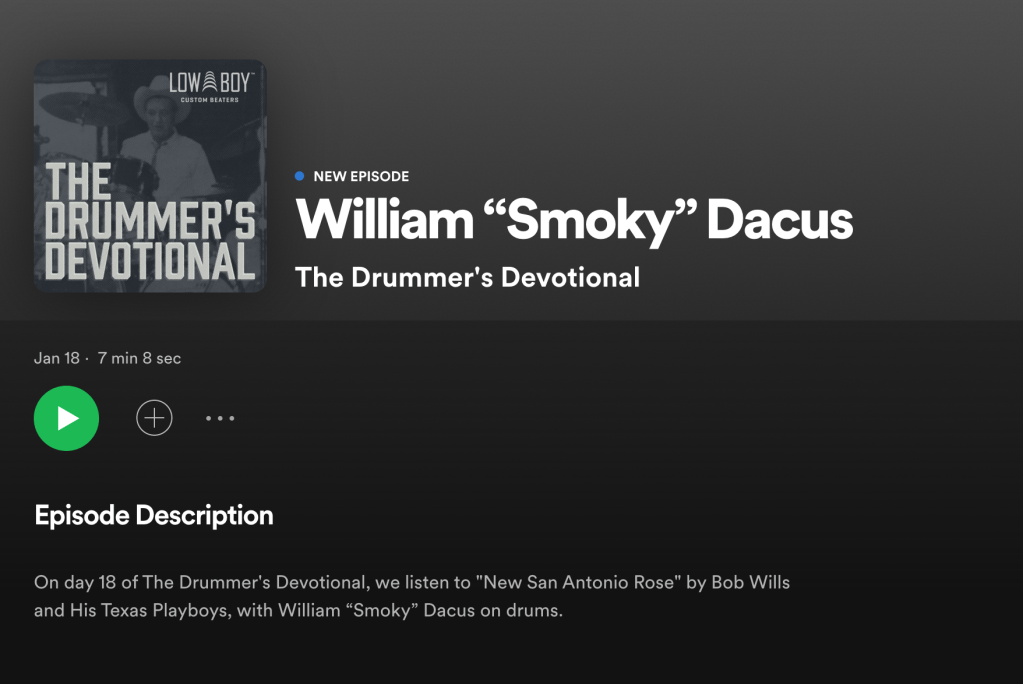
SKF NOTE: On January 18, 2022 I received an email from Jeremy Brieske (pronounced Brisk-ee). Mr. Brieske’s podcast, The Drummer’s Devotional, is, “A one-year project where we learn about a different drummer every day.”
Professionally produced, Brieske’s podcast episodes are short and to the point. Listeners are given a crash course of bio and music on each drummer. Then, I suppose, it’s up to individual listeners to seek out more info on their own.
I like the format.
Mr. Brieske wrote me on Jan. 18 to tell me he used my Smoky Dacus interview as backgrounder for Smoky’s episode of The Drummer’s Devotional. Brieske presents a solid portrait of Smoky in just over seven minutes.
I also learned I can better serve readers of this blog by offering the spelling of certain names as they sound. After listening to Smoky’s Devotional I added to his first blog post here that his last name, Dacus, is pronounced (Day-cuss).
Throughout the internet, Dacus’s nickname is spelled either “Smokey” or “Smoky.” Again, I used “Smokey” when I transcribed and posted his interview. I just now found Dacus’s gravestone. The name carved there is “Smoky.” I will make the correction throughout this blog.
At any rate, I’m happy the interview was of help to Jeremy Brieske and his The Drummer’s Devotional. It’s a fun, instructive podcast available on Spotify.





You must be logged in to post a comment.