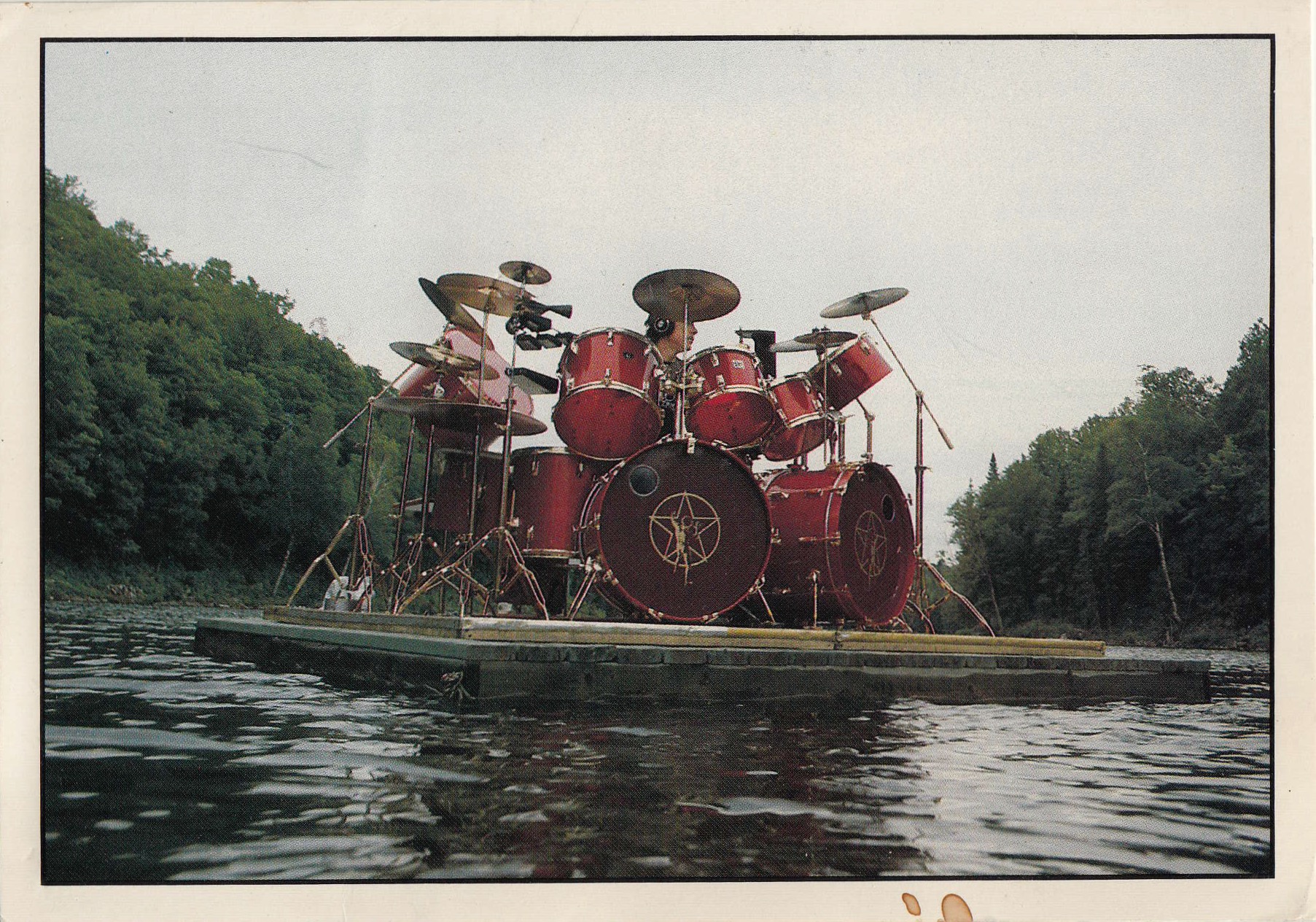
Postcard from Neil (1984)

SKF NOTE: Yesterday I emptied the third shelf of a red corner hutch in our guest room. My eight year-old grandson, Grafton, needed more space for the LEGO models he is so adept at building. Shelves one and two held old favorite books of mine. I will find another place for them.

Shelf three was cluttered with CD’s, external hard drives, books, newspaper clippings, drum keys and whatnot. Carefully piling it all into a sturdy shopping bag, the last item I reached for was this 37-year old postcard from Neil Peart with his reaction to our April 1984 Modern Drummer interview.

Dear Scott – I just saw the article yesterday, and I think it’s really good. I thank you very much for having made me look so good! Nice work, I think your preamble and the way you presented the flow of our conversation was very incisive and very ‘right on.” Thank you / You owe me a letter! Neil.

Only much later did I read a Tweet announcing that day, January 7, was the second anniversary of Neil’s death.

Neil was a great guy. That he played drums and wrote insightful lyrics was, of course, part of who Neil was as a human being. But even setting the drumming, the lyrics aside – Neil was a curious, wonderful human being. I miss our correspondence and I miss him.

Cherish remaining friends.
Posted in SKF Blog | Tagged , , | Comments Off on Postcard from Neil (1984)

Neil Peart Inside Maine State Prison

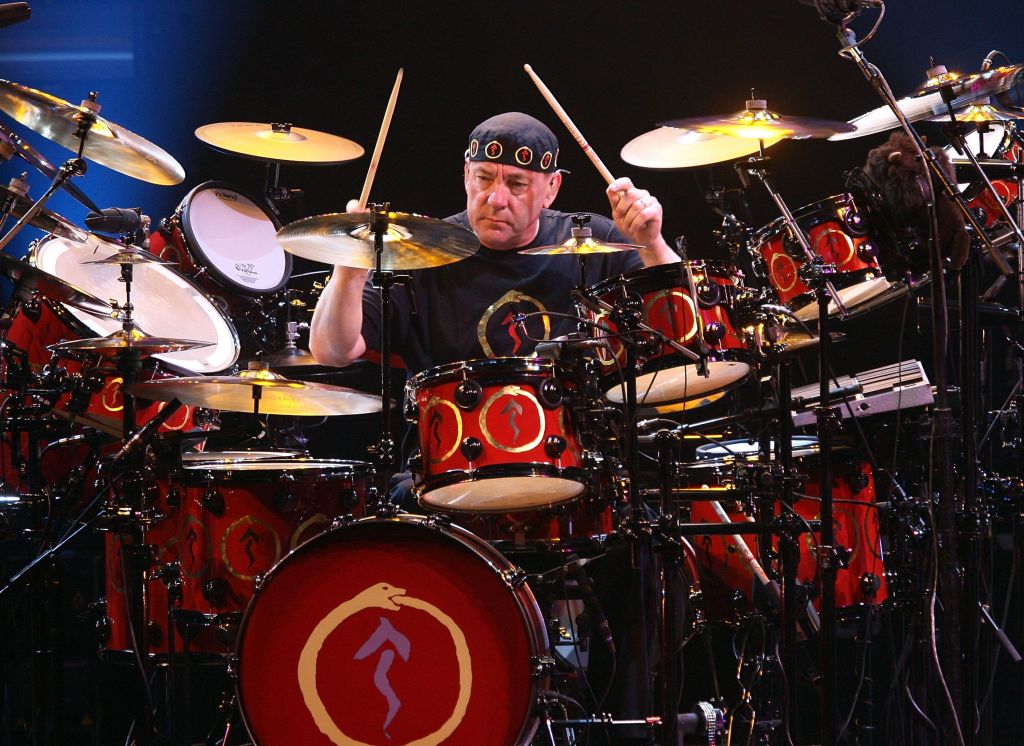
Neil Peart with his Snakes and Arrows drumset.

SKF NOTE: I had this Neil Peart memory today.

Inside Maine State Prison, which is the State of Maine’s maximum security prison, there is a music room where prisoners play keyboards, guitars, and drums. Yes, access to instruments is limited and linked to good behavior.

The music room is built of concrete blocks painted glossy white. And one day, in my capacity as Communications Director for the Maine Department of Corrections, I visited the room and was surprised by a giant mural painted on one glossy white concrete wall.

It was a mural of Neil Peart behind his “Snakes and Arrows” drumset, painted by one of the prisoners.

I snapped a photo of the mural with my iPhone and sent it to Neil. He, in turn, replied saying nice things about the mural. If I can ever find the email or letter I will add Neil’s exact words here.

But when I was next at Maine State Prison I was able to track down the prisoner painter and let him read Neil’s email. He was thrilled. It was a nice gesture from Neil which really brightened a day for a prisoner who probably didn’t see too many bright days behind the razor wire, iron bars, and chain link fence.

Posted in SKF Blog | Tagged , , , , | Comments Off on Neil Peart Inside Maine State Prison

Info Wanted – Big Sid Playing Sonny Greer’s Drumset

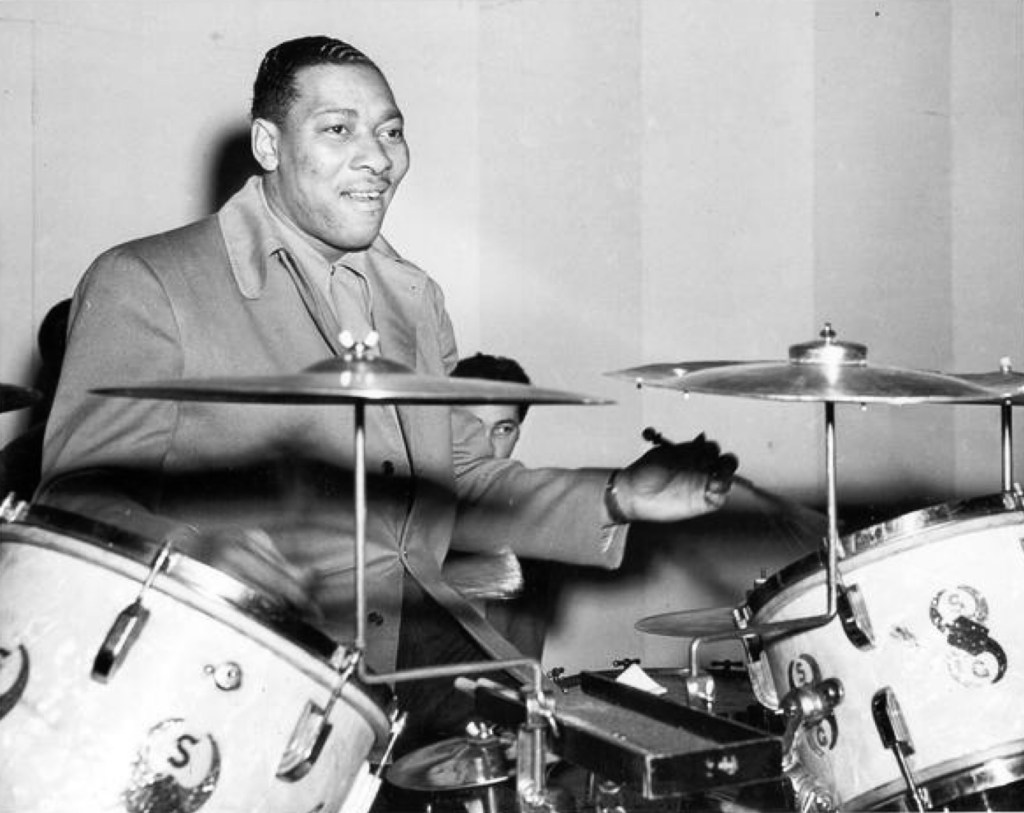
SKF NOTE: An interesting photo, new to me, from the University of Missouri-Kansas City. The University’s best guess is this photo of Big Sid Catlett was taken 1945-1950. It’s part of the Dave E. Dexter, Jr. Collection. The University is welcoming more information.

I wrote to tell them this is a photo of Big Sid behind Sonny Greer’s drumset. Perhaps Catlett was subbing for Greer, or sitting in on a Duke Ellington Orchestra appearance.

In any event, this is a cool photo. Thank you, UMKC.

Posted in Drum/Music News, SKF Blog | Tagged , , | Comments Off on Info Wanted – Big Sid Playing Sonny Greer’s Drumset

With Max Roach and His Drums

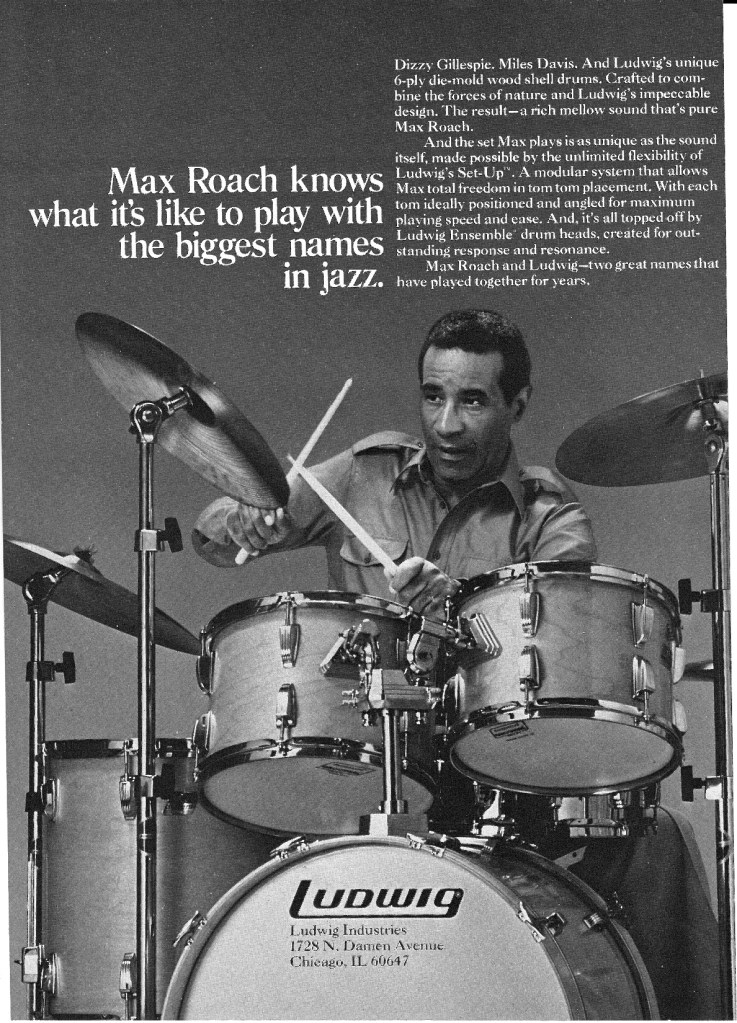
SKF NOTE: What did it feel like, on July 15, 1981, standing with Max Roach next to his blonde Ludwig drum set in his home music room? I felt awe. Reverential respect and wonder.

Max said, “I’m playing a 22″ bass drum, 12″ and 13″ mounted toms, a 16″ floor tom, and a 14” [floor tom] which is a tunable floor tom with a Meazzi footpedal.”

I was sitting close to Max when I saw him in concerts in NY and Chicago clubs. But being within touching distance of his drums, with Max next to me, was a very different experience.

Yes, I wanted to sit at the drum set to know what that felt like; to look at Max Roach’s drum set from his perspective, notwithstanding Max was several inches taller than me.

Sitting behind them, what did Max’s drums and cymbals sound like? Was the tension on Max’s bass drum pedal loose or tight? Was playing the bass drum effortless or did it feel like a leg muscle toning machine?

Max never invited me to sit at or play his drum set. I never asked. Neither did he play his drums that day.

I wasn’t vain enough to want to sit at Max’s drums and try to impress him. It’s that I would have been fascinated to hear the sound of his drum set while seated behind them. That’s all.

Max Roach’s sound and style were a major influence on my playing and concept of drumming. To have the opportunity to interview him in his living room; and to then have him show me his drum set in his music room was heady stuff.

Forty years later it still feels that way.

Posted in SKF Blog | Tagged , , | Leave a comment

Fleetwood and McVie Behind the Curtain

SKF NOTE: Drummer Mick Fleetwood and bassist John McVie are one of pop music’s strongest, most inventive rhythm sections. Listen particularly to 1970s Fleetwood Mac on to the way Mick and John interlock drums and bass guitar with every song.

In this “Anatomy of a Song” by Lindsey Buckingham, he tells the Wall Street Journal’s Marc Myers, “As with our other songs, the instruments on Go Your Own Way weren’t recorded together. John put down a bass part first, then I played some guitar so we’d have a basic track for Mick Fleetwood to add his drums. That’s how we always recorded the basic track.”

I’ve long marveled at how Mick’s drumming syncs with McVie’s bass patterns. If, as Lindsey Buckingham says here, Mick Fleetwood “always” had John McVie’s bass track to play off, Mick’s melodic drum parts make perfect sense. As if the drummer converts bass guitar parts to drum parts.

Whatever they’re doing, the result is brilliant and fun to hear.

=====

wsj.com
Anatomy of a Song
How ‘Go Your Own Way’ Helped Lindsey Buckingham Get Over Stevie Nicks
The 1976 breakup song was a way forward for Fleetwood Mac

By Marc Myers
Sept. 14, 2021 8:00 am ET

As with our other songs, the instruments on “Go Your Own Way” weren’t recorded together. John put down a bass part first, then I played some guitar so we’d have a basic track for Mick Fleetwood to add his drums. That’s how we always recorded the basic track.

For the bass, I asked John to play straight eighth notes, which he did. The feel he had was both flowery and sophisticated.

We wanted a great drum track before layering on other parts. The drum pattern I wanted Mick to play in the verses was modeled after Charlie Watts’s pattern on the Rolling Stones’ “Street Fighting Man.”

I illustrated the pattern for Mick on a tissue box. But Mick did his own thing to pare down Charlie’s pattern. Mick made it a straight four and took one of the beats out, which made it sort of syncopated, a brilliant move.

=====

Both Mick’s drum pattern and my strumming guitar create a tension that resolves in the chorus. When you hear the first chord of the chorus, there’s a great sense of arrival.

Full Story

Posted in Drum/Music News, SKF Blog | Tagged , , , , , , | Comments Off on Fleetwood and McVie Behind the Curtain