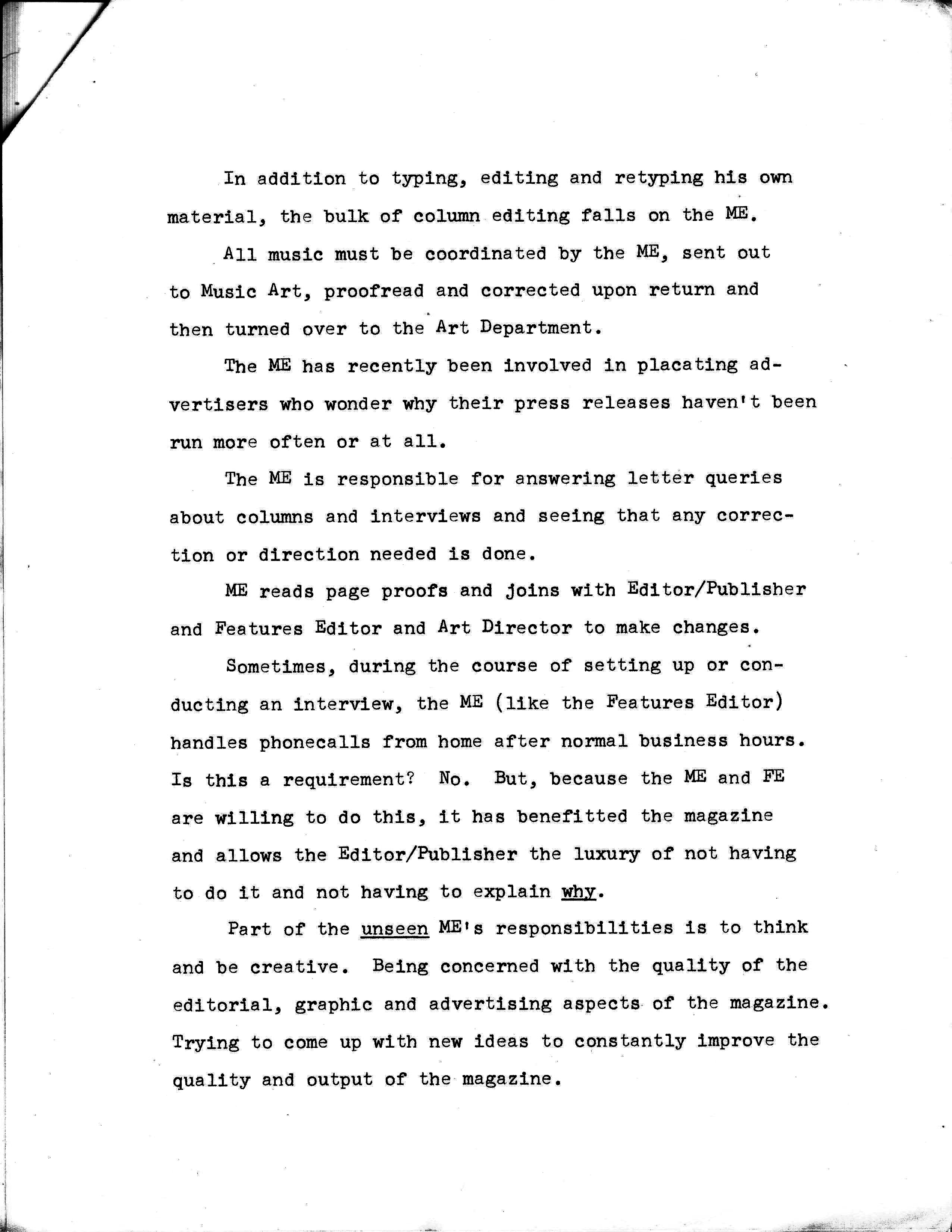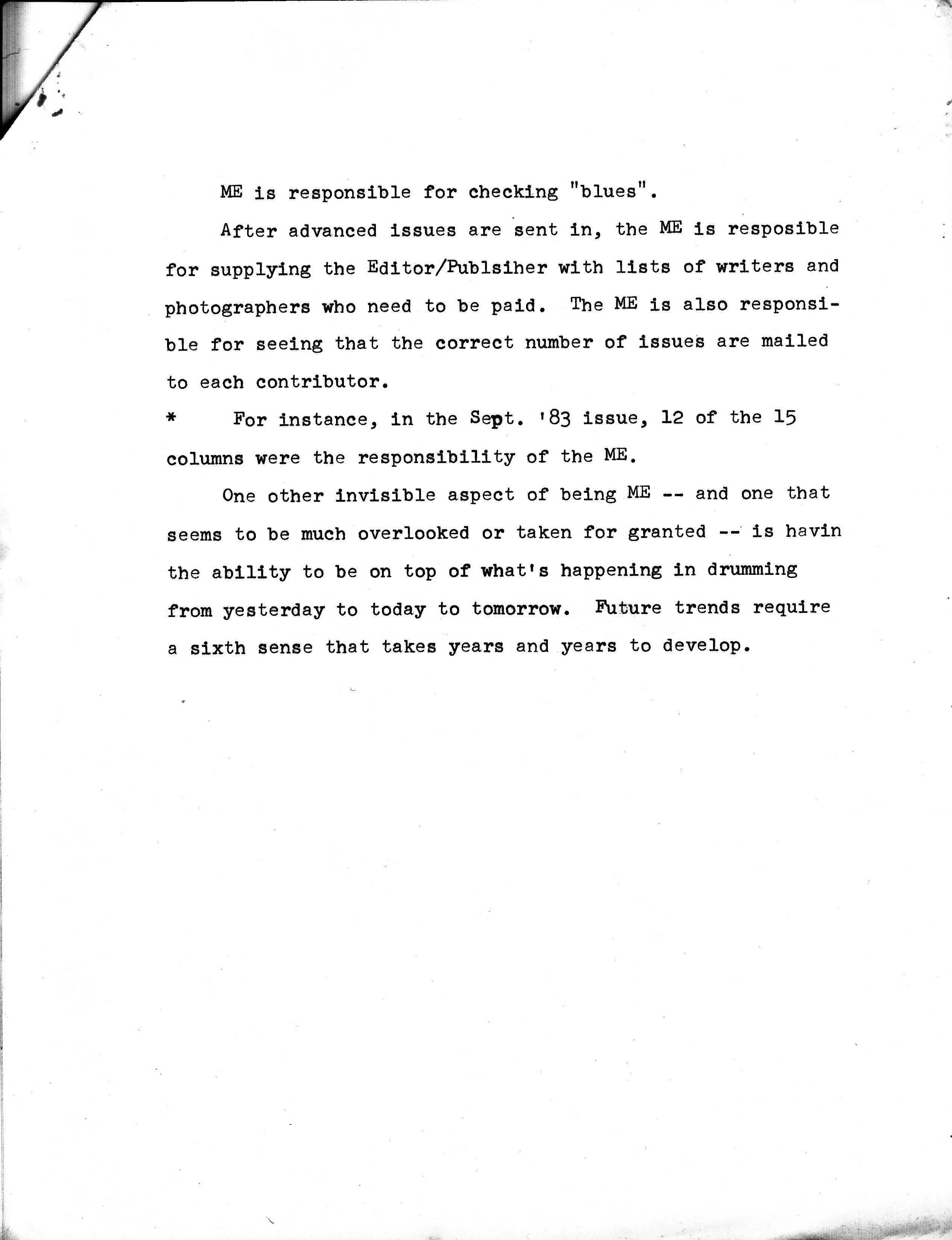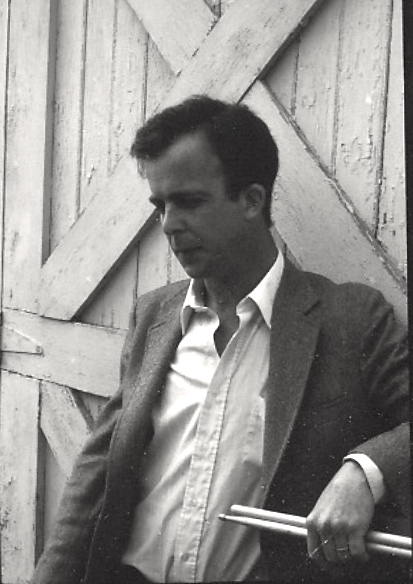
Job Description-Modern Drummer Managing Editor (1983)

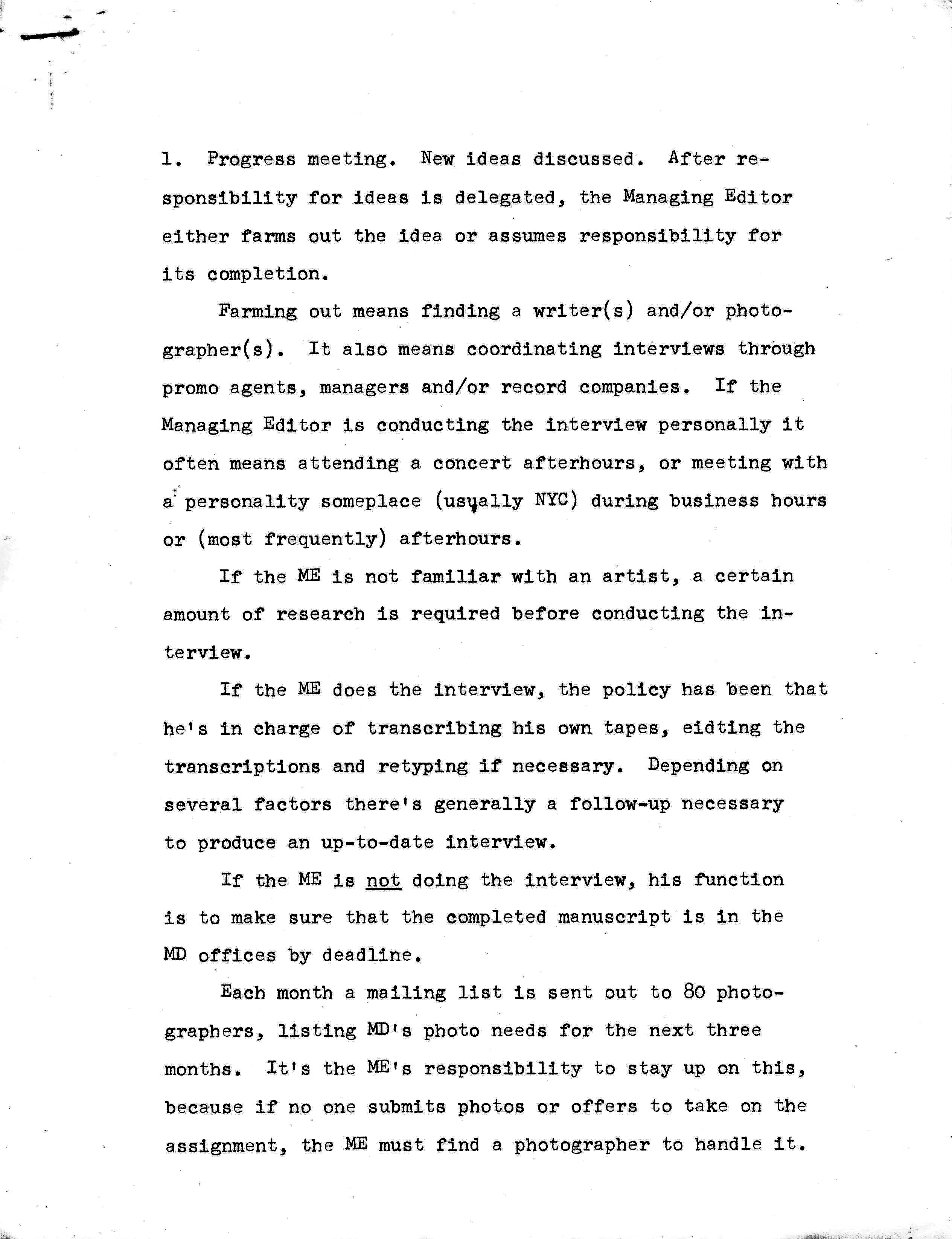
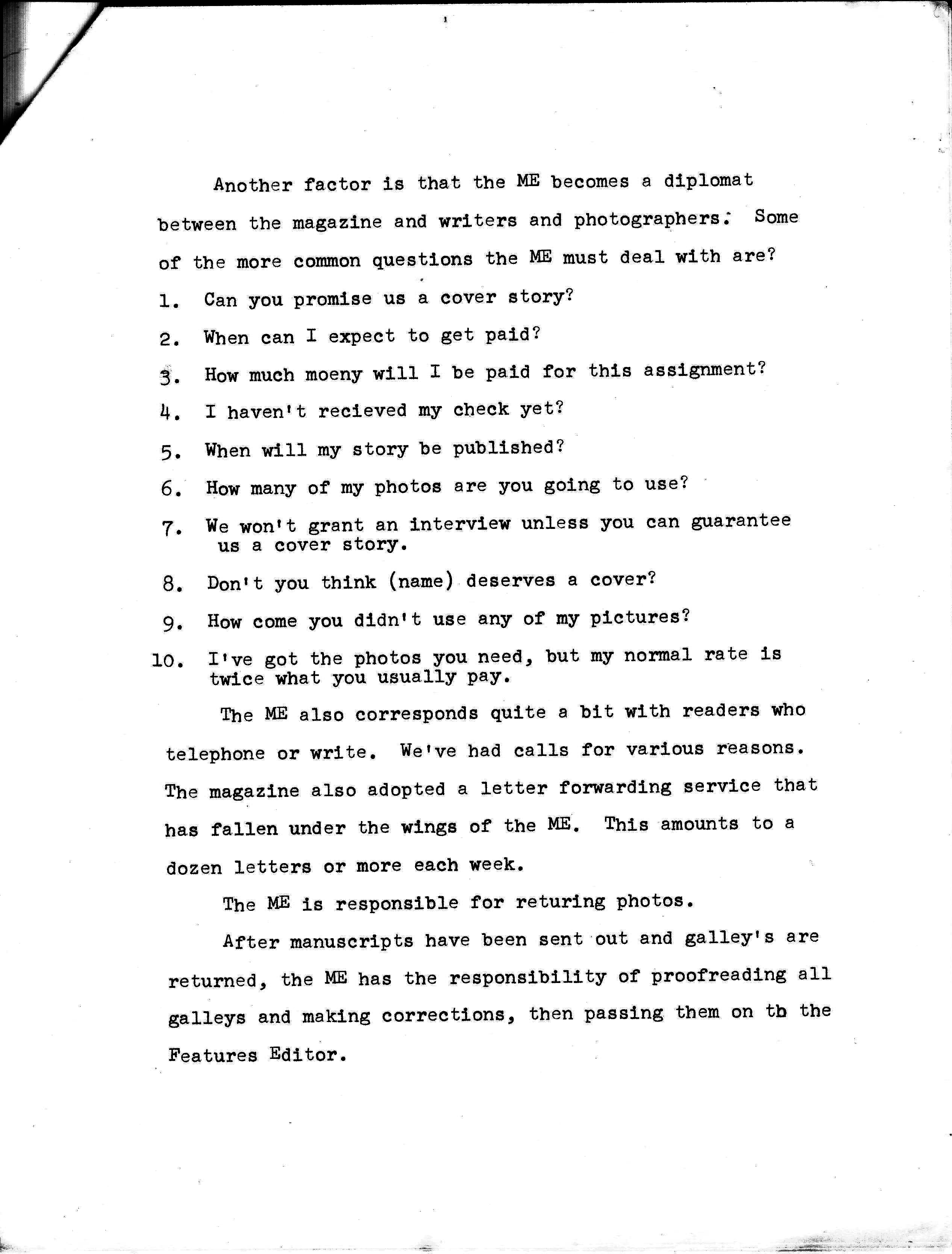
SKF NOTE: The four pages below describe my duties as Modern Drummer‘s Managing Editor. My dim recollection is that I wrote this circa 1983. Had I written this job description in 1980, when I was first hired as MD Managing Editor, it would be different. Several aspects of the job came about over time as MD grew to a monthly magazine from nine issues a year.

Why did I type out this detailed job description? I can only guess. As I said, I have only the slightest memory of this document. But in 1983, the MD employees primarily responsible for putting each issue of MD were the Features Editor, Art Director, Sales Director, Publisher, and the Managing Editor.

MD‘s support staff, and our freelance writers and photographers were also essential to producing the magazines. But the core production team was MD‘s Publisher, Features Editor, Art Director, Sales Director, and the Managing Editor.

Other than Publisher Ron Spagnardi, I had been on MD‘s staff longer than the Features Editor and the two Directors. When I learned the Publisher was paying me less than the others I was hurt, a bit angry, and puzzled.

I wanted to ask Ron why he was paying me less.

Before doing so I wanted to build my case, to have my full job description at the ready.

Also, I wanted to know what percentage of MD feature interviews and stories I’d written as Managing Editor. I was surprised to discover, between 1980 and 1983, I’d written 48-percent of MD‘s features.

Spagnardi told me he was paying the others more than me because they had college degrees and I didn’t.

My response was, “So what? In addition to my Managing Editor duties I’ve written almost half MD‘s features. I’m doing the work.”

In the end I was given a $2,000 raise. My pay went to $14,000 per year from $12,000, and I began thinking about working elsewhere.

I should clarify some points so what I wrote in 1983 will make more sense.

First, I was writing about publishing a magazine pre-computers and before the digital age and the internet. Modern Drummer was built with typewriters, land lines, audio-cassettes, literal cut-and-paste magazine layouts, and non-digital photography.

The Managing Editor duties described here are in chronological order. That is, MD‘s editors outlined issues at Progress Meetings, followed by several acts until each magazine was published.

Features Editor Rick Mattingly and I did quite a bit of “off the clock” work. After hours phone calls, homework, and interviews. We both loved what we were doing. I viewed the after hours work as an opportunity, and also as part of the gig, although the after hours work was not part of the gig.

MD might have been quite different if we insisted on limiting our work the magazine’s official 40-hour per week schedule.

Finally, the knowledge Rick and I brought to MD about drummers and drumming was not insignificant. I’m sure that’s why I mentioned it in this job description.
Posted in Revisiting My Life in Music, SKF Blog | Tagged , , , , , , , , , , | Leave a comment

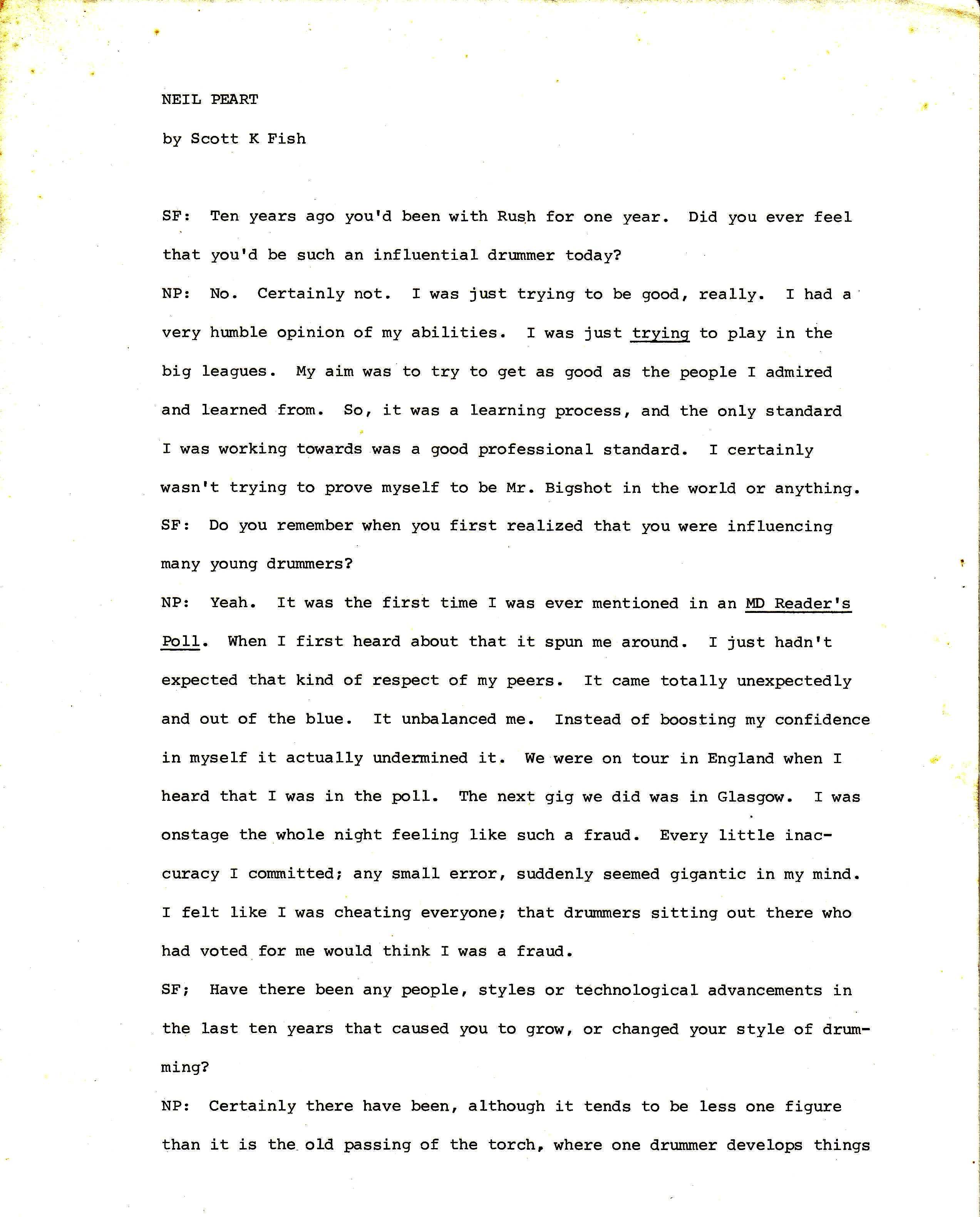
Download Peart Original Manuscript-MD 10th Anniversary Interview

SKF NOTE: Writers of Modern Drummer‘s 10th Anniversary Issue all agreed our interviews, in MD founder/publisher Ron Spagnardi’s words, “would be to assess the current state of the art by looking back at how it was arrived at, and then looking ahead to predict where it might be going. As always, the answers had to come from the drummers themselves.

“[T]he obvious drummers to contract were those whom the readers of the magazine had honored in the MD Readers Poll: the four living Hall of Fame members, and six other drummers who were voted to the top of their categories in the most recent poll.”

I stepped down as MD’s Managing Editor in October 1983. So this was a freelance assignment.

Neil Peart’s 1986 interview was by telephone. I scrambled last minute to make it happen. Normally I would have made sure I had a working electrical outlet or fresh batteries for my cassette recorder. Cleaning and demagnetizing the tape heads were routine. Finding a quiet, comfortable place to sit, where I could take notes, or refer to my written ideas/questions was key.

What I had not planned on were desk phones and land lines not working with my Radio Shack suction cup mic. Fortunately, I was in a home with two phones, so I improvised. I placed one phone’s earpiece near my cassette recorder’s built-in mic and recorded our interview that way. Neil and I talked over the other phone in the other room.

After transcribing and editing our conversation using a typewriter, I submitted this finished manuscript for publication to Modern Drummer.

Download Original Manuscript of SKF’s Neil Peart Interview for Modern Drummer’s 10th Anniversary Issue. (PDF)

Posted in Backgrounder Interviews, SKF Blog | Tagged , , , , , , | Leave a comment

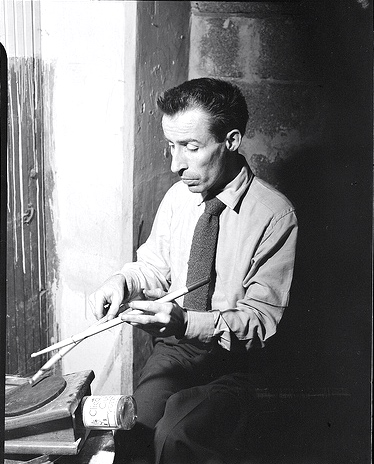
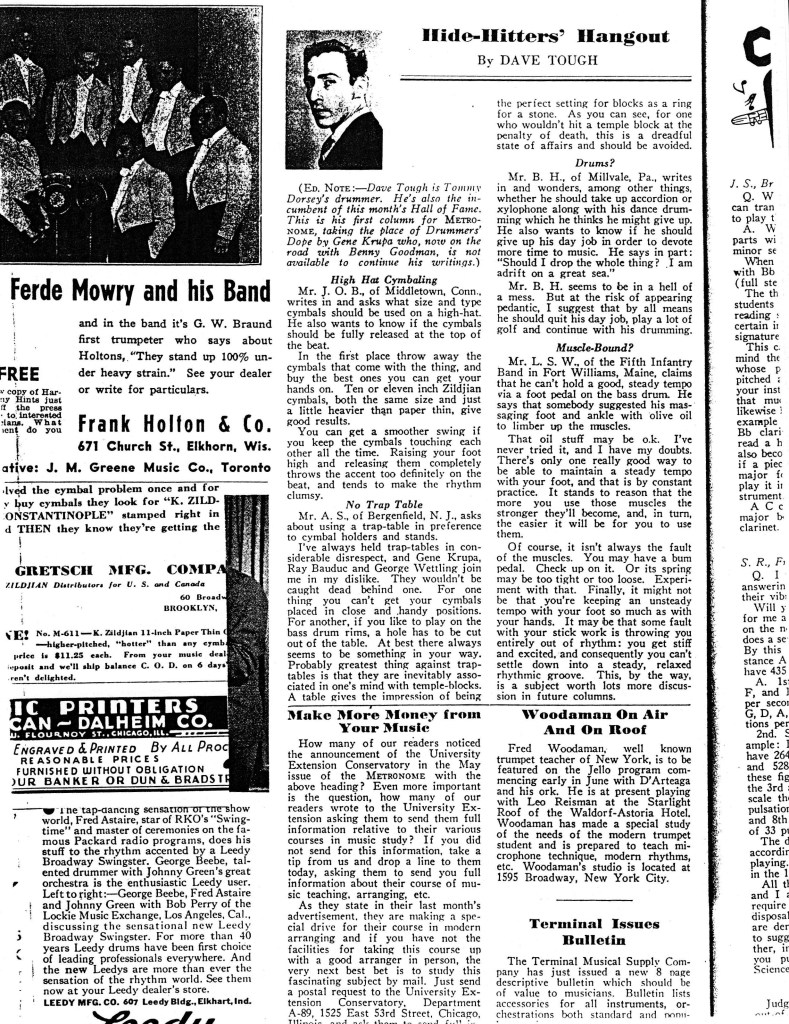
Dave Tough Drumming Advice

Dave Tough

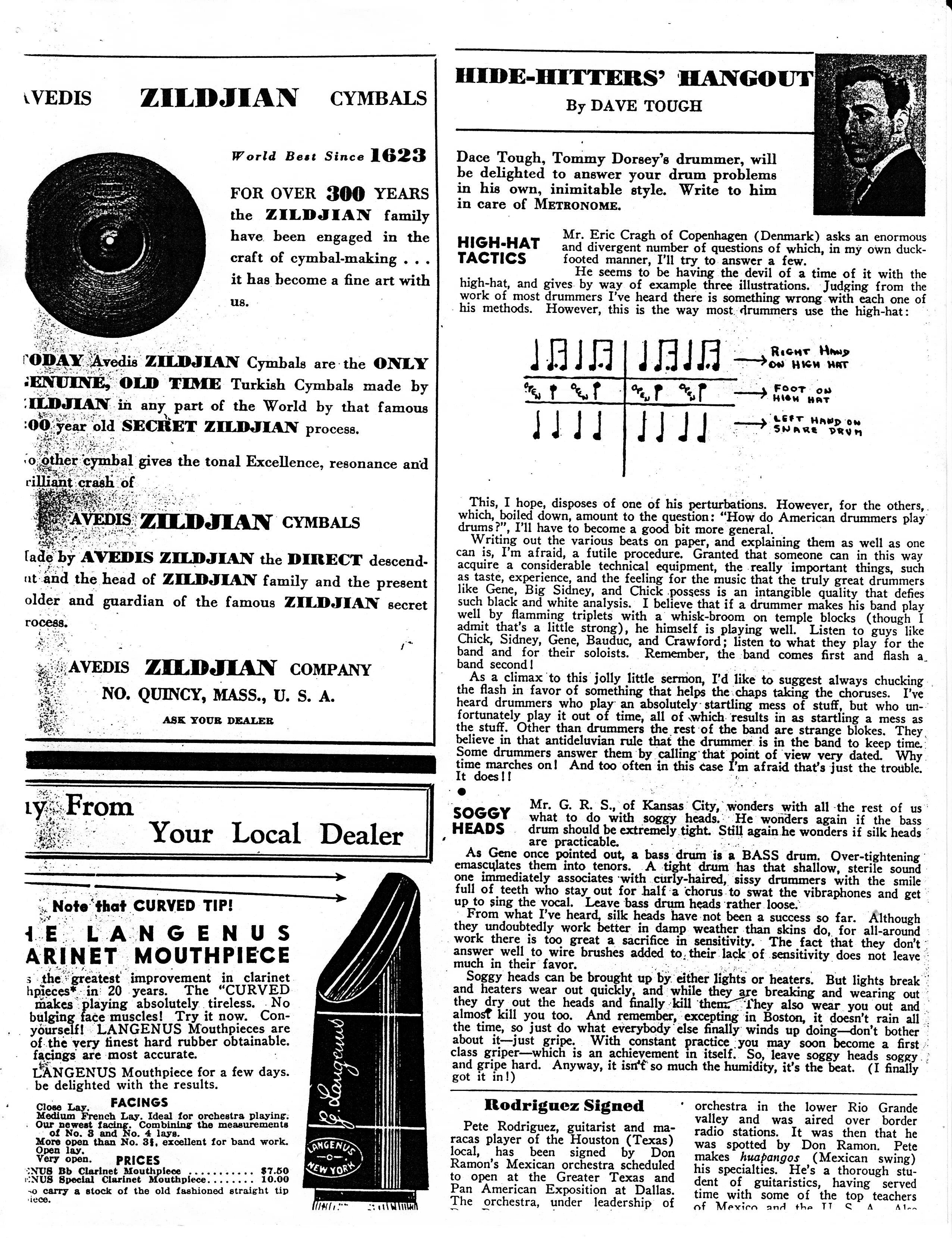
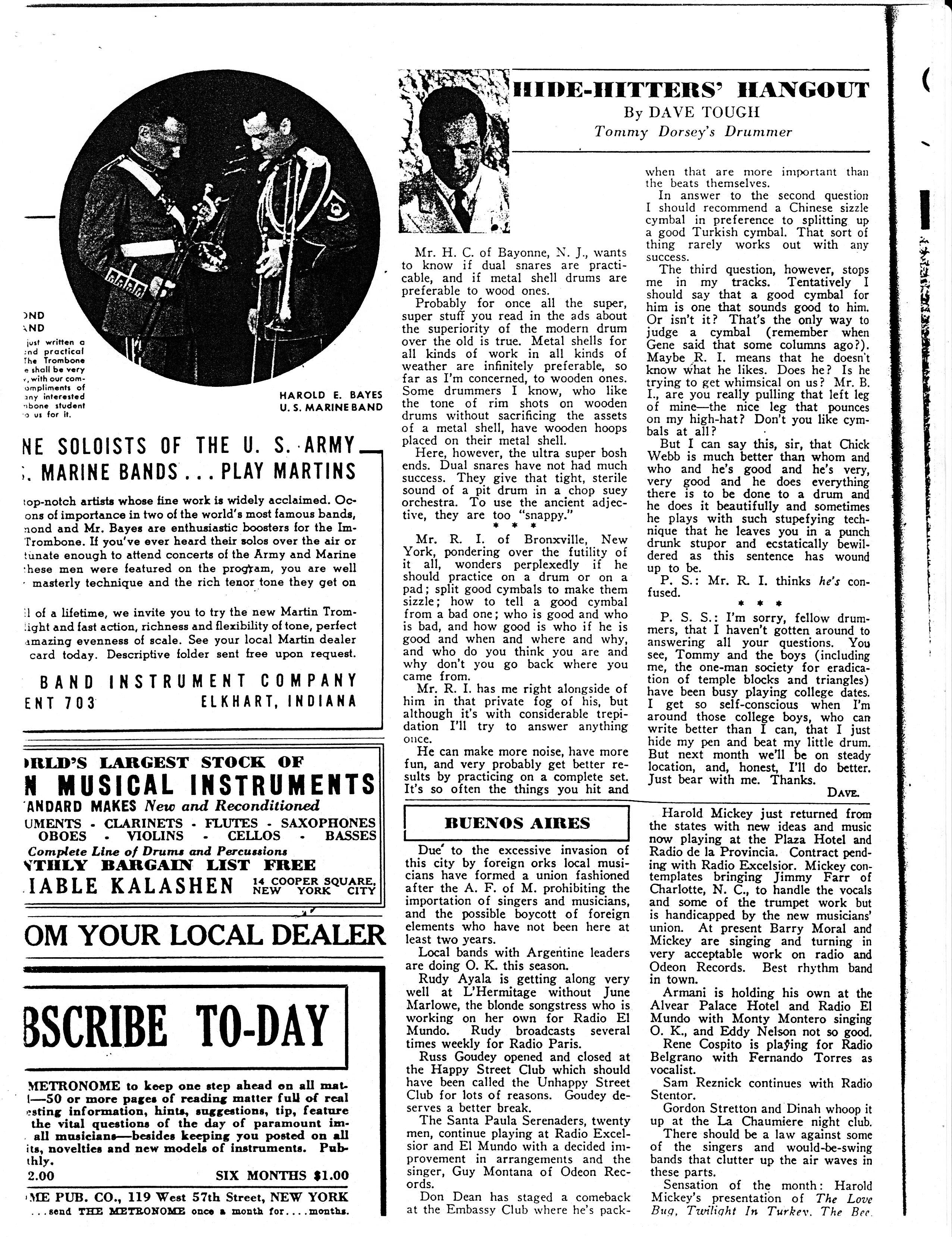
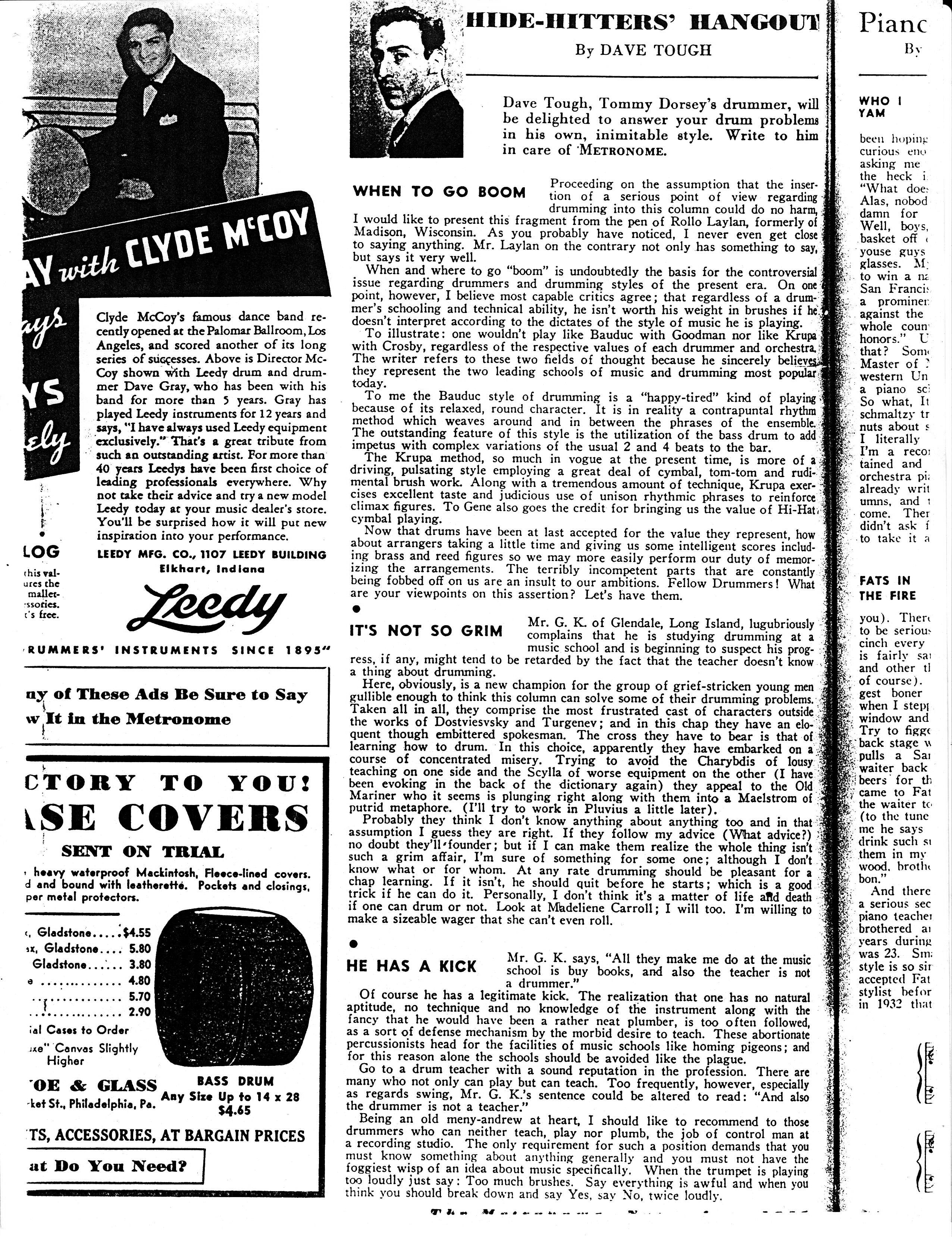
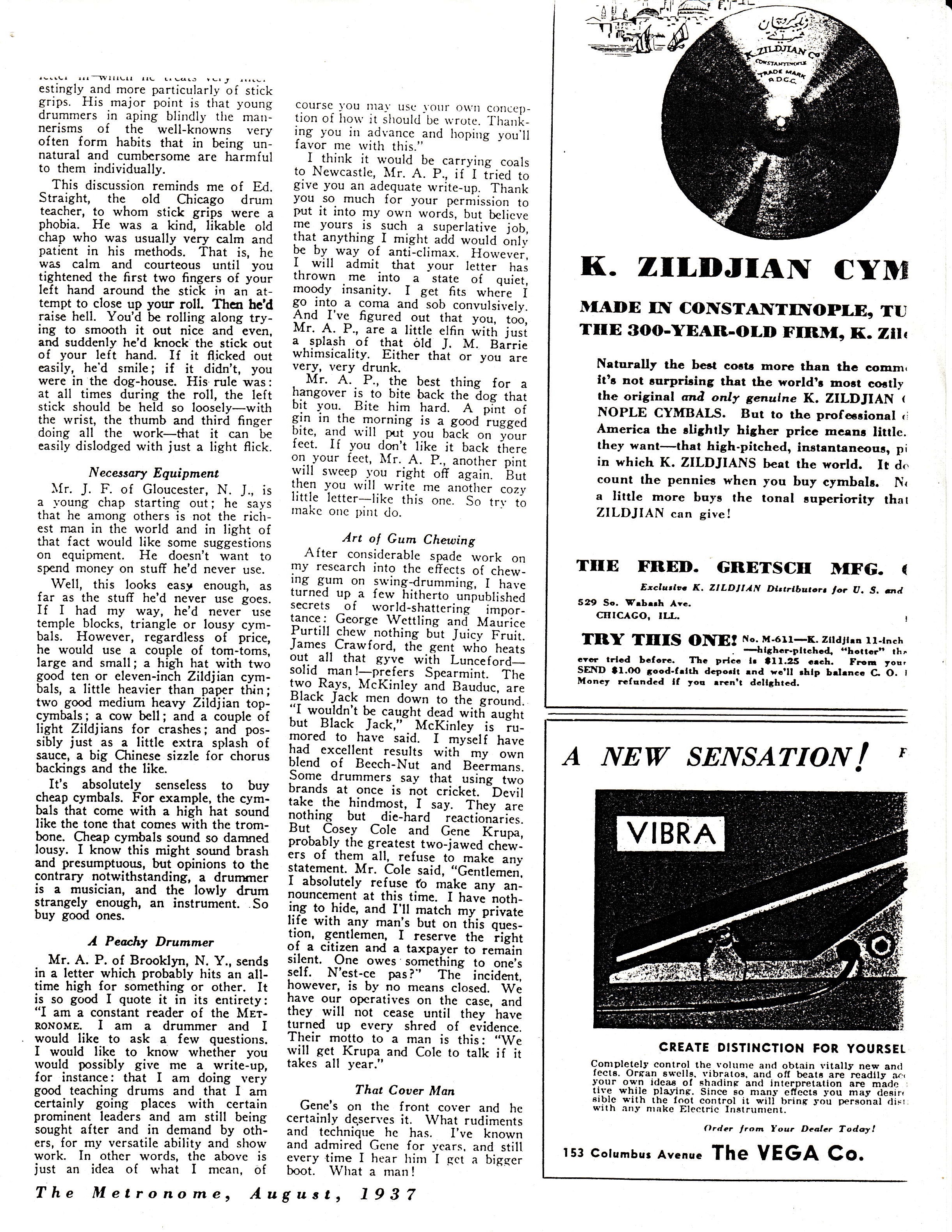
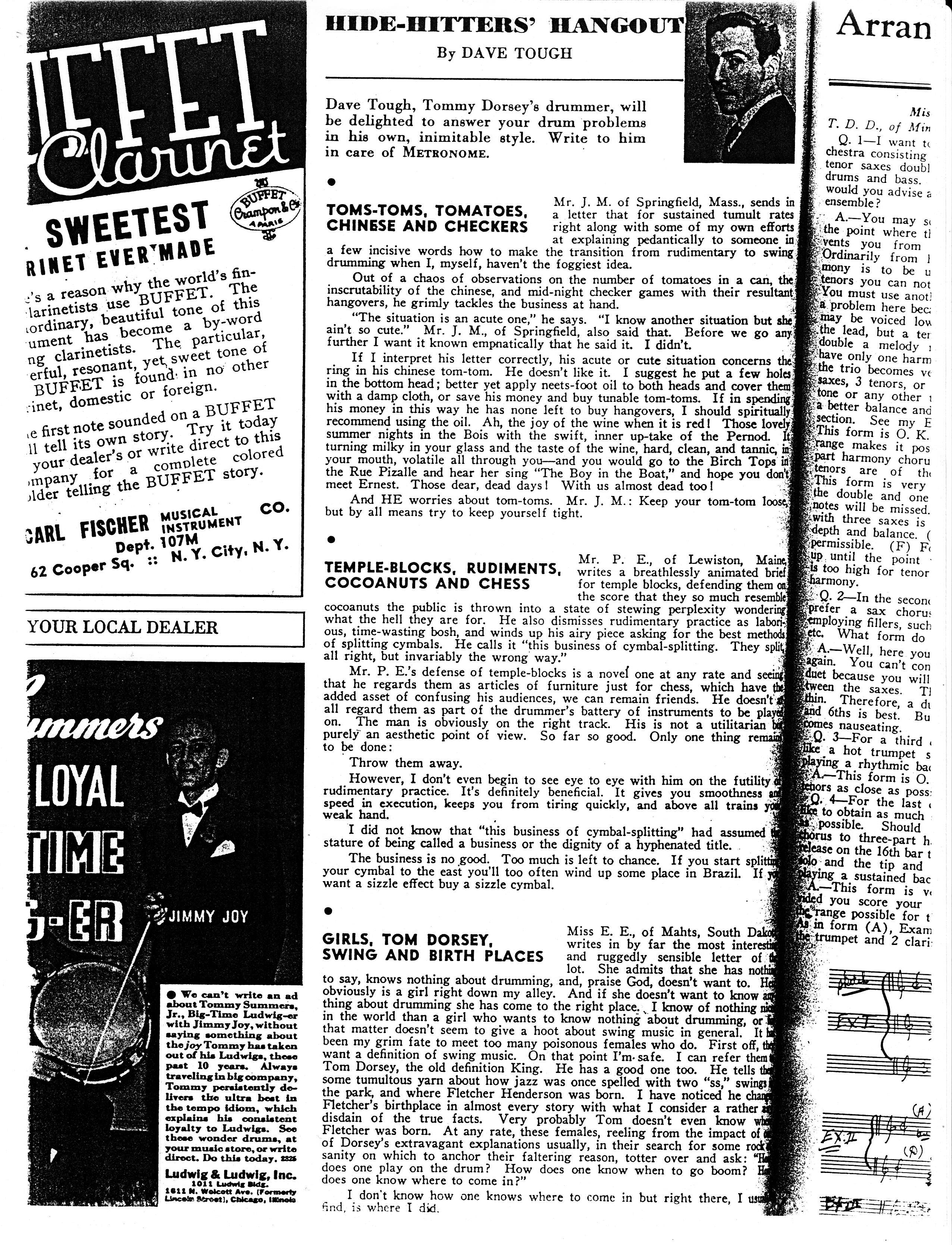
SKF NOTE: My friend and former Modern Drummer Features Editor, Rick Mattingly, long ago mailed me these photocopies of drummer Dave Tough advice columns. Tough briefly wrote columns for Metronome magazine.

Tough’s columns are fun and instructive reading. Here’s my list of advice or topics mentioned that caught my attention.

  • Left-Hand playing quarter-notes on the snare drum.
  • Writing out the various beats on paper, and explaining them as well as I can is, I’m afraid, a futile procedure. Granted that someone can in this way acquire a considerable technical equipment, the really important things, such as taste, experience, and the feeling for the music that the truly great drummers like Gene, Big Sidney, and Chick possess is an intangible quality that defies such black and white analysis.
  • Silk drum heads??
  • A tight (bass) drum has that shallow, sterile sound one immediately associates with curly-haired, sissy drummers with the smile full of teeth who stay out for half a chorus to swat the vibraphones and get up to sing a vocal. Leave the bass drum heads rather loose.

===

  • Tough solution for a ringing Chinese tom-tom: “I suggest…a few holes in the bottom head; better yet apply neets-foot oil to both heads and cover them with a damp cloth, or save…money and buy tunable tom-toms.”
  • Practicing rudiments is “definitely beneficial. It gives you a smoothness and speed in execution, keeps you from tiring quickly, and above all trains your weak hand.”

===

  • Metal vs wood drum shells: “Metal shells for all kinds of work in all kinds of weather are infinitely preferable, so far as I’m concerned, to wooden ones. Some drummers I know, who like the tone of rim shots on wooden drums without sacrificing the assets of a metal shell, have wooden hoops placed on their metal shell.”
  • Practice on a drum or pad: “He can make more noise, have more fun, and very probably get better results by practicing on a complete set. It’s so often the things you hit and when that are more important than the beats themselves.”
  • A good cymbal is one that sounds good to you.
  • (I am) the one-man society for the eradication of temple blocks and triangles.

===

  • (D)rumming should be pleasant for a chap learning. If it isn’t, he should quit before he starts; which is a good trick if he can do it. Personally, I don’t think it’s a matter of life and death if one can drum or not.
  • Go to a drum teacher with a sound reputation in the profession. There are many who not only can play but can teach.

=====

  • On hi-hat cymbals: (B)uy the best ones you can get your hands on. Ten or eleven inch Zildjian cymbals, both the same size and just a little heavier than paper thin, give good results. You can get a smoother swing if you keep the cymbals touching each other all the time. Raising your foot high and releasing them completely throws the accent too definitely on the beat, and tends to make the rhythm clumsy.
Posted in Drum/Music News, SKF Blog | Tagged , , , , , , , , , , , , | Leave a comment

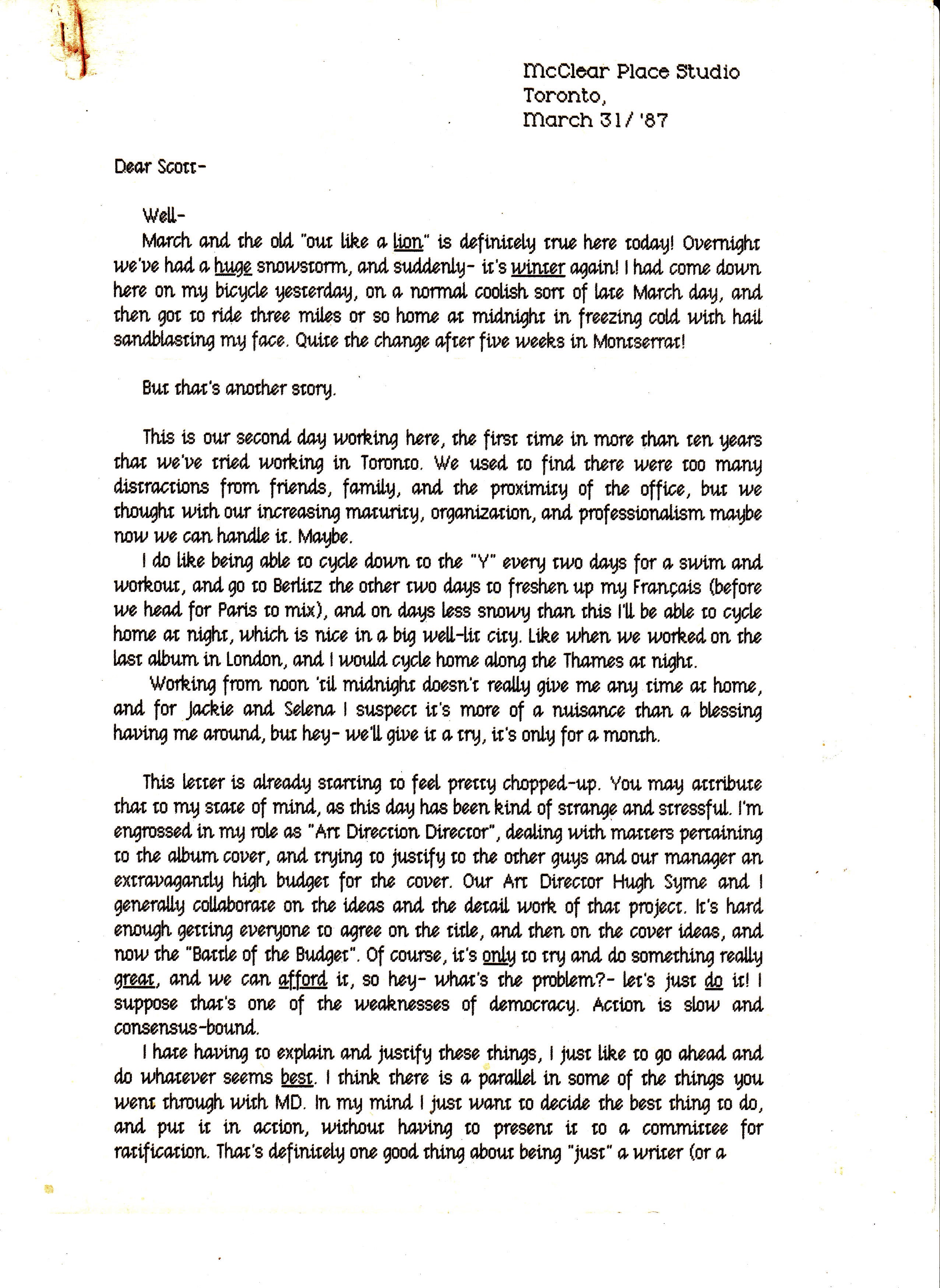
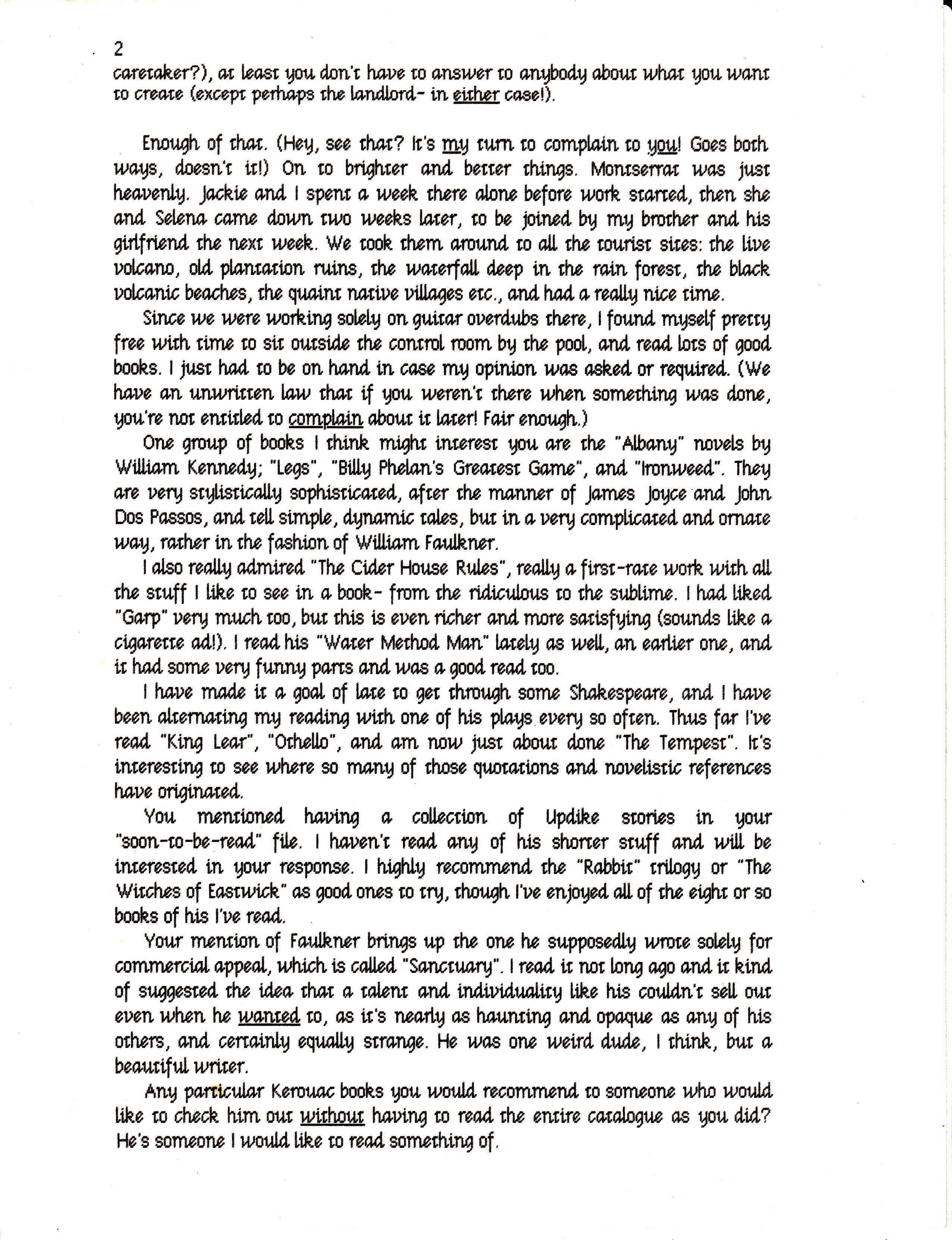
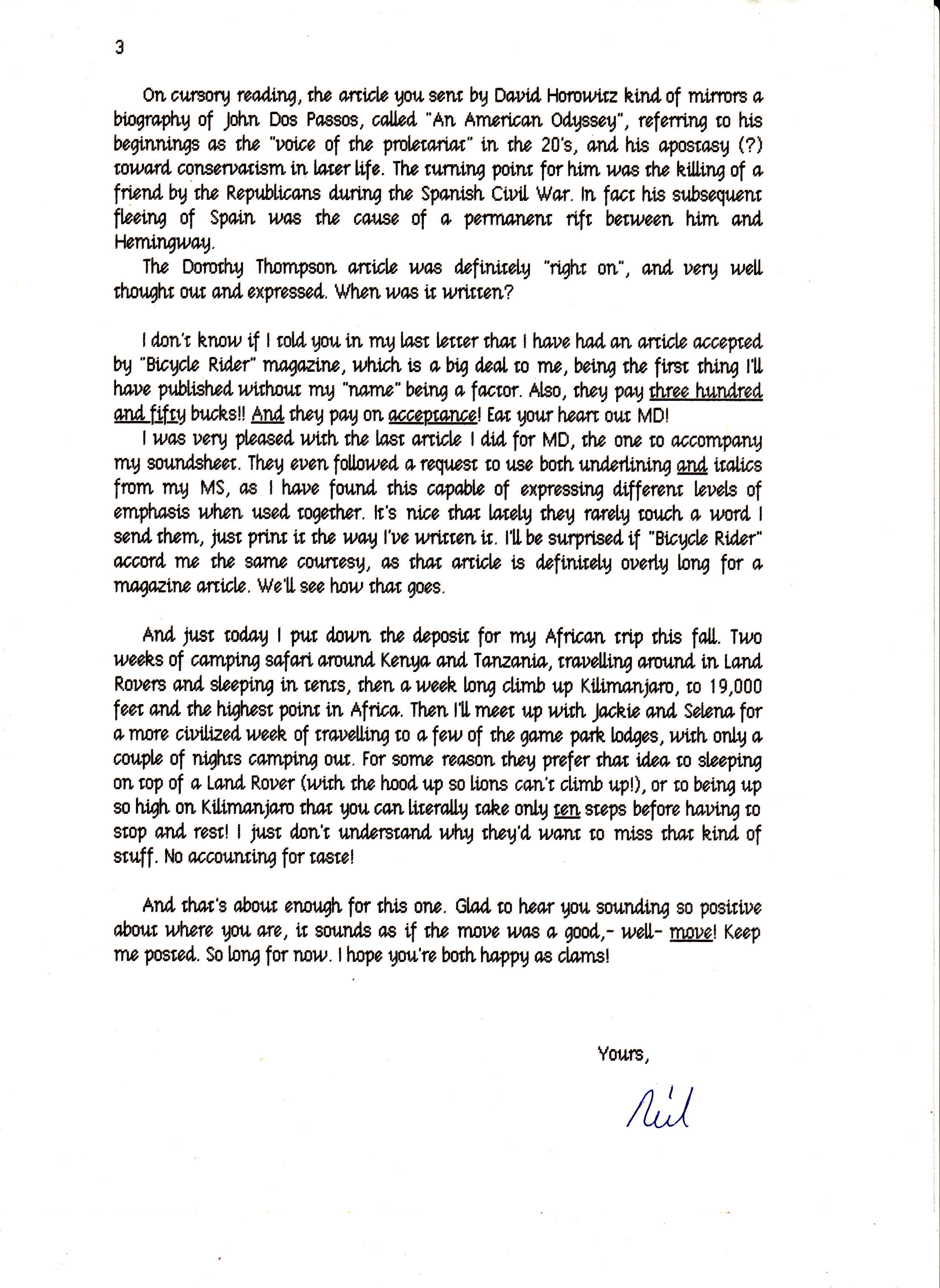
Peart Letter to SKF – Music, Writing, Books, Travel

SKF NOTE: A few days ago I posted my letter in reply to Neil Peart’s March 31, 1987 letter to me.

This post is Neil’s March 31, 1987 letter. It is one of my favorites from Neil. Mostly, I think, because in this letter Neil gives insight to his music, his reading and writing, his travels, and his guidance to an old friend – me! – who had just relocated to Maryland from Connecticut.

Posted in SKF Blog | Tagged , , , , , , , , , | Leave a comment

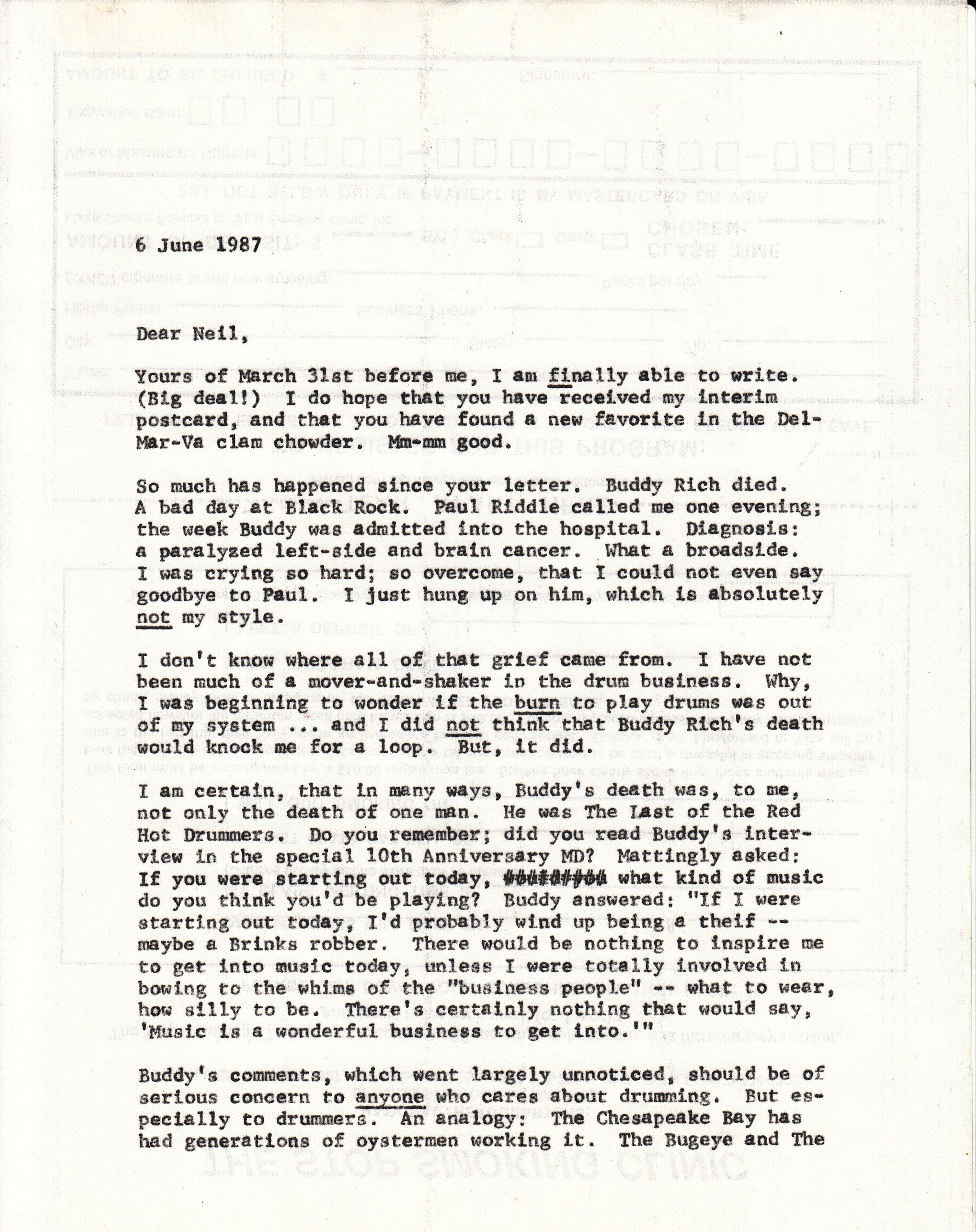
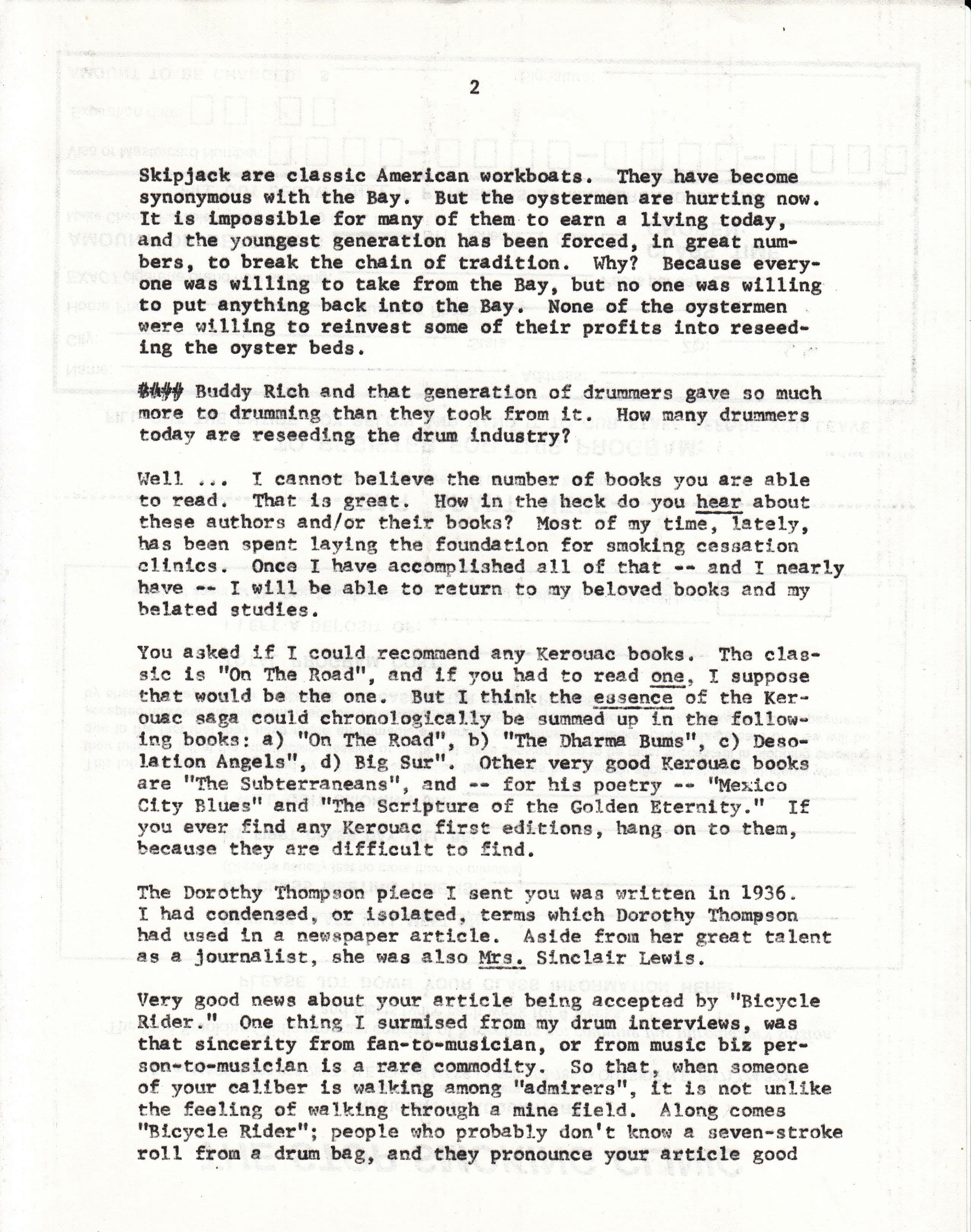
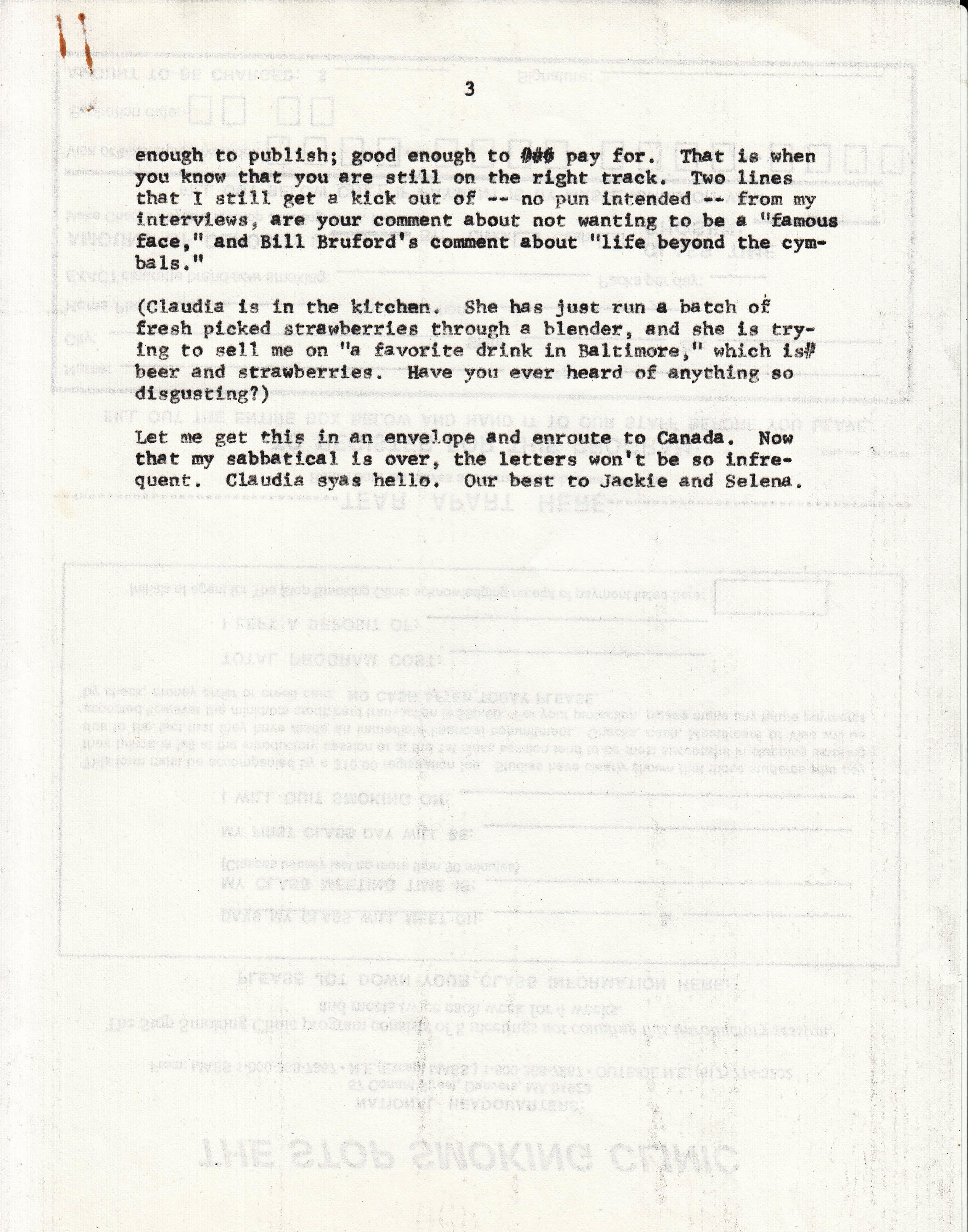
SKF Letter to Neil on Buddy, Drummers, Books

SKF NOTE: This three-page letter to Neil Peart from me was written when I was married and living in Oxford, MD on the Del-Mar-Va peninsula. I was working as Area Director for the MA based non-profit Stop Smoking Clinics, four years or so after stepping down as Modern Drummer’s Managing Editor.

If you look close at the letter images here you’ll see I typed the letter on the back side of Stop Smoking Clinics registration forms.

Neil and I kept up a correspondence. This letter of mine is a response to his March 31 letter to me.

Interesting in retrospect is what I wrote Neil about Buddy Rich’s recent death. I may have Neil’s response somewhere. But reading this letter I am reminded of how distraught I was over Buddy’s death, and how puzzled I was at how very sad I felt.

No surprise, Neil and I often shared thoughts on books. Here, replying to a long list of books Neil had written me about in his last letter, I said, “I cannot believe how many books you are able to read.” And then, at his request, I offer Neil my Jack Kerouac book recommendations.

I miss corresponding with Neil. He was a great pen pal.

Posted in SKF Blog | Tagged , , , , , , , , , , | 2 Comments