John Bonham: There Goes Another Rubber Tree Plant

SKF Note: Excerpt from a 1988 interview with 21-year old Jason Bonham.

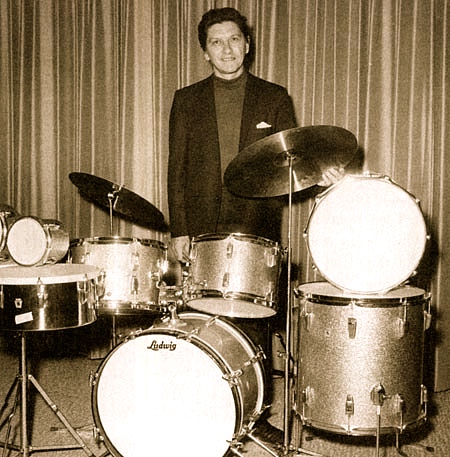
John-Bonham-Stainless-Steel-Ludwig-Drums-Kit-Setup13Jason Bonham: There’s a great story. You must print this. It’s fantastic.

They had this huge, huge rubber plant in the Abba Studios in Stockholm. And they set my dad’s drum kit up in the corner next to it. In this big stone room.

My dad came in. He played for 15-minutes. The next day, the plant was dead.

And they tried to revive this plant for weeks while they were there. And it just died instantly. It was so loud. And [my dad] was using the famous steel drums, like stainless steel shells. Stainless steel bass drum, stainless steel shells. It was just totally awesome loudness.

And this plant, this poor thing, just next day was keeled over in the corner of the room. I thought that was quite amusing.

end

Posted in SKF Blog | Tagged , , , , , | Comments Off on John Bonham: There Goes Another Rubber Tree Plant

Gary Chester: Calfskin Heads, Vintage Drums, Studio Sounds

SKF NOTE: I found the full transcript from my interview with Gary Chester, published in the April 1983 Modern Drummer. The transcript is 64 typed pages, using one-and-a-half spaces between sentences. On a manual typewriter! It is about twice as long as a typical MD feature interview at that time, suggesting Gary shared words of wisdom beyond those in his interview.

Scott K Fish: It seems like all the engineers and producers want all drummers to sound the same. It wasn’t like that in the ’50s and ’60s. Do you remember when that started happening?

Gary Chester: I was the only drummer that stayed with calfskin heads. I loved calfskin heads because I’m a brush player. I love brushes and I love calf. The whole set was calfskin. As soon as I started to record, I used plastic.

I had three set of drums. When I was hot, two of them were stolen. I had one set for rock, one set for “white” music – which is what I call Robert Goulet, or Perry Como, or the Jack Armstrong All-American trying to be rock ‘n’ roll. I had three good sets. All Ludwig.

I love Ludwig. I wouldn’t use anything else. They gave me a $1500.00 set in 1963 when I opened a TV show with Gene Pitney in Chicago. I never bothered them for another set because I don’t need a new set. I love what I’ve got. The old vintage drums, for me, are the greatest.

I usually used calf, but then in the studios, what you’re talking about was about ’74, ’75, ’76.

Around in that area the snare drum was lost. There was no highs on the snare drum anymore. Some guys muffled it down so bad, or took the snares off it so it sounded like a tom-tom. That originated in Philadelphia with what they called the “fatback,” the 2 and 4 really fat.

But there was no texture, no coloring, no emphasis, no highs on any of the playing. That’s what I miss. The drums now sound like sets of five tom-toms.

end

Posted in SKF Blog | Tagged , , , | Leave a comment

Neil Peart – No Keith Moon Without Krupa

Mystic Rhythms: Rush’s Neil Peart On The First Rock Drummer
JANUARY 06, 2015 2:03 AM ET

At 62, Peart has lived through and listened to a substantial slice of the history of modern drumming. He says he first wanted to become a drummer when he saw The Gene Krupa Story.

“He was the first rock drummer, in very many ways,” Peart says. “Without Gene Krupa, there wouldn’t have been a Keith Moon. He was the first drummer to command the spotlight and the first drummer to be celebrated for his solos, because they were very flamboyant. He did fundamentally easy things, but always made them look spectacular.”

Listen to Full Neil Peart Interview (MP3)

Full Story

Posted in Drum/Music News | Tagged , , , , , , | Leave a comment

The Original Funky Drummers On Life With James Brown

The Original Funky Drummers On Life With James Brown
By NPR STAFF
Originally published on Mon January 5, 2015 9:42 am

All this week, Morning Edition is talking about drums and drummers. For the first installment in “Beat Week,” David Greene spoke with a duo who shared drumming duties for the hardest working man in show business.

From the mid-1960s through the early ’70s, Clyde Stubblefield and John “Jabo” Starks created the grooves on many of James Brown‘s biggest hits, and laid the foundation for modern funk drumming in the process.

Full Story

Posted in Drum/Music News | Tagged , , , , , , | Comments Off on The Original Funky Drummers On Life With James Brown

Art Blakey on Chick Webb and Big Sid Catlett

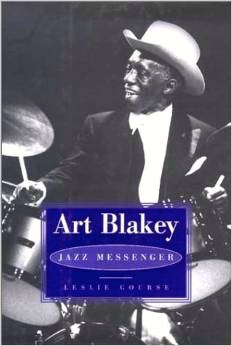
blakey_artLeslie Gourse: Blakey had learned to play the drums by listening to recordings of [Chick] Webb and Big Sid Catlett, which prepared him to play with several big swing bands in the 1940s. Eventually.., Blakey met those drummers and got advice from them.

“Catlett was a huge man,” Blakey [said]. “He’d sit at the drum and make it sound like a butterfly – so pretty – it had nothing to do with loudness.

“Catlett could play just as soft with a pair of sticks as you can play with a pair of brushes. And Catlett could take the brushes and play with them like sticks. Sid was so big that when he sat down at a twenty-eight-inch bass drum, it looked like a toy. He was a master. I tried to pattern myself on him. He said, ‘Just roll.’

“[Webb] told me…to learn how to space my energy.”

Blakey…had…an act in which he threw different-colored drumsticks around. Webb caught the act and [said], “OK, kid, the first thing I want to tell you: The rhythm ain’t in the air; it’s on the hides.” Webb…told [Blakey] to show up the next morning to practice playing press rolls on a snare drum. “I want you to roll ’til you get to one hundred, and I don’t want you to break that roll,” he instructed. Every day Blakey showed up to follow Webb’s instructions. “I liked to busted my wrist,” Blakey [said]. “I developed a press roll out of that.”

Blakey was trying to improve his music-reading skills when Big Sid Catlett came to a rehearsal of the [Billy] Eckstine band and told him, “Don’t try to read everything; take some and leave some. And when you get in trouble, roll.”

Blakey [said] “One night I had a bottle of whiskey in my coat pocket and I was drinking through a straw from a bottle during the show. When I came off the stage, Sid Catlett grabbed me, hugged me, and picked me up. But when he felt the bottle, he put me down, hit me, and knocked me to the floor. He told me, ‘Next time learn how to master your instrument before you learn how to drink. Next time I catch you, I’ll break your neck.’

Source: “Art Blakey: Jazz Messenger,” by Leslie Gourse, Schirmer Trade Books, 2002

Posted in SKF Blog | Tagged , , , , , , | 1 Comment