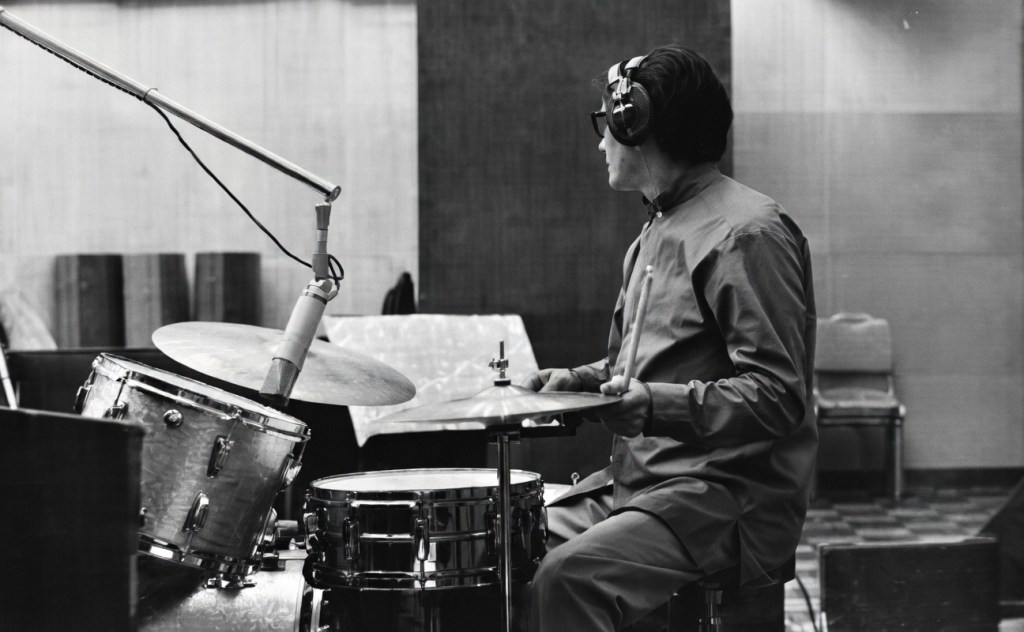
Gary Chester on Developing Good Time

SKF NOTEI found the full transcript from my 1983 interview with Gary Chester, published that year in the April Modern Drummer. The transcript is about twice as long as a typical MD feature interview at that time, suggesting Gary shared words of wisdom beyond those in his interview.

Scott K Fish: How did you develop good time?

Gary Chester: I studied time. Time is the whole essence of playing. Davey Tough, Nick Fatool, and another cat who just died in a fire, Morey Feld. These guys are not soloists or nothing, but their time is so gorgeous. I love time.

SKF: Did you used to talk to Davey Tough about time?

GC: We used to sit and play brushes all night. Him and I.

SKF: With a metronome?

GC: No. Just between ourselves on a cardboard box. What grooves we use to get! That’s the trouble with the younger generations. They don’t know time as well as they should

SKF: Until you started session work you never messed with a metronome?

GC: No. I never had to play with a metronome because God gave me something inside me. I have a born-in quarter note. So I don’t have to worry about that. But, when I went into records there was no click track playing. It was just the pulse of the room.

I don’t think you can show me a record that starts and ends in the same tempo, which is acceptable.

Posted in SKF Blog | Tagged , , , , , , , , | 1 Comment

Revisiting My Life in Music: The Earliest Music in My Life

11899092_1

Gene Krupa

In my first blog post I write of how important to my eventual music writing was hearing, at age six, my Uncle Bob’s recording of Gene Krupa‘s China Boy, and also, discovering Uncle Bob’s mismatched four-piece drumset and loving its “sound” – especially the small tom-tom.

As important to my music writing was the varied music heard at home, friends’ homes, on radio/t.v., in school. I asked Mel Lewis how he learned to play drums to different styles of music. He said, “Ears.” Listening! Mel was familiar with many types of music. By the time I started drumming, then writing about drumming, I too was familiar with many types of music.

Rock was in its infancy when I was a kid, so I grew up hearing the popular music of my parents’ World War II generation, plus the emerging rock music of my generation, mostly on AM radio. My mother loved Al Jolson. She also played the upright piano at home and I loved hearing her play, “Theme from the High and the Mighty,” by Dimitri Tiomkin.

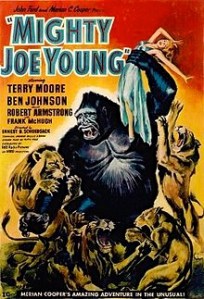
Mighty Joe Young movie posterOther songs/melodies I liked growing up were, Stephen Foster’s Beautiful Dreamer, from the movie Mighty Joe Young, Nat King Cole’s Ramblin’ Rose. Mitch Miller had a hit t.v. show of his men’s chorus singing “an alternative to rock ’n’ roll.” In his New York Times obituary it said, “Mr. Miller came up with the idea for his singalong albums in 1958, drawing on a repertory that ordinary people had sung in churches and parlors for decades.”
My 7th grade music teacher, Mr. Robinson, often taught our class to sing those same songs, often by singing along with Mitch. (Mr. Miller also played oboe on and produced some of Charlie Parker’s string albums.)

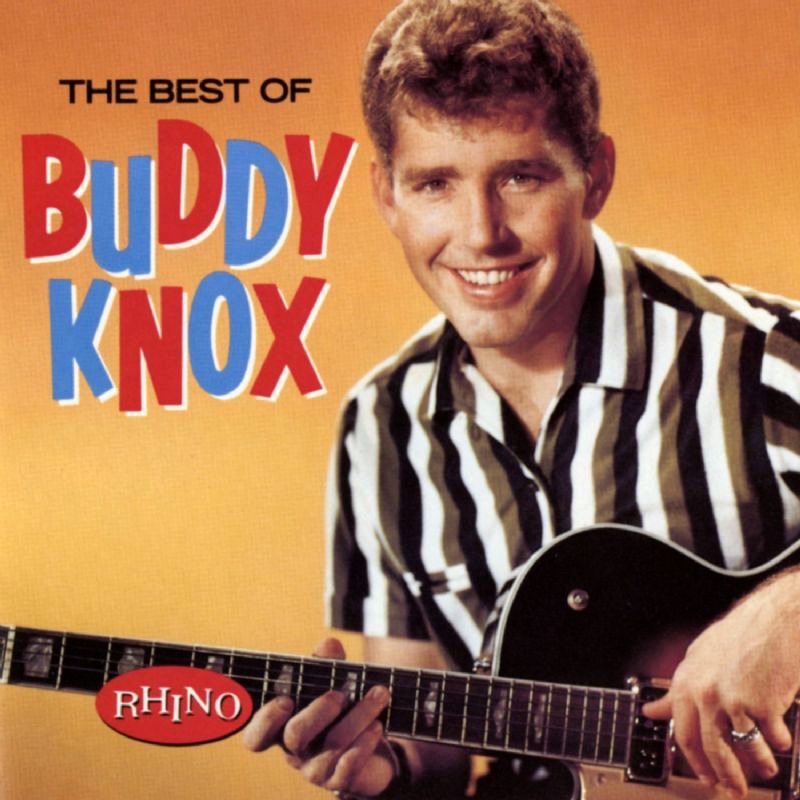
My classmate, Kevin Darby, was the first to introduce me to rock ’n’ roll. Kevin tried explaining it in words. I don’t remember what he said, but he finished by playing me his brother’s 45-rpm Party Doll, by Buddy Knox (1957).

knox_buddyThe Party Doll drummer is David Alldred. Of Alldred and the Party Doll recording session, Buddy Knox said, “We didn’t have a drummer, but a boy by the name of David Alldred, who joined the band later, was a session player for Norman Petty, so we used him. I can remember looking at him and all he had was two drumsticks and a box with cotton pushed up in it. I still think that makes a heck of a drum sound.”

Alldred was ahead of his time. Today it’s fashionable to have very expensive drumsets that sound like boxes full of cotton.

Gene Krupa, great American songwriters, early rock ’n’ rollers. These are examples of the sounds of my earliest musical life.

To be continued….

end

Posted in Revisiting My Life in Music | Tagged , , , , , | 1 Comment

Giving Every Child a Chance to Know Beautiful Music

Music Education Needs to Be a Click Away
David Gelernter, computer expert and author, on how to use the ‘cloud’ to bring Beethoven to young people
By DAVID GELERNTER
March 20, 2015 12:54 p.m. ET

Most children learn nothing about serious music in school and don’t expect to learn anything. Outside school, the music world is being upended and shaken vigorously. The ways we choose music and listen to it are being transformed by iTunes and Spotify and other such sites.

To know nothing about Beethoven? That is cultural bankruptcy. That is collapse. It goes far beyond incompetence, deep into betrayal and farce.

We have the raw materials we need to change this state of affairs.

How do we turn these digital services into tools to educate our children?

It would be simple to put together music-learning packages…independent of iTunes or Spotify, that merely link to those sites or others. We create a flock of 10-minute programs and have first-graders listen to each one repeatedly.

[T]he goal is to give every child a chance to attune his mind to seriously beautiful music.

We also have the means of building a great music city in the cybersphere, a central market where serious music comes from all over the world—in performance, in manuscript or in new or old printed editions, in scholarly and popular studies, photos and videos and biographies.

Aside from all that, we have a full-service musical bazaar, where professionals from around the world can hawk their wares and amateurs can have fun, stay up-to-date and learn.

Mr. Gelernter is a professor of computer science at Yale and a former member of the board of the National Endowment for the Arts. His “Tides of Mind: Uncovering the Spectrum of Consciousness” will be published by Norton later this year.

Full Story

Posted in Drum/Music News | Tagged , , , , | Leave a comment

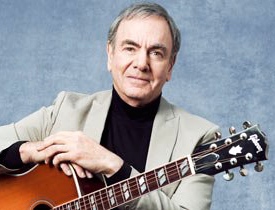
Neil Diamond: Two Songs from an $11,000 Guitar

[SKF NOTE: Yesterday I finished reading a Steve Earle biography. In it, there’s mention of Mr. Earle buying guitars when he senses the guitar has a ghost or a song in it. I find that fascinating. This snippet from Neil Diamond’s interview in today’s WSJ is similar.]

WSJ.com NY CULTURE
Neil Diamond Discusses Brooklyn Roots, Great Guitars
A Q&A with the performer, who will return to Brooklyn for a one-night-only show

spot-neil-diamond-covWSJ: What guitars are you into now?

Neil Diamond: For the most part, acoustic guitars. They each have their own character and personality. On a particular day, I might pick one up and start noodling around, looking for some emotional content in the chords.

I remember working on the “Home Before Dark” album [2008], and I had pretty much all of it written. I went to visit a guitar collector. There was a 1953 Gibson that I picked up, and I liked a lot. I bought it on the spot at an outrageous price. I think I paid $11,000 for it. I wrote two songs on it. I have never written anything else on that guitar since. It served its purpose. It generated the creative character that I was hoping for.

Full Story

Posted in Drum/Music News | Tagged , , , | Leave a comment

Kenney Jones: A Small Faces Reunion in 2015

[SKF NOTE: The Small Faces (aka, The Faces) are one of the great rock bands. I especially loved the looseness, the spirit when I was a high school listener. Infectious.]

All or Nothing
Rock & roll’s MVP keyboardist, Ian McLagan, was first and foremost an Austinite for the last 20 years of his life
BY TIM STEGALL, FRI., MARCH 20, 2015

As Ultimate Classic Rock points out, [Kenney] Jones discussed a potential Faces reunion during a chat about McLagan with The Austin Chronicle. “Rod (Stewart), (Ron Wood) Woody, and me are still going to do the Faces this year. It’s more important now than ever,” said Jones.

Full Story

Posted in Drum/Music News | Tagged , , , , | Leave a comment