John Von Ohlen On Indianapolis Music ‘Genius’ Bob Phillips

SKF NOTE: I want to correct my original post intro. I left Modern Drummer as a full time managing editor in October 1983, and continued freelance writing for MD for a few years after, including this John Von Ohlen interview. Having digitized and re-listened to the Von Ohlen interview tape, I know I conducted this interview from my home phone. The rest of my original intro is accurate.

John wanted to talk about Indianapolis music teacher extraordinnaire Bob Philips, “[T]he guy who really taught me music,” John told me.

So here , along with the transcript from the interview, is the audio from the interview.

==========

[SKF NOTE: From the transcript of my interview with John Von Ohlen, published in the March 1985 Modern Drummer. This interview was done by phone. I was in my MD office. John was home in Indiana. My introduction to John’s playing, years earlier, was through Stan Kenton’s Live in London album. Mel Lewis, who I had befriended by the time of this interview, spoke very highly of John. I happened to be in Mel’s apartment for one of his birthdays when he received a Happy Birthday phone call from Von Ohlen. “He always calls me on my birthday,” Mel said.

And prior to this interview I had listened a few times to John’s Blue Wisp Big Band albums. A terrific big band.]
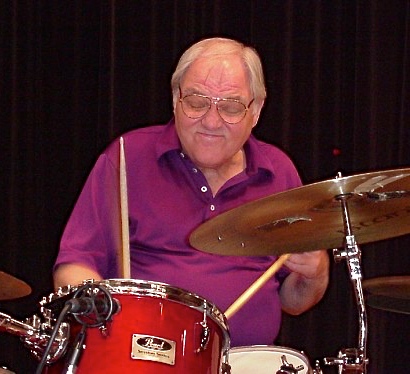
John Von Ohlen
John Von Ohlen John Von Ohlen

John Von Ohlen: I’ll tell you about the guy who really taught me music. His name is Bob Phillips. To Indianapolis musicians he’s like the guru, sage, teacher. He taught all of us just about everything we know. You can graduate from Indiana University or from Bob Phillips. He teaches in a very unorthodox way.

Bob invited me to play trombone in his “B” band on Saturday morning. And I went there every Saturday morning. He taught all of us how to play in the ensemble, and he had a beautiful way of teaching figures.

First of all, it was the real shit. There was no time for mistakes in reading. He made you play as if you were on a national television show, even when you were just a little kid. We ha no time for mistakes in reading. No time for playing wimpy. He wanted it out there and he wanted it right now. He’d say, “If we wanted it tomorrow we’d have rehearsal tomorrow.”
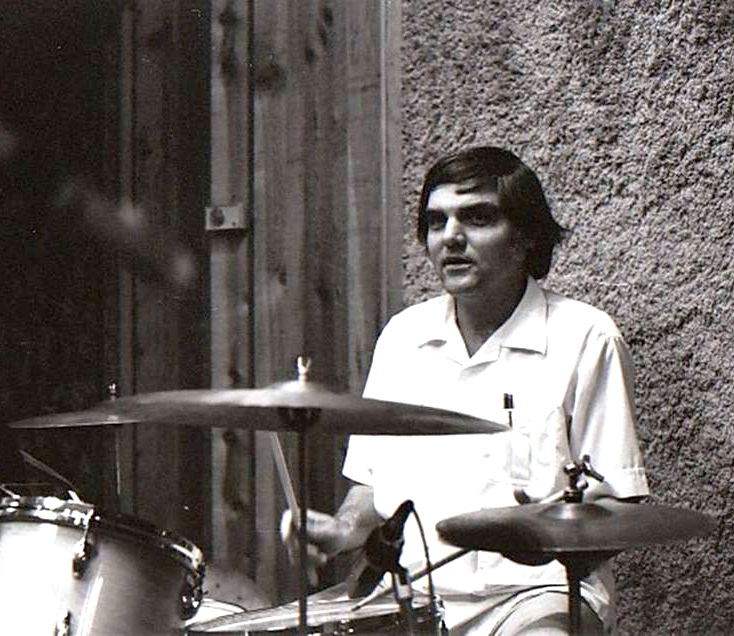
John Von Ohlen
John Von Ohlen John Von Ohlen

Scott K Fish: What was his reaction when someone did make a mistake?

JVO: He’d stop the band, single you out, and make you feel like shit. Right in front of everybody.

And he’d never compliment you. Week after week. Then when you were just about fed up with him he’d compliment you highly in front of everybody. Boy, you’d feel like a million bucks.

He never had drums at rehearsals. He didn’t believe in it. He’d say, “The band ought to swing by itself.” I’m very grateful to him for everything I learned from him. He was doing it to further good music.

SKF: After you graduated high school you went to study at North Texas State.

JVO: Yeah. I was never into school. It was bondage. I went to North Texas State because I was coming out of 12 years of school and I thought I should go to college.

Prior to going, Bob Phillips had said to me, “Think about your favorite players. How many of them went to school?”

I couldn’t think of any. Not one. None of my favorite players went to school.

Bob said, “You don’t need to go to school. Just start working. You already know what you want to do.”

But, I went down to North Texas State and, right away, I found out that I didn’t want to go to class.

end

Posted in SKF Blog | Tagged , , , , , , | 2 Comments

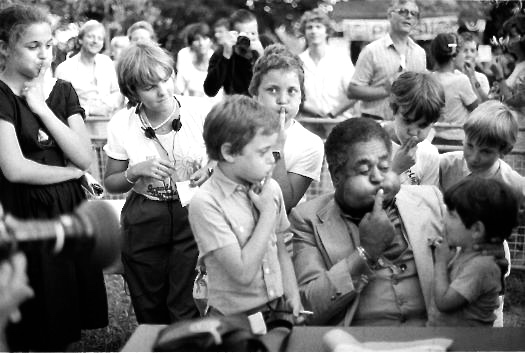
She Said, My Topic is Dizzy Gillespie

This morning I am remembering accepting Dixmont’s First Selectman’s invitation to serve as one of three judges of a public speaking contest for grade school kids. Not that I felt qualified to do so!

Dizzy Gillespie

Dizzy Gillespie

The second speaker, as I recall, was a petite 12-year old girl with long dark hair. Standing onstage in the school gym, this young lady said her topic was Dizzy Gillespie. Dizzy Gillespie??? For the next few minutes this kid spoke of how she discovered this legendary jazz trumpeter, and how much Dizzy Gillespie influenced her own trumpet playing.

I was – no pun intended – blown away and delighted to hear a 12-year old who knew about, and spoke with passion and knowledge about, Dizzy Gillespie.

Not long after that I came across a photo book about Dizzy. I bought it thinking I could get it to that student somehow. That never happened. From time-to-time, such as this morning, I remember that young lady and regret not making more of an effort to get her that book. I hope she’s still playing.

And, yes, I voted her as the public speaking contest winner.

end

Posted in SKF Blog | Tagged , , | Comments Off on She Said, My Topic is Dizzy Gillespie

Revisiting My Life in Music: The Rise of Writing Influences

american_revolutionSKF NOTE: I’ve written about some of my key musical influences. But what about my writing influences? When did that start?

I am surprised I cannot pinpoint a specific moment when I fell in love with writing. My parents were readers. Growing up I read comic strips, comic books, young readers books, (i.e. The Hardy Boys Series), magazines (MAD, and Famous Monsters of Filmland, hot rods and auto racing), and children’s history books about The American Revolution, The American Civil War, pirates, WWI fighter pilots.

My father graduated Syracuse University with a journalism degree. All my life he was a magazine editor, then a book editor. He worked first for Boy’s Life, then Sports Afield, and most of my life, Outdoor Life. I have memories of my dad on weekends, sitting on our living room sofa with a typed manuscript, a yellow legal pad, and red pencils, editing magazine articles. That was my first look at proofreaders marks.

proofreadingWriting letters to grandparents and other relatives, I suppose, was my intro to writing. Long distance telephone calls were too expensive. If I wanted to communicate with family members, letter writing was the best means of communication. My letters were written mostly in longhand. We had a manual typewriter at home. Sometimes I used it and two fingers to peck out a personal letter. But that method was slow. My brain was always working faster than my two fingers could type.

typewriter_manualI learned penmanship, grammar, and spelling in school and at home. I was also privvy to my father’s rapid writing on his manual typewriter. Wanting to learn how to type with all fingers on both hands I enrolled in a high school typing class. Typical of my attitude about school (forced confinement!) I learned how to type and how to format business letters (headings, dates, introductions, closings, tabs, margins), paying little attention to the rest.

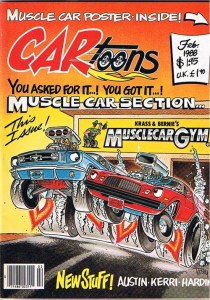
cartoonmagcoverSo early on I loved reading, history, writing to communicate with people, and, on a manual typewriter, I was typing with accuracy 100 words per minute. CARToons magazine published my poem, “The Midnight Ride of Paul Chevelle,” when I was 15-years old. That was a complete surprise. My poem was just a Chevy fan’s response to a pro-Ford Paul Revere spoof CARToons published. That was my introduction as a published (unpaid) freelance writer.

In junior high school and high school, through new friends at school, work, and in my neighborhood, I was exposed to more and more varied musicians and writers. Time now to sort out those experiences and how they – and other experiences – were my training ground for getting paid to write about musicians, mostly drummers.

To be continued….

-end-

Posted in Revisiting My Life in Music | Tagged , | 1 Comment

Rhythm: Who Could Ask for Anything More?

[SKF NOTE: All that’s missing is the hamster wheel.]

http://www.ultimate-guitar.com
Today in Crazy Instruments: Meet Yamaha’s 360-Degree Spherical Drum Kit
04/18/2015

raijin_spherical_drum_1[W]e…present you Raijin, Yamaha’s 360-degree spherical drum set.

[T]he kit allows musicians to take on a different approach to drumming and possibly express themselves in a different way than usual.

It has all the components of a standard drum set, with not one, but several cowbells, four bass drums with pedals and numerous cymbals and toms.

The manufacturer stated: “This design seeks to create an ideal form that will allow human beings to go beyond existing methods to express themselves. The design resembles a globe and allows performers to let their imaginations run wild on an assortment of different kinds of drums. Energy erupts centered on the performer and creates an increasingly visually dynamic world of sound.”

Full Story

Posted in Drum/Music News | Tagged , , , | Leave a comment

Are Drummers a Dying Breed?

Linn Drum (Photo courtesy VintageSynth.com)

A Drum Forum drummer using the name “homeby5” has thread titled, “Are We a Dying Breed?” “When I was young I was attracted like crazy to live music with one catch….they had to have a drummer or it wasn’t a real band!,” writes homeby5. “But today, we are replaced by machines, DJ’s, single acts, tambourine players, etc…but mainly computer beat machines!”

Are drummers a dying breed? Good question. In the early 1980’s I was at Max Weinberg‘s home and he was showing me a Linn Drum, an early drum machine that sold for $3,000. The Linn Drum was causing a lot of excitement in the recording world. Someone thought Modern Drummer should feature the Linn Drum as a cover story. That is, instead of a drummer on the cover, have a Linn Drum on the cover.

Max said, at the time, he could envision future drummers no longer bothering to learn the rudiments. Why, Max asked, would you go through all the trouble of playing a decent double-stroke roll when you can just push a button and have a near perfect double-stroke roll?

That thought literally made me shiver because I thought Max was making a great, plausible point.

Bottom line: acoustic drums, electric drums, drum machines — at best they are all communication tools. How well people communicate with them is up to the individuals using them.

end

Posted in SKF Blog | Tagged , , , , , | Leave a comment