When he…began to learn the instrument, in his early 20s, Micky Dolenz taught himself to play using his left foot for the kick drum, and his right leg for the hi-hat. He then focused on the snare with his left hand….
“Yeah, half-right, half-left,” Micky Dolenz tells Bob Girouard of Modern Drummer. “The bottom half is left-handed and the top is right-handed. I play the kick with my left foot and the snare with my left hand.
“When I was a kid I had a leg disease called Perthes,” Dolenz adds. “My right leg was, and still is, weaker than my left. So, when I went to play conventional-style, it hurt. But since I was just beginning, [my first teacher,] John Carlos, said, ‘Hey, change it around.’ He put the kick on my left and the hi-hat on my right — which I still do to this day — and it worked!”
[SKF NOTE: This looks great. The drumset players on this disc, in chronological order, are: Connie Kay, Jimmy Cobb, Tony Williams, Jack DeJohnette, Al Foster, and Ndugu Leon Chancler.]
Miles Davis at Newport: A Four-Disc Set Coming in July
By BEN RATLIFF
April 30, 2015 12:01 am
Columbia/Legacy Recordings is to announce Thursday that it plans to release “Miles Davis at Newport 1955-75: The Bootleg Series Vol. 4” on July 17. A four-disc set of live recordings, it traces the history of Davis’s concerts at the various Newport Festivals — in Newport, R.I., as well as in Berlin; Dietikon, Switzerland; and New York City. (About three-quarters of the tracks have not been commercially released.)
The set includes his complete performance at a festival all-star jam session in 1955, which led to his signing with Columbia; the 1969 concert played shortly before the recording of the studio album “Bitches Brew”; and an appearance in 1975 before a extended hiatus from performing — all of which cemented his status as a Newport mainstay.
SKF NOTE: Thank you to Wall Street Journal Music and Pop Critic Jim Fusilli for bringing this story, this documentary, to my attention. A chilling piece of music history.
What the Khmer Rouge Did to Rock
The new documentary “Don’t Think I’ve Forgotten: Cambodia’s Lost Rock and Roll” recounts the fate of Cambodian musicians, including the band Baksey Cham Krong.
“If you want to eliminate values from past societies you have to eliminate the artists. Because artists are influential. Artists are close to the people.”
Q. You write that when Jerry’s opiate problem became obvious, you all wanted to play with him so much that you turned a blind eye. Could you have done more?
Kreutzmann: We attempted interventions, but he saw a setup for what it was. And he would go to [rehab] places, but he was smarter than the therapists and could outtalk them all. I think 12-step is a great program, but he would have nothing to do with it, firmly believing that a person had the right to do whatever he liked as long as it didn’t hurt other people. But hurt where? Hurt how? Emotional pain can be much more painful than physical pain.
Q. And your pain is still evident.
Kreutzmann: We just had no luck with getting him to leave heroin. The drug owned him and that’s really sad. I was never mad that he was a heroin addict. I felt compassion and deep sorrow. He would play the most forlorn, lonesome-sounding solos. It was the one time where I could really hear inside him and it was a great, deep sadness.
According to [Bill] Kreutzmann.., …the book was a by-popular-demand project. “I would be telling these stories at parties or after shows . . . and different people would say, ‘You have to write these down,’ ” [he] said.
“The thing that I mostly discovered in doing this book was the amount of love I have inside of me that I can put into music,” he said. “I love to play music. I had no idea how much I loved it. And then you start writing the book and you realize how people enjoy what you do, and it reaffirmed my feeling about playing music.”
When the Grateful Dead formed in 1965, he said, “The only expectation was the desire to play music as best as we could. We didn’t expect to be rock stars, we never expected to get as famous as we did. We never set goals or anything like that.
“The only goal we had . . . was to play music at the highest level possible. I think we did a pretty good job.”
In Praise of the Teen Summer Job From hauling bricks to delivering newspapers, traditional summer work taught generations of teens about life, labor and their place in the universe By DAVE SHIFLETT — April 24, 2015 11:40 a.m. ET
Jack Casady
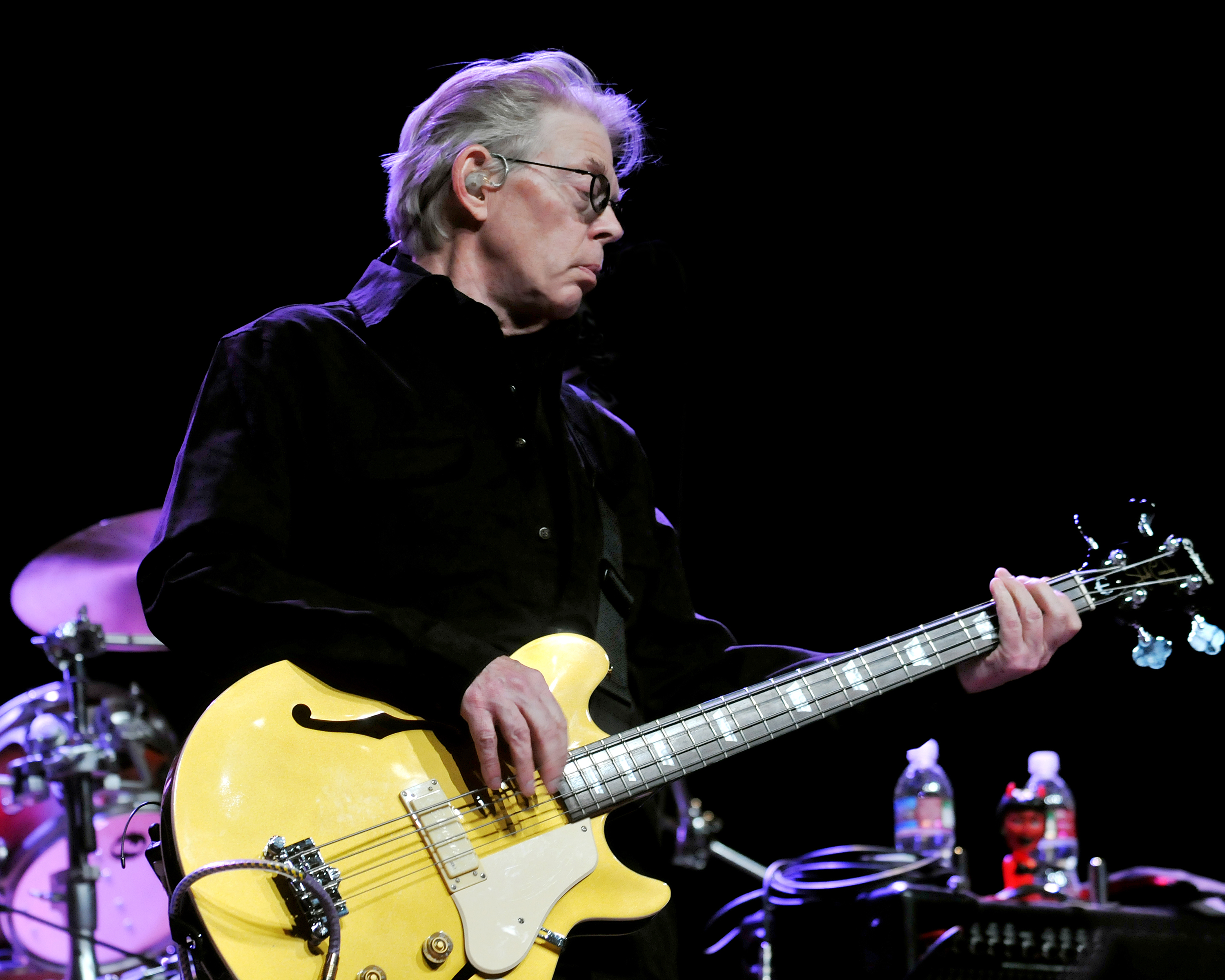
…Jefferson Airplane bandmate Jack Casady…remembers being a paper-delivering prodigy. “I started when I was 11 years old,” he said…. “On Sundays, I got up at 3 a.m. and delivered 400 papers.” He adds, “I made good money”—some of which he used to start the grass-cutting business that paid for his first musical instruments, including an amplifier kit he put together with help from his father.
“All of that taught me the thought process of setting your goal and then putting together the steps to reach that goal,” said Mr. Casady. “I learned that work was a means to independence and that if something you want is not available, you can make it yourself. There was no drudgery involved for me. Work was a means to freedom.”
His advice to young workers: Live and toil “with integrity,” and adopt a no-slacking attitude. “Luck and timing can make a big difference,” he said. “But Lord knows, prepare. If you prepare properly, you’re ready for luck and timing if they come your way.”

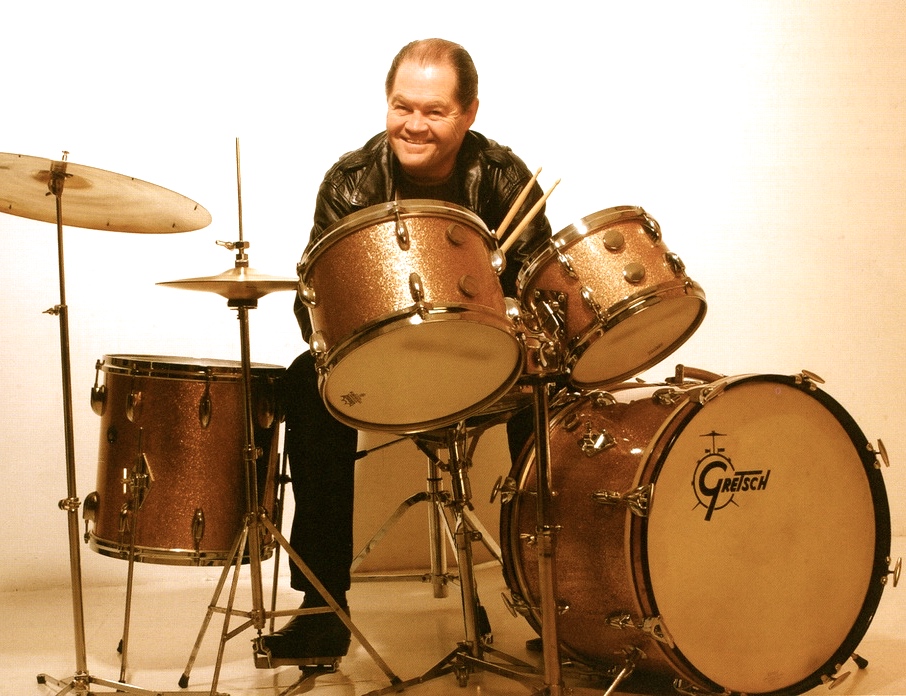 [T]he unique set up the Monkees’ Micky Dolenz employs for his drum kit.
 Scott K Fish
You must be logged in to post a comment.