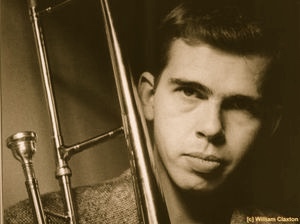
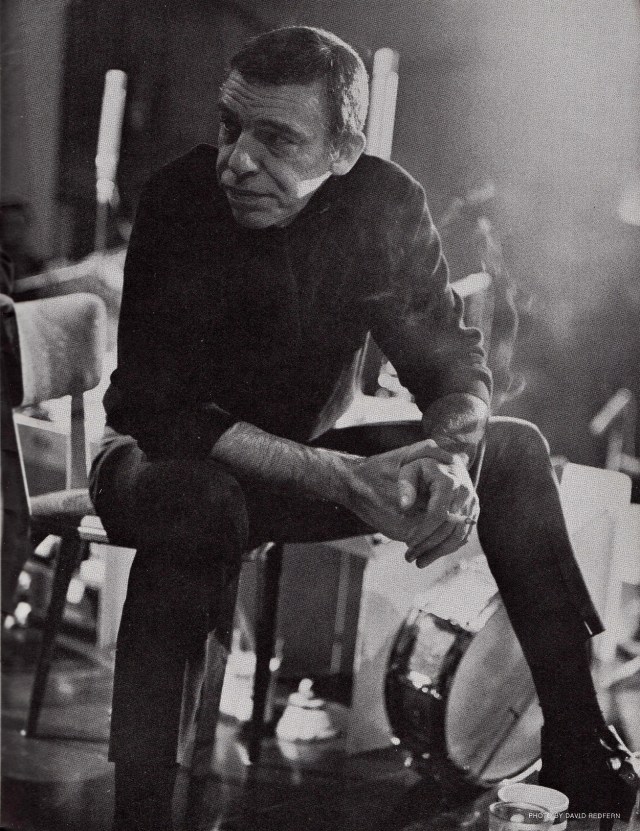
Ed Soph: Knowing the Reasons

SKF NOTE: Ed Soph was living in a small Garrison, New York house in the middle of the woods when we first met. My friend, Chris Conrade – a terrific drummer and teacher now living in Oregon – studied with Ed. He suggested I interview Ed for Modern Drummer.

I first heard Ed Soph in 1974 – years before meeting Chris – on trombonist Bill Waltrous‘s “Manhattan Wildlife Refuge” album. Ed’s playing on that date is so clean and precise, even in uptempo songs such as “Zip City.

Soph moved to Connecticut, not far from my home. We visited several times. Once, Ed asked me to listen to two cuts of a guitar/bass/drums trio with which I was unfamiliar. The first tune had a rock beat. The second tune was in swing time. Afterwards, Ed asked me, “What do you think of the drummer?” “Who is it?” I asked. Ed wouldn’t say. Finally, I said, “He sounds more comfortable with swing than rock.” Ed nodded. “Who is it?” I asked again. “It’s me,” Ed said.

Ed was smart, funny, curious, methodical. He was a wonderful person to interview. No matter what question I asked, Ed had a thoughtful answer.

I don’t remember if this exchange on rudiments from my Ed Soph interview transcript is part of Ed’s MD feature story. But let me clarify a photo MD used showing Ed playing a drumset with four sticks. We – MD’s editors – didn’t know it at the time, but after Ed’s interview was published he laughed about the photo. Ed said he was just clowning around with the photographer. Nothing against using four sticks. It was just that Ed Soph didn’t use play drumset using four sticks.

Ed Soph

Ed Soph

Scott K Fish: Going back to the rudiments/no rudiments argument. If you found the most unschooled backwoods drummer in the world – would there be anything in his playing that could be rudimental?

Ed Soph: Sure. Single-strokes and double-strokes. I think the rudiments are very valuable because they teach a certain discipline. Plus, they teach a linear concept that can then be translated into a drumset concept.

Man, what would rock drumming be without the paradiddle?

There’s something magical about the rudiments. If you play drums, you’re going to play a rudiment.

Where did the ride cymbal pattern come from? Why does ding-dinga-ding exist? Where did that come from? Why is the hi-hat played on two and four, and not on one and three? Why was the bass drum played on four beats? Why was it played on one and three? And why is it not played either of those ways anymore?

There are reasons for all that. Why did guys start playing drums with single heads? Knowing the reasons for all that is how you find direction in your own playing.

end

Posted in SKF Blog | Tagged , , , | 9 Comments

The Best Drum Solo Nobody Heard

SKF NOTE: My 5/2 post, “The Top Secret Drum Method,” in which a drummer fears someone stealing his ideas, prompted a wonderful reply from my friend, Rick Mattingly, former Modern Drummer Features Editor.

Rick is correct. I not at MD when this incident happened.

Rick Mattingly

Rick Mattingly

Rick Mattingly: Scott, I think you might have left MD before this happened. Neil Peart decided to give away an old drumset. Readers were invited to send in a cassette of themselves playing a drum solo, and the best one would win the drums. There were also 2nd and 3rd place prizes of cymbals. The winners were chosen by Neil and we were going to publish the solos on a “sound supplement,” one of those flexible plastic records.

Two of the winners were thrilled; one of them didn’t want his solo published because then other people could steal his ideas.

end

Posted in SKF Blog | Tagged , , , , | Leave a comment

Brookmeyer: Jazz is One Human Being Talking to Others

Bob Brookmeyer

Bob Brookmeyer

Bob Brookmeyer: “What you are producing should be a human sound. The metal instrument is just a thing you use. Jazz is a personal expression. A jazzman should be saying what he feels. He’s one human being talking to others, telling his story – and that means humor and sadness, joy, all the things that humans have.”

Source: Bob Brookmeyer: Strength and Simplicity, by Bill Coss. Down Beat, 1/19/61

Posted in Drum/Music News | Tagged , , , , | Leave a comment

Sinatra on Stage Fright and Music Professionalism

SKF NOTE: Learning stage fright happens to the some of the giants of music, was a help in overcoming moments of stage fright I had drumming or singing. In my case, the jitters came when stepping outside of my musical comfort zone. Sight-reading charts onstage the first time, for instance.

Here’s Frank Sinatra at age 84 talking with radio show host Larry King about stage fright. What Sinatra says here about show biz professionalism are also words of wisdom for all musicians.

Frank Sinatra

Frank Sinatra

Larry King: Is it still a kick when the man says, and now, ladies and gentlemen –

Frank Sinatra: Oh, it’s a kick. Absolutely. And I swear on my mother’s soul, the first four or five seconds I tremble every time I take the step and I walk out of the wing onto the stage. Because I keep thinking to myself, I wonder if it will be there? When I go for the first sounds that I have to make, will it be there? I was talking about it jus the other night at Carnegie Hall…. I said, even just going out and looking at the audience, I was terrified for about four seconds and then it goes away.

King: How do you explain that?

Sinatra: I don’t know. I can’t explain it. I always had it. Will you remember the lyrics? Is your tie right? Will you use your hands right? Will you look pleasant to the audience? You have to be on the ball from the minute you step out into that spotlight. You have to know exactly what you’re doing every second on that stage. Otherwise, the act goes right into the bathroom. It’s all over. Good night.

Source: Producer: Lessons Shared from 30 Years in Television, by Wendy Walker with Andrea Gagan, Published by Center Street, 2010.

Posted in SKF Blog | Tagged , , , , , | 1 Comment

Rich Ends Show Mid-Solo

SKF NOTE: In the early 1980’s, Max Weinberg asked if I’d like to see Buddy Rich playing at either New York University or Columbia University – I can’t remember which. Of course, I said, “Yes.”

I saw Buddy Rich play live about a half dozen times. I remember particular moments from each venue. For example, sitting one night on the Eisenhower Park, East Meadow, New York lawn watching Buddy’s big band burn it up. The first set over, Buddy thanked the crowd and announced a short break.

After 15-minutes or so, Buddy’s band members begin filtering back to their seats onstage. Buddy steps back onstage to rousing applause. He starts a tune intro playing swing time on his hi-hat. Then, looking left at his band, he spots a conspicuously empty chair in saxophone section in front.

Buddy stops playing. He asks the band, “Where’s Fred?” No one knows. But, a moment later Fred (not his real name) is onstage, hurrying to his chair. He sits down, pulls his sax strap over his head, and turns to the music chart.

As Fred gets ready to play, Buddy stands and walks directly in front of Fred. He extends his right hand to Fred and the two men shake hands. “How long have you been with my band?” Buddy asks. The exchange is picked up by the live band mics. Fred answers. Buddy says, “Well, enjoy your last night with the band.”

Then Buddy walks back to his drums, to his hi-hat intro, and the band burns through a second set.

I don’t remember Buddy’s band when Max and I heard Buddy in that University setting. It must have been a small band. We were in balcony to Buddy’s left. I don’t think we were in a theater. My recollection is Buddy was playing in an inside general purpose open area. People listening to the music were sitting or standing near the stage. But people (students?) were also going about their business on the outskirts of the concert goers.

I recall Buddy playing very much “for the band” that day. It was a kick seeing Buddy play that way. If you were seeing and hearing Buddy Rich for the first time, you might think, “This drummer swings. He’s a great team player.” But you were not witnessing Buddy’s technical wizardry.

Buddy’s solos were always different, but they followed a pattern. Buddy, I believe, compared playing a drum solo to delivering a good joke. The build-up, done well, leads to a perfectly timed punch line .

Buddy’s solos often (always?) included his playing a super soft, beautiful sounding buzz roll on his snare drum. Playing that buzz roll, Buddy would bring the drumsticks towards him, closer to the edge of the snare head, until finally he was playing on the snare drum rim.

Then he’d work his way back to the snare head, ending his solo with a blistering crescendo of drums and cymbals.

But this day, in New York City, Buddy plays his snare buzz roll, draws his sticks back onto his snare rim — and stops playing! He grabs a towel, stands, wipes sweat from his face and neck. He walks to the front of the stage and tells the audience – as a matter of fact, no regrets, no in-your-face – that he just didn’t feel like finishing his solo.

Buddy tells the audience “you all know what comes next” in his solo, describing, as I did a moment ago, the drum crescendo and cymbals crashing. Since the audience knows what was coming – it doesn’t matter if Buddy doesn’t repeat it.

Buddy thanks everyone for coming. The show is over.

end

Posted in SKF Blog | Tagged , , , | 1 Comment