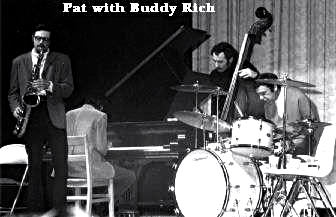
Pat LaBarbera: I like to play with Buddy because he builds a fire in me. He makes me want to play. When he says that he wants to stretch out a tune, he really plays behind you. A lot of cats tend to think of him, more or less, as a soloist than the type of drummer who plays as a timekeeper.
Source: Profile: Pat LaBarbera, Tenor Saxophonist with Buddy Rich, [author not listed], October 25, 1973, Down Beat
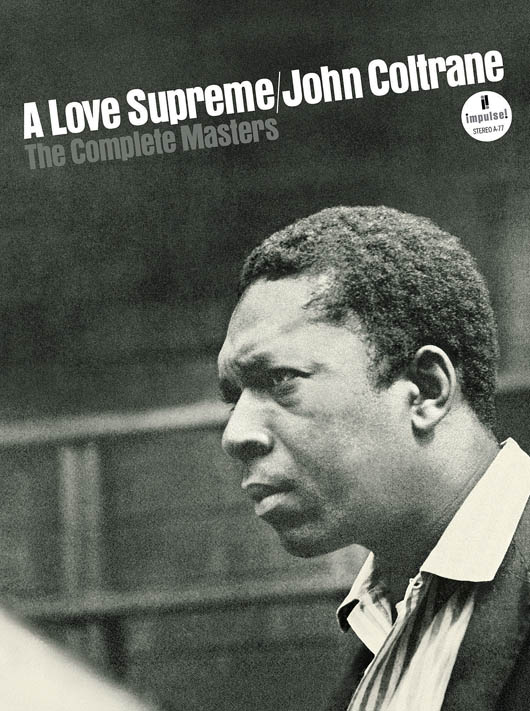
A Love Supreme: The Complete Masters is Coming 11/6/2015
John Coltrane and his classic quartet (Elvin Jones, Jimmy Garrison and McCoy Tyner) went into the legendary Van Gelder Studio in New Jersey and recorded A Love Supreme–the four-part suite that has influenced musicians and reached generations of fans far beyond the jazz world. Far less known is the fact that Coltrane, his classic quartet and two additional musicians–the legendary saxophonist Archie Shepp and second bassist, Dr. Art Davis–returned to the studio the next day to cut the opening part of the suite again. Until now, the complete picture of what happened on those two days, including all takes, overdubs, and even studio chatter, has been unavailable.
That will change on 6 November when Verve will release A Love Supreme: The Complete Masters…. It will include this alternate version, taken from reels from the personal collection of John Coltrane and originally recorded in incredible sonic detail by Rudy Van Gelder, along with revised notes and detailed information on these amazing lost sessions.
…A Love Supreme: The Complete Masters brings together all existing recordings and written outlines for the first time to paint the most comprehensive and accurate picture of the A Love Supreme story. It reveals how Coltrane’s masterpiece came together, from its initial conception as a nine-piece performance–it turns out the original plan was for a nine-piece band, including three Latin percussionists–to how it changed and developed in the studio. …The Complete Masters is the first to feature all six takes of “Acknowledgement,” the opening section of the suite, in their entirety….. The box also presents takes one and two of the track “Acknowledgement” from the sextet sessions in stereo for the first time.
A Love Supreme: The Complete Masters will be available in two formats: a 2-CD set, including the original best-selling album, along with unreleased mono “reference” versions of two tracks, owned by Coltrane himself, and seven unreleased performances from the two sessions. A 32-page booklet features an extensive essay by Ashley Kahn, noted producer, instructor and author of A Love Supreme: The Story of John Coltrane’s Signature Album, rare photographs from the sessions and all of Coltrane’s surviving musical sketches and written elements for the groundbreaking, four-part suite, including the words that would become the poem, “A Love Supreme.”
A 3-CD “Super Deluxe Edition” adds what is currently the only documented live recording of the album, a spirited, impromptu performance from the Festival Mondial du Jazz Antibes in July 1965…. This 3-CD set is presented in a larger format that includes additional information about the live material and a personal introduction by Carlos Santana.
SKF NOTE: Somewhere along the way I paid $4.98 for an interesting book of music interviews and photographs by Julie Coryell and Laura Friedman: Jazz-Rock Fusion: The People, The Music. Ms. Coryell did the interviewing. Ms. Friedman, the photo shoots. I have to fact check this, but I believe I worked with Laura when I was at Modern Drummer. That is, Laura may have done some photo shooting for an MD article or more.
Laura’s black-and-white photo of Steve Gadd has always been a favorite. Right down to Steve’s box of Marlboro’s, butane lighter, and lit cigarette in hand.
This segment from Julie Coryell’s interview has Steve talking about the major impact Chick Corea‘s drumming had on Steve. Gadd spoke about this in another interview (Down Beat?) where he said Chick Corea was explaining and showing Steve Tony Williams‘s concept.
Good stuff worth passing on.
Julie Coryell: After college you played with Chick Corea. What was that like?
Steve Gadd: Chick came to Rochester and formed a band. Chuck Mangione, Chick, Joe Romano, Frank Polaro, and me. We were working six nights a week. We got into the same kind of stuff that Miles was doing and the influence came from Chick. Working with Chick was inspiring and confusing….
I could play with all my might all night without getting tired, but there was something that just wasn’t happening; there wasn’t a real blend. …Chick was feeling real locked in to the way I was playing, because I was playing a very rhythm-oriented thing….
One afternoon Chick said let’s go down to the club and play. I said great. He ended up playing some drums for a while and I watched him. I said, holy s**t, not because he was a great technician, but just the musical approach — he got so much more music out of the instrument.
Chick had to go into New York for the weekend and…when he came back the band was steaming. I forgot the backbeat, eliminated playing the high-hat on two and four. There’s a thin line between real free-form music and music that’s loose, where one isn’t really heavily influenced. There’s a thin line between when it happens and when it’s b******t.
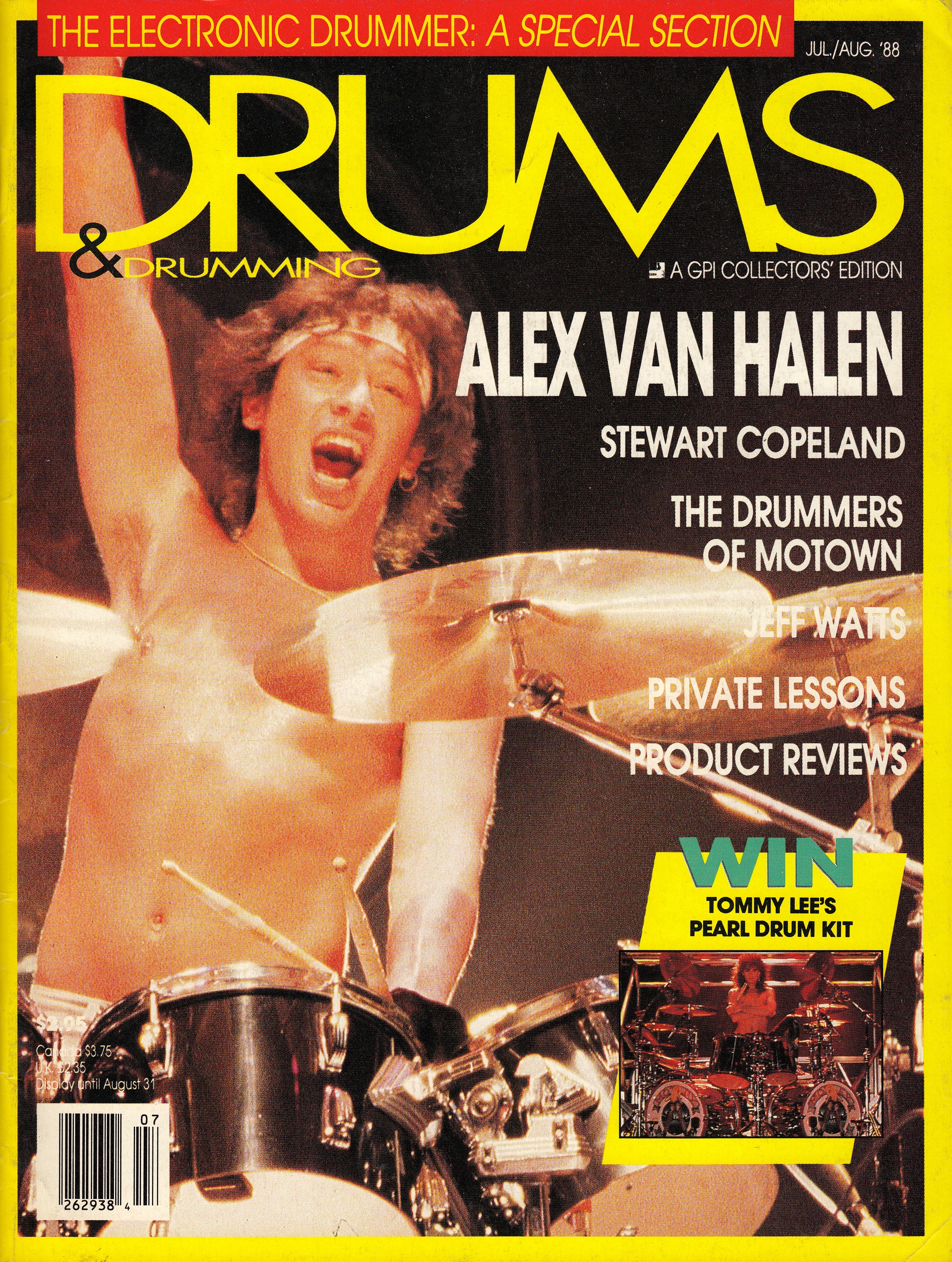
SKF NOTE: This is a profile on Jason Bonham written in 1988. Jason was on “permanent relief” from his band,Virginia Wolf; finishing a project with Jimmy Page.
Ours was a phone interview. At the time, I was at home in Oxford, Maryland. Jason was at home somewhere in England.
These pages were scanned from my copy of Drums & Drumming July/August 1988. Sorry for the yellowed 27-year old pages!
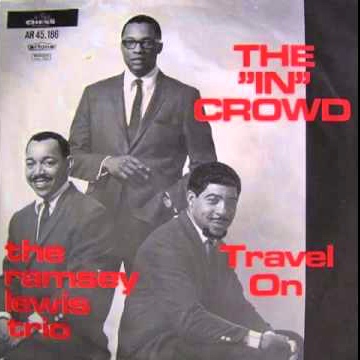
SKF NOTE: Thank you, Mike Bourne, for having Ramsey Lewis tell the back story to his Grammy Award winning song, The In Crowd. We never know what chance meetings might lead to. The Ramsey Lewis Trio drummer at this time was Isaac “Red” Holt.
This segment is from Those 88 Monsters That I Love, by Mike Bourne, Down Beat October 25, 1973.
Mike Bourne: How did you decide to record In Crowd? It isn’t exactly an obvious song.
Ramsey Lewis: I was in Washington, D.C. playing at the Bohemian Caverns. We had a record session coming up on the weekend. This was like on Tuesday. We were gonna do like nine tunes, and I think, I had seven down.
So one afternoon, I was having lunch in this place, and this waitress came over and she said, “What are you doing?” I was getting my notes together for the album, what I was gonna play. She said, “Why don’t you record The In Crowd?” The in what? She said, “It’s on the jukebox.” And she played it.
So I went by a record store. I bought the 45, took it back to my hotel, and played it, wrote out the changes, and we had rehearsal that day. And it felt good. But, I said, well, at least it’ll fill the album out — because as far as I was concerned that was not one of the major tunes on the album.
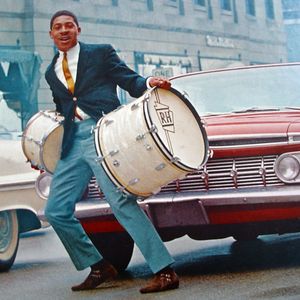
Isaac “Redd” Holt
So we played it that night, and the people started reacting to it. So I said, maybe this will do good for the album.
That following night, we recorded it, and the audience participation was out of sight. They were clapping and carrying on and, of course, it’s history now.
MB: It’s such history that you eclipsed Dobie Gray. People remember the song by you, not the original recording.
RL: That’s probably one of the few times in the history of the record industry that an instrumental eclipsed a vocal.





 Scott K Fish
You must be logged in to post a comment.