Do Drum Clinics Sell Drums?

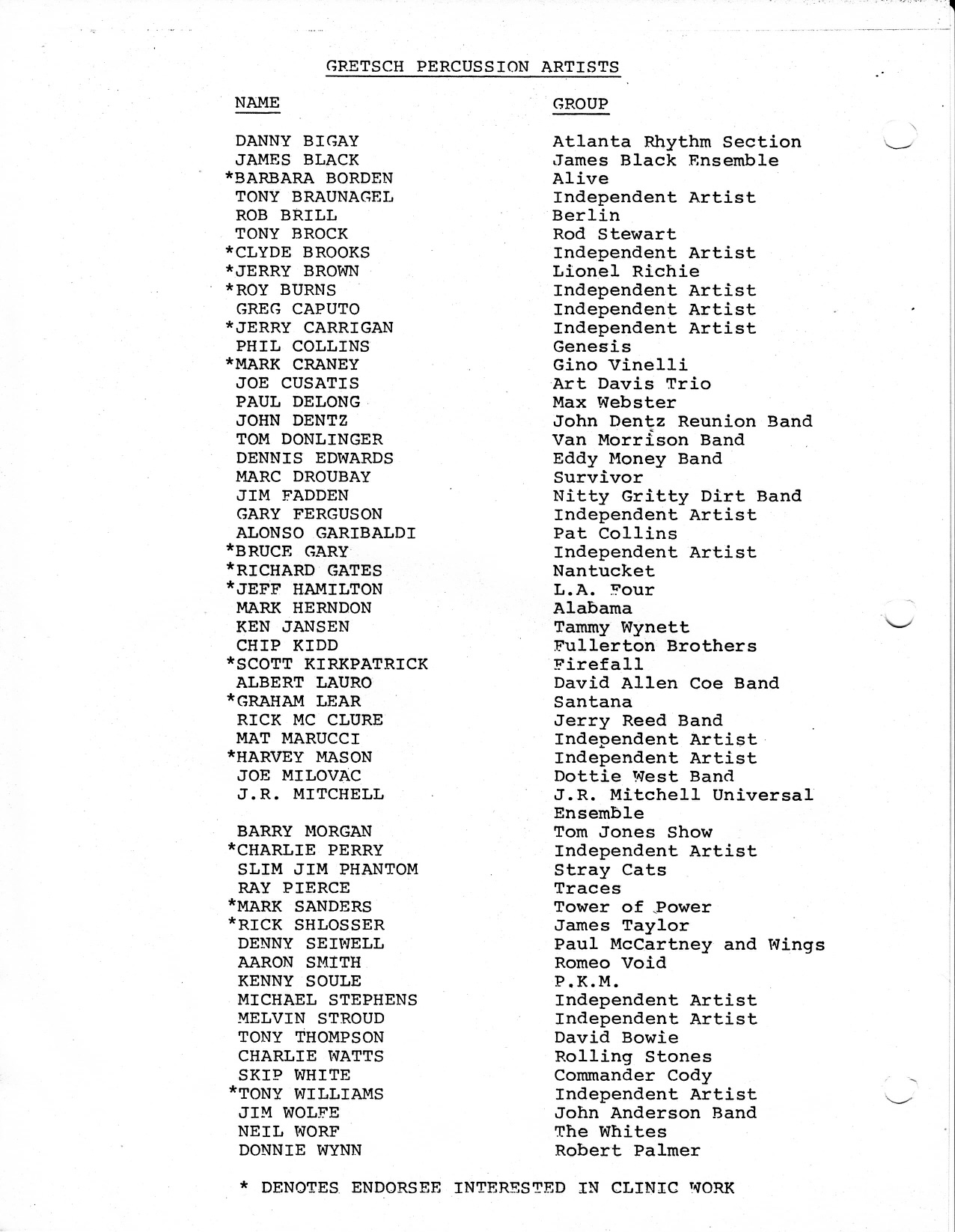
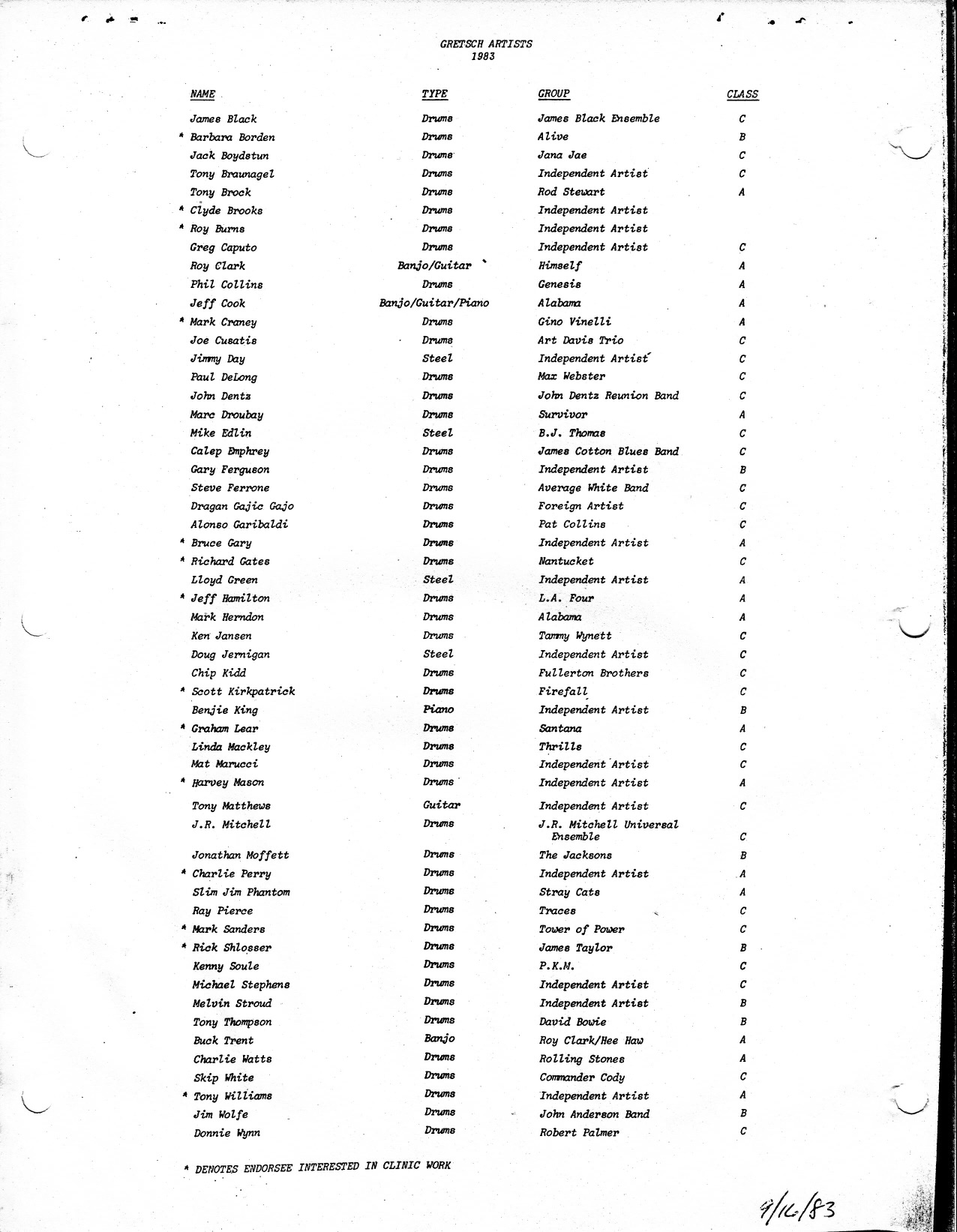
SKF NOTE: For a brief period, after stepping down as Modern Drummer‘s managing editor, I worked as the Northeast Sales Representative for the Gretsch Musical Instrument Co. These two “Gretsch Percussion Artist” lists were included in a three-ring-binder full of Gretsch product info and pricing. When retailers asked how much it would cost to buy a Gretsch drumset, an individual drum, sticks – anything. The answers were in my three-ring-binder.

These 1983 artist lists vary slightly. My guess is the list without the “Class” column is newer.

The only Gretsch Drum Clinic I managed was with Harvey Mason in Connecticut. But common sense tells me the “A” class Gretsch artists are the better known drummers. The asterisks (*) next to drummers’ names indicate the players interested in doing drum clinics.

Interesting that a majority of drummers didn’t want to do clinics.

I remember talking with Karl Dustman, a well-respected drum industry pro working at the time for Gretsch, about this list. Imagining a Tony Williams clinic was exciting until Dustman said, “Tony Williams is Gretsch‘s most expensive non-working clinician.”

Going strictly by memory, Harvey Mason’s clinic fee in 1983 was in the $800 range. That’s $2,516 in today’s dollars.

Tony Williams’s Gretsch clinic fee was $1,200 or, in today’s dollars, $3,775.

When a drum retailer wanted to host a drum clinic, the dealer was required to cover the clinician’s fee. (I’m not sure about expenses for travel, meals, lodging.) Retailers were also required to have at the clinic a Gretsch drumset matching the clinician’s specifications: number of drums, specific drum sizes, hardware, and specific color.

If you were a large retailer with a big Gretsch drum inventory you might have a clinician’s drumset on hand.

But for smaller drum retailers, having a, say, Harvey Mason clinic, would mean paying the $800 fee plus buying a brand new Mason Gretsch drum set with hardware. Maybe cymbals.

In theory, the drum clinic would inspire attendees to buy from the retailer enough new Gretsch drums to make the venture profitable.

In my very limited drum selling experience, that theory did not hold true for smaller drum dealers. I would be interested in seeing profit-and-loss clinic data from drum manufacturers, not just Gretsch.
Posted in SKF Blog | Tagged , , , , , , | Comments Off on Do Drum Clinics Sell Drums?

Bellson Cymbal Set-Up Circa 1980

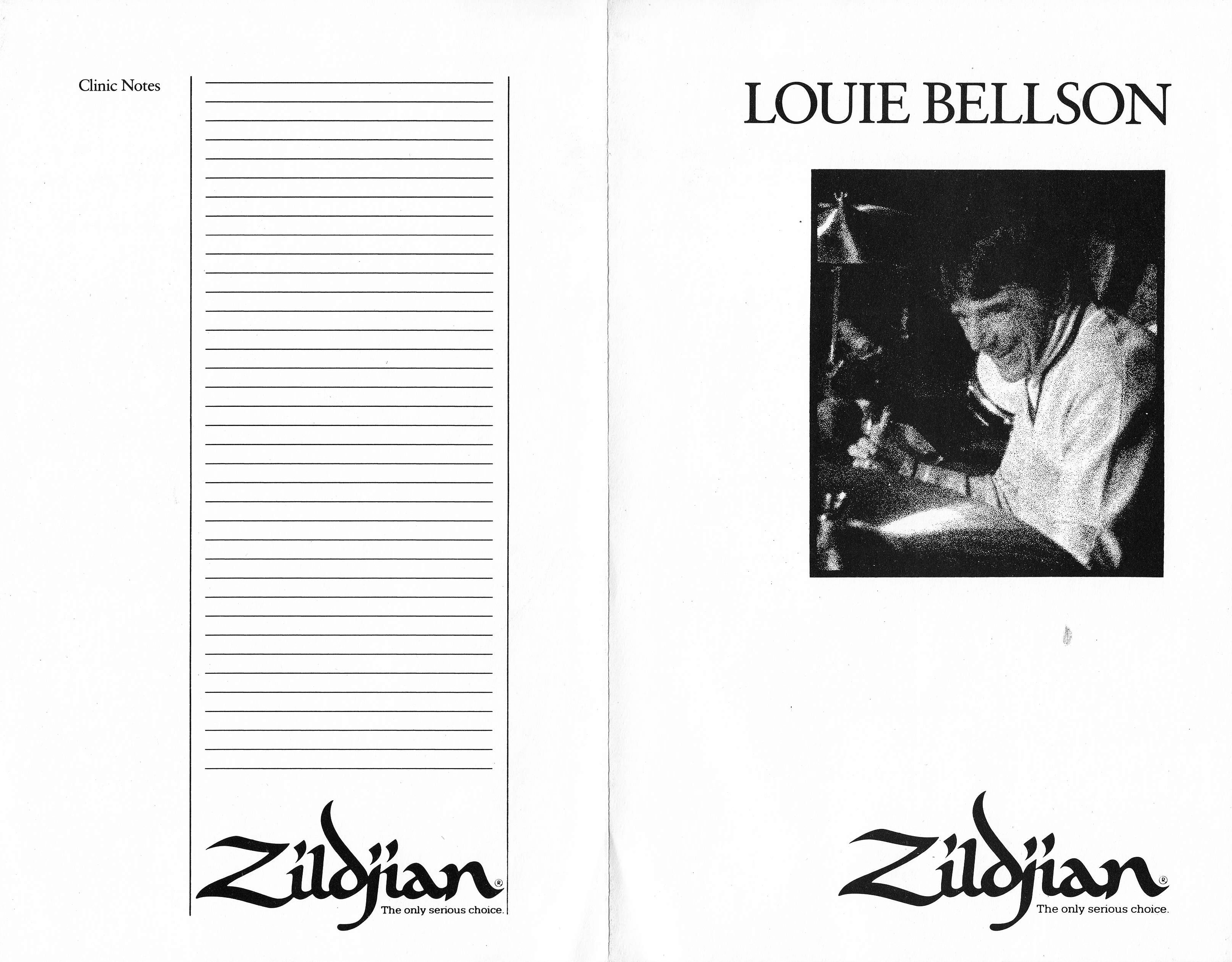
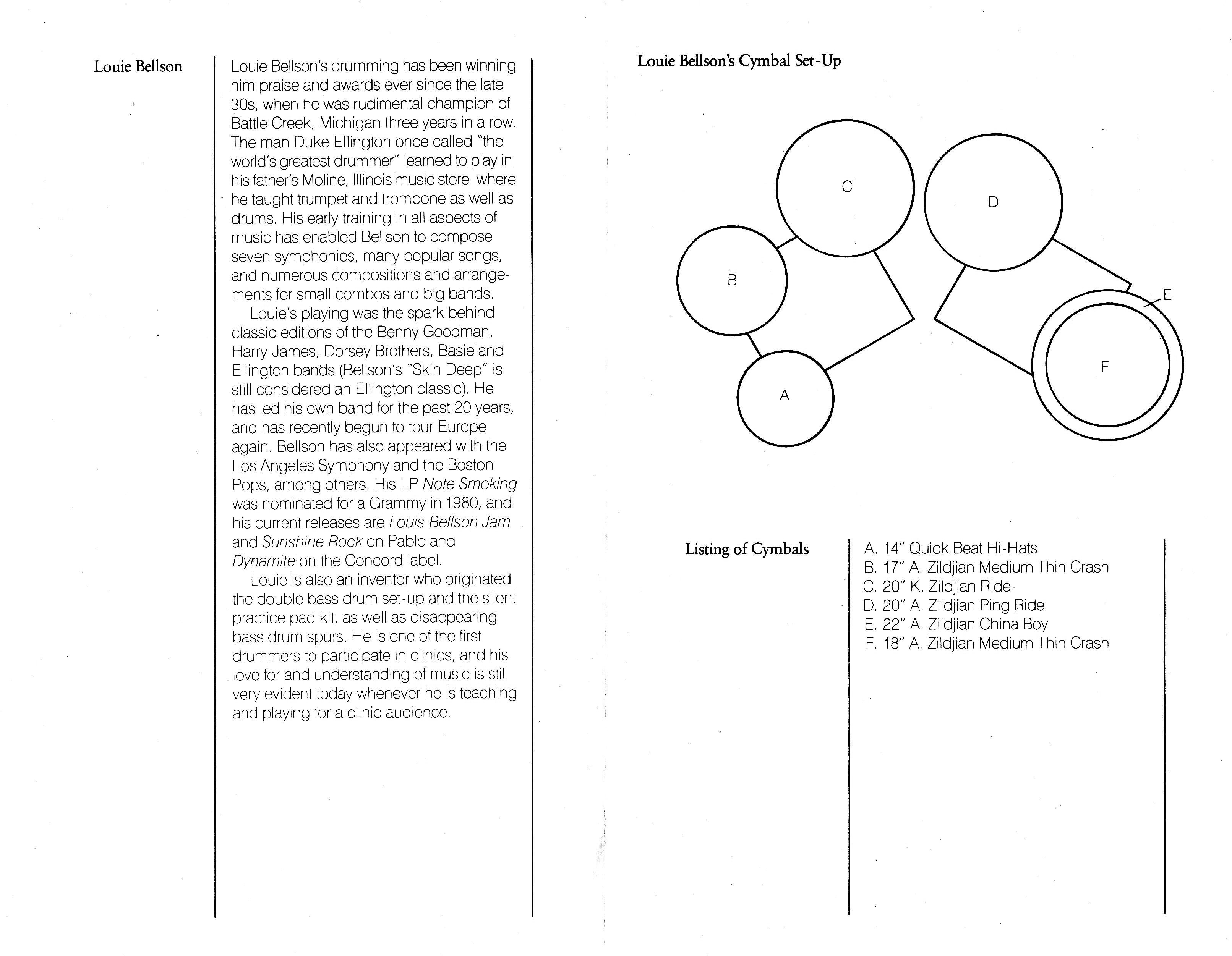
SKF NOTE: One more Zildjian Famous Drummer Cymbal Set-Up. This time, Louie Bellson.

Bellson’s cymbal set-up shown here is circa 1980-81. That’s based on the dates of his three “current releases” mentioned in this handout:

Sunshine Rock (1978)
Louie Bellson Jam (1979)
Dynamite (1980)

Bellson had an amazingly distinguished career as a drummer, clinician, inventor, songwriter, arranger, educator. That he was the first drummer to use double-bass drums is up for debate. (Ed Shaughnessy is also said to have been first with double-bass drums.) But there is no disputing Bellson’s popularizing drummers using two bass drums.

Starting with Skin Deep (1953) and Concerto for Drums (1956), Bellson left drummers a number of “you gotta hear this” recordings.

Posted in Audio, SKF Blog | Tagged , , , , , | Comments Off on Bellson Cymbal Set-Up Circa 1980

In Search of Barbara Borden

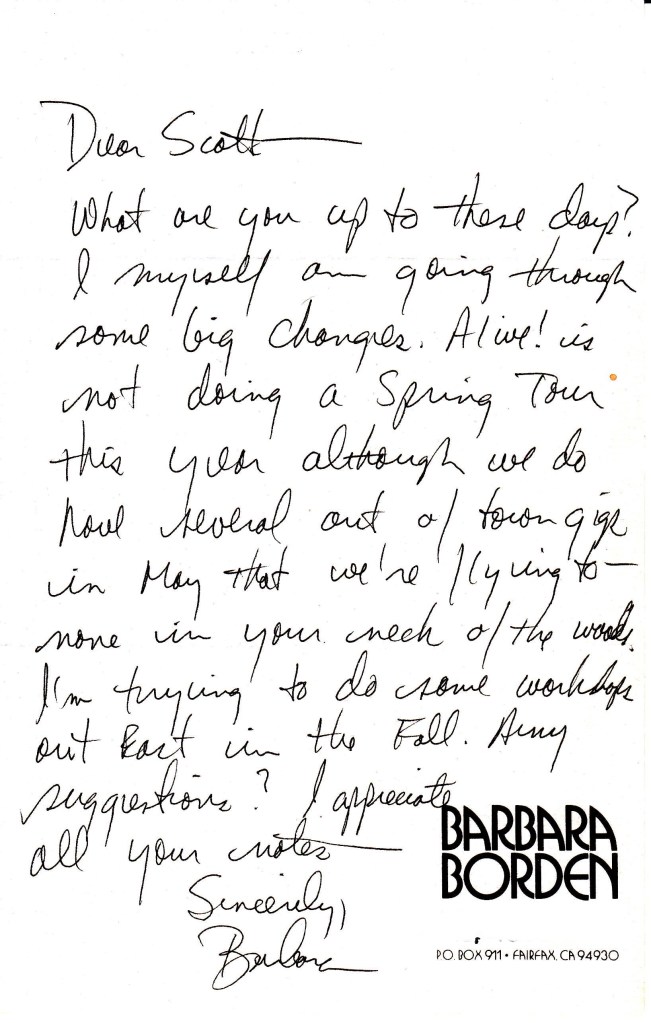
SKF NOTE: Having come across drummer Barbara Borden’s note recently, I had hoped to pass along an up-to-date location/itinerary for Borden with this blog post. She does have a web site. She is the subject of a 2012 documentary, Keeper of the Beat: A Woman’s Journey Into the Heart of Drumming, Alive!’s albums are still available for listening and buying.

There is also online a trailer of a Alive!’s 2015 40th Reunion Tour.

Borden’s web lists a May 2023 event, Joy Alive!, in which she performs with a trio.

And that is, for now, where my trail ends.

Modern Drummer published my interview with Alive!’s Barbara Borden and Carolyn Brandy in its July 1982 issue. The interview took place on October 15, 1981.

Here’s what I wrote about Alive! in the intro to their MD interview:

Alive! first came to my attention through photographer Kathy Sloane. She was telling me great things about these women who had a jazz band on the West Coast. While I was listening to all of the superlatives, I was thinking, “Big deal! Another novelty act.” But then I caught myself and thought, “Hey, that’s a real loser’s attitude. Why not give them a listen?”

The newest record, “Call It Jazz,” was recorded live at the Great American Music Hall in San Francisco and it definitely grabbed my attention! Then Barbara Borden and Carolyn Brandy (the drummer and percussionist respectively) were good enough to visit the MD office one afternoon when this conversation took place.

Recently, I had the pleasure of catching two sets of Alive! at Seventh Avenue South in New York City. As good a record as “Call It Jazz” is, it does not capture the magnitude of Alive! First, this is a band of musicians with an original sound. There’s no listening to their songs and thinking, “Hey, that sounds like so-and-so.” Secondly, the band plays softer than most bands and that reminded me of something Mel Lewis said: “Intensity has nothing to do with volume.” There was so much strength in the subtlety of Alive! that it was almost deceiving.

There are no slouch/hack musicians in this band! Like watching Stan Laurel act – there is always something going on. I developed the greatest respect for these people as human beings and as musicians.

In spit of all the “open mindedness” of living in 1982, I know that what these women are doing isn’t easy. It isn’t easy for anyone, but going by own original attitude, I have a feeling that the hill has been a little steeper for Alive!

Anyway, the beauty of it all is that they are succeeding! Like a long shot winning a race, or a little guy beating the tar out of some lug in the ring – that’s inspirational. That’s Alive!

Perhaps this post will reach Barbara Borden and she will drop me a line.

Posted in SKF Blog | Tagged , , , , , | Leave a comment

Mel Learns Roach from Dunlop

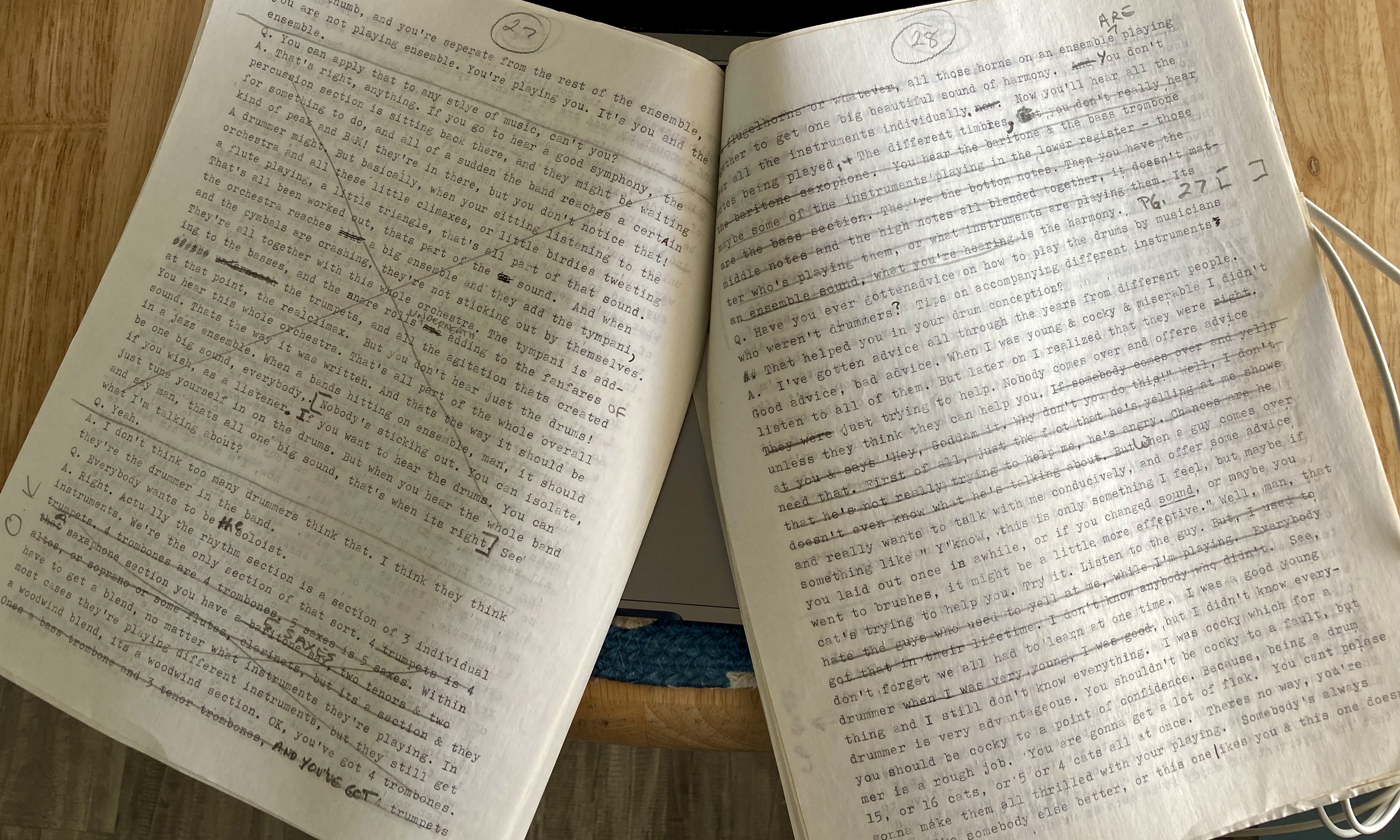
SKF NOTE: This exchange is from the full transcript of my September 8, 1977 Mel Lewis interview. Modern Drummer magazine used my edited transcript as Mel’s first MD feature interview.

You can see in the photo I’ve included with this post, large sections of Mel’s interview cut from the final product. MD feature interviews had word limits, and Mel’s full transcript was way over the limit. So some things had to go.

This blog gives me the opportunity to share some of the “cut” good stories in my transcripts.

Like this one.

I didn’t know at the time Mel and Frankie Dunlop were boyhood friends. Neither did I know how experienced and versatile a drummer Frankie was.

This interview, it turns out, was my first step in finding and interviewing Dunlop for Modern Drummer. That interview, and the interview tapes, were destined to be Dunlop’s only feature interview. I’ve made the tapes available for listening here.

In this back-and-forth with Mel, he is telling me about his early drumming experience in Buffalo, NY, often subbing for his father, who was also a professional drummer, on shows, in pit orchestras, for Vaudeville shows, and in big bands. Lewis mentions his friend, Frankie Dunlop, who had a similar drumming background, and lots of valuable drumming experience.

I especially like the image of a young Dunlop traveling to NYC from Buffalo, taking drum lessons with Max Roach, and returning to Buffalo and sharing what Roach taught him with Lewis.

=====

Mel Lewis: Frankie Dunlop came from Buffalo with me. Frank was a wonderful young drummer then.

Q: Could he do shows and all that too?

ML: Sure!

Q: You’re talking about the same Frankie Dunlop who played with Thelonious Monk?

ML: Yeah, that’s right. Oh yes. Frank, to me, is an excellent drummer. To this day. He hasn’t had all the good luck I’ve had.

Well, he wasn’t always in the same place I was. Wherever he worked…. He was with Maynard’s band. He sounded great in Maynard’s band.

So, he had his big band experience. ‘Course, he claimed he got a lot of that from me. He used to show me all Max’s licks. He used to come and study with Max when we were kids. And I would sub for him on his gig with George Clark’s group. ‘Cause that was the only way George would let him go. If I played.

So he’d com back and I’d sit down and I would listen to what he just learned and I’d pick it up.

We were the two early Bebop drummers in Buffalo.

But I had that big band experience. and George used to insist that he listen to me. So we helped each other all the time. Frank and I were good friends. We still are. We don’t see each other as often as I’d like to, but it’s always fun.

Q: Where is he? Is he still in NYC?

ML: Oh yeah. Well, he lives out of the City right now. I think he’s back playing with Lionel Hampton right now.

Frank has worked a lot of shows. He works the mountains ’cause he lives out in that area. Frank does a lot of the mountain work.

In Buffalo he worked shows, he played in all the clubs too. And with Maynard’s band. And with Monk! Oh, he sounded great with Monk.

Q: Yeah. Definitely.

ML: So, I mean, there it is. He’s got those roots too. And he can do it.

Posted in SKF Blog | Tagged , , , , , , , | Comments Off on Mel Learns Roach from Dunlop

Neil Peart – Golden Thumb Award?

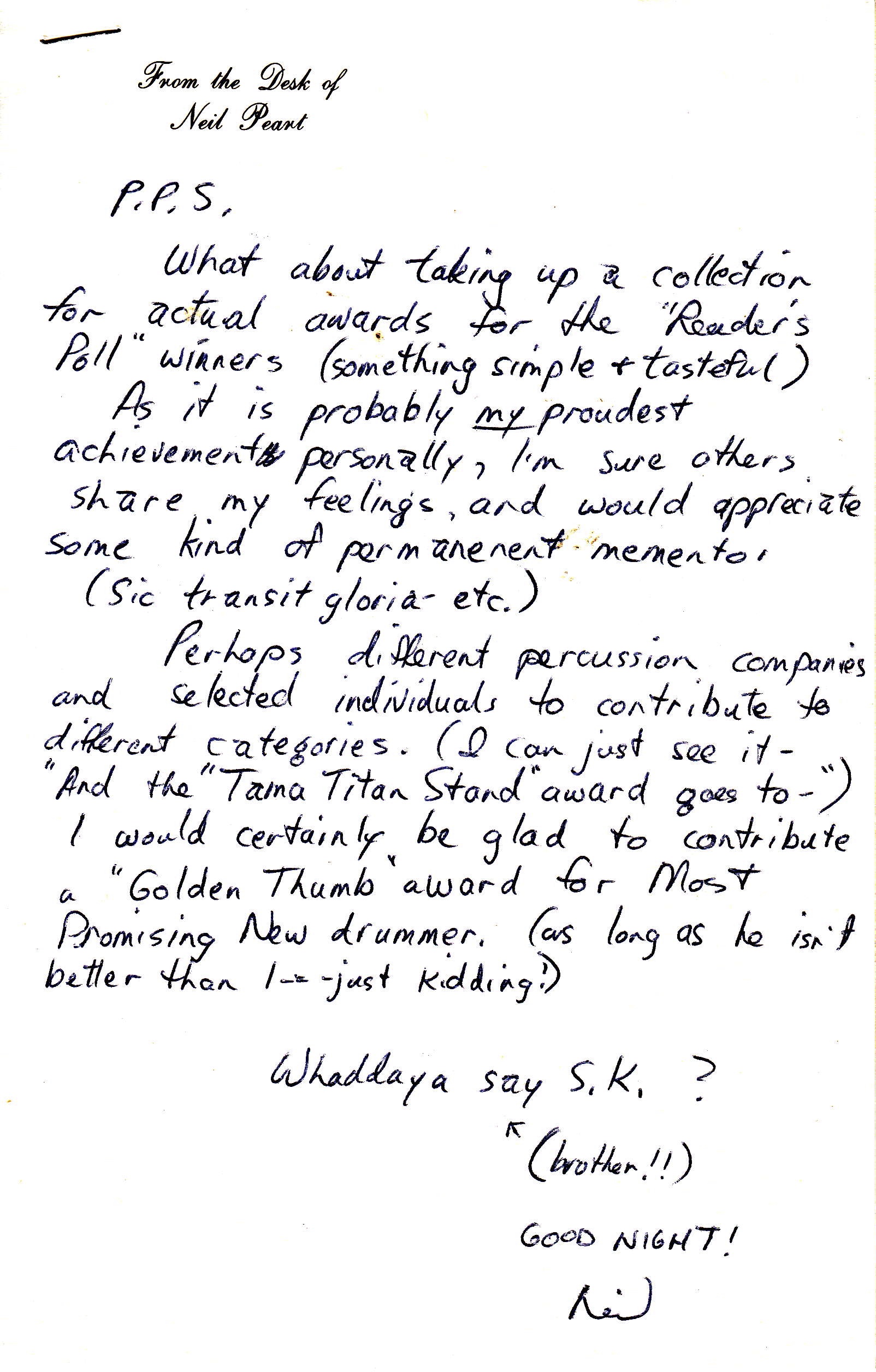
SKF NOTE: Neil Peart sent me this curious note in early 1982.

Why curious? Well, the note is curious to me for these reasons:

  1. Until I reread Neil’s note, I hadn’t given any thought to physical awards to Modern Drummer Readers Poll winners.

I have a memory of seeing two award plaques in Buddy Rich’s apartment. I wouldn’t swear to it in a court of law, especially after reading this note, but I was pretty sure those were Modern Drummer Readers Poll Awards.

My friend and former MD Features Editor Rick Mattingly tells me the magazine did present award plaques. One well-known drummer, who shall remain nameless, “won more than one category one year, so they sent him a single plaque that listed all of the awards. He thought he should have gotten a separate plaque for each award,” said Mattingly.

It was not Neil Peart.

  1. That Neil thought of this MD Readers Poll Award as “probably my proudest achievement personally,” surprises me in a good way.

MD’s 1982 Readers Poll voters awarded Neil Peart first place for Best Rock Drummer, Percussion Instrumentalist, and Recorded Performance for Rush’s “Exit: Stage Left” album.

Posted in SKF Blog | Tagged , | Comments Off on Neil Peart – Golden Thumb Award?