Dave Weckl: ‘Up And Coming’ Profile 1984

SKF NOTE: When posting the complete transcript of my 1983 interview with Dave Weckl for Modern Drummer, I mentioned MD had published a much shorter version of the interview in April 1984 as an Up and Coming profile of Dave Weckl, which I am posting here. Here’s the back story of how Dave and I first met.

Dave Weckl was age 23 when we met for this interview, living in Bridgeport, CT getting ready to go on tour with Simon and Garfunkel  — arguably the first major gig that put Weckl on the map.

[SKF NOTE: 6/17/17 – Dave Weckl’s profile interview is now available on MD‘s Archive Page.]
1984_md_skf_weckl_upandcoming

Posted in SKF Blog | Tagged , , , , , , , | Comments Off on Dave Weckl: ‘Up And Coming’ Profile 1984

The Drum Thing: Photojournalist Portrays Drummers as Human Beings

the_drum_thing

SKF NOTE: So far, so good. That’s my first impression of Deirdre O’Callaghan’s newly published book of her photos and “personal conversations” with 100 drummers, The Drum Thing.

In my February 2016 Life Beyond the Cymbals post, What Makes a Music Photographer Good?, I wrote about photographers I worked with as Modern Drummer‘s managing editor, summing up my admiration with, “A picture is worth 1,000 words. As much as I love writing, I have always admired photographers and cartoonists with the gift, the skill, of capturing a whole story — or endless stories — in one image.”

This morning an online New York Times story about The Drum Thing grabbed my attention. I bounced to Ms. O’Callaghan’s Twitter page, to The Drum Thing page on Amazon, then to her web site, her Facebook page, and finally, to The Drum Thing on book publisher Prestel‘s web site — all in an effort to learn more about O’Callaghan’s book treatment of drummers.

Prestel’s introduces O’Callaghan’s book:

The drummer is usually the least well-known member of any band. Yet behind every frontman is the person keeping the beat, and often acting as the music’s driving force. In these portraits, Deirdre O’Callaghan places drummers…in their private rehearsal spaces and residences—from studios, bedrooms and basements to garages and gardens—allows her to capture the true essence of their personalities and lifestyles.

From what I’m seeing and reading this morning online, Dierdre O’Callaghan’s photojournalism here nails it. Her photos of drummers are quite good, often superb, with moving surprises in her use of drummer’s personal inanimate items — broken

drumsticks, handwritten notes pinned to cork boards — always with an eye toward helping readers understand drummers as musicians.

Finally, Ms. O’Callaghan’s treatment of drummers, in her photography and writing, first as human beings, is a valuable contribution, perhaps especially to upcoming drummers raised with a steady stream of musical image without substance.

I leave you — hopefully with Dierdre O’Callaghan’s blessing – of a glimpse of The Drum Thing through my edited words segment of her portrait of Steve Gadd.

Steve Gadd

Back in the ’70s no one thought that drugs were ever going to be a problem — we all found out different later on. I was getting called to do work with people who were my idols; if it was a choice to try and stay awake or go to sleep, I’d want to stay up and play music. And part of my life was falling apart. I started using so I could work and then at some point I was working to use, and I didn’t even know what had changed. It was a subtle change.

Music was the only thing I could get lost in and still feel like I was able to give something good to somebody because, in a lot of other areas in my life, I wasn’t able to keep it together. I held on to music for dear life because that’s the only thing that made me feel that I was still connected.

Posted in Drum/Music News, SKF Blog | Tagged , , , , | Leave a comment

Joe Henderson: A Song Intro that Tricks Your Ears

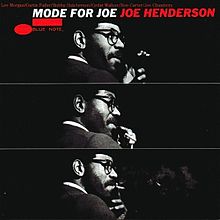
henderson_joe_mode_for_joeSKF: Joe Henderson’s A Shade of Jade is a track to add to the growing list of songs that trick the ears. DrumForum.org has popular, periodic threads on songs from many styles of music that trick our ears. The Doobie Brothers’ Minute by Minute is another trick opening song. You hear the piano intro, start tapping your feet in time — or so you think! When the full band kicks in, some listeners find they are not even close to tapping their feet in time.

In another post here I talk about the same phenomenon, suggesting the beats, the time feel we create during song openings — while our ears play tricks on us — are often worth keeping, not dismissing as wrong.  Certainly, our different conception of time is fun to experiment with, to open our ears more.

Thank God for Blue Note records. “It didn’t matter which one you bought. You knew it was going to be good,” Paul T. Riddle said to me one time about buying Blue Note albums when we were kids. I had to chuckle. Paul is exactly right.

Joe Henderson’s 1966 Mode for Joe album is a case in point. The band is Lee Morgan (t), Curtis Fuller (trom), Joe Henderson (ts), Bobby Hutcherson (vib), Cedar Walton (p), Ron Carter (b), Joe Chambers (d).

The whole album is a keeper, but at least listen to the song intro on A Shade of Jade. Your ears will thank you.

Posted in Audio, SKF Blog | Tagged , , , , , , , | Comments Off on Joe Henderson: A Song Intro that Tricks Your Ears

Music Interviews and the ‘Me Too’ Syndrome

morelistening

SKF NOTE: These last few weeks I’ve started digitizing my drummer interview audiocassettes. That is, I’m recording copies of the interviews to my MacBook from a cassette deck. As I do so, I’m discovering, or reminding myself, of interview “do’s” and “don’ts” that may help upcoming music writers.

Sometimes, either by my invitation, or because of circumstances, other people took part in my interviews with drummers. When a guest adds to the conversation, the interview — it’s wonderful. But when a guest talks more than me (the interviewer) and/or the drummer I’m interviewing — the whole mood sours.

A chronic “me too” syndrome, is one example. That’s where the drummer I’m interviewing shares a story like, “One of my best drum teachers was a local piano player nobody ever heard of: Thomas Kraft. Well, Thomas Kraft had a lot of on-the-job experience. He taught me about what other muscians like and don’t like in drummers. That helped me tremendously.”

Immediately, a guest with the “me too” syndrome pipes up with a similar — sometimes not so similar — story about himself. “Me too” stories almost always add nothing of value to interviews. Instead, “me too” stories waste time, kill momentum, and in extreme cases, force the interviewer to ask the “me too” guest to stop interrupting.

Interruptions always make transcribing interviews much harder. Trying to hear an accurate quote while two people talk at once, or while a “me too” guest habitually finishes the sentences of the musician you’re interviewing.

With the advent of digital sound, I’m finding “me too” guests make it very difficult, in some cases impossible, to create digital sound bites from audio cassettes.

Given the chance to go back in time and do over drummer interviews with “me too” guests present? I would make it clear, upfront, that the purpose of this interview session is to hear what the drummer has to say. My job is to help the drummer tell his or her story. If the “me too” guest can do that too — great. Otherwise, stay home, please.

To be clear, I’ve had people with me on drummer interviews who, by their knowledge, maturity, ability to listen to other people, and knowledge of the drummer being interviewed, made the interview much, much better.

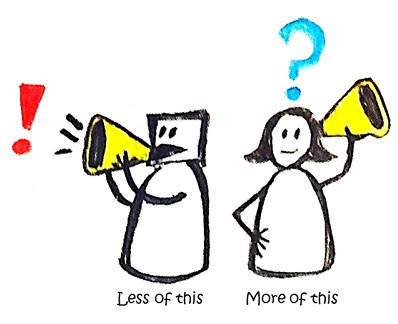
Photo Courtesy of Business Critical Learning

Posted in Revisiting My Life in Music, SKF Blog | Tagged , , , | Comments Off on Music Interviews and the ‘Me Too’ Syndrome

Levon’s Drums: Sliding to a Different Tonality

Robbie Robertson: I wrote The Weight in late 1967 in a house I was renting in Woodstock, N.Y.

The Band…had already written enough songs for Music From Big Pink. But I wanted one more as a fallback, just in case.

Our drummer and singer Levon Helm had just returned after spending nearly two years away from the music business. I wanted to write a song that Levon could sing better than anyone in the world.

As the song’s words came to me, I wrote them on my portable typewriter. I got used to typing lyrics from Bob [Dylan]. I never saw him write anything with a pen or pencil. He’d make little corrections on his typed pages, but everything he wrote initially went through his typewriter.

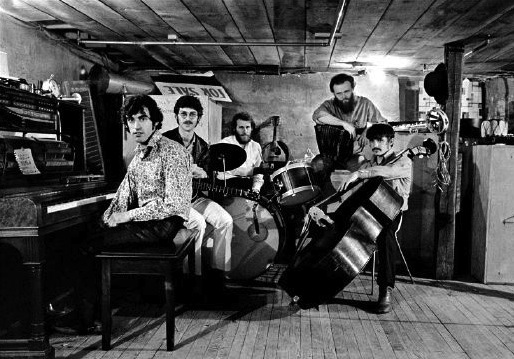
The-Band-at-instrumentsThere was no magic to this process. It was just that Bob knew how to type. He had taken typing in school.

When the Band got together to rehearse at Big Pink in late ’67, I had a basic chord structure, a melody and words. I taught that to everybody. At some point during rehearsals, I stumbled across Levon adjusting his drumheads and the sounds they made. I had him loosen the heads so when he hit them, the sould would slide to another tonality.

We recorded The Weight in early 1968 at New York’s A&R Studios. We set up in a circle. We couldn’t record in isolation booths with headphones — we needed  to look at each other and lock in. We were used to sitting around playing together in Big Pink’s living room and basement, and hearing everybody at once.

Source: The Weight by the Band’s Robbie Robertson, by Marc Myers, Nov. 29, 2016, Wall Street Journal

Posted in Drum/Music News, SKF Blog | Tagged , , , , , | Comments Off on Levon’s Drums: Sliding to a Different Tonality