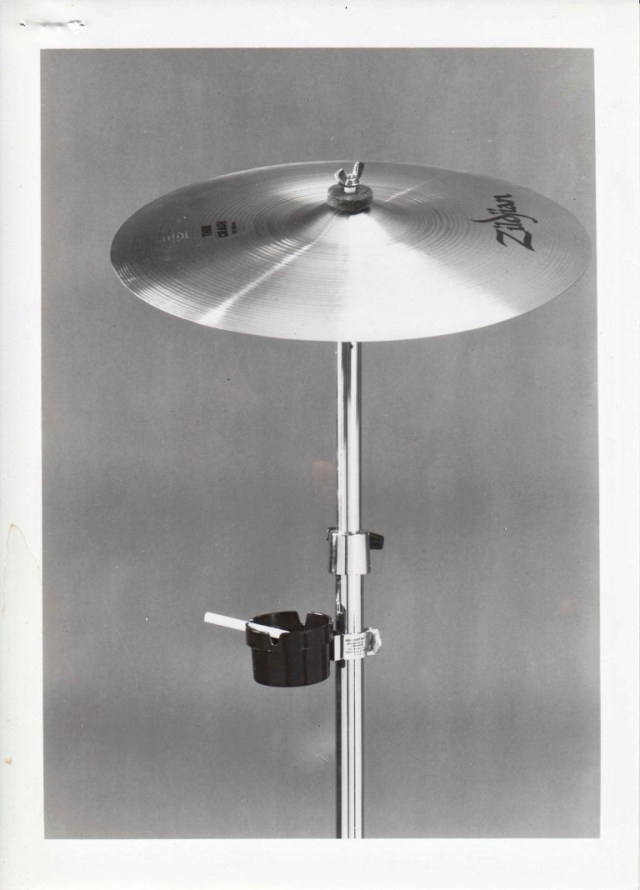
Just Don’t Adjust My Cymbal Stand Ash Tray

ashtray_cymbal_stand

SKF NOTE: From a stack of drum product photos comes this ash tray that mounts on a cymbal stand. Not sure who made (makes?) this product, or how successful it was (is?) But within our smokers-as-pariahs world, it’s hard for me to imagine much drummer demand for this ash tray. Plus, I can envision heavy-smoking drummers sending clouds of tobacco ash over drumheads and drumsets every time they crash this cymbal.

Posted in SKF Blog | Tagged , | Comments Off on Just Don’t Adjust My Cymbal Stand Ash Tray

Shaughnessy: Dave Tough Like Elvin in His Sense of Time

tough_dave

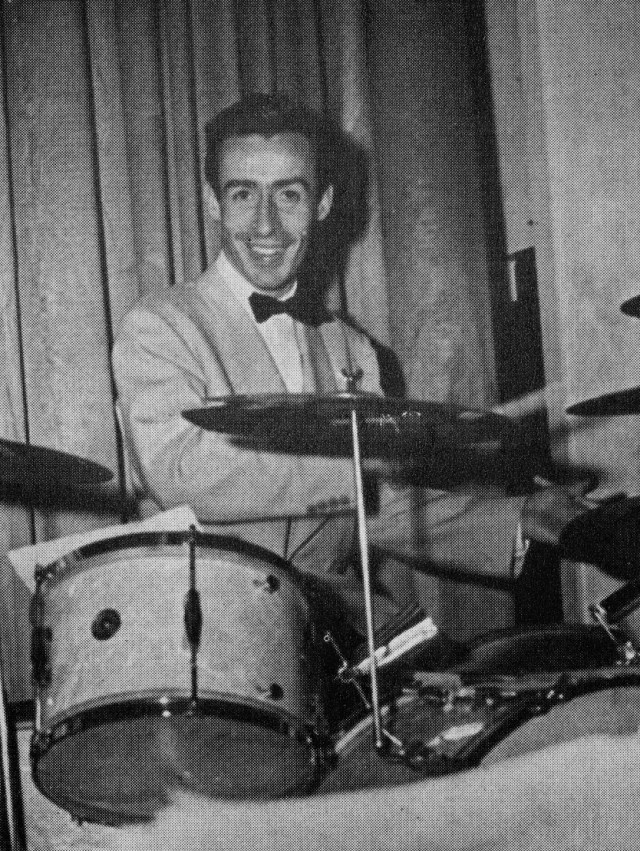
Dave Tough

SKF NOTE: In 1985 I clipped and saved Whitney Balliett‘s piece, Little Davey Tough, from my copy of The New Yorker magazine. This was a writer’s standard pre-internet method for building a personal resource library.

Mr. Balliett’s piece is timeless and should be interesting to any one who values drummer Dave Tough, and/or is curious to know drum history’s high points. Balliett interviews musicians who played in bands with, or were otherwise close to, Dave Tough. People such as Bob Wilber, Chubby Jackson, and Ed Shaughnessy.

=====

…Ed Shaughnessy…hung around [Dave] Tough when he was fifteen or sixteen and Tough was with Woody Herman. [Shaughnessy] said of [Tough] the other day, “No drummer could match his intensity. He used a havy stick with a round tip. He had the widest tempo, the broadest time sense, and in that way he was like Elvin Jones. He was always at the center of the beat, even though he gave the impression he was laid back.

“He played loosely, with not much tension on the stick, and he tuned his drums loosely. He kept a glass of water and a cloth on the bandstand, and before each set he would dampen the cloth and wipe the footpedal head of his bass drum with a circular motion. That drumhead was so loose it almost had wrinkles in it.

“He told me he did this because he didn’t want the bass drum to be in the same range as the bass fiddle. He didn’t want the two to compete. And he tuned his snare and tomtoms the same way, so that they were almost flabby.

“He was a master cymbal player — maybe the greatest of all time. He had a couple of fifteen-inchers on his bass drum, plus a Chinese cymbal and what we call a fast cymbal — a small cymbal you use for short, quick strokes. And he had thirteen-inch high-hat cymbals.

“He’d use his high hat, wiether half open or open-and-shut behind ensembles, and when things roared he would shift to the big, furry sound of the Chinese cymbal. He had a very loose high-hat technique, and he was always dropping in offbeats on it with his left hand.

“He often used cymbals for  punctuation where other drummers used rimshots or tomtom beats. He told me he didn’t want to interrupt the rhythmic wave.”

Source: Little Davey Tough, by Whitney Balliett, The New Yorker, November 18, 1985

Posted in SKF Blog | Tagged , , , , | Comments Off on Shaughnessy: Dave Tough Like Elvin in His Sense of Time

Jim Gordon: What Made You Want to Be a Pro Musician?

SKF NOTE: I explain how this interview came about here.

This latest excerpt, except for a deleted question about the weather, and the removal of tape hum and a few tape clicks, is the beginning of my taped conversation with Jim Gordon. Also, I’ve deleted a couple of throat clearings and stammerings.

Where this excerpt ends, our conversation begins on an earlier excerpt I posted here:

Jim mentions touring at age 17 as drummer for The Everly Brothers, and meeting the Beatles in 1963-64. The Everly Brothers were part of an English tour which included Bo Diddley, The Rolling Stones, and Little Richard. You’ll hear me asking Jim about Bo Diddley’s drummer, at a time I was trying to fill in holes while writing my History of Rock Drumming.

###

Posted in Audio, SKF Blog | Tagged , , , | Comments Off on Jim Gordon: What Made You Want to Be a Pro Musician?

Jim Blackley: ‘Take the Weight Off Yourself. Just Play.’

Robert-DiSalle-PIC

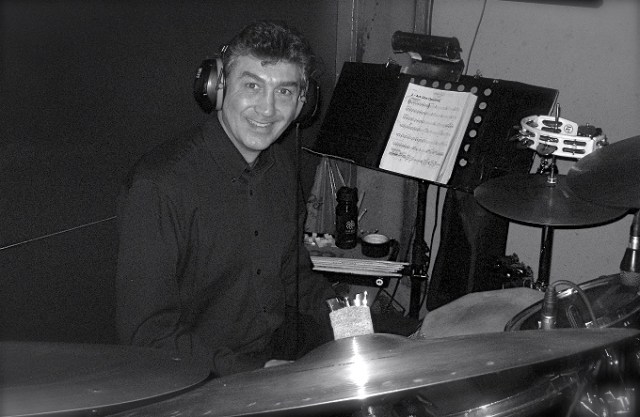
Bob DiSalle (Courtesy HeadHunters Drumsticks)

SKF NOTE: I found out about Jim Blackley’s death from Jonathan McCaslin. Jon asked if I had interviewed the great drum teacher, Mr. Blackley. I had not. Neither did he and I ever meet face-to-face, but we did have a few enjoyable phone conversations about drums and life. When the phone rang, and it was Jim Blackley calling, that was always a good thing.

T. Bruce Wittet interviewed Jim Blackley for Modern Drummer.

McCaslin, I think, was also collecting stories about Mr. Blackley from pro drummers for possible use in tribute to Blackley. As McCaslin writes on his blog, Four On The Floor, “Blackley has undoubtedly had an important influence on Jazz drumming in Canada and his methods and books are really worth checking out.”

Here’s an excerpt from my 1983 interview with Bob DiSalle. Bob was telling me about his studies with Peter Magadini and Marty Morrell, then about meeting Jim Blackley.

====

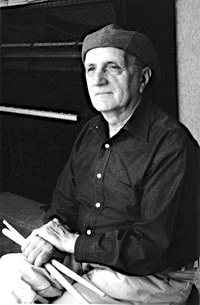
Bob DiSalle: Then I studied with Jim Blackley. I took about a year off from studying…and went to see Jim at a time I really needed some direction. He was bang on as far as that goes. He was a great teacher.
blackley_jim

Jim Blackley

When I was studying with Jim Blackley he was very good for me as far as direction. I remember telling him, “I’m really confused. I’m working really hard, and I don’t think I’m a great player, but I think I’m good enough to work and make more than I am now. It’s like I’m barely getting by, and I just really wish that things would happen.”

My wife and I were talking about starting a family and wanting to buy a house — just the things in your private life that you want to put together.

Jim said, “Just keep working and don’t worry about it. Take the weight off yourself. Just play. Put half your efforts into the music, and with the other half, keep your private life together, and keep yourself together.”

I’d walk away from my lesson feeling like there wasn’t any weight there, and that, sooner or later, things would work out. It just seemed that shortly after I adopted that attitude of relaxing, and letting things go the way they would, things started to work out.

That’s when I started working with Bruce [Cockburn]. I started to get more work around town. The jingle thing started happening. My wife and I got our family started. I bought a house last year, and we’ve got another little addition in the family.

Things — privately and musically — seem to be working towards where I would like them.

Posted in SKF Blog | Tagged , , , , | Comments Off on Jim Blackley: ‘Take the Weight Off Yourself. Just Play.’

A Unique Look at Buddy Rich’s Drumset

burnin_for_buddy_mid_cd_bklt

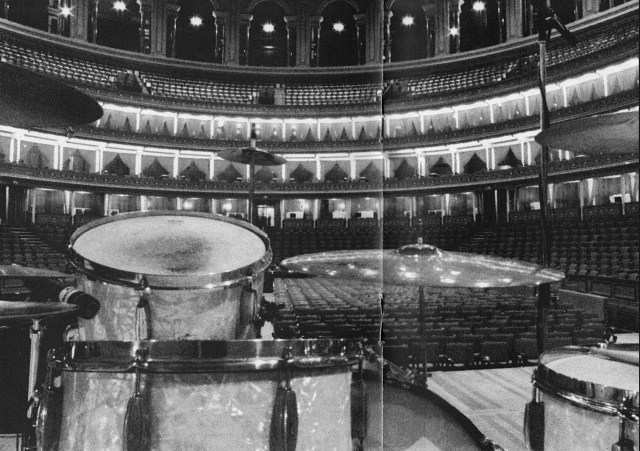
SKF NOTE: Eames Drumshell Company founder, Joe MacSweeney, gives us a unique insight into Buddy Rich‘s drumset. Mr. MacSweeney collected and refurbished 1940-44 vintage Slingerland Radio King drums, using them to create a five-piece set, with original hardware and calfskin heads, for Buddy Rich.

During a 1982 meeting, MacSweeney said Buddy Rich “said that the perfect wood snare drum for him was a 5 1/2 x 14 Radio King,” which Joe found, reworked – including calfskin heads – and presented to Buddy. Rich “was…almost like a young kid getting his first drum,” said MacSweeney.

The two men talked about putting together a full set. MacSweeney said, “Buddy…referred to his style as simple, and he thought that set should be a basic, simple instrument. He was mainly concerned with the snare drum; the other drums were just tonal effects….” Rich wanted “a set…he’d be comfortable with.”

“Buddy always played relaxed. That was [a key] to his style,” MacSweeney continued. “He always considered the drums…should be played like any other instrument — not banged or hit.”

Drums were “tensioned,” not tuned, Rich believed. “He would actually let them get quite loose before he bothered to pull them up again,” said MacSweeney. “He got an amazing sound out of…the eight lug Radio King [snare] – by keeping the bottom head quite tight and the snares very tight, and he got depth from the drum by keeping the top head loose,” said MacSweeney.

That observation is new to me. I’ve always thought Buddy’s snare batter heads were tight. They sound tight. But, MacSweeney, says Buddy let his batter head “get quite mushy at times,” and he “loved to use calfskin when weather permitted.”

The bass drum, said MacSweeney, was the only drum Buddy muffled.

Source: Buddy Rich: A Special Tribute, Modern Drummer, August 1987


Posted in SKF Blog | Tagged , , , , | Comments Off on A Unique Look at Buddy Rich’s Drumset