FOR MORE INFORMATION Contact: Scott K Fish scottkfish@gmail.com or 207-458-7185
Newly Released Song Explores Fatherhood Lost to Abortion
Turner, ME – A man anticipates fatherhood. The prospective mother chooses abortion instead. Shattered hopes force him to start his life over.
“She Changed Her Mind,” the newly released song by Scott K Fish and Jason Carey on PineCone Records USA, tells about this emotional journey.
“For men who want to be fathers, abortion has a unique impact. Sadly, their side is absent from public discourse and policy discussions on this issue,” said songwriter Fish.
“I’ve forgotten the name of the columnist who said men whose dreams of fatherhood end with abortion, live the remainder of their lives with ghosts. There’s truth in that,” Fish said.
Jason Carey produced/arranged “She Changed Her Mind.” He added, “This song, giving voice to the pain and suffering of this individual experience, also encourages respectful conversations about it.”
“She Changed Her Mind,” dedicated to men living with ghosts, is available for a limited time from PineCone Records on the web at https://pineconerecords.com/she-changed-her-mind and across popular social media platforms.
TURNER, ME — “Private Person,” a song by Maine musicians Jason J. Carey and Scott K Fish, tells the story of the October 2023 Lewiston, ME mass shootings by Robert Card; imagining how history might have changed if just one of several authorities had heeded the warnings and calls to help the troubled Card.
“Card referred to himself as a ‘private person.’ The night Card went on his rampage, we had already been working several months on a video documentary about mental illness. Particularly about the difficulty of sufferers getting proper help, because of the nature of the illness, and lack of available resources,” said Carey.
The Lewiston shooting tragedy was an awful demonstration of the worst aspects of mental illness.
A man in denial clearly in need of help
Family and friends pleading with authorities to help the man
Authorities ignoring or dismissing the calls for help
And finally, the man reaching a mental breaking point
After absorbing news stories laced with quotes from victims’ family members, Card’s family, law enforcement officials, military personnel, elected officials, and the general public – Fish and Carey responded to the shooting through song.
“Private Person” imagines what conversations might have gone through the shooter’s head, as well as conversations about what went wrong, and how we could have done better in Lewiston and Statewide.
Fish said, “Someone with mental illness often doesn’t know they’re ill. That’s part of what makes sufferers tough to help.”
“Add to that a shortage of trained mental health professionals, a lack of mental health facilities. We basically ask our neighbors with mental illness to fend for themselves,” said Carey.
“Private Person” makes clear that doing nothing is neither a strategy nor an option.
How many times should someone have to ask for help before help is given?
Carey and Fish hope “Private Person” will help persuade people to consider the wisdom, the humanity, the decency, of providing a helping hand to individuals grappling with mental illness.
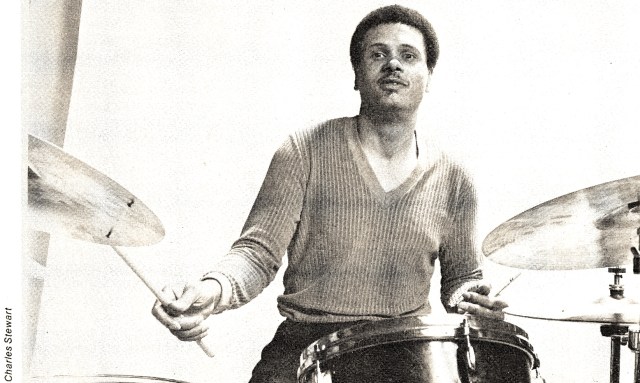
Keith Copeland, jazz drummer and music educator, died in February 14, 2015. During his career Copeland played and/or recorded with Sam Jones, Billy Taylor, Johnny Griffin, Stevie Wonder, Rory Stuart, George Russell, and Hank Jones. He also led his own groups and taught at Berklee College of Music and Eastman School of Music, among others.
While I’m afraid I don’t remember the specific steps leading to my interviewing Copeland for Modern Drummer, I remember the interview clearly. We met at a restaurant on Centre Island, NY on July 23, 1983. The interview was published in the May 1984 MD.
I rediscovered my full Copeland interview transcript in July 2015, five months after Keith passed. Re-reading our conversation after 30 years I was impressed!
Here’s part of what I wrote about Copeland in his May ’84 interview introduction:
“After meeting and interviewing Keith Copeland, there’s one word that seems to represent his overall approach to drums: tradition.
“One of the most impressive aspects of Keith Copeland is that, unlike many of his contemporaries, Keith is carrying on the mainstream tradition not by default, but by choice. At one time in his life he was at the apex of the rock world as the drummer in Stevie Wonder’s first Wonderlove band. And prior to that he’d earned himself a reputation around the Boston area as a funk drummer to be reckoned with.
“When Alan Dawson retired from Berklee after 18 years of teaching, Copeland was hired for the position based on Dawson’s personal recommendation.”
In this interview, Keith shared a wealth of information for drummers. Especially, but not only, for drummers wanting to play jazz drums.
I have already posted on my blog and YouTube page audio segments of this interview. The original interview is on two sides of a 90-minute audio cassette.
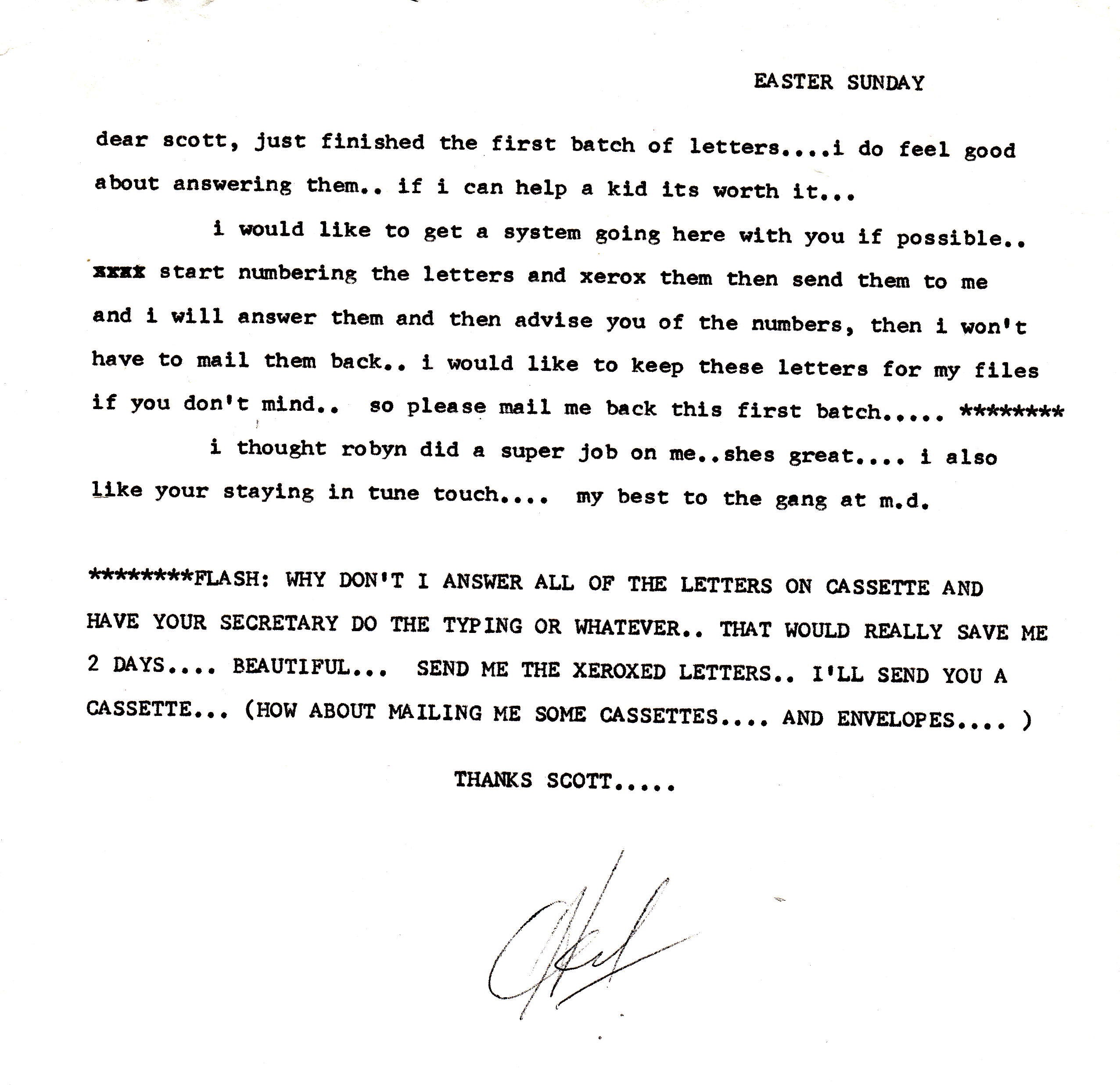
SKF NOTE – This letter from the great drummer Hal Blaine needs some explaining.
First, the letter is in mostly in reference to Blaine’s monthly “Staying In Tune” column for Modern Drummer. The column concept was Blaine’s. MD readers could write to him with questions about almost anything; not just drumming, and Hal would reply in his magazine column.
So this is Hal suggesting a system for handling “Staying In Tune” letters, which we did use.
The reference to Robyn is Robyn Flans’s MD feature interview with Blaine.
Finally, Hal eventually did answer his letters on cassette. But I never had a secretary, so all of the cassette transcribing fell on my shoulders.
SKF NOTE: I often find reading articles and interviews in old music magazines pleasurable and instructive. This 44-year old piece by Conrad Silvert on the Old and New Dreams band, and its individual members, is a case in point.
I’ve posted here just that part of Silvert’s piece focused on drummer Ed Blackwell. Blackwell has long been a favorite drummer of mine since I first heard him on the John Coltrane-Don Cherry “Avant Garde” album. My initial impression was that Blackwell took Max Roach’s melodic drumming one or more steps further.
When I interviewed Blackwell at Wesleyan University for the November 1981 Modern Drummer, it was, for me, a disappointing exchange. Blackwell and I didn’t click for reasons I don’t know, but I could feel it, and it was a let down because I thought so highly of his musicianship-and I still do.
Thank you, Conrad Silvert, for this Blackwell profile. I don’t think we can ever have too many.
=====
Ed Blackwell doesn’t just play the drums. He coaxes some special stuff from a trap set that has nothing to do with the material world. And Blackwell’s is the stuff of legend. Whenever Professor Longhair or Dr. John or the Neville Brothers have sung about, that’s what Blackwell has. No matter how far “outside” Old and New Dreams may venture, Blackwell sits there, imperturbable, totally relaxed, cooking up those deceptively simple patterns that keep the music locked right down to earth.
New Orleans arguably has produced the most soulful…American music of this century, and Blackwell is one of the great exponents of that tradition. Now he lives in Middletown, Connecticut and teachers drums to five students per semester at Wesleyan University. But he lived in New Orleans until he was almost 30, and you can hear it in every note he plays. The New Orleans sound is a spicy mixture of Caribbean, African and European ingredients. Blackwell reinforced the African elements of his playing when he toured the African continent with Randy Weston; when he played an extended solo at Town Hall on “Togo” (which he wrote, basing it on a Ghanese traditional folk melody), the man conjured up a whole battery of hand drummers.
Blackwell seems to erase the distance between his hands and the surfaces of the drums. “Blackwell,” says Don Cherry, “has always made his own sticks, his own mallets, his own practice pads. And he always practices on the pads, so you never hear him crash or bang. His drums are pure swing. He plays independently with all four limbs and still going forward in one direction. He made an important impression on Ornette when they were in Los Angeles together, and Billy Higgins’ hearing Blackwell helped him play with the band later on.”
Blackwell, a soft spoken, exceedingly gentle man, doesn’t seem overwhelmed by his own abilities. Before he left New Orleans, he was part of the American Jazz Quintet. “They were all bright musicians,” he says, “and all admirers of Ornette. They all wrote original materials, and they all had that New Orleans touch-you can’t escape it if you’re raised there. It’s inbred. That’s why you see so many rhythm and blues players coming to New Orleans just to record with New Orleans drummers. They’re looking for that particular pulse and that New Orleans parade, that marching beat. I never actually played drums at the funerals, but I was around the parades, part of the audience called the “second line” that followed the parade, and I was always there, clapping and dancing. It was a happy feeling all the way.
Blackwell went to Los Angeles in 1951 and met Ornette [Coleman] the next year. “Ornette and I lived together from ’53 to ’55. We didn’t get much work because very few people put up with Ornette’s way of playing at that time. We’d play for ten dollars a night, four dollars a night…different prices.”
Considering Blackwell’s talent, history and reputation, it is phenomenal that he just finished making his first album as a leader, “Don’t Quit!” for Sweet Earth, a new company in New Hampshire. Blackwell’s band consisted of Charles Brackeen, reeds; Mark Helias, bass, and Achmed Abdullah, piano. (Helias also has recorded with Redman).
Blackwell enjoys teaching and occasionally giggling with his own group, but his time with Old and New Dreams plainly gives him his greatest satisfaction. “After leaving this band, the love I feel from them, from the music, lasts the whole years. I feel so full.”
Source: “Old and New Dreams,” by Conrad Silvert, Down Beat June 1980





You must be logged in to post a comment.