“My dad chose setlists for the two nights that I hadn’t heard before. He…shied away from the tried and true and went to places musically that were very different. [T]hankfully, his last recordings were caught on tape for all of us to enjoy forever. It has taken thirty-three years to finally get these recordings out. An absolute labour of love that I never gave up on. At times it was quite a struggle, but in the end, it was all about the music.’ Source: Cathy Rich
A great teacher shares some life Scott K. Fish, Special to the Piscataquis Observer • November 22, 2019
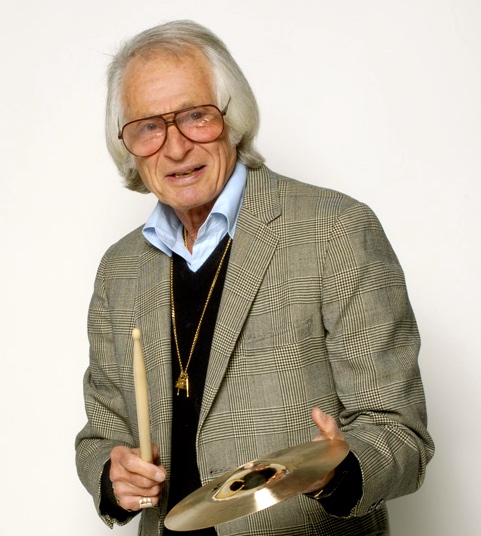
Freddie Gruber was a great drum teacher. If you have a great teacher in your life, no matter the subject taught, then Freddie Gruber won’t be a total stranger.
I was thinking yesterday of meeting Freddie Gruber in 1982. Excerpts of my interview with Freddie are posted on YouTube and my blog. The years 1980 to 1983 were fun and instructive. Through my job with Modern Drummer magazine, the staff and readers were creating new, in-depth material with familiar drummers.
We were also discovering drummers with great careers who had stayed under the music publicity radar. Some played exclusively in recording studios or in orchestra pits for theater performances. For years, most music buyers showed no interest in knowing specific musicians playing on albums. The soundtrack of “West Side Story,” for example, had composer Leonard Bernstein’s name, but not the individual musicians playing that incredible music.
In the early 1980s, the MD editors and writers were starting to find and interview those kinds of unsung musicians.
Drum teachers were another under the radar group. Often these were local teachers, highly regarded, but little known outside their hometown areas.
Freddie Gruber was a drum teacher in the Los Angeles, CA area. Born in 1927 in New York City, Freddie studied with some of the great classical percussion teachers, befriended many of the up-and-coming jazz players, and developed a reputation as an innovative drummer. Barry Ulanov, one of the finest jazz writers wrote about Freddie in a 1940s column called, The Shape of Jazz Drums to Come.
Too many superb musicians in 1940s-1950s succumbed to drugs. Freddie was caught in that trap, but he didn’t die.
Starting life over, Freddie began teaching, slowly. At first he was answering drummers’ questions between sets in nightclubs. As his reputation grew, his teaching practice grew.
I met Freddie through drummer Jim Keltner. When Freddie visited New York City in 1982 we met in person. He was staying in Buddy Rich’s apartment, and he agreed to an interview. Having him actually sitting down for a taping session was not easy. He kicked the can up the road a few times, saying yes to a time/place, then running out the clock at that time/place without an interview.
Our last chance was in Buddy Rich’s apartment. Freddie and I were at the kitchen table. Before the interview, Freddie talked non-stop, saying all these pearls of wisdom, asking me NOT to turn on my tape recorder.
FINALLY, Freddie gave me permission to fire up the recorder.
Trying to understand Freddie Gruber’s teaching method, I asked, “Suppose I’ve just walked into your studio for my first drum lesson. What happens next?”
Freddie points to a pair of drumsticks on the table and asks me to play something, anything. I tap off a few measures of drumming on the Formica. Freddie asks me to play something again, and I do.
My first drum lesson with Freddie Gruber is over. Freddie analyzes my playing with amazing accuracy. For example, he says, “You don’t have much big band drumming experience, only small groups.” “How can you tell?” I ask. “By the way you hold your arms close to your body,” Freddie says.
And miracle of miracles, Freddie corrects how I was drumming with my left hand, clearing up a challenge dogging me for years and years. In the blink of an eye Freddie showed me a simple, natural way of playing and holding the stick with my left hand. Not much different from the way I had been playing. But, Freddie’s adjustment made all the difference in the world. It was one of those plateaus musicians reach now and then after a long dry spell.
A great teacher, a one-of-a-kind man. I am grateful Freddie Gruber and I had the chance to share some life together.
SKF NOTE: When playing copy songs in bands, I was never big on note-for-note copying of the original drummer’s parts. Sometimes I duplicated drum parts, but most often I captured the flavor of original drum parts while creating my own drum parts. Lacking technique sometimes prompted my decision to do my own thing. Mostly I had no interest in spending time learning to copy drummers on records. Chances are the original drummers came up with their own drum parts — why shouldn’t I do the same?
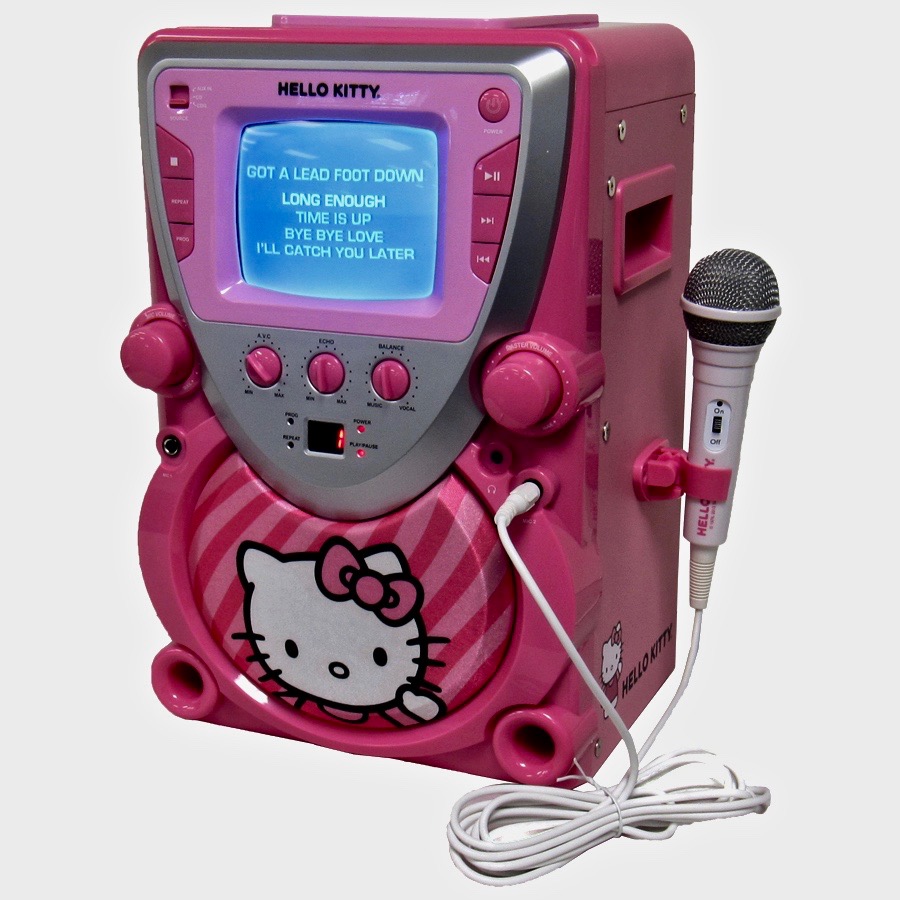
YouTube is thick with videos of Karaoke drummers playing along note-for-note — including breaks and solos — with some famous record, i.e. Philly Joe Jones’s Billy Boy. I suppose there is some merit as a learning tool in dissecting and memorizing well-known drum parts. But that’s like learning the alphabet, then to spell, then to write, and spending most of your time retyping and reciting famous books: “Hey, look here. I wrote Catcher in the Rye.”
Actually, no. J.D. Salinger wrote Catcher in the Rye. You just memorized and retyped Salinger’s bestseller.
The principal in learning to copy famous drum parts and solos is the same. You didn’t create For Big Sid or Toad. You just memorized drum solos created by Max Roach and Ginger Baker.
As I said, dissecting master drummers has merit. It’s the same for writers studying the works of great writers. Of lumberjacks studying the work of master woodcutters. The principle applies to any profession.
At some point, however, drummers need to find our own voices. That’s hard.
There is a YouTube video of a drummer telling his interviewer about playing one night at The Five Spot when Tony Williams was in the audience. (I’ve forgotten the drummer’s name, but I’ll find it and add it to this post when I do.)
The drummer said during a break he was talking with some people, being somewhat apologetic about his drumming concept — which was still a work in progress. Tony Williams was in that group. He told the drummer – paraphrasing – not to be apologetic, but to consider instead that no one else had yet approached the drums the way he — the Five Spot drummer — was approaching the instrument.
I love that. Is there any doubt Tony Williams was simply passing along a consideration he had about his own way of drumming?
SKF NOTE: This is the last segment of my full interview, no edits, with Frankie Dunlop. The interview took place in 1984 in two sessions. The first session, on October 16, 1984, was at my former in-law’s New York City apartment. The December 13, 1984 second session took place at my rented cottage home in Washington, CT.
Topics covered in this seventh and last part of Frankie’s interview include Lena Horne, timekeeping, Thelonious Monk, judging musicians by the condition of their instrument, Mel Lewis stolen cymbals, Frankie drum and cymbal setup with Monk, Switching to Sonor from Slingerland, Jake Hanna gifted snare drum, Frankie Dunlop drum clinics, drumsticks, Steve Gadd, Shelly Manne, Philly Joe Jones, clinics about drugs and music in elementary school, Lionel Hampton, George Jenkins.
One other point. Frankie and I are the dominant voices in this last segment. You’ll also hear my landlord, Jack Jackson, and my then-wife, Claudia.
I’ve cleaned up the sound from the original audio cassettes with compression, and also noise reduction, to minimize tape hiss. Now and then there are sound hiccups. Otherwise the sound is intact. The taping starts and stops are not seamless. Our conversation does not flow undetected from one side of a tape to the next, or from one tape to another tape. While interviewing, I tried to keep my eye on the time, but didn’t always succeed.
However, where Frankie was making an important or interesting point and a tape abruptly ended, we picked up the point when the next tape started rolling.
There are seven approximately 45-minute sessions in total, roughly three-and-a-half 90-minute tapes.
I will give each session a full listen before uploading them, and provide topic highlights — an index — for listeners.
I believe this is the only taped interview with Frankie Dunlop in existence. Since 1984 no other taped interviews have surfaced. For that reason I would like to make these tapes available to the public for posterity. Especially for drummers and music historians.
I’m happy to answer questions. The best way to contact me is through my SKFBlog.
SKF NOTE: This is the first of two interview segments with Frankie Dunlop on December 13, 1984 at my rented home in Washington, CT. I am making available my full interview, no edits, with Frankie Dunlop. The interview took place in 1984 in two sessions. The first session, on October 16, 1984, was at my former in-law’s New York City apartment.
The December 13, 1984 second session took place at my rented cottage home in Washington, CT.
This segment includes two wonderful stories Frankie tells. The first story is about a Charlie Mingus rehearsal. The second story is about a Sonny Rollins club date. Frankie’s mimicking of both Mingus and Rollins still makes me laugh.
I’ve cleaned up the sound from the original audio cassettes with compression, and also noise reduction, to minimize tape hiss. Now and then there are sound hiccups. Otherwise the sound is intact. The taping starts and stops are not seamless. Our conversation does not flow undetected from one side of a tape to the next, or from one tape to another tape. While interviewing, I tried to keep my eye on the time, but didn’t always succeed.
However, where Frankie was making an important or interesting point and a tape abruptly ended, we picked up the point when the next tape started rolling.
There are seven approximately 45-minute sessions in total, roughly three-and-a-half 90-minute tapes.
I will give each session a full listen before uploading them, and provide topic highlights — an index — for listeners.
I believe this is the only taped interview with Frankie Dunlop in existence. Since 1984 no other taped interviews have surfaced. For that reason I would like to make these tapes available to the public for posterity. Especially for drummers and music historians.
I’m happy to answer questions. The best way to contact me is through my SKFBlog – Life Beyond the Cymbals.

 Scott K Fish
You must be logged in to post a comment.