SKF NOTE: These Bad Company publicity shots are circa 1983. I never met drummer Simon Kirke, but I interviewed him briefly for Modern Drummer. My best recollection? I was asking follow-up questions to round out another MD writer’s Simon Kirke interview. Here’s the back story.
I have three audio excerpts from my conversation with Mr. Kirke in the Audio category of this blog.
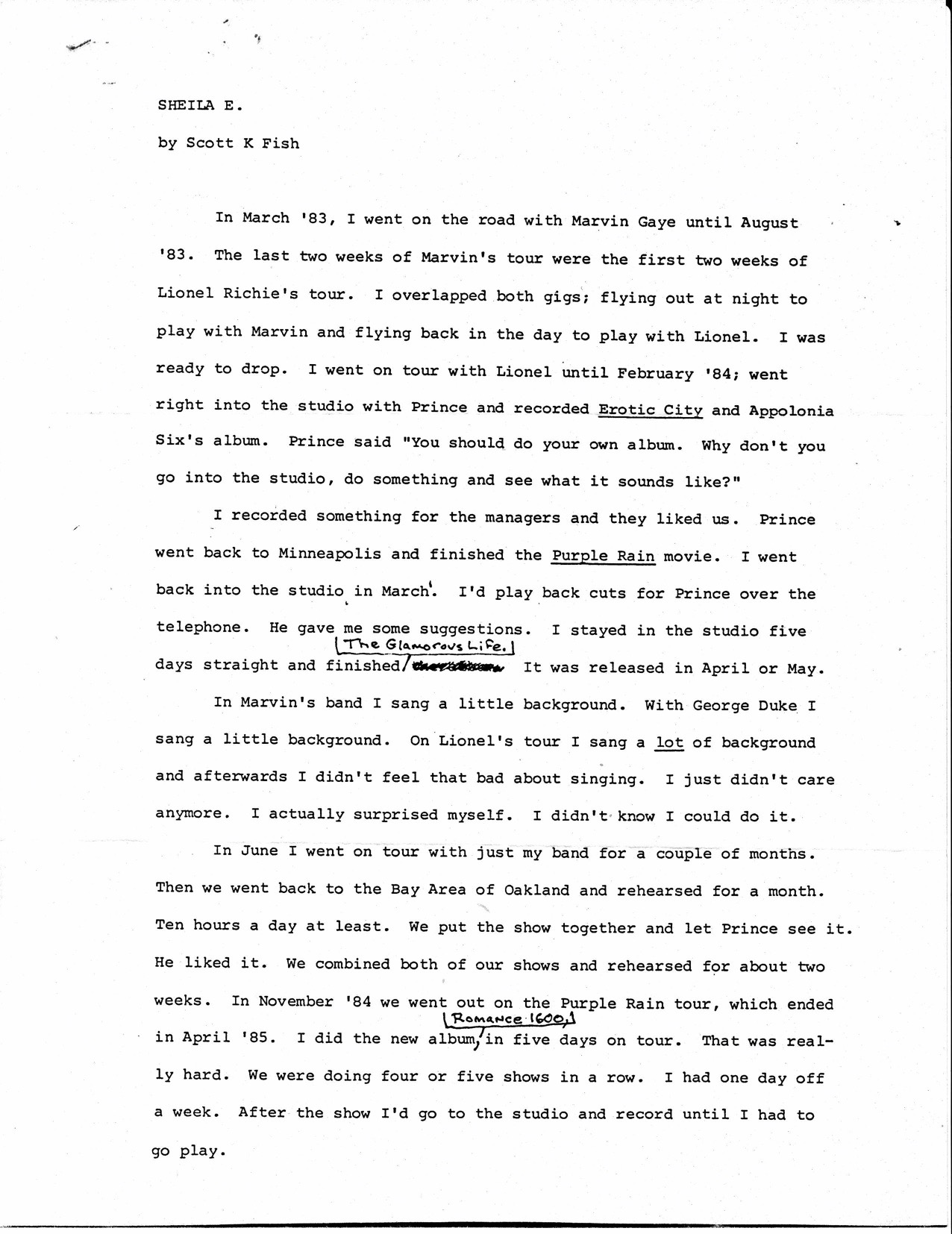
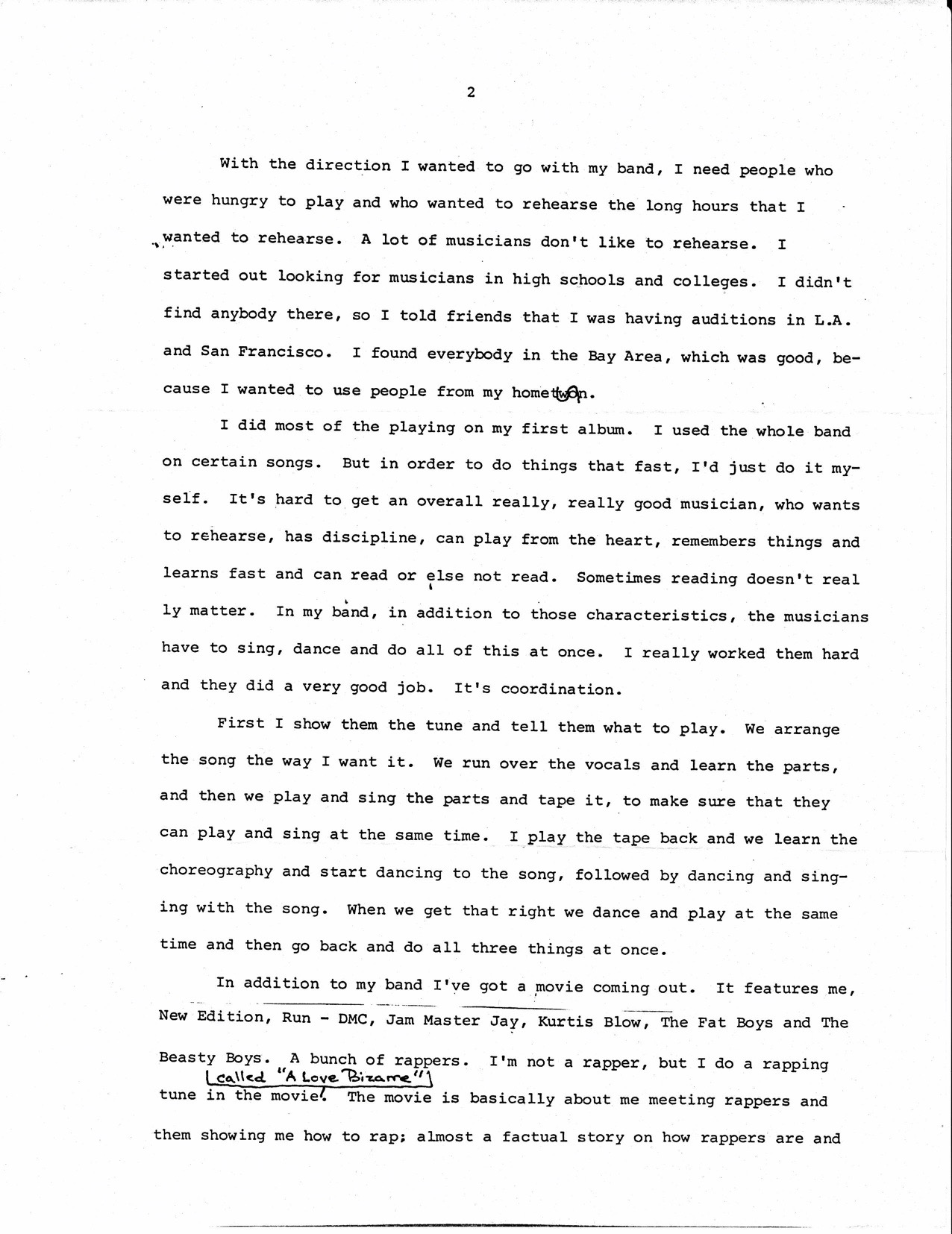
SKF NOTE: I interviewed Sheila E in 1985 for CREEM magazine. These pages are from that interview, but instead of the narrative story published in CREEM, these are Sheila’s words organized almost as a letter or a column.
I don’t remember why I wrote this piece or if it was ever published. I don’t think it was published. It’s possible this was put together for Modern Drummer.
At any rate, here’s a short autobiography from Sheila E at the time her hit album, single, Glamorous Life, was released, in her own words.
SKF NOTE: Chip Stern‘s emails are always a treat and always a worthwhile learning experience. I encourage you to read Chip’s reflections on his friend, Ginger Baker.
Homeward Bound: Reflections on a Musical Legacy 01-01-2020 | By Chip Stern | Issue 107
One hardly knows where to begin.
I was blessed to call Ginger Baker my friend.
I was likewise blessed to call Max Roach and Papa Jo Jones friends. And for reasons not altogether clear to me, I was tasked by the universe—both as an aspirant in rhythm and as a scribe—not only to chronicle their innovations for my fellow music lovers, but to bear witness to the end games of all three as they faded to black and a receptive silence.
Be that as it may, it’s always too damn soon to say goodbye.
And for me, arriving at some recollection of Ginger and our interactions with each other over the past 35 years has been trying, and here it is a full month and change since he passed, and only now am I able to reflect in part on both his darkness and his light, as in the end, Peter Edward Baker was nothing if not a man, guarding his muse behind an elaborate moat of snarkiness, alternatingly gentle and abrasive, sharing and guarded, kindhearted and off-putting, perceptive and naïve, funny and fatalistic.
The track, Panther Pause, especially grabbed my attention — especially Larry Bunker’s drum intro.
Later, circa 1972, I bought a vinyl copy of The Chuck Mangione Quartet’s Alive! album with Steve Gadd on a four-piece Gretsch drumset. Gadd’s intro on St. Thomas is remarkably similar in concept to Bunker’s Panther Pause intro. And I wonder if Gadd heard, and was influenced by, Bunker’s drumming on Panther Pause.
Or perhaps it was just a cool concept floating around in the ether tapped into by two musical giants.
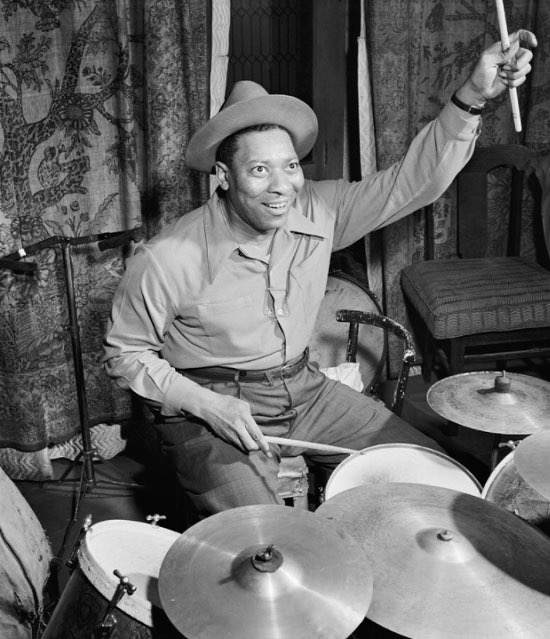
SKF NOTE: Ruby Braff was a jazz trumpeter born in 1927 and died in 2007. Having first hand accounts from musicians who knew and worked with great drummers like Big Sid Catlett is invaluable. In Ruby Braff’s brief remembrance here, he gives us insight into important universal principles of drumming Sid Catlett used so well: economy of motion, knowledge of music composition, and a musical style of soloing.
Ruby Braff on Big Sid Catlett — He arranged his drums so tightly around him they looked like little balls hanging off him. Watching him take a solo was a thrill. He hypnotized you. His sticks went so fast they were blurred. But they also looked like they were moving in slow motion.
Each solo had a beautiful sense of composition. Most drummers can’t even count, but if he took a twelve-bar solo he played exactly twelve bars and if he took a thirty-two-bar solo he played exactly thirty-two bars. And each solo sang its own song.







 Scott K Fish
You must be logged in to post a comment.