SKF NOTE: When Robyn Flans was a frequent Modern Drummer contributor, and I was Managing Editor, we worked together on several 1980s interviews — including the Ringo Starr cover story.
I’m looking forward to reading Robyn’s upcoming biography of one-of-a-kind drummer Jeff Porcaro.
=====
Pre-order now and receive an autographed copy of It’s About Time, signed by author Robyn Flans, and a limited edition card featuring a “Rosanna” chart handwritten by Jeff with early childhood photo from the family archive.
Pre-Orders are expected to ship beginning in mid-September.
SKF NOTE: From theGary Chester the DrummerFacebook page. Gary was a wonderful guy and, without a doubt, an innovative drummer. Check out Gary’s Facebook page if you have not already done so. Here’s the back story on my first meeting with Gary.
===== August 17th, 1987 around 4am EST Gary suddenly passed away at home with his wife and two of his daughters.The time was actually right about now as I post that the unbelievable was forced to fit into the believed for so many around the world.
Still to this day there is no replacement for the innovator and I suppose THAT is a true definition of the word itself, Innovator = irreplaceable. Those who knew Gary feel as satisfied as one can, knowing he was lost at 62 yet even one day with Gary was more than enough to know… your life had changed.
We miss you and love you profoundly. We will ALL be thinking of you today, Gary. xoxo
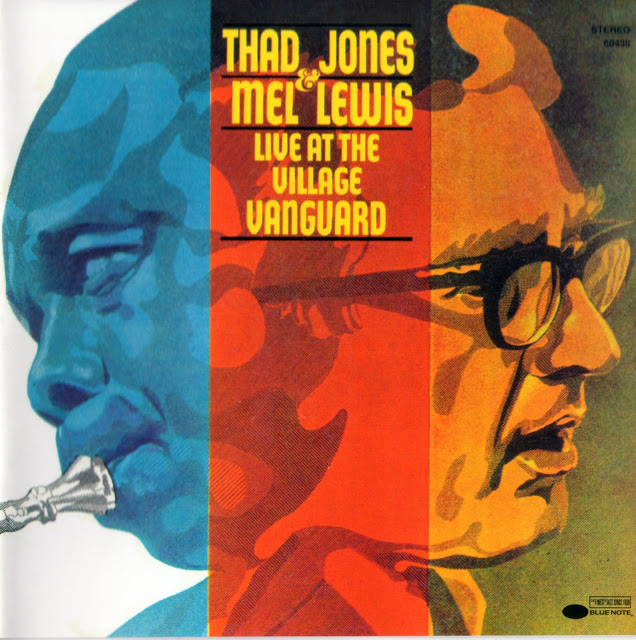
SKF NOTE: The Thad Jones-Mel Lewis Orchestra remains one of the all-time great big bands. For me it’s always interesting reading how the team worked. Here’s Mel Lewis sharing his perspective on playing Thad’s charts.
“[Thad Jones writes] the unexpected, interesting underparts, interesting jumps for the guys who are not playing lead. His placing of the notes as opposed to the rests is never obvious. You can’t anticipate his charts. He stays away from the eighth note rest-dotted quarter note routine. His whole rhythmic conception — the way everything falls — his use of space — it’s so beautiful to play from a drummer’s standpoint.
“There is so much impact in his ensembles; the voicing leaves you breathless.
“And then there are the things he does after he writes an arrangement, the changes he makes as he is rehearsing and directing it. I can say this for sure: Of the few arrangers and instrumentalists who have achieved a sound of their own, he is one.”
Source: “Thad’s Thing,” by Ira Gitler, Down Beat Feb. 22, 1968
LikeLoading...
Posted inSKF Blog|Comments Off on Mel Lewis on Playing Thad Jones’s Charts (1968)
SKF NOTE: When I use the coffee pot for making coffee – as opposed to a K-cup – I fill the water level to six cups. I do that by listening to the sound of the water rising.
I’ve gotten good at knowing what six cups of water sounds like.
LikeLoading...
Posted inSKF Blog|Taggedsounds, water|Comments Off on The Sound of Six Cups of Water
SKF NOTE: Here’s the back story on my interview with J.R. Mitchell. In this excerpt, Mr. Mitchell discusses some of the challenges left-handed drummers face. Once I on an Iowa gig I had to share my right-handed drumset with the other band’s left-handed drummer. This was a deal my bandleader had made. I very reluctantly went along with it, but I was angry. Finally, I was tired of having my drums changed around all night, so I left them set up left-handed and played them that way.
So I am quite empathetic with what J.R. Mitchell says here.
=====
SKF: Did you find any challenges in being a left-handed drummer?
J.R. Mitchell: Yeah. I really didn’t want to play left-handed because I was concerned about sitting in. I told my teacher, “I won’t be able to go and play. I’ll have to be changing people’s drums around.” He said, “Well, if you play well enough you won’t have to sit in with other people.”
It made alot of sense.
I knew a guy in Philadelphia named Richard Easley. He was left-handed, but he set his drums up right-handed. It was so goddam awkward. He played with [jazz organist] Jimmy McGriff for the longest time.
My teacher told me that whatever hand you use the most should be the hand that you use the most should be the hand that you use on your ride cymbal. The muscles have been used more in that hand — and it’s stronger.
I can play right-handed but the feeling is so much different. I’m ambidextrous because I write left-handed, play baseball right-handed.
I found that most cats don’t mind you changing the snare and the sock cymbal. If I was going to sit in and saw that a guy had his drumset tied down — I wouldn’t even ask him. Alot of times I really don’t want to sit in. I think there’s a period of time in a musician’s life where they do alot of sitting in. I’ve done that.
Now if I’m going to play it’s serious business. I don’t have to play to let other musicians know that I’m a drummer. You’re not proving anything to yourself and you shouldn’t have to prove it to the other musicians.








You must be logged in to post a comment.