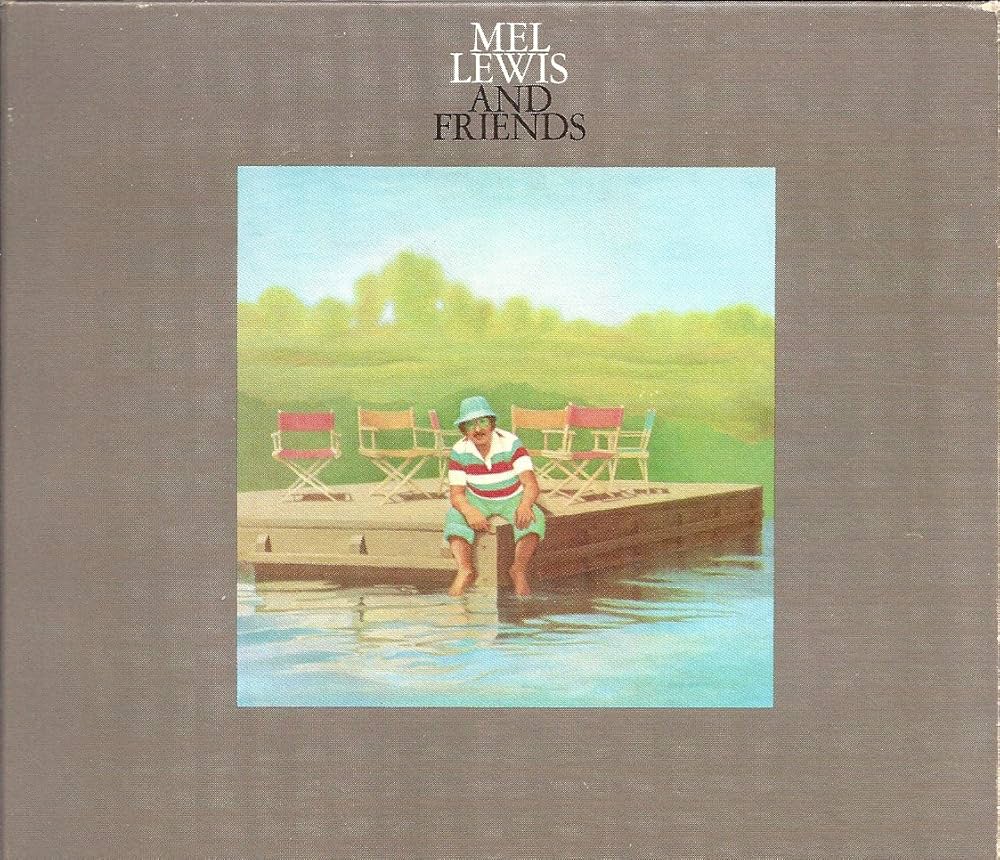
Mel Lewis and Friends Side 1Mel Lewis and Friends Side 2
SKF NOTE: This is a wonderful small group album led by Mel Lewis on the too long defunct Horizon label. Recorded in 1976. Released in 1977.
My cherished copy, which I had with me in 1977 when I interviewed Mel Lewis for Modern Drummer is autographed by Mel.
Ron Carter (bass), Gregory Herbert (alto sax), Freddie Hubbard (trumpet), Michael Brecker (tenor sax), Hank Jones (piano), and Cecil Bridgewater (trumpet) round out the album players.
The entire Horizon catalog, which includes Thad Jones/Mel Lewis Big Band albums, is well worth hearing. Hopefully the Horizon catalog will once again be made available at least digitally.
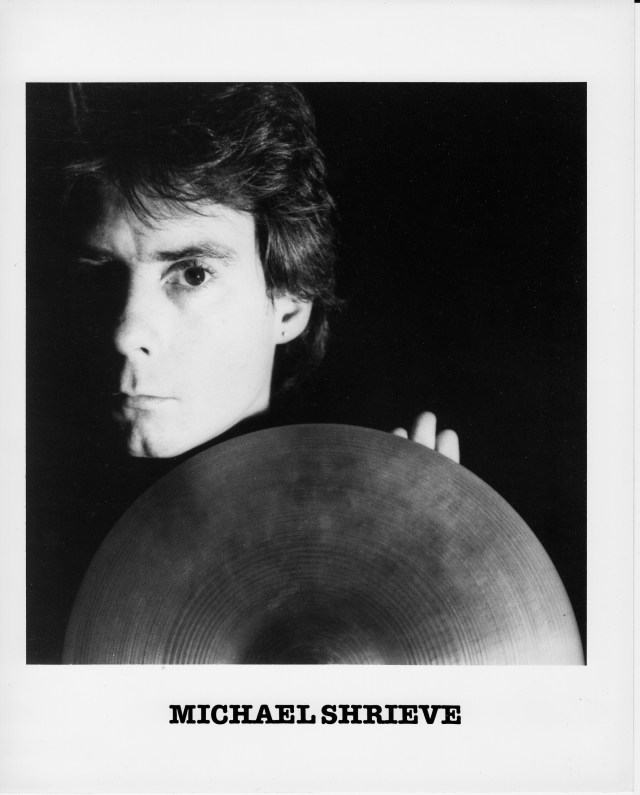
SKF NOTE: Listening back this morning to one of my recorded 1980s Michael Shrieve interviews, I remember lessons learned about interviewing.
My biggest lesson, I think, was learning to shut up. Ask a question. Then while the person being interviewed is answering – shut up. Llet them answer. Don’t finish their sentences. Don’t step on their answer to ask a follow-up question.
Have a follow-up question? Make a note of it. Ask the question when the interviewee stops answering the current question.
Shut up means also eliminating all unnecessary “y’know’s,” “um’s,” and other utterances interjected while the interviewee is talking.
Shutting up is especially important when recording interviews to be broadcast as audio/video interviews.
It’s easy enough, although time consuming, to leave out utterances from print interviews.
Not as easy cutting utterances from audio/video interviews. Sometimes it’s impossible. I learned that working on video projects with videographers Dean Gyorgy and Scotty Heidrich.
My worst offense, I learned, was making sounds while the interviewee is talking. In those cases it is impossible to separate the two sounds – my utterance from the interviewee’s voice – for the audio or video interview.
“God gave us two ears and one mouth. We should use them in that proportion,” is a good rule for interviewers.
I would actually modify that rule for interviewers. “God gave us two ears, two eyes, and one mouth,” and we should use them in that proportion.
I first heard Alan Dawson on at least one of his many sideman dates for Prestige records. I heard it said Mr. Dawson was an in-house drummer for Prestige – which, according to Dawson during my interview with him, isn’t true. He was just the first choice drummer on many recording sessions. He drummed on so many dates it seemed as if he was Prestige’s house drummer.
But my first stop-me-in-my-tracks memory of Mr. Dawson is the 9/8 Indian Song on the Dave Brubeck/Gerry Mulligan Mexican concert Columbia album, Compadres. As of this writing, that album is not readily available in any format. Someone was kind enough to post the track on YouTube. See above.
Dawson plays a great drum solo on Indian Song. But listening to the album only, no visuals, what really grabbed my attention was the maraca playing during the solo. It was smack dab in sync with Dawson’s drum solo. I could not figure out if one of the other band members and Dawson had worked out this routine. That didn’t make sense. It didn’t sound as if Dawson was shaking the maraca and, with one hand, playing the intricate drum solo. Had some blistering Mexican percussionist been invited onstage noncredited on either the LP or the liner notes? It all remained a mystery.
Fast forward to the early 1970s. Living in Iowa, I attended an Alan Dawson drum clinic at a forgotten Iowan college or university. Dawson focused on the importance of learning drum rudiments and of using them musically, demonstrating each spoken example on his four-piece drumset. One example I’ve used since was a double-paradiddle used as a Latin beat. For right-handed drummers, the double paradiddle was played with a triplet-feeling, right hand on the bell of the ride cymbal, left hand starting on the snare, but also moving between snare and tom-toms. Dawson learned it from a young drum student who discovered it following Dawson’s advice to use the drum rudiments musically.
And at one point in the clinic, Dawson solved the Indian Song mystery. He played the song using a maraca in his right hand, a drumstick in his left! As soon as I saw him do that I thought, “Of course!” But, I was not able to solve the riddle relying on my ears alone. I had never seen another drummer use a maraca as a drumstick substitute. It just didn’t cross my mind as an answer to what I was hearing on Indian Song. Drummers who grew up with internet access may be unable to appreciate my dilemma.
In the last couple of years I was once again awed by Alan Dawson’s playing in two places. First, on Booker Ervin’s album, The Freedom Book.
Second, on a series of YouTube videos of Dawson playing in Sonny Rollins’s trio. Holy smoke! Totally relaxed, in command, always musical, sounding great.
SKF NOTE: This piece was thoroughly enjoyable to put together. My intent was to write similar pieces with pianists, guitarists, and other instrumentalists as subjects. Don’t remember why I never did.
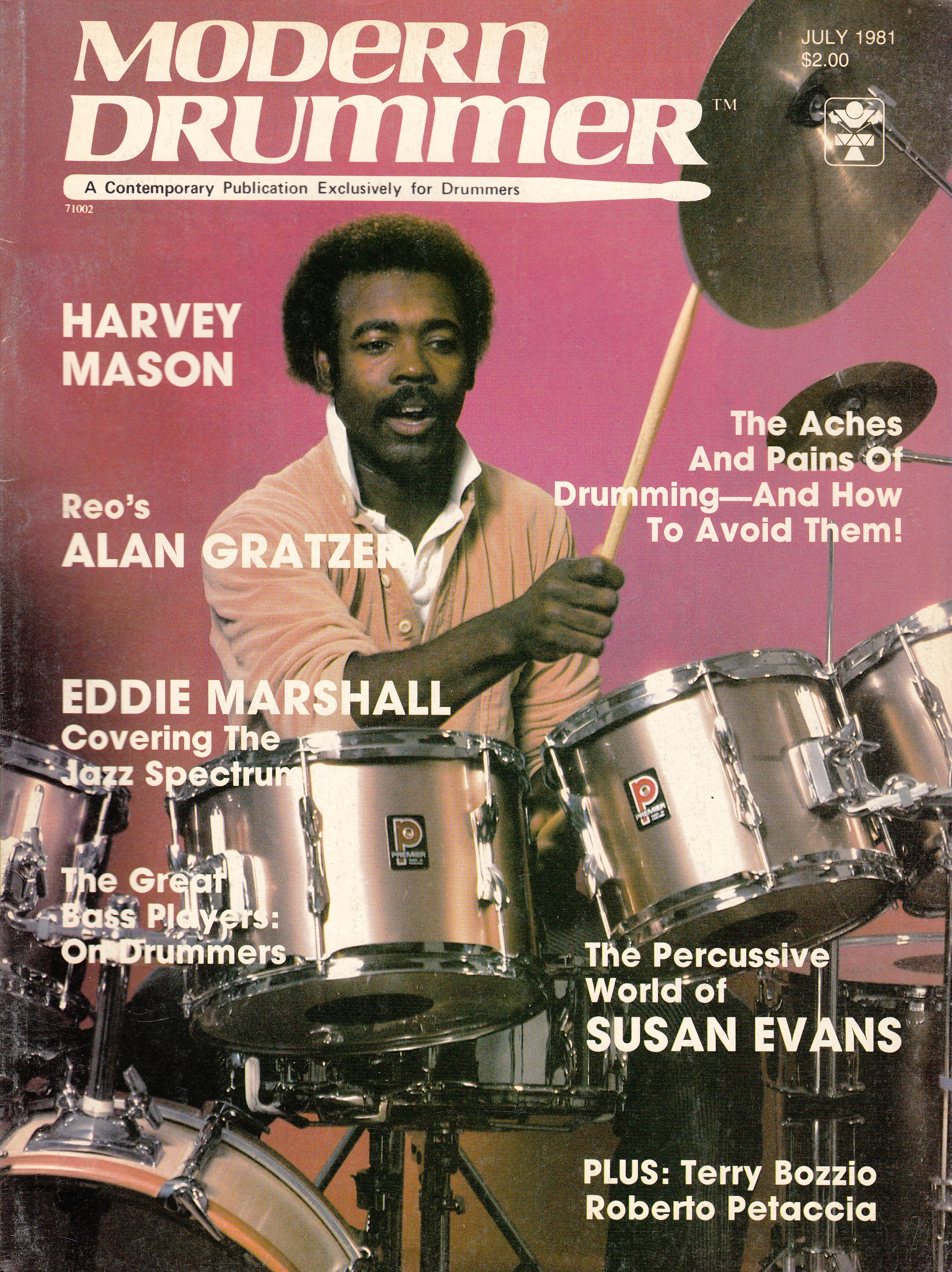
Also, it is interesting to me, looking at this piece this morning, that on the July 1981 Modern Drummer cover this piece is titled, The Great Bass Players: On Drummers. Every where else in the magazine the piece is, Bassists: On Drummers. In his introductory Editor’s Overview, Ron Spagnardi wrote, “As drummers, we’re all well-aware of the importance of a good musical relationship with the bass player. If you’ve ever wondered what a bass player really looks for in a drummer, well, we talked with some of the best. Their illuminating comments are here to absorb in Bassists: On Drummers.”
[SKF NOTE: 6/17/17 – The Great Bass Players: On Drummers full article is now available on MD‘s Archive Page.]
SKF NOTE: In 1981, the idea of writing a History of Rock Drumming for Modern Drummer seemed as if it would be mostly combing existing books and magazines for biographical details, and weaving all that into a narrative. Boy, was I surprised!
To a large extent, except for a handful of high profile drummers, the history of rock drumming was ignored in authoritative books of that time such as Rolling Stone magazine’s Encyclopedia of Rock & Roll.
In the year it took me to research and write that MD rock drumming series, I discovered several wonderful drummers I didn’t know about beforehand. Also, I found out after-the-fact about drummers I didn’t mention in the series.
One of those was Muscle Shoals Rhythm Section drummer extraordinaire Roger Hawkins. And leaving out Roger from that history was a simple blunder, an oversight. I was very familiar with Roger and his stellar musical career. When someone – an MD reader? – told me I had left him out of the series, I telephoned Roger and said, “I’m sorry.” He was a real gentleman about it.
I also received a letter from a wife in upstate New York. She liked my History of Rock Drumming, she wrote, but thought her husband should have been included. His name, she said, is Gary Chester. And Mrs. Chester included, as I recall, some of the well-known artists Gary had worked with, and some of the well-known songs with Gary on drums.
One thing led to another and I drove to the Chester home upstate New York and interviewed Gary. It was an interesting day with Gary, his wife, and his two daughters. Wonderful people.
My favorite parts of the interview/visit? Gary, talking about first hearing Steve Gadd play, said, “You could tell he wasn’t guessing.” A subtle, to-the-point, assessment.
There exists a photo of a young Gary Chester playing a drumset at a Gene Krupa drum contest – which Gary won. Krupa is standing behind Gary in the photo. Gary said, “Gene was a nice man, but a lousy drummer.” And when I gave Gary a look of disbelief at that comment, he very calmly explained why he thought Gene Krupa was a lousy drummer. I don’t remember the specifics of what Gary said, but…fair enough.
Gary had interesting stories of sessions he played: Using a bean bag ashtray for a shaker sound. Or hitting a balloon with a timpani mallet for a bass drum sound. On a Laura Nyro recording session he rented a large sheet of glass and smashed it as part of a Nyro song.
He also spoke of a method he had for overdubbing drums behind or ahead of the beat, a way to fix songs where the drum parts were rushing ahead of or dragging behind the beat, without having to scrap an otherwise great music take. I also think Gary used a click track when doing this kind of corrective playing.
Let’s use an example where a beat is subdivided into 16th notes counted, “1-e-an-uh”. Let’s say Gary wanted to overdub an eight-measure drum part beginning on the “1” beat of the first measure.
If his goal was to overdub behind the beat, Gary would use the “e” as the “1,” as his starting point, all through the eight-measures. Presto! The rushed drum part was gone. Maybe some Gary Chester students can confirm or correct my understanding of this technique.
I still have my audio-cassette of my interview with Gary. One of these days I would like to digitize it and make it available to the public, or at least get a copy to his family.
[SKF NOTE on May 7, 2023: A few years ago I gave Gary’s daughter, Katrina, digitized copies of Gary’s interview, and a copy of the complete tape transcript.]
Gary’s feature interview appeared in the April 1983 MD. Six months later I was gone from MD, working for Gretsch. So I was not on hand for Gary’s method book, “New Breed,” and his subsequent, very well-deserved recognition by drummers worldwide. But I am glad to have known Gary Chester and to have helped others know him. One of my favorite writing career serendipities.





 Scott K Fish
You must be logged in to post a comment.