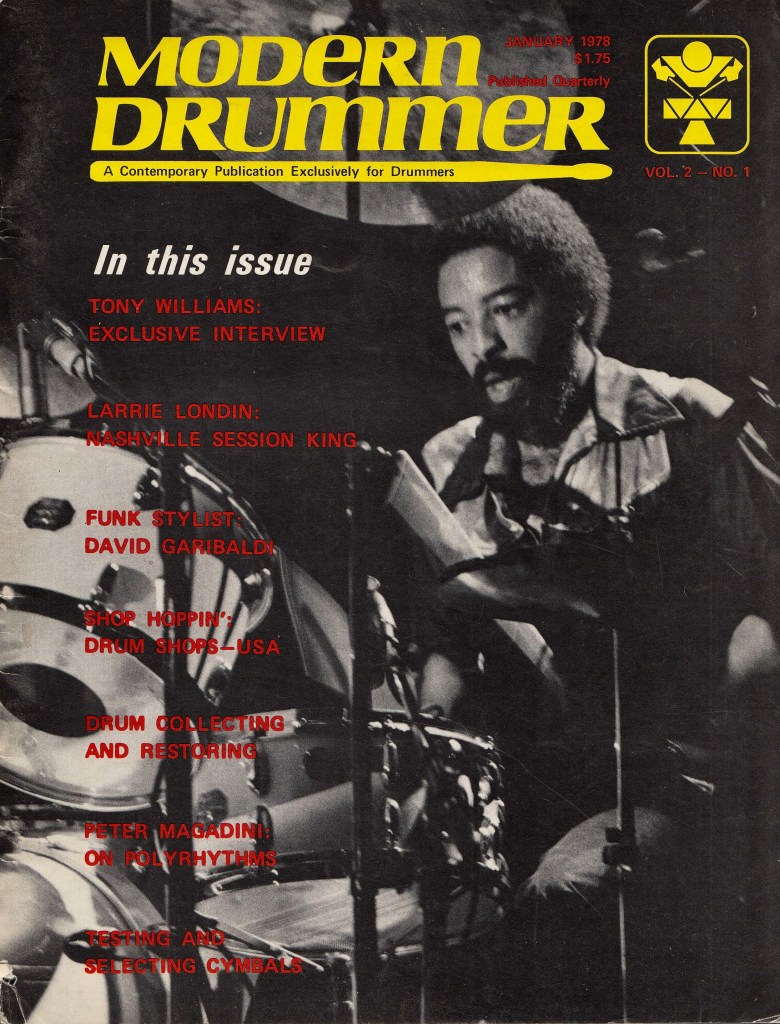
SKF NOTE: On his Facebook page, musician Charles Lloyd posted this photo on Tony Williams’s birthday, writing:
“Born on the day the drum Master, Tony Williams – propelling us, dancing us, giving us wings to fly higher I was blessed to be in NYC during this very fertile period. Tony was 19 when we recorded my second album “Of Course, Of Course” together with my dear Pisces brother, Gabor Szabo and the legend himself, Ron Carter.”
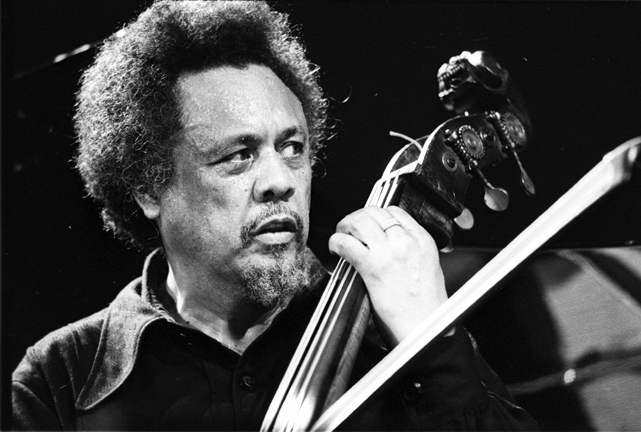
UNSPECIFIED – CIRCA 1970: Photo of Charlie Mingus Photo by Tom Copi/Michael Ochs Archives/Getty Images
SKF NOTE: As 2022 draws to a close, bassist, composer, bandleader Charles Mingus is on my mind. Last night, adding more music from my library to my iPod, I was reminded of the never-before-released Mingus albums I’ve purchased recently.
Mingus’s band at the 1971 Newport Jazz Festival first opened my ears and heart to jazz. The jazz I had listened to was a foreign language. It sounded okay, but I didn’t understand it. Imagine listening to a great speaker narrating an audio book in a foreign language. You might think, “I wish I knew what that guy was saying.”
For me, Mingus was the Great Jazz Translator. The moment before Mingus’s band started playing I didn’t understand the language. A song or two into his set at Newport 1971 something changed. I could understand bits-and-pieces. If music was words, I was understanding some of Charles Mingus’s words. More important, although I still didn’t speak the language of jazz, I could understand it.
After my 1971 Newport experience I bought and listened to as many Mingus albums as I could. There was very little of Mingus’s music I didn’t love. Also, I loved his way of presenting his music as “organized chaos.”
He wanted his musicians to take risks. Forcibly, if necessary. Unannounced, Mingus might stop the rest of the band during one player’s solo, basically to see if the soloist could stand on his own.
Mingus’s music uses stop time, half time, double time, and no time. Organized chaos.
And beautiful melodies. Mingus wrote some timeless melodies. Among them, “Goodbye Pork Pie Hat,” “Better Get Hit In Your Soul,” “Peggy’s Blue Skylight,” “The Shoes of the Fisherman’s Wife Are Some Jive Ass Slippers,” and “Boogie Stop Shuffle.”
The recent Mingus releases in my library, all three of them live dates, are loaded with classic Mingus musicianship. Including the “chaos” moment that have me sharply focused, wondering, “Where is the music going?”
The two drummers on these three albums are Dannie Richmond or Roy Brooks. Among the several times I saw Mingus in concert, Dannie was most often the drummer. But I did see-and was very impressed with-Roy Brooks with Mingus in some New York City nightclub.
So, as I leave behind 2022 and ease into 2023, I find it curious that I’ve reconnected with Mingus. There was a long stretch where Mingus’s music didn’t pique my curiosity. As if I had heard enough of it, and maybe it was time to listen to other music.
But these new Mingus releases, and some reissues I’ve picked up of previous Mingus albums, have renewed my love and interest in this great musician. The Great Translator.
In chronological order, the new Mingus albums I’ve acquired, and their respective drummers, are:
SKF NOTE: Merry Christmas. I’ll share what I think is very goods for music lovers in general, and for drummers in particular: New recordings of never released live dates with some of the world’s great drummers.
Our home power went out here in Maine two days ago. Since then, Eileen and I stayed in a nearby Hilton Hotel. One night, to pass time, I visited my Facebook page. I saw an ad from a new to me record company called The Lost Recordings.
“We travel the world in search of rare or previously unreleased recordings by legendary artists. Using a unique restoration project, we bring this priceless heritage back to life,” begins the label’s introduction on their FB page.
I visited The Lost Recordings‘ “HD Download” page. (Not all their albums are available in digital format.) Here are the album artists of my immediate interest: Art Blakey & the Jazz Messengers (1958), Dave Brubeck Quartet with Joe Morello (1958), Dave Brubeck Quartet with Joe Morello (1967), Thelonious Monk Quartet with Ben Riley (1967), Stan Getz with Roy Haynes (1966), Oscar Peterson Trio with Ed Thigpen (1961), Bill Evans Trio with Jack DeJohnette (1968), and the Dizzy Gillespie Quintet with Mickey Roker (1972).
I bought the 1958 Blakey album last night and it’s great. I’m looking forward to hearing more of The Lost Recordings music.
Around 1967, when I was in high school, age 16 or so, Ed Mathews and his family moved into their Huntington, NY home, directly across the street from our family home. My memory may be off, but I remember Mr. & Mrs. Mathews with three young children. One boy, two girls.
Ed Mathews was a major, positive influence. One of very few adults who encouraged, by his actions and words, my pursuit of music as a profession.
My life goal in 1967 was to be a professional musician. I loved drums, but didn’t own a drum set until I was age 18. In several high school garage bands I was lead singer.
Mr. Mathews, as I greeted him, was Columbia Records’s lead Artists & Repertoire man. Berklee College of Music defines an A&R man as “responsible for finding promising new artists for a record label or music publisher to sign.”
Among the acts Columbia Records signed while Ed Mathews was in A&R were Blood, Sweat, & Tears, Big Brother & the Holding Company, The Chambers Brothers, Leonard Cohen, Laura Nyro, The Electric Flag, Peaches & Herb, O.J. Smith, Paul Revere & the Raiders, The Buckinghams, and Gary Puckett & The Union Gap.
Despite, or because of, our age difference, Mr. Mathews and I talked about music as equals. He knew more about the music business. And he was familiar with more music and musicians.
I was young with good ears and instincts. In hindsight, I was like a one-man (adolescent) marketing gauge for Mr. Mathews.
Mr. Mathews had a small home music room with a quality stereo system, and a floor piled high with LP’s. After a typical visit, Mr. Mathews would send me home with a pile of new albums for listening.
When we’d next meet, he would ask me what I thought of this artist or that album. And I was always straightforward with my answers.
I once suggested to Mr. Mathews he sign The Who. They were on the Decca label at the time. Mr. Mathews wasn’t excited. “What are you going to do with a band that smashes their instruments?” he asked.
Another time I recommended Ten Years After as a great band Columbia records could get from the Deram label. I played Mr. Mathews a Ten Years After track I loved: “Woodchopper’s Ball.”
Again, he paraphrased his “no” by asking, “What are you going to do with a band that plays old Woody Herman tunes?” Of course, I was unfamiliar with Woody Herman’s music and had no idea the Herman band had recorded that “Woodchopper’s Ball” in 1939. I just knew I liked Ten Years After.
In 1969, The Who made such a smash with their rock opera, “Tommy,” which, as of this writing, has sold 20 million copies. Mr. Mathews and I never did get the chance to talk about “Tommy.”
Neither did we talk about how Columbia Records, in 1971, signed Ten Years After to the label.
I have an unpleasant memory of Mr. Mathews telling me Columbia Records was going to “break up” Big Brother & the Holding Company, and build a new “horn band” behind singer Janis Joplin.
Horn bands were hot. Blood, Sweat & Tears, Chicago, The Electric Flag.
But I thought-notwithstanding its raw musical edges-Big Brother, with Janis, was a great band. Breaking them up, I said, was a bad idea.
Mr. Mathews gave me tickets and transportation to see Simon & Garfunkel in Forest Hills Stadium, and later, the newly revised Blood, Sweat, and Tears with David Clayton-Thomas as lead singer in Greenwich Village.
Two Emarcy jazz albums he gave me had a significant impact on my music career. One was pianist Eddie Heywood’s self-titled trio date with Wendell Marshall on bass, and J.C. Heard on drums.
That was my go-to album for learning to play brushes. And many years later, when Joe Morello asked me during our interview if I was familiar with J.C. Heard, I surprised him by answering, “Yes.”
Mr. Mathews gave me a copy of the Emarcy album, “Daahoud,” by the Max Roach-Clifford Brown Quintet. That was my introduction to Max Roach and his drumming concept.
Max’s drumming sounded so different from the obvious rudimental influenced drummers I was listening to; the Buddy Rich and Louis Bellson school of drumming.
I loved Max’s “melodic” drumming. At first, Max’s style sounded easier than trying to emulate Buddy and Louis. But when trying to copy Max’s approach I ran into obstacles, shortcomings.
To drum melodically I needed to know much more about song forms and song lyrics.
Hearing Max for the first time, especially with the remarkable Roach-Brown Quintet, opened my ears immeasurably. It started me down a musical path of limitless musical possibilities.
I once invited Mr. Mathews to listen to a rock trio I was in. Guitar, bass, and me on drums and vocals. He said yes!
The trio, instruments set up in the guitarist’s parents’ basement, played Mr. Mathews a few songs.
On the drive home, Mr. Mathews constructively critiqued the band. He said when I have a band I really think is ready to make a record, he would see that we got into a Columbia Records recording studio in Manhattan.
And he was true to his word. Another band in which I was lead singer, The Neighborhood Blues Boys, recorded six songs in a Columbia Records NYC studio. We released one of the songs, “Slave Girl,” written by our lead guitarist, as a 45-rpm record for our high school art book.
Somewhere along the line, Mr. Mathews told me to be sure to graduate high school. After graduation, he said, he would see that I was hired at Columbia Records.
Why that hiring never happened is a fuzzy memory. I think it was likely because I was more interested in traveling the path of a performing musician.
Eventually Mr. Mathews and I lost contact. In the early 1970s, and again in the early 1980s, I wrote to everyone I could think of who might know the whereabouts of Ed Mathews. No luck.
Still, Ed Mathews is easily among the top people who influenced me in positive directions. Musical and otherwise. I wish we could have revisited later in life. I think, I hope, Mr. Mathews would have been pleased with my life choices.





 Scott K Fish
You must be logged in to post a comment.