Neil Diamond: Two Songs from an $11,000 Guitar

[SKF NOTE: Yesterday I finished reading a Steve Earle biography. In it, there’s mention of Mr. Earle buying guitars when he senses the guitar has a ghost or a song in it. I find that fascinating. This snippet from Neil Diamond’s interview in today’s WSJ is similar.]

WSJ.com NY CULTURE
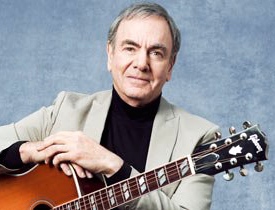
Neil Diamond Discusses Brooklyn Roots, Great Guitars
A Q&A with the performer, who will return to Brooklyn for a one-night-only show

spot-neil-diamond-covWSJ: What guitars are you into now?

Neil Diamond: For the most part, acoustic guitars. They each have their own character and personality. On a particular day, I might pick one up and start noodling around, looking for some emotional content in the chords.

I remember working on the “Home Before Dark” album [2008], and I had pretty much all of it written. I went to visit a guitar collector. There was a 1953 Gibson that I picked up, and I liked a lot. I bought it on the spot at an outrageous price. I think I paid $11,000 for it. I wrote two songs on it. I have never written anything else on that guitar since. It served its purpose. It generated the creative character that I was hoping for.

Full Story

Posted in Drum/Music News | Tagged , , , | Leave a comment

Kenney Jones: A Small Faces Reunion in 2015

[SKF NOTE: The Small Faces (aka, The Faces) are one of the great rock bands. I especially loved the looseness, the spirit when I was a high school listener. Infectious.]

All or Nothing
Rock & roll’s MVP keyboardist, Ian McLagan, was first and foremost an Austinite for the last 20 years of his life
BY TIM STEGALL, FRI., MARCH 20, 2015

As Ultimate Classic Rock points out, [Kenney] Jones discussed a potential Faces reunion during a chat about McLagan with The Austin Chronicle. “Rod (Stewart), (Ron Wood) Woody, and me are still going to do the Faces this year. It’s more important now than ever,” said Jones.

Full Story

Posted in Drum/Music News | Tagged , , , , | Leave a comment

Revisiting My Life in Music: Keys to Becoming a Music Writer

SKF NOTE: Thinking back. This is a list of qualities/skills I think helped or were essential in becoming a music writer. More important, these qualities/skills will serve well anyone wanting to be a music writier. This list will also help me flesh out my music writing years in future blog posts.

My first professional typewriter. Photo taken in 2014.

My first professional typewriter. Photo taken in 2014.

Listen. Listen. Listen.

A love of music,  drumming, writing, reading, researching, history.

Learning how to type, how to write a business letter, how to speak well on the telephone, how to conduct interviews in-person and by phone.

Fact checking. Patience. Accuracy.

Keep company with people who are doing what you want to do; with people who will encourage you, but also be straight with you.

Avoid negative people: chronic pessimists.

Music is physical, mental, emotional, and spiritual. So is creative writing.

Not being afraid to ask questions. Not being afraid to say, “I don’t understand,” or “I don’t know.”

Listen. Listen. Listen. Remember: the story/interview is about them, not me.

Learning how to transcribe interviews recorded with audiocassettes, and later, with digital recorders.

Letting the interviewees fact check stories and interviews before publication.

Learn how to take photos. Knowing when to leave photo shoots in the hands of professional photographers.

Study by reading, listening, and sometimes by playing, all different styles of music, and all different types of instruments.

Some of my best insights into drumming came from musicans other than drummers, and sometimes from non-musicians.

Be reliable. Be honest.

Learn how to put fear in a box, and how to overcome fear.

Listen. Listen. Listen.

To be continued….

Posted in Revisiting My Life in Music | Tagged , , | Leave a comment

American Revolution: Everything Was Bad if the Drummers Were

VIDEOS: Upper Dublin teacher ‘drums up’ Revolutionary War history
Published: Saturday, March 14, 2015
By Linda Finarelli

Upper Dublin — In the…1770s…listening to the beat of the drum was…a way of life.

That message was brought home to the eighth-graders at Sandy Run Middle School…when music teacher Sean Kennedy demonstrated the role of drummers during the Revolutionary War.

“Snare drums were strictly tools of war” back then, said Kennedy, a professional drummer who “was brought up learning all of the battle signals the drummers used to play in the 1700s and 1800s,” and teaches them to his current students. “Without the battlefield drummers, modern drumming might not exist,” he said.

…Kennedy said…the “single largest employer of musicians today is the U.S. military.”

[T]hat history can be traced back to sunrise April 19, 1775, when John Parker, commander of a 77-member militia company in Lexington, Mass., seeing 700 British troops approach, told company drummer boy William Diamond, 17, to sound “To Arms,” signaling the enemy’s approach and the start of the armed conflict leading to the War of Independence, he said.

Gen. George Washington complained the “music of the army” was “very bad,” and threatened that if the drum and fife majors didn’t improve, their ranks and pay would be reduced.

“Everything was bad if the drummers were,” Kennedy said.

“The Rogue’s March”…was played when a soldier was “drummed out” of the army for misbehavior or for a funeral processional.

“The drummers and signals were life and death,” Kennedy said. “Usually they were teenage boys and usually didn’t get shot at, but it was very dangerous.”

…Kennedy noted, “Everything…played on the drum set today has roots in the Revolutionary War.”

Posted in Drum/Music News | Tagged , , , | Leave a comment

Ballard and Rainey: Jazz is an Open-Source Code

Irish Times
Never mind the whiplash, here’s some proper jazz drumming lessons
Don’t believe everything you see at the movies: for great jazz sticksmen Jeff Ballard and Tom Rainey, being mentored was a joy – although Ray Charles was no picnic
Cormac Larkin – Mon, Mar 9, 2015

ballard

Jeff Ballard (Photo credit CultureRadar.com)

Jeff Ballard is best known as one-third of the…Brad Mehldau Trio, and he has also spent extended periods in the drum chair for legends such as Ray Charles and Chick Corea.

Like so many American musicians, his first experience of jazz education was…his own high-school band.

“It was actually a very nurturing environment,” says Ballard. “The director was an old trumpet player from Chicago. He was a very hip guy and he would instil a community feeling in the band. They’d bring in very heavy old-school guys to teach us, and for me the message from the older musicians was that nobody owns this stuff. It’s greater than you, and it deserves to be passed on.”

Tom Rainey (Photo credit jeanloupbertheau.com)

Tom Rainey (Photo credit jeanloupbertheau.com)

Tom Rainey is one of the most creative and innovative drummers on New York’s fertile downtown scene, and a regular with influential band leaders such as saxophonist Tim Berne and pianist Fred Hersch.

The central character in Rainey’s education was…Keith Copeland, who died last month at 68. [Mr. Copeland] was a giant of the drum set.

“It felt like I was hanging out with a friend, basically, like an older brother kind of figure who happened to be an incredibly swinging and beautiful drummer, and also had a real talent for imparting information.”

For both drummers, jazz is an open-source code that they are glad to be able to share.

But check out Ballard and Rainey…. [Y]ou’ll discover…being a jazz drummer is more about communication than being shouted at.

Full Story

Posted in Drum/Music News | Tagged , , , , , , | Leave a comment