
Introduction
by Scott K Fish
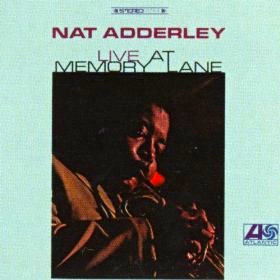
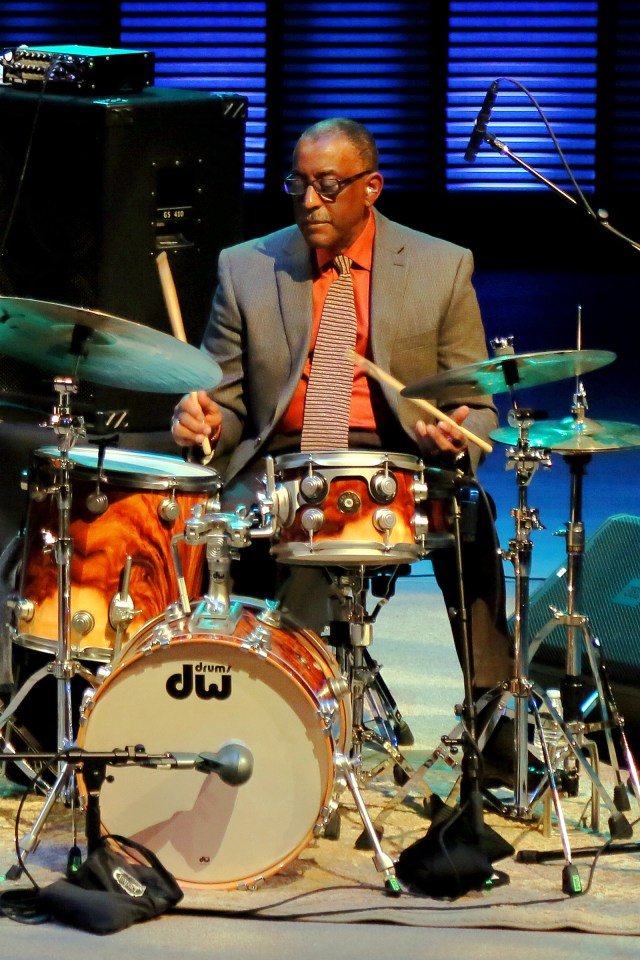
About 40 years ago I bought Nat Adderley’s Live at Memory Lane as a cut-out LP from a Long Island, NY drug store. I didn’t know Nat Adderley at all. I have excellent instincts about an album’s content from studying the album cover. Memory Lane, became a lifelong, all-time favorite, short list, album. The band is Nat Adderley (cornet), Joe Henderson (tenor sax), Joe Zawinul (piano), Victor Gaskin (bass), and Roy McCurdy (drums).
To me, as an aspiring professional drummer, Roy McCurdy’s drumming on Memory Lane was profound. Uplifting, loose, swinging, musical, plenty of technique, wisdom/maturity to not allow technique to trump the music. Plus, while I understood what Roy was playing, there was still mystery in Roy’s drumming: What the heck is he playing? How is getting that sound?

Roy McCurdy is on another short list, favorite album: The Jazztet Here and Now. Musically it is, in ways, the opposite of Memory Lane. Led by Art Farmer (trumpet, flugelhorn) and Benny Golson (tenor sax), The Jazztet’s tunes are precise, tight — always swinging — with top shelf soloists. The other band members are: Grachan Moncur III (trombone), Harold Mabern (piano), Herbie Lewis (bass), Roy McCurdy drums.
What struck me about McCurdy’s drumming on Here and Now was his beautifully tuned drumset, his ability to swing hard while playing clean and precise, and his creative fills and solos that were also swinging, musical, and precise. I can’t recall on Here and Now one time where Roy McCurdy fails at, or even wrestles with, executing his ideas. Amazing.
I missed listening to my Live at Memory Lane and Here and Now albums after transitioning the bulk of my music collection to CD’s, then MP3’s. Finally, Memory Lane was available in MP3 format. Years later, an MP3 version of Here and Now was released.
After Here and Now on MP3, I wondered what happened to Roy McCurdy. I found out he is teaching at University of Southern California, so I emailed him in November 2014:
Dear Professor McCurdy:
I’m writing to thank you for giving me decades of inspiration through your drumming. Just yesterday I found on Amazon the Art Farmer/Benny Golson Jazztet’s Here and Now album. I had that on vinyl for years and years, but lost it somewhere along the way.
Also, your playing on Nat Adderley’s Live at Memory Lane remains a favorite. Crisp, musical – you play great.
I was managing editor of Modern Drummer magazine (1980-83). I never lost my love of drums and drumming, even when my career path took different turns. I always played and I always kept listening.
A few months ago I started a blog so I would have an outlet for my drum experiences. I call my blog Life Beyond the Cymbals.
Thank you again.
Best,
Scott K Fish

I received this reply email:
Hi Scott
Thank you so much for the kind words. I’m glad you enjoyed the things I did over the years. I’ve had a fantastic career and it’s still going strong. Lots of playing and lots of teaching.
I see that you were with Modern Drummer. I always wondered why I was not on the list with the top jazz drummers. It’s something that my students asked me about all the time at USC, and something I think about all the time too.
So if you’re still in contact with somebody [at Modern Drummer], could you please forward this bio over there. Maybe it would help.
Thanks again for your kind words.
Roy McCurdy
I did exchange a couple of emails about a Roy McCurdy interview with an MD editor who, in the last email I received, said, “We’d like to do something with Roy but I’ll need another month or so to figure out exactly what. Thanks for your patience on this, and please email me again in January.”
I reached out again in January. No response. It is August, as I write, still no response. Back in February I suggested to Roy that I interview him. Just as I interviewed drummers when I was MD‘s Managing Editor. Roy and I could distribute the final interview as we saw fit. Roy agreed.
It’s funny how life works sometimes. Forty years after first hearing Roy McCurdy play drums and 30 years since my last full-length drummer interview — here is my full-length interview with Roy McCurdy. We recorded the bulk of the interview by phone on May 15, 2015. I sent Roy the full transcription and a few written follow-up questions. Roy sent me his written replies and I inserted them into our interview.
Roy talks about his formative years in Rochester,NY, and then our discussion covers his career with The Jazz Brothers, The Jazztet, Sonny Rollins, Cannonball Adderley, Nancy Wilson, Kenny Rankin, and other great musicians.
We also talk about Roy’s teaching, his drum equipment, and his future plans.
Thank you, Roy McCurdy, for this opportunity to help tell your story. I enjoyed every minute.
The Roy McCurdy Interview
Q. I’d like to start with what you’re teaching now in college Jazz Studies: what you do, what you teach, and your reaction to the students you teach.
A. I teach at USC – University of Southern California. I also teach at Pasadena Conservatory of Music. On the USC campus is The Thornton School, a jazz school. That’s where I teach individual lessons, help with ensemble work, and do Master Classes. I’ve been at USC about ten years, and at Pasadena Conservatory about four years. I do basically the same things at both places.
Q. Are you teaching drum students or teaching jazz?
A. I teach individual lessons for drum students. Sometimes I have a few bass players in the class who want to learn how to play correct time and stuff like that. Master Classes are big classes. About 40 kids in the class. We just talk about music, about when I came up playing and steps I took to get where I am. Students are always interested. And it changes. Every semester there are new students. I talk to them about being on the road, playing with different people, and all those kinds of things.
Q. The road you walked down — starting as a kid interested in playing drums — to where you are today, is that the same road your students have to walk? Or has that road changed for them?
A. I think it has changed a lot. The difference between me and my students? When I came up we learned how to play jazz and blues and all those kinds of things on the street. We just learned it right from the street. Now they’re going into classes and learning how to do that. I think it’s a little bit different because we used to listen to a lot of records — a lot of records — then try to play what we heard the guys playing on the records. I spent hours doing that.
Students here get their jazz education from the school teachers. But it’s not quite the same. Sometimes it’s like pulling teeth to make students listen to a lot of recordings. And listening is 50-60 percent of it. You have to know what you’re hearing, and listen to the masters. We came up playing with little small groups, forming little small groups, and trying to copy everything we heard. It’s a little different now.
The road I walked down went through high school to Eastman School of Music to study with Bill Street, a rudimental drum teacher. I studied rudiment drumming with him for four years. After that, at about age 16 or 17, I was playing professional. It was just a different level. Now, the kids at 16 and 17 – there’s a couple playing professional — but, most of them are no way near ready to play professional at that age.
Q. When you say you learned to play on the street, I take that to mean you learned to play hanging out with other musicians your own age, listening to radio, listening to records.
A. Yes.
Q. Kids today have YouTube, the Internet. In terms of access to music, the sky’s the limit. Yet from what you’re saying, it sounds as if they’re either stifled somehow by that or….
A. No, I don’t think they’re stifled. Now they have more ways to hear jazz than we did, but we had a hunger to listen to jazz. We listened to jazz on records. We tried to find radio stations from different parts of the country playing jazz. We really, really spent a lot of time studying this music to play it.
Today’s students, yeah, they’ve got YouTube and all kinds of things. They have a wealth of different kinds of music. They should take advantage.
When we came up you developed from and into individualized players, players you could recognize when you turned on a record or listened to on radio and say, “Oh, well that’s this person and that’s that person. There are a lot of good musicians coming out of schools, but most of them sound the same. There’s not much individuality.
Q. It used to be easy to tell who was playing drums by the sound of their drums.
A. Yeah. Exactly.
Q. Now everybody sounds the same.
A. Everybody sounds the same. And it’s not just the drums. It’s the horns and everything. There are a few exceptions, but it’s not like before. It’s really different now.
When I say we learned the music on the streets, we learned by forming small groups and getting together and listening, and studying. They didn’t have jazz in the schools when we were coming up. They didn’t have jazz in the schools until maybe around the early ’60s.
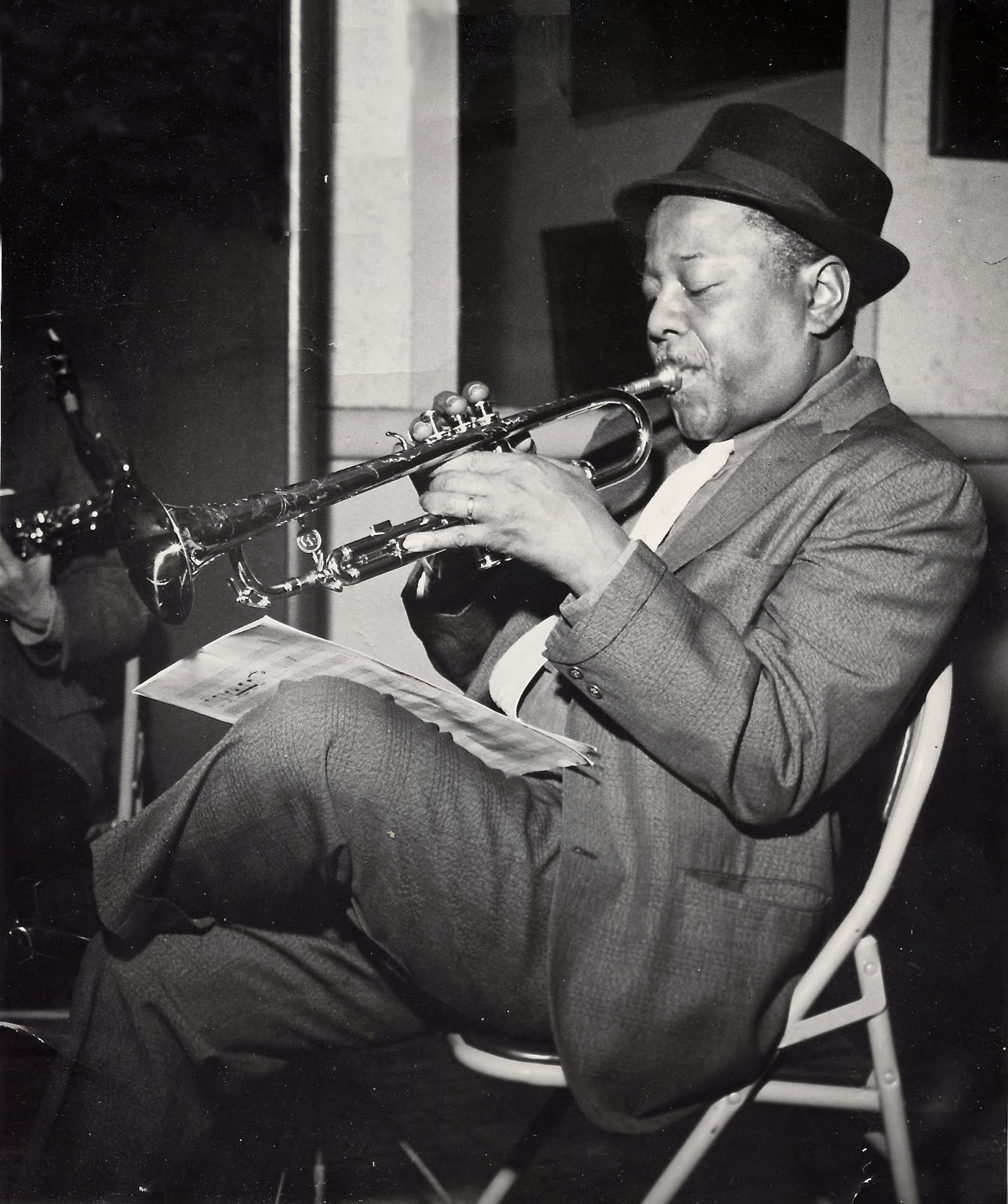
We learned all we could from listening to other guys, and playing, and doing a lot of different things. By the time I was 16 I was playing with Roy Eldridge, Eddie “Cleanhead” Vinson – people like that. Because they were coming through town as individuals and picking up rhythm sections. We had developed to such a point that they would request us when they came in town.
Q. When I was growing up, Ed Beach had a wonderful jazz program on radio station WRVR out of New York City. Ed knew the music and the players. Every show was entertaining, but also a music lesson in Miles Davis, Mose Allison – whoever was Ed’s focus for that night’s show. Did Rochester, NY have any DJ’s like that?
A. Yes. A guy named Will Moyle had a jazz program – I think it was every night of the week. And we could listen to it. It didn’t come on for long. About an hour or so. But I would listen to that. And you could tune your radio late at night and hear stations coming from the south playing jazz. There would be a lot of static, but I could hear it.
Q. Is there a single moment in your life when you knew you wanted to make a living playing drums?
A. Scott, I think it was almost from the beginning. That’s kind of strange to say, but I got interested in playing drums when I was about 7- or 8-years old because of my family. There was a lot of music in my house. And my cousin played parade drums. His drum was always around and I got the chance to play on that. My sisters and my cousins had the music called Boogie Woogie. They listened to the Blues. They listened to the Jazz at the Philharmonic records. So all of those things — they would be listening, and I would be listening too. They’d roll up the rug in the living room and be dancing to this stuff all the time. I loved it. And with the drum being there – I just started playing.
By the time I was 8 I started taking lessons. By the time I was 10, 11, 12 years old – that’s all I thought about! Me and a friend of mine named Warren Greenlea — who played saxophone — that’s all we talked about: “We’re going to be professional musicians. We’re going to play with these other guys someday.” That’s what we focused on.
Q. From age 7 or 8 until age 16 – how were you learning to play drumset?
A. I was going to music stores. The music stores had guys who taught different instruments. I had a drum teacher there. My folks also had a drum teacher come to the house once a week.
By the time I reached 16, in high school, I was playing gigs outside of schools in little venues where my father would have to go with me because I was too young to be in there by myself. I was playing with a lot of little bands, and with a lot of blues bands.
I was playing with one band called Count Rabbit and his Bunnies – which was a blues band. And I played a lot of that, a lot of rhythm-and-blues. Then I just kind of naturally turned to jazz. All the way through high school I did that.
When I got out of high school I went into the military service. The Army was going to draft me. I talked to a recruiting guy and asked if I would be able to play music in the Army. He said, no, they’re going to send me someplace else.
We had an Air Force Base near Rochester called Samson Air Force Base. I went over there and took an audition for the band. I passed it. When I came out of basic training I went straight into the Air Force band.

Q. Some kids like learning drums by ear, some by learning to read music. What’s there any aspect of learning to play drums you didn’t like?
A. I liked everything about it. Most of the bands we played in in the early years — we just played by ear. We didn’t have any music. Finally, through studying, I learned how to read later on. But most of the stuff we were learning to play by listening and playing by ear.
The saxophone player I told you about, Warren, he never took a lesson. He just played saxophone by ear, and he played incredible alto saxophone.
So that’s how I learned. Then later on, being in the service and playing all the time the reading became much better.



 Scott K Fish
You must be logged in to post a comment.