Be a successful session drummer
By Geoff Nicholls (Rhythm) Ian Thomas tells us how he got to be one of the UK’s most in-demand sessioneers
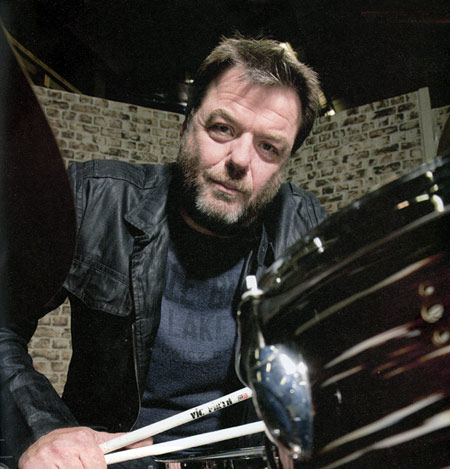
Ian Thomas
Arriving in London from his native Cardiff in 1984, Ian was known as a superb jazz and big band player. But he could also rock and his big breakthrough was on George Michael’s 25-million selling Faith (1987).
1. Take a bad kit to the studio and it will sound bad whatever anyone does to it. So make sure your instrument is up to scratch.
2. Be on time and find out what you need. What is the music? Find out what instruments you need.
3. Be versatile, and learn together. Why cut off a whole load of work because you can’t be bothered to learn to read?
4. Play for the music.
5. Approaching the live gig. What I’m into now is trying to remember songs and sets. I used to write everything down and it would take ages to get rid of the cheat sheets.
6. Learn to read, but have patience. Everyone says to me your reading is amazing and actually it has taken a long time to get it together.
7. On film work. I did a session for the Twilight series of films. There were five of us in the percussion section and it was the hardest thing I have ever seen written in my life! Improvising to actual picture is really rare.
8. Breaking through. Coming to London from Cardiff was a big step, I didn’t know anybody. I signed on the dole and said I would give it five years or do something else.
9. Bringing It Home. I’ve been working on [my home studio] for the last four years. I was doing quite a few sessions where [clients] had only booked the studio for the live drums. Nowadays many want live drums again, and they can’t get it from a machine. So they hire a studio and a bunch of mics, but they have no idea how to mic a drum kit! I can do a better job, why not come to my place?
10. It’s okay to be nervous. “The first time I worked with BB King was on his 80th birthday album in 2005. He gathered us all around and said, ‘I have played on thousands of albums in my lifetime and I have never played perfectly on any of them. I doubt if I will play perfectly on this one either. I am gonna play from here [the heart] and that is all I want you to do. Forget any fears, I just want to hear what you have to say.’
SKF NOTE: Last week, after years and years of searching, I found the full transcript of my interview with drummer Smokey Dacus. I wrote here about Smokey and the lost transcript in April 2014. I said in part:
Smokey Dacus, original drummer with Bob Wills & the Texas Playboys, is credited as the first to play drumset in a country band. Modern Drummer founder/publisher Ron Spagnardi chose to not publish my interview with Smokey Dacus as a feature. Ron’s decision remains one of very few regrets from my MD days. If memory serves, only key points from the Dacus interview were included in the Country Drummers segment of my feature MD series, A History of Rock n Roll Drumming. The remainder of that interview is one of many manuscripts in a box in my closet.
I am preparing the interview for publication on Life Beyond the Cymbals. It is 41 typewritten pages of insight into one of the world’s great drum innovators and one of America’s – especially country music’s – innovative bands.
This segment from the transcript is a brief look at how Bob Wills and Smokey Dacus first met. I will post the full interview – which has never been published – very soon.
=====
Smokey Dacus: So I was playing in this hotel band in tuxedos. But the common thread I mentioned was: everything I played — luncheons, dinners, or dances — was written. That was when you used to go to Jenkins Music Store [and] pay 75-cents for an orchestration. The cotton pickin’ thing was at least a half-inch thick. There was a piano score, scores for at least four violins, a full reed section, three trumpets, the trombone — the whole bit!
Well, we didn’t have all those [instruments]. So we would just take out the pieces we needed for our group. But everything we played was read. Okay.
And so, I was playing in this hotel band and Bob Wills approached me. Somewhere along the road I had gathered the reputation of being the best dance drummer in town. And Bob came to me in late ’34 and he wanted me to come play drums with him.
Well, at that time, his type of music had two names. It was either a fiddle band or a string band. That’s the only way you referred to them. And they did not use drums! They had no use for a drummer because their rhythm was a bass fiddle and a banjo — which was the basic rhythm.
Now, you add a guitar to that, well, he kind of helped it a little. And the piano player, if he wasn’t taking a chorus, well, then the piano player played rhythm. Just chords. So the rhythm section at its high point included the bass fiddle, the banjo, the guitar, and the guy chording the piano.
So, [Bob Wills] came to me and I said, “What in the hell do you want with a drummer in a fiddle band?” I thought he’d lost his mind! And he said, “I want to take your kind of music and my kind of music and put them together and make it swing.”
[SKF NOTE: You can read my introduction to Roy McCurdy’s interview in Part 1. You can read Part 2 by clicking here. And Part 3 by clicking here.]
Q. Of the albums you made with Cannonball, are there some you like better than others?
A. I liked all of those records. (laughs) I did. I liked them all. I had a great time playing on those and I liked them all. It’s hard to pick one or the other. We went through a lot of different phases and each phase is different. I heard they’re supposed to release an album we did in ’64 when I first joined the band: Live at the Penthouse in Seattle. Myself, Sam Jones, Cannon, and Nat, and Joe Zawinul. It’s a really nice thing. They release things all over the place! The things we did in Europe. I guess they’ve been taped and they’re releasing all these different things on CD now.
Q. That’s great. A friend gave me a 4-CD box set of newly released John Coltrane with Eric Dolphy in concert. Miles Davis is coming out with new material in a box set of his Newport dates. Keep ’em coming!
A. Horace Silver’s band. Major band. When we would come to town it was just unbelievable. You would go to different clubs and the clubs would be jam packed. There would be lines waiting outside to get in. People were very knowledgable about the music. The gigs would last for a week or two at each place. It was just amazing. The band was so popular. Then you would go to places like in Europe or Japan and you were like rock stars. It was just an incredible feeling. I really cherish all those memories, man. It’s just beautiful to remember all those things. Damn! I was there! (laughs).
And then with Cannonball’s band we went through playing a lot of different styles of music. We were playing jazz. We were playing funk. And we got a lot of flak for doing some of that stuff. But Cannon stuck to his guns, and we did it, and he was still selling records and packing clubs. There were purists saying, “Why are you playing Mercy, Mercy, Mercy?” But that was one of the biggest records out at that time.
Q. Did you keep journals? Were you a letter writer all those years you were playing?
A. I didn’t keep a lot of journals, but I have scrapbook after scrapbook just full of stuff. Articles. Places we played. Things we did. Schedules we had. Just all kinds of things. Not only with Cannon, but with other people too.
Q. Your fellow Cannonball Adderley member, Joe Zawinul, went on to create milestones in “fusion jazz.” The seeds of Zawinul’s fusion work are heard in his work with Cannonball. As far as I can tell, you were not involved in fusion bands in the way Lenny White, Billy Cobham, Eric Gravatt, and other drummers were. If so, was that by choice?
A. Well, I came up in a time when I was playing more straight ahead music, although along the way I played just about every type of music around. We would experiment with fusion sometimes in rehearsals with Cannon and Joe Zawinul. I knew what it was about and how to play it. I don’t know! I got the calls for the more traditional things.
Q. Did you stay in touch with Joe Zawinul? Did the two of you ever play music together again? Did you have conversations about music?
A. I never played in a band with Joe Zawinul after the Cannonball Adderley band. We both went on to do other things musically. But we remained very close. He was one of my best friends. We lived very near each other in Pasadena, California. Our families were close and our kids grew up together.
It was a great ride. Cannon passed in 1975. Then I said, “Uh oh. What are you going to do now?” But I was playing with a lot of different people. I started working doing a lot of different things. You ever hear of a singer named Kenny Rankin?
Q. I love Kenny Rankin.
A. He was one of my dear friends and we did a lot of work together. We did maybe four albums together. We had a lot of fun and traveled all around.
I was also working with Bobby Timmons. Me, Sam Jones, and Bobby Timmons had a trio. That was a beautiful thing too.
Q. Were there rehearsals prior to Kenny Rankin’s recording sessions?
A. Oh yeah. We would have extensive rehearsals with Kenny. And we would also be on the road and we would play those things too. We traveled quite a bit in between the time I was with Cannon and after Cannon passed. But he would have a lot of rehearsals.
We did a nice album of standards that Kenny wanted to do. We did Kenny and strings with Don…, I forgot his name.
A. Don Costa! Yeah. Costa loved Kenny, so we did a lot of music with Costa. I worked a lot of different places with him. Took me to places we didn’t go playing jazz. They were different kind of clubs. (laughs). But Kenny still wanted the jazz feeling, so we had a great time.
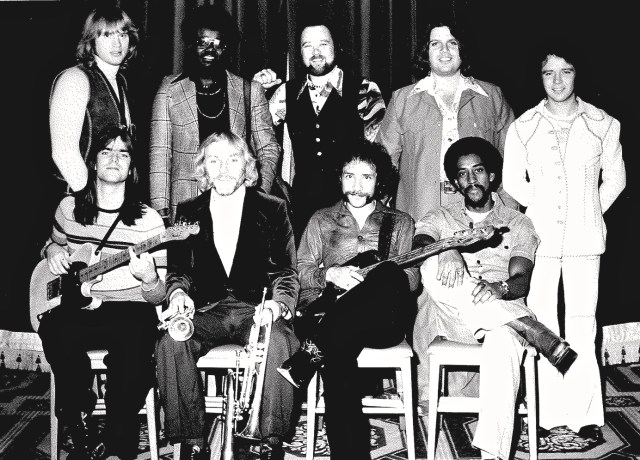
Then I got a call to do Blood, Sweat and Tears. Bobby Colomby called and said, “Roy, I need you to take my place.” So I joined Blood, Sweat and Tears and I had a great time with them. Which was completely different! Now we’re playing for rock, but all the guys in the band were jazz musicians. We had Mike Stern, Larry Willis, Tony Klatka. Oh, my God! You should have seen the size of the drums I was playing. I said, “Wow!” I had never played drums that big before. Just a huge set of drums.
Q. You couldn’t use the drums you wanted?
A. We couldn’t use a small set. It was more of a rock kind of set. I’ll never forget. I was playing Fibes drums. I had four toms on the top and two smaller toms. Two floor toms. A bunch of cymbals. We used them all too. Fortunately I didn’t have to set anything up.
Roy McCurdy with Blood, Sweat & Tears
Going from jazz to rock? The way you were treated was like a whole different thing. You didn’t have to do anything. They had drum techs, people to come to your house and pick up your luggage when you traveled, limousines waiting at your house to take you to the airport, to take you back home. I never touched the drums except when I sat down. And they were always perfect.
Playing jazz we were always handling our own stuff. I was so happy when we started flying instead of driving. We could just relax then. When you get off a gig and get in the car and drive to the next gig, you get a little sleep, get in the car and drive to the next gig. It was just amazing.
Q. Your drum equipment: What are you using now? Why? Do you tend to use the same drumset, cymbals, drumheads for all musical situations?
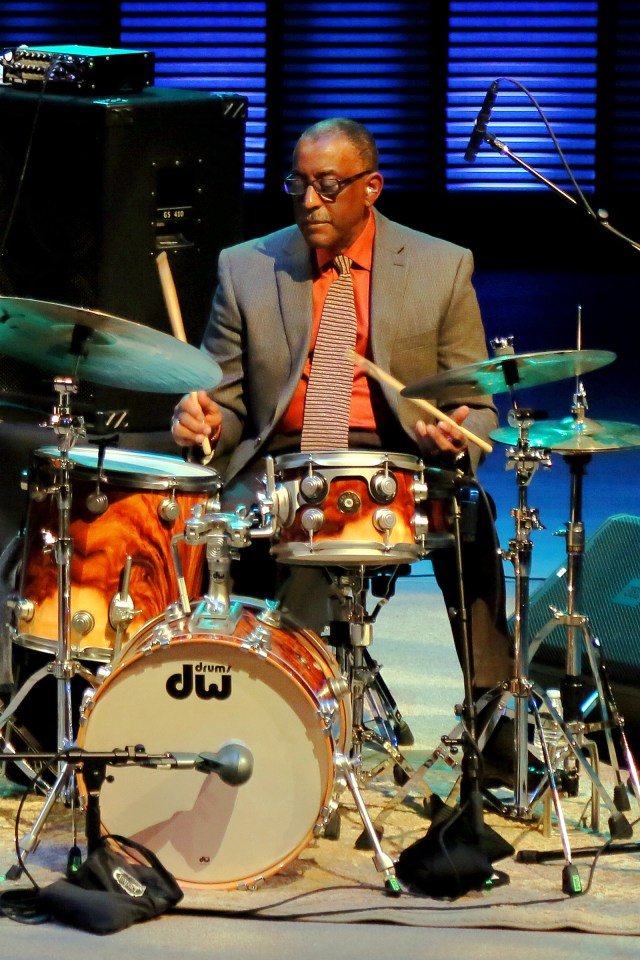
A. I have an endorsement with DW Drums. I’ve been with them several years now. I use 7”x10″ and 8”x12″ toms on top and a 14”x14″ floor tom. My snare is a 6″ maple solid shell. My bass drum is 18″ by 14″, but I do use a 20”x16″ bass drum for a bigger sound on certain jobs. I have a second set, same sizes, only the shells are cherry wood. They have a real warm sound.
I am with Istanbul cymbals. I use the Agop series. My cymbals are a 18″ crash ride, a 22″ ride, a 22″ flat ride, a 16″ thin crash, 14” hi hats. I use the same cymbals and drumset for all musical situations.
I also endorse Regal Tip sticks and brushes. I use the 5A X series wood tip. I am with the Remo company for drum heads. I like to use the Ambassador coated heads, and my bass drum head is a Powerstroke 3.
Q. Do you remember the drumsets and cymbals you used live and in the studio throughout your career.
Playing in Rochester, N.Y. with the Jazz Brothers through the time with The Jazztet, I played and recorded on Pearl Drums. A black pearl finished set, and later, a white set. Both sets had a 20″ bass drum, 8”x12” tom, 14”x14” floor tom, 14”x5” metal snare.
I didn’t have an endorsement, but my cymbal setup with the Jazz Brothers was Zildjian. An 18” Crash Ride, a 20″ Ride, and 14″ hi-hats.
For a brief time with the Jazztet I had a Paiste endorsement and used a 20” Ride, an 18″ Crash Ride, an 18″ Flat Ride.
When I joined Sonny Rollins (1962) I got an endorsement with Rogers Drums. I had a black pearl set, and later on a white set. The dimensions were the same as my Pearl drumsets. I used those drums on the albums I recorded with Sonny. I went with ZildjianCymbals, playing a 20″A Ride , an 18” A Series Crash Ride, and 14″ Matched hi-hats.
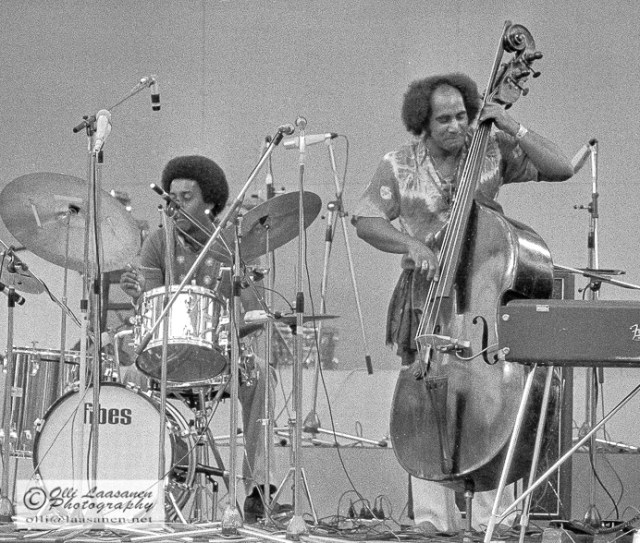
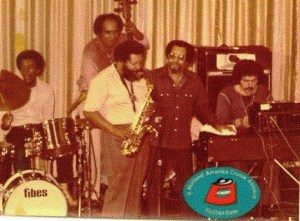
I joined Cannonball Adderley’s band in 1964 playing and recording with my Pearl drums for two or three years, and using Zildjian Cymbals. Later on in the Cannon years I got an endorsement with Fibes drums. I’m not sure what year that was, but I used Fibes for the remainder of the time. I was with the band, up to 1975. The drum setup changed. I started using 7”x10” and 8”x12” toms on top, a 14”x14″ floor tom, and an 18″x14″bass drum. My Fibes drums were clear drums.
With Blood Sweat And Tears my drums were still Fibes: a white set with four toms on top, the snare was around 6.5″ deep, and 14”x14” and 16”x16” floor toms. I had an18″ Crash, two 18″ Thin Crashes, a 22″Ping Ride, a 22″ China Cymbal. I recorded one BS&T album with that set of drums called, Brand New Day.
I went back to a smaller jazz set with Sarah Vaughan and Nancy Wilson, still Fibes for a while. In the last part of the 1980’s, I signed with Remo Drums. My setup was 7”x10” and 8”x12” toms on top, a 14”x14” floor tom, an 18”x14″ bass drum. My cymbal set up was a Zildjian:18” Crash, 22″A Series Ride, a 22″ Flat Ride,14″ Matched A hi-hats.
Around 2010, still with Nancy Wilson, I changed to the DW Drums Jazz Series I use now.
Q. Did you own/use any drum equipment during your career that you really liked and wish you still had it to use?
A. I used a Gretsch drum set in the 1970’s I really loved a lot. Rosewood in color and great sound. 7×10 and 8×12 toms, a 14×14 floor tom. I still have that set in my studio.
Q. Aside from BS&T, you mention playing blues and R&B. Were you influenced at all by any of the pop/rock music from the 1950’s forward? How about any of the drummers?
A. No. I didn’t listen to hardly any pop music from the 1950’s other than what heard on the radio. So I wasn’t influenced by it. I was listening to a lot of Doo-Wop music though. It was really popular in our neighborhood. But I didn’t know who any of the drummers were.
Q. Have electronic drums, drum machines, sampling, etc. impacted you at all?
A. No. I have a set of Roland electronic drums in my studio that I like to play, but I never got into drum machines or sampling.
Q. What did you do after leaving Blood, Sweat and Tears?
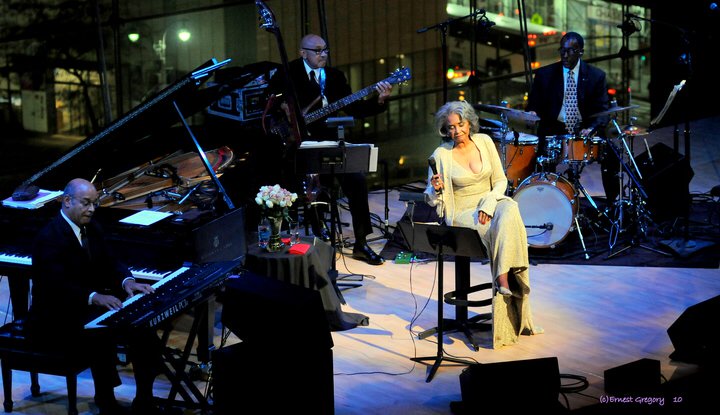
Nancy Wilson with Roy McCurdy
A. After Blood, Sweat and Tears I stayed with Sarah Vaughan quite awhile. Then I was asked to join Nancy Wilson’s band and that gig lasted 31 years. I joined her in 1980 until she retired a few years back. That was an incredible gig.
And at the same time I was also working with Ella Fitzgerald. Me and Bobby Durham. When Bobby couldn’t do it they would call me to do it. If I wasn’t working with Nancy I would do that.
Q. It would seem like playing with singers would provide less opportunity for surprises in the band. True?
A. It’s true. You have to think a little different. You can play with intensity, but you have to keep it at a certain level. Singers don’t want to be covered up. With drums it’s very easy to cover the singer up. You play with a certain level of volume and intensity and sensitivity. It’s just a knack to play with a singer. I got a chance to play with just about every major lady singer and quite a few men singers.
Q. What was it like working with Betty Carter?
A. Betty was beautiful. Working with Betty it was Ron Carter, Betty, and Harold Mabern. She was just really beautiful. She got really tough — later on, not when I was with her — when she started working with a lot of the younger guys. She had this kind of thing like Art Blakey. All these younger drummers and musicians would come through her band and she’d give them a hell of a hard time. But they all developed into very fine musicians. When I was working with her she was fine.
Since Nancy Wilson, besides the teaching thing, I’ve just been playing with a lot of different people. Still playing all the time — which is great. I love it.
I just got the Living Legends Award out here last year, which is great. There’s a University out here called Soka University of America. They have great jazz concerts, and they’re getting ready to honor me next year. I do a lot of concerts out there with a lot of different people. I just did a great concert with Benny [Golson] and Kenny Barron, and Buster Williams.
Q. Do you still have “Ah ha!” moments playing drums?
A. Oh yeah! Sure. Definitely. It’s hard sometimes to come to those peaks we used to get when we played every night, and you get to a playing level that was so high. Because you were playing with the same guys all the time. You would just reach these peaks and you’d say, “Damn!” They’d just be so good. It was like leaving your body and looking down at yourself and watching yourself play. I’ve talked with other guys about that. They said, “Yeah, I’ve experienced that once or twice.” But not all the time. It just happens for a while. But I love those things. And I am still playing at a high level now.
[SKF NOTE: You can read my introduction to Roy McCurdy’s interview in Part 1. You can read Part 2 by clicking here.]
Q. Your first night with Sonny Rollins you just show up and play? No rehearsals?
A. No rehearsals. We just went right in and hit. That’s what it was. The gigs would be one, two weeks at a time in one place. Then you go to another place for one, two weeks at a time. I mean, by the time the week was over – especially the two weeks – we were pretty comfortable with each other. I knew what he was going to play. I was fine.
He changed personnel a lot. So sometimes you’d be playing with some guys, sometimes it would be different.
Q. Let’s talk about bass players a little bit. You’ve played with a lot of great ones. Do you talk with bass players about how you’ll work together? Do you just start playing and see how you two fit? How does that work?
A. You just play and try to feel each other out, see where everybody’s playing on the beat. If it’s comfortable, there’s nothing to say. Sometimes you find people who play a little different place than you play. I like to play way up on top of the beat. Sometimes you run into guys who play way behind the beat. It’s kind of like pulling a truck up a hill. You try to adjust. Sometimes it works and sometimes it doesn’t. Most of the guys that I’ve played with, we kind of adjusted right away and everything goes great.
Q. You’ve played with acoustic bass players who aren’t using amplifiers. It seems to me you’d have to play pretty soft not to drown them out.
A. Fortunately, when I came up playing there was no amps. It was all acoustic. Guys just take their bass out of the car and walk into the club and play. We were used to playing acoustic like that. It wasn’t until later that guys started using amps and things started getting a little louder.
When I was playing with Sonny’s band it was acoustic some times. Also with The Jazztet. Sam [Jones] didn’t have no amp for a while. Then bass players started using them. Even before amps they started putting mics on the bridge of their basses. Remember that? They would put mics into the bridge to get a bigger sound. Then amps came out and they started using pickups. If anything, when bass amps came out it made everybody play louder.
Q. What happened between your time with Sonny Rollins and when you joined Cannonball Adderley’s group?
A. I left Sonny in 1963 and went home to take care of some family business. I stopped playing for almost a year. I took a job atEastman Kodak as a film tester. People were calling offering me gigs. I was working in this factory and missed playing a lot. I was working the night shift, so I would take my radio and listen to the late jazz programs. That just made things worse, because every now and then I would hear things I played on.
Finally, one night I was home hanging out with some guys I grew up with. A couple of them were musicians. The phone rang and it was Cannonball Adderley. He said Louis Hayes was leaving the band to join Oscar Peterson and was offering me the job as his new drummer.
I put my hand over the phone and told the guys, “It’s Cannonball on the phone.” They had a fit when they heard that. I told them, “He wants me to join his group.” I had been refusing a lot of guys that called because I was working and trying to get my marriage together. My friends told me, “If you don’t take this gig we’re going to kick your butt.”
So I told Cannon, “Yeah, I’d love to do it, but I’m working in a factory. It will take me about two weeks to get out of there.” He said, “Well, take your time. When you’re ready, call me and we’ll make arrangements to bring you in.” And that’s what he did.
I called them in about two weeks and joined Cannonball’s group in Atlantic City. They were playing in the club opposite Willie Bobo’s group. Louis Hayes had left to join Oscar Peterson. Cannonball had started the gig in Atlantic City two days before I got there. So Willie Bobo played drums with them until I got down there.
Q. Same thing? No rehearsals. Just going in and hitting it?
A. Fortunately, I knew a lot of Cannon’s music because I had been listening to a lot of his records at that time. It took me about a month – or a little more – until I felt I was really playing well with them. I had been off for a while, and in the beginning, I have to say, I was real nervous. But Cannon was so patient. He said, “Don’t worry about it. It’ll be fine.” Then one night, man, it just happened. The music started burning consistently and it was fine from then on. That gig turned out to be 11 years.
Q. Talk about the different changes you went through over that time period. Eleven years with such a popular band is unusual. For example, when Mercy, Mercy, Mercy became a hit record was Cannonball’s group accused by jazz lovers of selling out?
A. When I joined the group it was Cannon, Nat, Sam Jones, Joe Zawinul, and Charles Lloyd. We were just playing straight ahead, you know, all the things Cannon was playing at that time. Great songs. Work Song, Jeannine. All those straight ahead tunes.
But Cannon was interested in playing other things too. He had a wide interest in a lot of different kinds of music. And he was encouraging everybody to write. He got Joe Zawinul to write. Joe was kind of shy about writing. And finally Joe started writing. Nat was writing, and Sam was writing. Everybody was writing!
The band’s music started covering a wide range. It wasn’t just straight ahead anymore. There was some funk in there. A lot of Latin. There was odd-time signature tunes. Joe was writing tunes like74 Miles Away in 7/4 time. He was writing Mercy, Mercy. He would bring that song into rehearsal. He just brought it in one day and said, “Listen, I got this little thing I just wrote on some paper. Why don’t we try it?” We tried it and we loved it in rehearsal. We worked on it. We played it for a few weeks and took it out in front of an audience and they just went crazy!
During that period of time electric stuff was coming in. It was hard to get bass players to play electric bass. Sam, a straight up bass player, didn’t want to play the electric bass at that time. Also, the electric piano. We started out on the Wurlitzerwith Mercy, Mercy, Mercy, and then that kind of progressed into the [Fender] Rhodes. Then things started happening with that. Little things. Joe used to say, “I wish I could change the sound. I wish I could do this. I wish I could bend these notes.” And those things started developing. They were making little attachments where you could do all those things.
Mr. Harold Rhodes himself use to fly into different cities and meet us. When the piano broke down he would repair the piano! Then Joe learned how to do it and Fender would send parts to him on the road if he needed them. And Joe would repair the Fender Rhodes.
Then we started playing the electric stuff with Mercy, Mercy,Why Am I Treated So Bad!,Walk Tall, — all those tunes we used the electric instruments on.
Joe was writing tunes — he was thinking different — so he was writing tunes that progressed later on into the Weather Report kind of tunes.
It was just great. We had such a variety of music. It was unbelievable. And we were playing , six nights a week all the time. First we were driving. We’d start in New York, we’d drive all the way to California, all the way up to Vancouver, British Columbia, and all the way back. We would play all the way up and all the way back.
We were so tight! Cannon didn’t like to record unless he played the music for a while. So by the time we went into the studio to record — we were ready. I did about 11 or 12 albums with the Cannonball Adderley band — a lot of it live. And a lot of it was done at Capitol Records where they would set up a bar and chairs and tables in big Studio A. They would invite people in. It was like a club atmosphere. We would play and they would record the whole night.
We did quite a few albums like that. There were a few people waiting to get in with the first albums, Then there’d be a line all the way down the block. People who’d hear we were recording were trying get into Capitol Records to be there when it happened. It was one big party. We did have some people who criticized us because they wanted to hear straight ahead music all the time, but the band was riding high and doing fine.
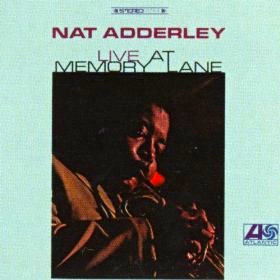
It was the same thing with the Live at Memory Lane album. Line all the way down the street. That was Nat Adderley’s recording, the Adderley band without Cannonball. Joe Henderson played tenor sax that night.
Q. How big was the Memory Lane club?
A. The club was small. It maybe held 200 people, if that. But there were people lined up down the street trying to get in there.
Q. There’s just something magical about that album. The music is so loose. Joe Zawinul’s tunes are….
A. Oh yeah. It was just a fun night. We had the best time. The first time we recorded without Cannon. Joe Henderson played saxophone. Cannon was there. And, it’s a funny story. My wife — who I met several years later — told me she was in that line and couldn’t get in that night.
Q. Cannonball was in Memory Lane when that album was recorded?
A. Yeah, he was in the audience. It was really, really an electric night. Everybody was right on top of their game. It was fun to do.
Q. What was the story with the acoustic piano that night? It’s slightly out-of-tune. Joe made it work, obviously.
A. Yeah, that was the old piano in the club, and it probably was out of tune. I don’t think they were tuning it much in them days.
Q. But it’s cool. It fits. The piano’s not horribly out of tune. And it’s a great album. Just a great, great date.
A. Yeah. We just did so many things. And it was a crazy band. Cannon loved the music. Just before he passed away the band was really stretching out and doing a lot of colleges, a lot of seminars, and a lot of master classes in colleges around the country. It was a big thing. He loved that.
When we did the college master classes with Cannonball, the whole band took part. We talked to music students about the history of jazz and how it progressed through the years. Then we would do lessons with the drummers, bass players, piano and sax players. Cannon and Nat and Joe would work with the other instruments as well. Then the evening of the next day the band would give a concert, open to the students and the public. I’m not sure if any of our clinics were recorded.
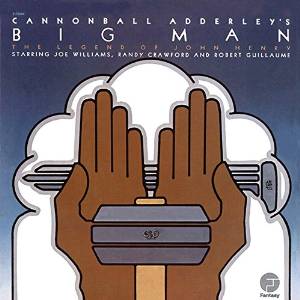
We also did a record called Big Man which is a play Cannonball had written. I just read in the paper the other day that it had just been released on CD. [Big Man: The Legend of John Henry was originally released by Fantasy in 1975. It was released on CD by Real Gone Music in 2015.] There’s a lot of stars on it. [Cannonball] wrote all the music and he wrote all the lyrics and stuff for this. And he had big hopes. He wanted to take this play on the road.
Q. When Cannonball passed was that a shock? Unexpected?
A. Yeah, it was a shock. It was just him and I together. Not when he died, but….
We had just finished in Milwaukee and we were going to Indiana. We had some time off with the band, so Cannon and I decided to drive to Indiana. The rest of the guys went home just to hang out for a few days.
We drove to Gary, Indiana. On the way we stopped in Chicago. Cannon bought a lot of barbecue and stuff, and we drove on into Indiana. He had all this barbecue in his room. Yeah, we were just hanging out.
The next morning I woke up and went down and had breakfast. Then I went back up to my room and Cannon called me and says, “Roy, come and have breakfast with me.” And I said, “Well, I just ate, but I’ll come down and have some coffee with you. He said, “Cool.”
So I met him downstairs. They were closing the restaurant and he was standing there trying to charm the lady into opening up the restaurant so he could get some breakfast. And while he was talking he just had a stroke. He just started slapping his face. He was saying “mmm, mmm, mmm.” He couldn’t talk. And his arm was going up and down, out of control.
We figured out he was having a stroke and we had to rush him to the hospital. We put him in a car and were starting out to the hospital about two or three blocks away. On the way to the hospital we got broadsided by another car in the street.
Q. Oh man!
A. Yeah. It was just amazing. Nobody got hurt. I kind of literally picked Cannon up and put him in another car and we got him the rest of the way to the hospital. Doctors and staff were waiting out there for him. He was kind of paralyzed on one whole side of his body. He passed away about two weeks later. I think he passed away from — not the stroke so much — I think it was pneumonia. He was only 46 years old.
Q. He was such an incredible improviser. One of his albums I especially love is Somethin’ Else.
A. Isn’t that a beautiful album? He was such a lyrical player. He was such a melodic player. He also had a lot of Blues in his sound. I loved Cannon.
The reason we stayed so long together – it was like family. I mean, everybody was like family. Cannon wanted it to be that way. He says, “This is a group. We’re together. And we’re all great musicians playing together, but it’s like a family.” Everybody loved each other. It was just great.
Q. What do you tell students in your Master Classes about Cannonball and Nat Adderley?
A. They ask me questions about him. They want to know what he was like. How it was playing with him. They had heard stories about how he loved to eat. They ask me about that. They ask me about him playing with Miles [Davis]. They would ask about when Cannonball first came to town, because they had heard about the stories about when he first came to New York, and how he blew everybody away. So I would tell them about that. And about things we did on the road, the different clubs we played in, the recordings we did, how we did them, and how much fun we had, and about the guys that were in the band.
Q. What do you think it’s important for students to know about the musicians you’ve played with? I’m guessing some student questions you like, some you don’t. If someone asks, “Roy McCurdy, what should I know about Nat Adderley? Sonny Rollins? Cannonball Adderley?” What would you say?
A. Well, I would tell them that they were intelligent, smart. They were very well-schooled about their instruments, very particular about their instruments. Cannon and them guys – Nat, Sonny – practiced all the time. They were interested in everything that was going on. Cannon had a big interest in everything that was going on around the world and he could talk about those things.
Q. You traveled extensively. What advice can you offer drummers for keeping body and soul together on the road?
A. Well for me it was two things. I would find the nearest gym to my hotel and I would work out everyday. If there was no gym around I would work out in my room or go for a run. The other thing was to always have good books around. Reading is good for plane rides or just some quiet time in your room.
Q. Any book or author recommendations?
A. I’m a fan of Dean Koontz, Lee Child‘s Jack Reacher series, Stephen King, and Michael Crichton – just to mention some authors I like. You can’t go wrong if you have them on the road with you.
[SKF NOTE: You can read my introduction to Roy McCurdy’s interview in Part 1.]
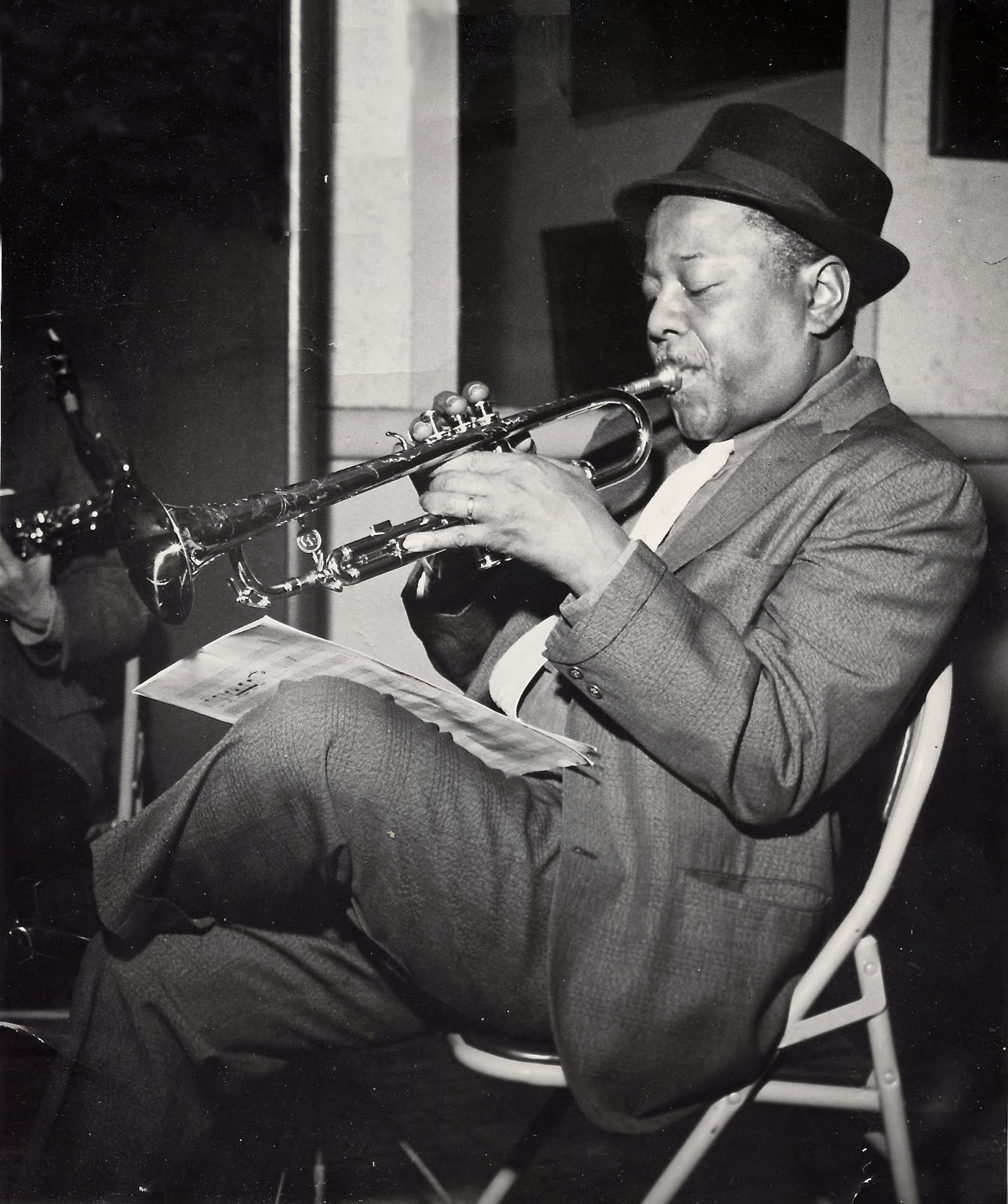
Q. How did you get the gig with Roy Eldridge?
Roy Eldridge
A. He was amazing. The reason I got that gig is, I was probably one of the better drummers in town. And musicians would come through as singles, picking up rhythm sections in each town they went to. They’d come upstate New York and go through Buffalo, Syracuse, Rochester, and all those different places. When they came through to play a club in Rochester, I would get the call. I was underage. I was only like 16. But my father would go with me and stay with me the whole night.
Q. You had great parents.
A. Yeah, I did.
That was another thing too. Roy [Eldridge] used to call me his namesake because we both had the same name: Roy. He said, “This is my namesake. Little Roy.”
Q. Were you on the road with Roy Eldridge?
A. No. I just played with these guys when they came to town. I didn’t go on the road until after I got out of the Air Force.
Q. The first night you’re playing with Roy Eldridge, does he expect you to know his songs?
A. They had rehearsals in the afternoon. The gigs back then didn’t start until around 9 at night. So we would go in, play several different songs, and then play them at night. That was it.
Q. Roy Eldridge was a good drummer too.
A. He was. He loved it.
Q. Were there life lessons Roy Eldridge shared that stuck with you?
A. No. They would just tell you things like, “Relax,” and “Don’t try to play everything you know at one time.” (laughs) Just relax and be yourself and try to groove. And that’s what did.
Q. After the Air Force you played and recorded with the Mangione Brothers. What a great band that was. Can you talk about that experience?
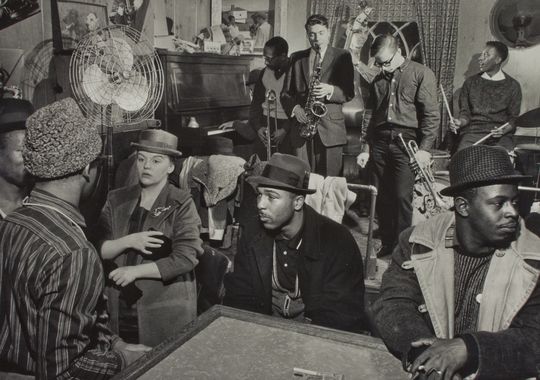
A. When I got out of the service I came back home to Rochester, and there was a club there called The Pythodd. It was a jazz club and had a great bunch of jazz musicians playing there from the Rochester area, and outside Rochester. That area brought in a lot of musicians. I think because the Eastman School of Music was there.
The Pythodd. Roy McCurdy on drums. Chuck Mangione on trumpet.
I was home for about two or three weeks and got the gig playing at this club. It wasn’t an organized group then. It was just a bunch of different guys playing every night. The bass player was Ron Carter. He was going to school there. Pee Wee Ellis was tenor saxophone player – who played with James Brown for years, and a lot of different people. Sal Nistico. Joe Romano. A lot of different musicians from upstate.
So, we were playing there. Chuck [Mangione] was playing there too, and his brother Gap [Mangione]. Occasionally. It just kind of developed into Chuck’s group. He started writing tunes and it became an organized group. We were working at The Pythodd six nights a week. It was a sextet. There was, Gap, and Chuck, and myself. Ron left to go to New York. Bill Saunders was the bass player. Larry Combs. And Sal Nistico was in that band. It was just a great band.
We recorded a single called Struttin’ with Sandra, and then recorded an album called The Jazz Brothers. Cannonball [Adderley] had this series on Riverside Records called Cannonball Adderley Presents. He would present new acts and old acts he thought should be heard. Our group was one of the groups he picked.
Q. Other than saying, “Hey, Riverside, this is a great group. Record these guys,” did Cannonball have anything to do with song selection and/or arrangements?
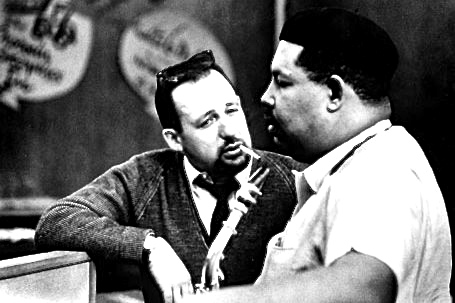
A. He didn’t have anything to do with writing the charts. He selected the group for recording, and he would also be in the recording studio when we were doing it. He and Orrin Keepnews were in the booth throughout the whole recording session.
Q. Was it intimidating to have Cannonball Adderley in the studio? How did the group react to that?
Orrin Keepnews & Cannonball Adderley
A. The group was fine. We met Cannon earlier in Toronto. Chuck and Gap and I had driven up to Toronto and met him and Nat Adderley. They were playing at the Town Tavern. We went up there, saw them, and got to know them a little bit. So, no, it wasn’t intimidating. They were really gracious, really beautiful people. The only thing intimidating? Here we are in New York [City] recording our first big album in this big studio, you know? But we were prepared because we’d been playing the music for a while.
After the record came out we started traveling up through New York State and did a lot of gigs with that particular band. We ended up in New York City at The Five Spot. We did a two week gig there which was really nice. A couple of guys went through that band too. The bass player, Bill Saunders, left and Steve Davis played. He also played with [John Coltrane] ’Trane. And Jimmy Garrison was with the band for a while.
Then when we left The Five Spot we came back to Rochester and started working again back in The Pythodd. I think maybe two, three weeks later I got a telegram from Art Farmer – he wanted me to come down to New York and join The Jazztet. He had come in to hear us at The Five Spot and to hear Chuck play and that led to me getting the gig with them.
Q. The Jazztet’s Here and Now album is one of my all-time favorites. It’s also the second time I heard you play. What impressed me at my very first listening? You were swinging hard and playing so clean and precise.
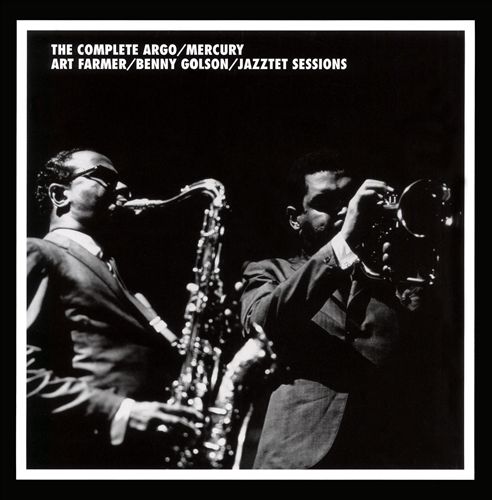
Mosaic Jazztet Box Set
A. That’s how The Jazztet was. It was clean. They had a great book. They were almost not too successful because the people thought, “Oh, they’re really too polished.” But it was a great band. A lot of guys went through this band. Mosaic has a big box set with all the Mercury/Argo Jazztet records and a booklet of everybody who went through that band. It’s really nice. I did about three albums with them. That was incredible. I really enjoyed playing with Benny [Golson] and Art [Farmer]. I still play with Benny today. We still do some things together.
Q. Benny Golson is a musician I don’t think of often. But whenever I put on a record with him on it – he’s always playing great. He just doesn’t come to mind as often as, say, Sonny Rollins or John Coltrane.
A. Right. But he’s a major player. There’s a lot of stories about him and Coltrane growing up in Philadelphia. Yeah, we had a great time. It’s funny because I got a telegram to come down and join them. I told everybody in Rochester, “Oh man, I’m going down to join The Jazztet in New York. They’re bringing me in.”
They flew me into New York. The Alvin Hotel, right across the street from Birdland, is where they put me up. I thought we were going to meet at Birdland in the afternoon, meet Benny – because I hadn’t met Benny. I’d only met Art – and talk about being in the group.
I walked across the street, Scott, at about 1 o’clock to meet them, and saw this big line of musicians outside. Horn players and everybody. I said, “Wow, what’s this?” I walked across the street and Benny said, “Uh oh. Here comes Roy McCurdy the Rochester Flash.” It turns out they didn’t bring me down to join the group. They brought me down for an audition.
They took us down into Birdland. They called each guy individually. Different drummers, different horn players, different people to play. At the end of the evening they called us into the back room individually and talked to us. When I came in Benny said, “McCurdy, the gig is yours. We want you to play with us.” So I didn’t have to go back home!
Q. On Here and Now were your fills and solos worked out beforehand or were they spontaneous?
A. Just improvised on the spot. Those were just some of the things I played. Before we recorded the tunes we had been out on the road playing for a while. So you kind of got used to playing different fills on tunes. So those were my fills, but not worked out beforehand.
Q. Up to and including your time with The Jazztet were you particular about your drums? Did you have a favorite drumset? One drummer on DrumForum.org is willing to bet that on Here and Now you were playing a wood RogersDynasonic snare drum.
A. I think I was playing Gretsch drums at that time. That’s funny he said that. I did have an endorsement with Rogers, but not until I was with Sonny Rollins.
Q. Your drums sound beautiful on Here and Now. When you were in the recording studio did you have a say in how engineers recorded your drum sound?
A. No. I just tuned my drums a certain way. I just went in and did the sound check. But it was just the way I tuned my drums. I used to like mine to be crisp and sound clean. Today we do have more say, but back then you didn’t have too much of a say about the [recorded] sound of the drums or the way they did things.
Q. The engineers weren’t deadening drums.
A. No. They didn’t do anything like that. I could play the drums open with no problem. We’d record in the same room most of the time. There wasn’t a lot of separation. I remember they would use partitions around the drums to keep the sound from leaking out too much.
When we recorded with Chuck [Mangione] we were all in the same room. Now in the studio all musicians are pretty much separated. Another thing: we used to record a whole album in five or six hours. We were through. Now it takes two or three days or more to record one album!
I’ll never forget. I was so used to going in to record in the afternoon, be out in time for dinner, and the whole record would be done. Later on, when I was playing with Blood, Sweat and Tears, man, we would record for six months on the same album!
So we did those [early albums] fast. It was incredible. And we didn’t know we were making records that were going to mean something later on. We did them fast and some are classic records today.
Q. What happened after you left The Jazztet?
I was with The Jazztet for a little over a year, then with Betty Carter, and then working in Brooklyn with Kenny Dorham at club called the Blue Coronet. A guy named Prophet Jennings, who was friendly with Sonny Rollins, used to come by my gigs when I was in New York. And he used to come over to Brooklyn to the Blue Coronet.
[He told me] “Sonny’s getting ready to change drummers and he’s real interested in you.” So I said, “Great.” And I finally got to meet Sonny. He said, “Yeah, McCurdy, I would like to have you play with my band.” I said, “Great.” We met in New York. Me and Sonny and Henry Grimes was the bass player. Later Ron Carter became the bass player, and Sonny also used Paul Bley on piano for quite some time. But most of my time with the band it was a trio format: bass, drums, sax.
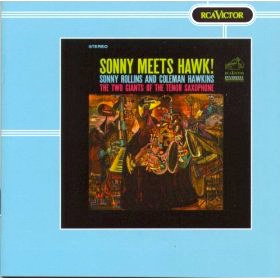
I had the best time with Sonny. That was 1962. Played a lot of gigs with him. Made three albums with him:Now’s the Time, Nucleus and another really great album with him called, Sonny Meets Hawk with Sonny and Coleman Hawkins.
Q. What made your time with Sonny the best time?
A. Because it was just the three of us playing and I became so strong with that band. Listen, Scott, we would start playing and I’d look up at the clock, 15-20 minutes had gone by, and we were still playing the same tune. Half-an-hour later we’d still be playing the same tune. Uptempo!
I played sets with Sonny where the set would be one tune. Or a series of tunes that would never stop. Just one tune into another.
You’d play uptempo. The bass would have a solo. Then the drummer would have fours or eights with Sonny, then I would have a solo, and Sonny would come back and play forever again. So I became really, really strong playing with Sonny in that format. And I had the greatest time hanging out with him. We traveled all over the world. The first time I went out of the country was with Sonny. We went to Japan. Henry Grimes, Paul Bley, and myself. Betty Carter was with us too. We accompanied her.
About a year ago Sonny and I were talking on the phone. He said that period was one of the best times in his musical career. That was special to me, coming from Sonny.
Q. Did that trio make unreleased recordings?
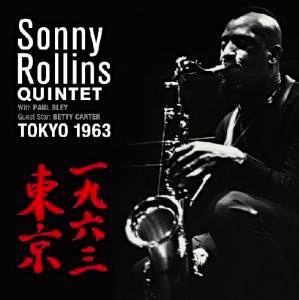
A. Could be. I’m not sure. We did a lot of stuff for RCA Victor at that time and other things. The concert in Japan with Sonny and Betty Carter was released in 2008 as, Sonny Rollins Quintet: Tokyo 1963.
We stayed in clubs like in The Five Spot in New York – it’s amazing to say this now – but we stayed in those clubs a month, two months at a time just with this one group in the club. You really had a chance to get very, very tight. And if we weren’t there, we were traveling. It was just so beautiful playing with Sonny. He was a rhythmical player. He’s perfect for a drummer to play with. I loved it.
Q. I was listening today to the Sonny Meets Hawk album. That gets pretty out in spots.
A. Yes it does.
Q. It’s fun to listen to.
A. It is. I get so much feedback. Everyone wants to know about that album. Sonny Meets Hawk. Sonny, he loved Coleman Hawkins. He almost kind of imitated him on that album. They were having the best time. Both of them. We did that album pretty late at night at RCA in midtown Manhattan.
Q. Did you ever speak with Sonny Rollins about some of the other great jazz musicians he played with, like Charlie Parker and Clifford Brown? Or did he ever talk about them?
A. No. He didn’t talk about that. He loved all those guys I’m sure. But he never talked about them much that I recall. He would just talk about the music at hand. He was so into what he was doing at that time.
Q. When you were with Sonny did you ever have a moment when you felt unprepared for the gig? Or that caused you to work on some aspect of your playing?
A. No. Not really. The only thing is, coming off The Jazztet, we weren’t playing quite as hard as Sonny was playing. My first gig with Sonny was out here in L.A., some place called the It Club. So we played the gig. And Sonny’s funny, man. He wrote me a letter and he said, “Roy, I am playing my behind off. I’m playing hard.” He said, “You’re not playing quite hard enough. Would you please play harder. Sincerely, Sonny Rollins.”
So I said, okay, fantastic. The next night we went into the It Club I just bashed down. I just laid it down on him, really , really hard. We just played the whole night strong. I got another note slipped under my door in the hotel, just like he did the first one. And he said, “Thank you. Sincerely, Sonny Rollins.”
From then on, that was it. I just played hard with him because he was such a strong, dynamic player. I just followed his lead. He loved drummers. He used to just kneel down and play right next to me from time to time.
Q. When you first joined Sonny had you listened to any of his other trios?
A. Uh huh. I had listened to a lot of his stuff. I was a big Sonny fan. And I would go to hear him every once in a while. I had no idea I was going to wind up playing with him. But, yeah, I did listen to a lot of stuff.
Q. Was that listening helpful?
A. Yeah, it was helpful, I guess. They expect you to know their music, for some reason, when you join their band. That’s what he said: “Do you know my music?” I said, “Um, some of it.” But most of the time, fortunately, he was playing standards and some of the tunes he wrote. So that was easy. We just played.





 Scott K Fish
You must be logged in to post a comment.