SKF NOTE: This young man has his head screwed on straight. What a great story. Living in the outer reaches of Alaska, Byron Nicholai falls in love with his native drumming and song. Then, using modern telecommunications and social media, Byron teaches his traditional music to young people by mixing it with contemporary music.
I look forward to listening to his just released CD, I Sing, You Dance.
SKF NOTE: I posted my What Makes a Music Photographer Good? on DrumForum.org, and member bbunk replied, “Whoa – Jim Marshall!!! You got to work with the king of music photographers!” To which I replied, “Someday I’ll write about, The Day the King of Music Photographers Screamed at Me.” Here goes.
In 1981 I had a very hard time finding a photographer who had for sale pictures of Ringo Starr playing drums. Action shots. Modern Drummer had secured a feature interview with Ringo Starr — which was a major coup for the magazine. (Once again, I think Jim Keltner was responsible for making that happen.)
It was up to MD‘s managing editor – me! – to make sure we had photos. I was able to have a photographer on location when freelance writer Robyn Flans interviewed Ringo. We used one of those photos for the cover, and a couple inside with Ringo’s interview. But I also very much wanted to have action shots of Ringo. Preferably great action shots no one had ever seen before.
Enter legendary photographer Jim Marshall. I vaguely remember, when I decided to call Jim Marshall, feeling as if I was approaching the Great and Powerful Oz. I felt that way many times on initial calls to photographers, musicians, and industry people when their work and reputations preceded them. I am pretty sure I had also heard that Jim Marshall had a volatile personality. Great photographer. Just don’t get on his bad side.
At the time, Modern Drummer paid something like $50.00 for one-time use of a photo, paid on publication. Would I be insulting Jim Marshall with that offer?
Jim Marshall did have photos of Ringo from The Beatles‘ final concert in 1966 at Candlestick Park in San Francisco, CA. They were not Marshall’s best work. But they were unique and they were action shots of Ringo. We used them with MD‘s Ringo interview.
Jim might have insisted on a somewhat greater amount per photo than MD‘s standard offer. He also insisted on getting paid right away, not on publication. He said he would express mail his photos, and as soon as I had them in hand, MD should send Jim a check for the full amount. The total amount that keeps coming to mind is $150. That amount may not be exactly right, but it’s close.
I approached MD founder/publisher Ron Spagnardi with Jim Marshall’s terms. He said okay. So I phoned Jim Marshall and said, “It’s a deal.” He sent his photos as promised. I let Ron know and reminded him of our promise to cut-and-send Jim Marshall a check immediately.
Jim Marshall
A day or so later, Jim Marshall called me. “Did you get my photos?” he asked. “Yes,” I said. “They’re great. Thank you.”
“I haven’t received the check. Did you send the check?”
“I think so,” I said. Truth is, I assumed the check would be sent.
“Well, I don’t have it,” Jim said. “How did you send it?”
“I don’t know,” I said. “Let me find out and I’ll call you right back.”
Long story short, the check had not been sent. I think Ron passed along the invoice to MD‘s check writer, who dismissed it.
I was not happy. I had given Jim Marshall my word, Ron had given me his word. And Jim Marshall was the only one who was true to his word. MD‘s check writer assured me the check would be written and sent out that day. And it was.
But I had to call back Jim Marshall and tell him what happened. He screamed and yelled at me about our broken deal, our broken promise. He was right. All I could do was listen and say, “I’m sorry.” It remains among my very few awful memories at Modern Drummer.
Chalk up another lesson. From that point on, whenever anyone promised me they would do something, I practiced President Reagan’s approach to the Soviet Union: Trust, but verify.
SKF NOTE: When I was a kid there was a popular t.v. show called To Tell the Truth. Three mystery guests would sit facing a panel of celebrities. Two of the mystery guests were imposters. The celebrities had a short period of time in which to ask questions of the guests, trying to out the real deal. At the end of the round, celebrities were asked to say which mystery guest they thought was the real deal.
Here’s a clip of To Tell the Truth with blues great Paul Butterfield.
My recent post of my Carol Kaye interview transcript had a To Tell The Truth reaction from some people who said Ms. Kaye was lying when she said she is the bassist on certain Motown hit records. One person, posting as shilohjim on DrumForum.org posted a reproduction of an “affidavit” from Motown songwriter/producer Brian Holland as proof positive James Jamerson is the bassist on those Motown hit records.
For me, the “affidavit” is a reminder of how tough — often impossible — it is to find out conclusively who the drummer is on certain songs. Not because one drummer is an imposter, a liar taking credit for someone else’s work, but for legitimate reasons.
I think drummer Gary Chester gave me this hypothetical example: Paul Simon hires musicians — including Gary Chester on drumset — for a New York studio date for an album, resulting in the satisfactory recording of a song we’ll call This City is Sad.
Paul Simon lives with his song for awhile and decides to change it, revise it. Maybe he adds a verse. Maybe Simon feels This City is Sad works better with a Latin feel in the bridge, not the slow swing feel originally written and recorded.
In Los Angeles, Paul Simon books another studio date at which he wants to record his new version of This City is Sad. Suppose Simon can’t get the same musicians he used for the New York recording session? Or he decides to record Sad with all new musicians? Or, through the miracles of recording technology, Simon and the recording engineer agree to cut-and-paste the New York studio musicians for the new verse, but to also bring in to the studio some killer Latin players — including drummer Ignacio Berroa — for the new bridge? And Ralph MacDonald, who’s playing percussion on this LA date, is asked to overdub some percussive sweeteners to the the entire song?
Carol Kaye
Paul Simon’s This City is Sad is released and becomes a smash hit. Now, tell the truth: who is the real drummer on this hit record? Gary Chester, Ignacio Berroa, and Ralph McDonald all say, “I played drums on Paul Simon’s This City is Sad.”
Here’s another possibility: Paul Simon is in Los Angeles. He wants to keep This City is Sad exactly as it was recorded by the New York studio musicians. But there’s a slight drumstick click in one part that probably won’t bother anyone, but it is driving Paul Simon crazy. Simon goes back into the studio with Hal Blaine just to re-record the stick click measure so the engineer can splice it into the New York version.
Suppose Gary Chester never finds out about this LA fix-it session. This City is Sad becomes a hit. A music journalist tells Gary Chester about reading a Hal Blaine quote in which Hal Blaine mentions playing drums on Paul Simon’s This City is Sad.” What’s Gary’s response? Maybe Gary’s response is, “Hal Blaine didn’t play drums on This City is Sad. I did.”
Who’s telling the truth?
Coming back to Carol Kaye, James Jamerson and who played bass on certain Motown hits. I am not, right now, willing to stake my life on the accuracy of the Brian Holland affidavit. Even if it is a genuine document. I am taking sides with neither Kaye nor Jamerson because I don’t have enough conclusive information. Sherlock Holmes’s “How dangerous it always is to reason from insufficient data” is one of my touchstones.
For instance, the incorrect grammar on the affidavit sentence is one red flag:
I (Brian Holland) hereby declare and testify that the bass line on the below listed songs was in fact performed by James Jamerson.
Holland, Dozier, Holland
Another red flag: Why is the affidavit song list aligned straight on the document while the text and signatures above the song list tilt to the right? Was this document modified? Did the original affidavit read: I (Brian Holland) hereby declare and testify that the bass line on the below listed song was in fact performed by James Jamerson. And someone later modified that sentence, skewering its grammar to accommodate a list of more than one song?
Another red flag: There’s nothing in this affidavit proving bassist James Jamerson played the bass line on the specific hit versions of the songs listed.
Gary Chester
Finally, Carol Kaye is not the only person I spoke with who raised questions about the identity of musicians on Motown records. Earl Palmer, Michael Carvin, Lee Young all raised questions in my interviews. Even Brian Holland himself said this to me of Motown’s studio musicians: “They never knew what the songs was they were going to be playing on at all.”
Here’s my complete exchange with Brian Holland on that topic:
Scott K Fish: Michael Carvin told me that Motown would just record the rhythm section, and those musicians would never know what songs they were playing on.
Brian Holland: That’s what we did 98-percent of the time. We’d go in and record just the track — maybe four or five pieces at most — and then go back and dub lead and the group in. Then you dub the strings in — maybe for the group and maybe not. But we did do the rhythm track first back then.
They had no idea what songs they were going to be playing on. No, no. They never knew what the songs was they were going to be playing on at all.
When I started writing for Modern Drummer the History of Rock Drumming, my main goal was to credit deserving unknown drummers. Which drummer played on this song? Answering that basic question was my goal.
I learned, much to my frustration, the answers are sometimes lost to history. Sometimes, for one reason or another, there are conflicting answers. And Sherlock Holmes is correct: It is always dangerous to reason with insufficient data.


 At the time, Modern Drummer paid something like $50.00 for one-time use of a photo, paid on publication. Would I be insulting Jim Marshall with that offer?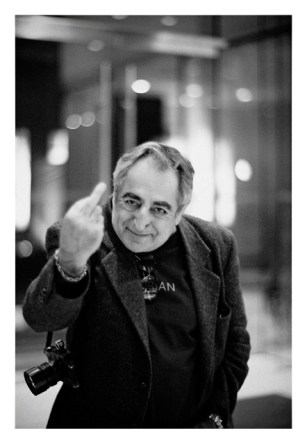




 Scott K Fish
You must be logged in to post a comment.