What Makes a Music Photographer Good?

malkin_rick
Rick Malkin

SKF NOTE: I wrote in an earlier post about, from my perspective as Modern Drummer‘s managing editor, what makes a music journalist good. I said I would write as well about what makes a music photographer good.

A picture is worth 1,000 words. As much as I love writing, I have always admired photographers and cartoonists with the gift, the skill, of capturing a whole story — or endless stories — in one image. When I first arrived at MD, and making sure we had photos on hand for each issue was one of my responsibilities, improving the magazine’s photos was a prime goal.

This was pre-digital photography. We worked mostly with 8×10 or 5×7 prints for 35mm black-and-white photos, and slides or prints for 35mm color photos.

stewart_chuck
Chuck Stewart

Finding existing photos of drummers was not easy. That surprised me, but it should not have. Prior to MD the market for drummer photos was small or nonexistent. For example, professional photographers could sell photos of Mick Jagger or John Lennon. But, photos of Charlie Watts and Ringo Starr? Not so much. Plus, drummers were often hidden behind their drumsets and cymbals, sitting under terrible lighting way up and/or back on stage risers, making it extremely tough for photographers to take drummers’ pictures.

It was the same story, only worse, for jazz drummers and photographers.

MD created a new market for photogaphers, a new place where photographers could sell drummer photos. Even with MD‘s 12 issues a year limitation — it was still a new market, new opportunities.

lee_john
John Lee

The photographer qualities I sought and found were the same as those I sought in music journalists — and then some. If an interviewer needed to clarify a question or otherwise add to a MD interview, he or she could often just pick up the telephone and do so.

That was not true of pre-digital photographers. If something went wrong during a photo shoot, photographer’s really wouldn’t know until they developed their film. So a photographer’s knowledge of light, shutter speed — everything! — was vital. A photographer on assignment taking photos for a MD feature interview probably has one time only to be with the drummer/subject. Experience, plus shooting as many rolls of 35mm as possible, was the photographer’s insurance against failure.

I never met an uninteresting photographer. Rick Malkin, Tom Copi, Jim Marshall, Chuck Stewart, John Lee — consummate professionals who I am so grateful to have met and worked with, and in some cases, to have as lifelong friends. And MD‘s Features Editor, Rick Mattingly, also did some fine photography.

copi_tom
Tom Copi

One final point: I learned fast that the best photo in the world can be reduced in quality — sometimes absolutely — at the magazine printer. Many times my delight at receiving great photos would turn to disappointment and frustration when those photos were reproduced in the magazine.

Digital photography has opened up limitless possibilities for photographers. Still, technological advances do not, cannot, replace the gift of the photographer’s eye. Their sense of composition, of knowing what makes a good picture, and their sixth sense of spotting opportunities and being prepared when opportunities arrive.

Photo credits for Rick Malkin, Tom Copi, Chuck Stewart, John Lee

end

Posted in Revisiting My Life in Music, SKF Blog | Tagged , , , , , , , , , , , | 6 Comments

Remembering Chico Hamilton’s Innovations

SKF NOTE: I came upon drummer Chico Hamilton by accident. Somewhere, many, many years ago, I picked up a Gerry Mulligan-Chet Baker Quartet album on the Pacific Jazz label. I’m sure I had read in at least one of many jazz books and/or magazine articles of this innovative pianoless quartet as part of my happily self-imposed self-study of jazz history.

But I don’t remember being aware of Chico’s playing before listening to my Mulligan-Baker Quartet album. Walkin’ Shoes, more than any other song on the album, immediately grabbed my attention. I loved the sound of Chico’s brush playing. The way he used his bass drum for accenting melody and soloists.

The Mulligan-Baker album led me to grab a Pacific Jazz album of Chico Hamilton’s own innovative group which included cellist Fred Katz. That group’s version of Topsy was one of my favorites.

I was reminded of those earlier days when I came across this Chico Hamilton Gretsch ad recently. Even Chico’s single-head, odd-size drums were innovative.

641203_downbeat_chico_hamilton

end

Posted in SKF Blog | Tagged , , , , , , , | Comments Off on Remembering Chico Hamilton’s Innovations

Terri Lyne Carrington: Drums Isn’t Everything

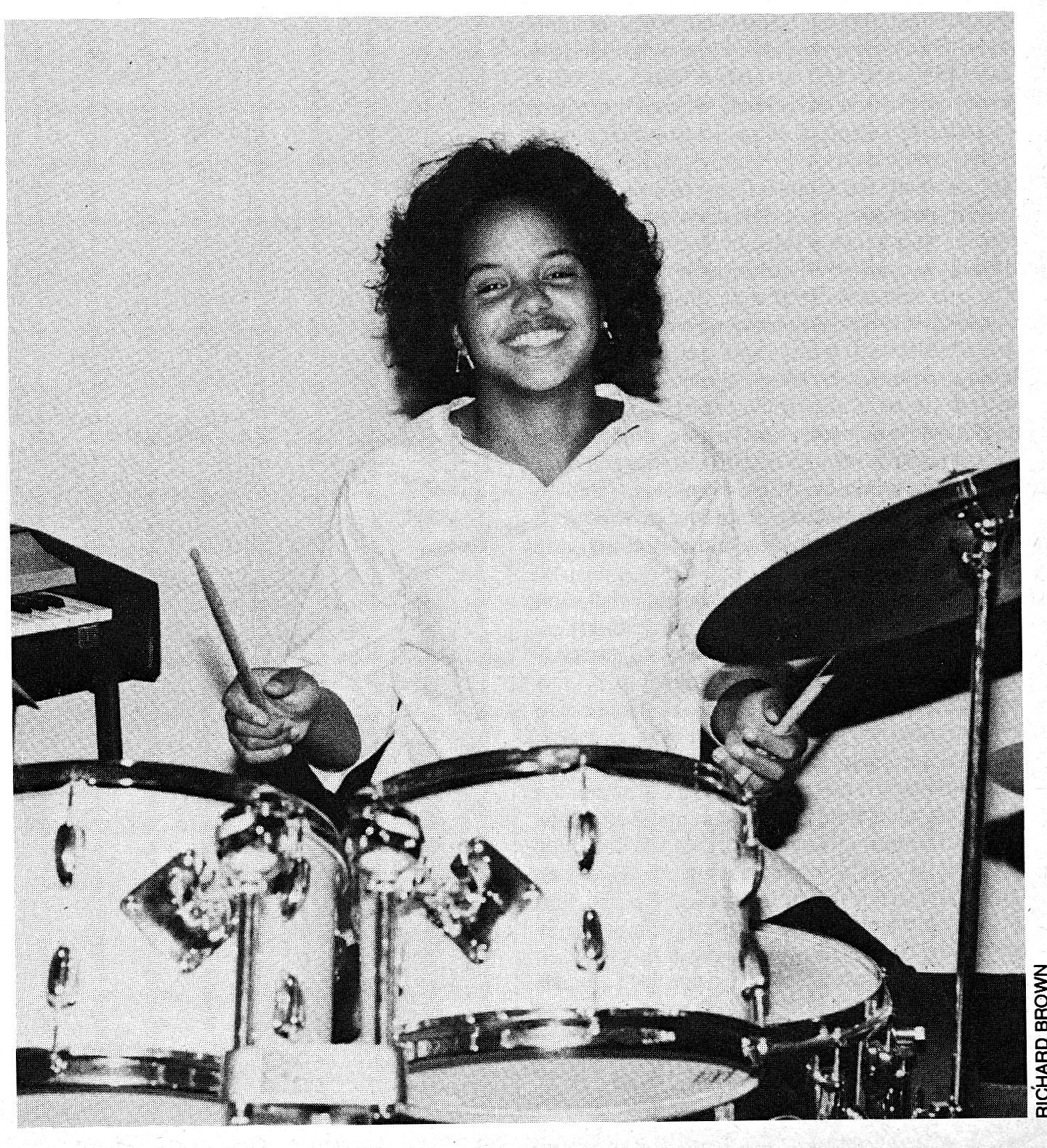
Terri Lyne Carrington: “I want to be a total musician, which includes writing and arranging music. I don’t want to be known as just a drummer.

“To me, the most important thing is to do well in school, and to be with all my family members as much as possible. [T]hey’re very warm and supportive people. These things come before drums. I mean, drums isn’t everything.”

792203_carrington_terri_lyne

Source: Terri Lyne Carrington, by Richard Brown, Down Beat, 3/22/79

Posted in Drum/Music News | Tagged , , , , | 1 Comment

Phil Collins: Nobody Had Ever Heard Anything Like That’

Phil Collins Looks Back on the ‘In the Air Tonight’ Drum Break: ‘Nobody Had Ever Heard Anything Like That
By Jeff Giles February 12, 2016 10:42 AM

That album’s landmark single, “In the Air Tonight,” contains one of rock’s most famous drum breaks — a moment Collins discussed with Digital Trends.

“When we had Eric Clapton and some of his guys come up to the studio, we played ‘In the Air Tonight’ for them. When the drums came in, everybody said, ‘F—ING HELL! What the f— is that?’ Nobody had ever heard anything like that. Frankly, drums were never that loud. But it was my album, and it worked,” argued Collins. “We were playing with psychological things. The audience is there going along with you, and then suddenly you knock them on the head with this thing: Bvoom-bvoom!”

Full Story

Posted in Drum/Music News | Tagged , , , | 1 Comment

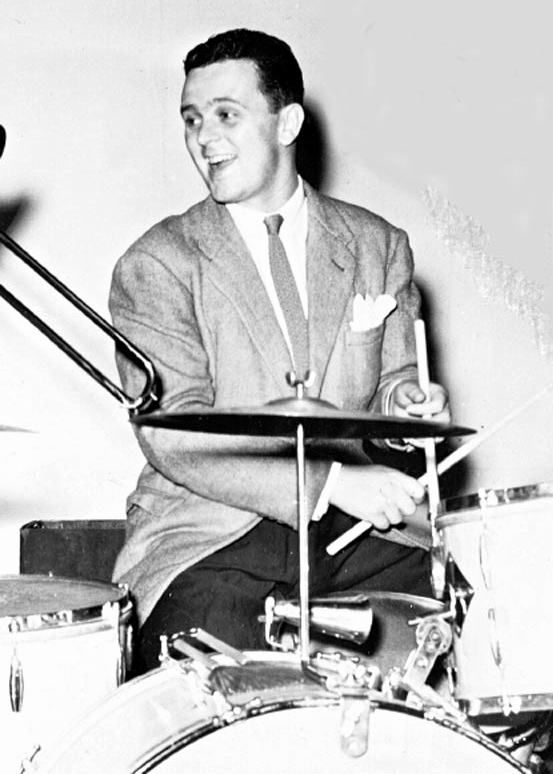
Maurice Purtill: I’m Not Dead


purtill_maurice

Maurice “Moe” Purtill

SKF NOTE: After I had closed for the night the cheese shop I managed in Huntington, NY, I was standing outside with Andy, one of the meat cutters from the butcher shop next door. Somehow we got around to talking about drums, and Andy said Glenn Miller‘s drummer, Maurice Purtill was a Huntington, NY native.

“No kidding?” I said. “Is he still alive?”

“No,” said Andy. “He died.”

Fast forward a decade. I’m Managing Editor of Modern Drummer magazine. A letter from a reader arrives asking, “Whatever happened to Moe Purtill?” That letter was floated during an editorial meeting as a candidate for publication in an upcoming MD. Neither Publisher Ron Spagnardi nor Features Editor Rick Mattingly had an answer for the reader.

“Oh, Maurice Purtill is dead,” I said. “I use to work next to a butcher shop in Huntington, NY — where Purtill’s from. The butcher knew Purtill. He told me Purtill died.”

So, I penned the “Purtill is dead” answer which accompanied that reader’s letter in the magazine. And not too long after that month’s MD hit the newsstands I received another reader letter from a NJ town not too many miles from MD‘s office. The letter said, in essence, “I am not dead. Signed, Maurice Purtill.”

I wrote Mr. Purtill an apology — which included my Huntington, NY story. Published a correction in the next available MD. But, boy, that was a great lesson in fact-checking.

end

Posted in SKF Blog | Tagged , , , , | 1 Comment