Weckl Describes Simon & Garfunkel Audition 1983

dave-weckl-10_large

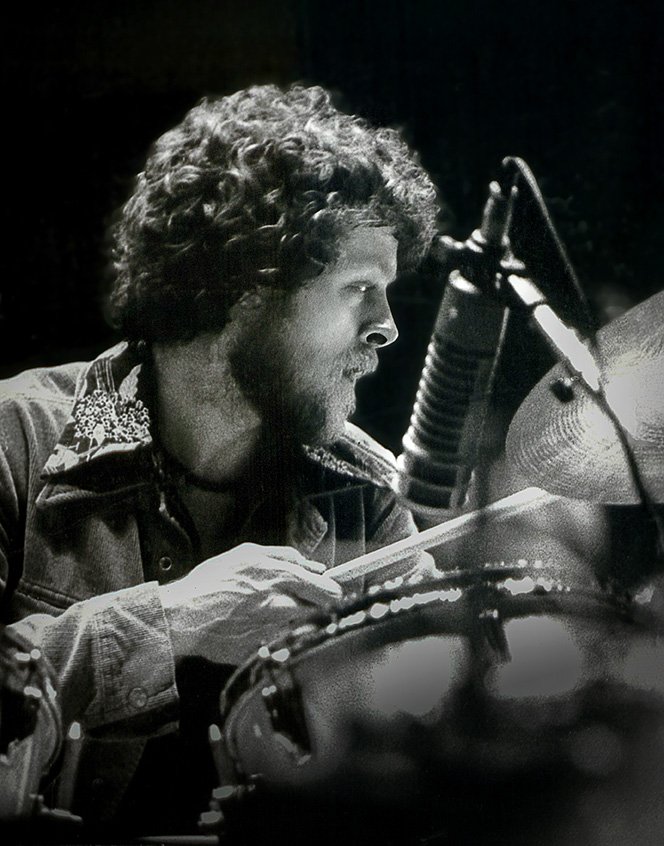
Dave Weckl

SKF NOTE: This exchange is from my 1983 feature length with Dave Weckl that was never published in Modern Drummer. Well, some of the interview was published in MD as a profile of Dave Weckl, but that’s it. Here’s the back story.

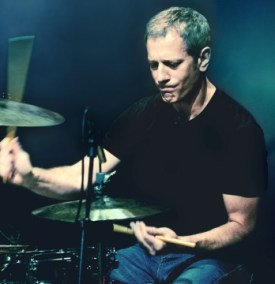
Weckl was age 23 when we met. He was living in Bridgeport, CT getting ready to go on tour with Simon and Garfunkel  — arguably the first major gig that put Weckl on the map.

Weckl’s own web site says of the ’83 Simon and Garfunkel reunion tour: “After this tour, it was not long before Dave was regularly being called for radio and TV jingles, sound track sessions, and top recording dates with such artists as George Benson, Peabo Bryson, Diana Ross, and Robert Plant, to name a few.”

I will make the entire interview transcript available in the future. Meanwhile, here is 23-year old Dave Weckl telling us about his audition for the Simon and Garfunkel drum chair.

Scott K Fish: Were there other drummers who auditioned for the Simon and Garfunkel gig?

Dave Weckl: Not that I know of. Anthony Jackson was basically responsible for that. That’s the one thing of getting people to respect you for what you are. You can’t act like something you’re not. Basically, try to form yourself to be something that people will respect and like. You’ve got to work at that. You’ve got to look at yourself from the outside in. The more people you have on your side, obviously, the farther you’re going to go and the better you’re going to do. This business works on recommendation.
jackson_anthony

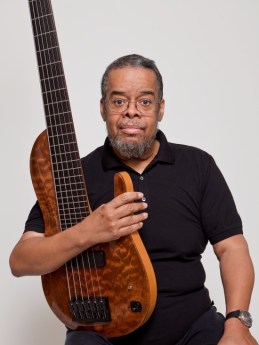
Anthony Jackson

SKF: Do you think your attitude is as important or more important than your technical ability?

DW: It all works hand in hand. And at times, attitude can outweigh your talent. And I’ve seen attitude work against somebody who is an outstanding player. They’re great, but for some unknown reason they’re not working. You ask, “Why?” And the answer is oftentimes, “Ah, he’s got a strange attitude.” That’s really it.

Once you get to know these people, and they know you as a person, and they can see that you’re not a jerk — that you’re a responsible type — then, of course, your ability has to be able to back you up. That’s when all the years of woodshedding come into play. When you’re thrown into a situation of, “Okay. This guy trusts me. He’s going to recommend me and put his reputation on the line.” That’s when you have to be able to back up what everybody’s talking about.

SKF: What was the audition for Simon and Garfunkel like?

DW: Well, Anthony [Jackson] recommended me to Paul Simon. I was working downtown with Barry Finnerty. Paul actually came down to check it out. The office had called me a couple of weeks before and said that they were looking for a drummer and there wre a couple of people they were interested in.

So I expected somebody to show up, but I didn’t expect Paul to show up.
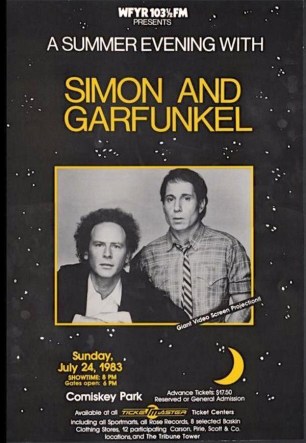
simon_garfunkel_1983It was funny, because I didn’t say anything to him. I didn’t go up to him. He was there for a purpose. He was there to see if I could play or not. He was there to see if he liked my style.

I figured if he liked me and wanted me to work for him, then I’d get to know him then. I just didn’t know what to say to him.

SKF: How did you feel when you saw him walk into the club?

DW: I felt good that he had showed up. I thought that was really nice. I didn’t want to scare him away or play a lot of shit because that ain’t what his thing is about. My main concentration was just playing musically for the music. We were playing some funk stuff and a little bit [of] fusion-oriented [music], but not really. It was a good thing for me to be playing with, and it was a good band.

I was mainly concentrating on groove, feel and time, and sensitivity.

SKF: And Paul never said anything to you that night?

DW: No. We never exchanged one word. I felt wierd about it, but I was just in that position where I didn’t have anything to say. I figured if he liked what he heard and wanted me to work for him — then I’d hear from him.

I think it was a week or a week-and-a-half before I heard anything. I was walking around in nervous anticipation trying to figure out what was happening. I was talking to Anthony in the meantime. And he didn’t even know if he was going on the tour yet.

But about a week-and-a-half later the office called and said they wanted to use me for the tour.

That was the audition.

end

Posted in SKF Blog | Tagged , , , , , | 2 Comments

Jimmy Madison: We Were Like Joe Morello’s Mascots

Photo from Jimmy Madison’s book, “Drummer Boy: My Life Playing for the Greats of Jazz and Funk.”

SKF NOTE: In August of last year I posted The Day Jimmy Madison Rescued Joe Morello. I remembered Jimmy Madison telling that story and I wanted to share it.

Yesterday I found the transcript of my interview with Jimmy Madison. Madison’s feature interview was published in October 1982 Modern Drummer. So here, in Jimmy Madison’s own words, verbatim, is the story of how Madison rescued Joe Morello. If I may say so, this original telling is better than I remembered.

Anyone know what Jimmy Madison is doing these days? I’ve searched the web for clues, coming up mostly empty.

Right before my lead question here, Jimmy Madison was telling me how he learned to play drums listening to Dave Brubeck Quartet with Joe Morello records.

Scott K Fish: Did you know what he [Joe Morello] was doing or were you going by sound?

Jimmy Madison: Mostly going by sound. But then, every time I would see him…. When I was 13 or 14, from having listened to Dave Brubeck records for a couple of years, the Dave Brubeck Quartet played in Cincinatti at a place called Castle Farms. It was one of those huge airport size hanger places with the fake palm trees. A big dance hall type place like out of the ’40s.

Brubeck played there and I went to see my hero, Joe Morello. I took my friend, Randy Bass, who was the other real good drummer in town. We got there early and the manager said, “The band’s not here yet. They’re coming from the airport and they’re going to come in the back door. I’ll give you a deal. You can sit on the stage with them if you’ll watch the back door for when they show up, so I don’t have to bother with it.”

So, we said, “Right!” We watched the door and they showed up in a station wagon from the airport, and we helped them bring the drums in and everything. We met Joe [Morello] and said, “It’s great to meet you.” He’s such a nice guy. And he’s always been a nice guy. He was like, “Yeah, guys. What’s going on?”

ludwig_400

He started setting up the drums and I looked in the case and there was no snare drum.

I said, “Where’s your snare drum?”

He said, “Oh, you know. I just got one of those new Super Sensitive snare drums.”

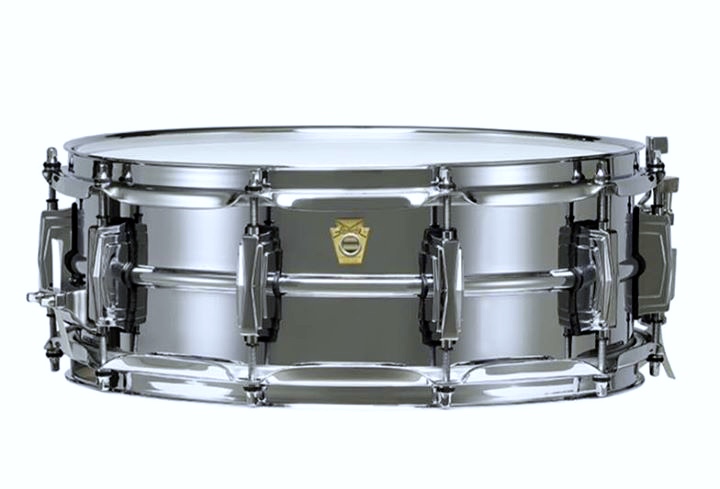
This was when Ludwig first developed them. Before they were even released. And they had given [Morello] one to test out. He was in a New York airport and somebody stole it!

There was a dance band there in between the Quartet, and [Joe] was going to use the guy’s snare. It was an old drummer with an old, beat up shitty snare drum.

I said, “Listen, I’ve got the same snare drum you use.” The regular metal shell drum. “I’ll call my folks. They’ll bring the drum and you can use it.”

Joe said, “Great.”

My parents brought the drum down and got in for free. Joe played my drum all night, and Randy and I just sat, like, five feet away from him checking him out.

That was the first time I ever heard Take Five. Joe was playing all this shit and Randy and I were transfixed. I had never heard anything like that before. Guys like Max Roach never even came to Cincinnati. So we were flipping out.

Joe signed [my snare] drumhead and all that.

Years after that, whenever the Brubeck Quartet would play Cincinnati — and they use to play The Ohio Valley Jazz Festival — we would be right there waiting for them at the gate. We’d take the drums in and set them up for free. And we’d get in for free. And we were like Joe’s mascots.

Whenever we would do that, and everything was ready to go, and there was time to kill, Joe would say, “Come on, guys.” And however many there were of us drummers, he would take us and beat on a windowsill and show us things. He gave us a drum lesson right on the spot.

I learned how to do a lot of that finger drumming — which I have since forgotten. [Joe Morello] was my main influence through most of my high school years. Then, abruptly, I had this piano player named Ed Farr, and he was into John Coltrane.

Photo Credit: Jimmy Madison

Posted in SKF Blog | Tagged , , , , , , | 1 Comment

DeJohnette: Savion Glover is ‘the Coltrane of Tap’

SKF NOTE: Now this show is going to be serious fun.

Music Preview: Drummer Jack DeJohnette aligns with tap-dancer Savion Glover
February 25, 2016 12:00 AM
By Rick Nowlin / Pittsburgh Post-Gazette

A key component in jazz, if not its very heart, is improvisation, and drummer Jack DeJohnette is taking that concept to a new level.

For the Friday concerts at the Manchester Craftsmen’s Guild Jazz Concert Hall, he and his trio are adding a twist — tap dancer Savion Glover.

“I call him the Coltrane of tap,” Mr. DeJohnette says. “Nobody does what he does the way he does it. I first played with Savion about 20 years ago at a young people’s concert at Carnegie Hall. It was so enjoyable.”

Mr. Glover’s routine is improvised based on the original compositions Mr. DeJohnette’s group is playing.

“Savion works off what we do,” Mr. DeJohnette says. “It’s spontaneous composition — that’s what makes it so exciting.”

Full Story

end

Posted in Drum/Music News | Tagged , , , | Comments Off on DeJohnette: Savion Glover is ‘the Coltrane of Tap’

Bonnie Raitt: ‘By 1987, I’d Had Enough’

SKF NOTE: Bonnie Raitt is one of my longtime favorite musicians. Very much looking forward to hearing her new album, Dig In Deep. Helping to kick off that album, the Wall Street Journal published the backstory to Bonnie Raitt’s hit song, Nick of Time. Keep ’em coming, WSJ. These music stories are terrific.

ARTS ANATOMY OF A SONG
Bonnie Raitt’s Turning Point: ‘Nick of Time’
‘Nick of Time’ was written out of an appreciation for newfound optimism

In 1988, a year after becoming sober, Ms. Raitt wrote “Nick of Time,” a soulful midtempo ballad about aging and rebounding that became a personal turning point.

Bonnie Raitt: By the end of the ’80s, I was closing in on 40 and decided it was time to re-evaluate my health and lifestyle. I saw what my peers and I had been getting away with—indulging in eating and partying without exercising. None of it was wearing well.

My downslide started around 1983, when Warner Bros. records dropped me just as I finished a new album.

… in ’86, I was mad and hurt, and I internalized everything, relying more and more on alcohol and drugs to numb the pain.

By early 1987, I’d had enough. With the help of some sober friends, I was able to stop drinking, lose weight and get in shape. Almost immediately I felt I’d had a spiritual awakening and physical rebirth. I felt optimistic for the first time in years.

I wanted to kick back and reflect on all the changes of the past year and maybe write some music honoring how grateful I felt to have made it through.

In Mendicino…I began thinking about the most poignant aspects of my life. That’s when the first verse of “Nick of Time” came to me.

…I had brought along my Yamaha portable electric keyboard. I also had my guitars and a little four-track Fostex cassette recorder. For a beat, I used a Roland TR-606 Drumatix, a compact drum machine from the early ’80s. Unfortunately, the “Philadelphia Soul” beat I liked on there had Syndrums built in.

After I signed with Capitol in 1989, I wanted Don Was to produce my first album for the label. I told Don about this song I had written, and he asked to hear the demo. When I put it on, the groove was there but so were those hilarious Syndrums. [H]e loved the song and understood immediately that cool soul inspiration.

We recorded “Nick of Time” at Ocean Way Recording in Hollywood. The song’s arrangement was the same one I had used on my demo, except we used Ricky Fataar on drums, James “Hutch” Hutchinson on bass, Mike Landau on guitar and I played the keyboard. Ricky is an astonishing drummer. He got a kick out of the demo with the disco effects, but he knew exactly how to translate the basic elements I had written.

[W]e wanted to add that heartbeat pulse you hear on Marvin Gaye’s “I Heard It Through the Grapevine,” but we didn’t have a hand drum. So Ricky picked up a burlap sandbag used to hold down mic stands and put it on his lap. They miked the bag and he played the heartbeat of the song with his hands.

Full Story

end

Posted in Drum/Music News, SKF Blog | Tagged , , , , , , | Comments Off on Bonnie Raitt: ‘By 1987, I’d Had Enough’

Thad Jones/Mel Lewis Orchestra – All My Yesterdays Mini Documentary

SKF NOTE: More backgrounder on Resonance Records first official release of this historic Thad Jones/Mel Lewis date.

end

Posted in Drum/Music News | Tagged , , , | Comments Off on Thad Jones/Mel Lewis Orchestra – All My Yesterdays Mini Documentary