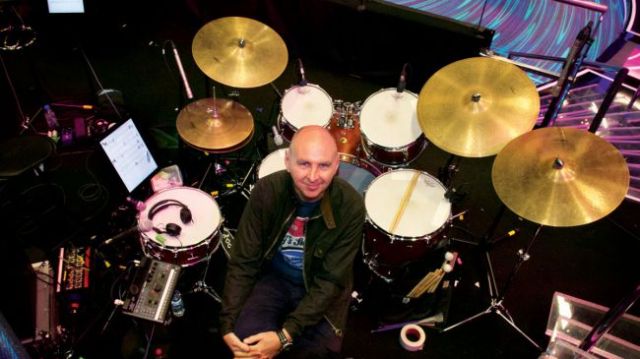
What You Play or Don’t Play Defines You

wilkeson_neal

Neal Wilkinson talks the “masters” of drumming and Carole King musical Beautiful
By Rhythm magazine

“The thing I find most challenging…on…every gig, is to play creatively in a song setting. Rather than playing millions of notes, …I’ve always been focused on…the flow, the groove, the choices of things you play and the palette you choose from. Even my sound, drum sizes, tuning, it all goes together to make it work.

“It’s what makes Purdie different to Gadd. It can be the simplest thing but often it’s…that you’ve chosen to…play [or not play] something. I think your…choice of what you play, or don’t play.., defines you as a player.”

“…I love Tony [Williams] and Elvin [Jones] because when you hear them play behind Miles or Coltrane the time is so strong [and] undeniable, but people tend to forget about that in those guys, they tend to think of them as these monster drummers that always played millions of notes.

Full story

Posted in Drum/Music News, SKF Blog | Tagged , , , , | Comments Off on What You Play or Don’t Play Defines You

Frankie Dunlop: Max Roach Took Me Under His Wing

SKF NOTE: Prior to interviewing Frankie Dunlop, Mel Lewis told me he thought Frankie, when he first came to New York City, had studied with Max Roach.

This interview excerpt is Frankie’s response to what Mel Lewis said.

Posted in Audio, SKF Blog | Tagged , , , | Comments Off on Frankie Dunlop: Max Roach Took Me Under His Wing

Great Price: Elvin, DeJohnette with Joe Farrell

SKF NOTE: Last night I bought several MP3 jazz albums, among them, Joe Farrell’s Moon Germs. In 1972 I first bought the Moon Germs LP — and have been waiting many years for its reissue. This is a quartet date with Farrell playing soprano sax and flute, accompanied by Herbie Hancock on electric piano, Stanley Clarke on bass, and Jack DeJohnette on drums.

Joe Farrell’s album from 1971, Outback, is equally good with Farrell adding tenor saxophone, alto flute, and piccolo to his arsenal. The band on this date is Chick Corea on electric piano, Buster Williams on bass, Airto Moreira on percussion, and Elvin Jones on drums.

Amazon has the complete Moon Germs for sale at $3.87, and the complete Outback for sale at $2.99. I get no kickbacks from these sales. These are just great prices on great albums with excellent playing by two great drummers: Elvin Jones and Jack DeJohnette.

Posted in Drum/Music News, SKF Blog | Tagged , , , , | Comments Off on Great Price: Elvin, DeJohnette with Joe Farrell

Frankie Dunlop: Gene Krupa Arranges Slingerland Endorsement

SKF NOTE: Gene Krupa‘s kindness to Frankie Dunlop early in Frankie’s career is covered in my blog post, Frankie Dunlop: Gene Krupa’s Kindness to an Upcoming Drummer. In this audio excerpt you can hear Frankie telling the whole story. Frankie was playing a “rattletrap” set of drums with Maynard Ferguson’s big band. Krupa, who was on the same bill that day, liked Frankie’s playing, and offered Frankie a Slingerland drum endorsement – including a new set of drums annually.

Posted in Audio, SKF Blog | Tagged , , , , | Comments Off on Frankie Dunlop: Gene Krupa Arranges Slingerland Endorsement

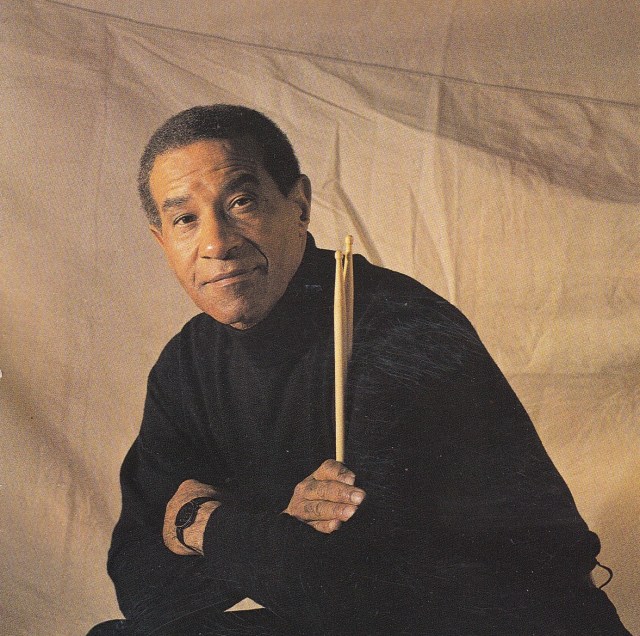
Max Roach: High Taxes Killed the Big Bands

roach_max_1987

SKF NOTE: The 1940s federal government entertainment tax (or cabaret tax) and the Musicians Union’s bans on recording music are two incredibly shortsighted policies that devastated the Swing Era. Coming across these incidents for the first time, many years ago while studying music history, I felt so sad for all the music lost, all the music careers damaged.

National Public Radio’s Terry Gross just reposted her 1983 Fresh Air audio interview with Max Roach. Here’s a portion of Ms. Gross’s interview where Max talks about the affect of the entertainment tax.

GROSS: You were one of the first drummers to play bebop, and…one of the first people to figure out how to drum in the…fiery sessions…being played. What were some of the challenges that…presented to you?

ROACH: …Instrumental virtuosity prevailed because during the War…. [During] the Second World War we had an extra 20 percent cabaret tax…. [A musician]  entrepreneur…had to pay…a city tax.., a state tax, and a federal tax. On top of that he had to pay a 20 percent government tax called entertainment tax. [T]his really heralded the demise of big bands during that time. This tax was just awful….

So the people who really got the jobs were the virtuoso instrumentalists. And everybody went home and practiced, practiced, practiced. And then that was the beginning of bebop….. Everybody began to sit and listen to the music rather than…dance to it. That was the beginning of it.

Full interview

Posted in Drum/Music News, SKF Blog | Tagged , , , | Comments Off on Max Roach: High Taxes Killed the Big Bands