Scott K Fish – Time Flies

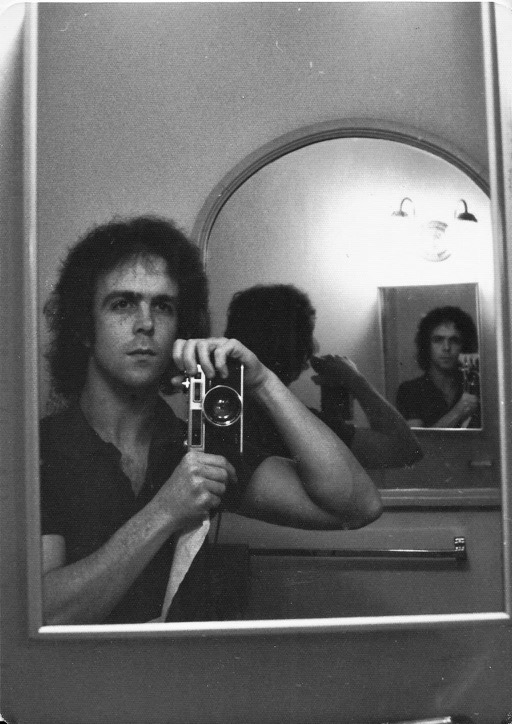
SKF NOTE: My friend of many years, Candice Baranello, mailed this photo of me taken right around the time I started freelance writing for Modern Drummer magazine.

In good times and bad — time flies.

Posted in Revisiting My Life in Music | Tagged , , , | Comments Off on Scott K Fish – Time Flies

Zutty Singleton – We Just Kept the Rhythm Going

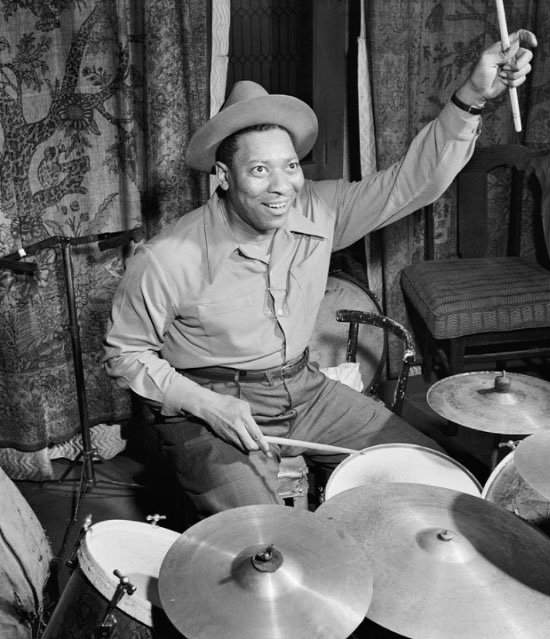
SKF NOTE: Growing up, I was aware of Zutty Singleton among the drum pioneers, but records on which he played were either not on my music priority list, or they weren’t available. The New Orleans-Chicago early jazz drumming was a style I set out to study in the early to mid-1970s when I was living and playing drums in Davenport, IA. Prior to Davenport I spent most of my time and money listening to big band and modern jazz drumming, rock, and blues drumming.

Zutty is still great listening. And with the advent of YouTube and other internet platforms, there are many more opportunities to study Singleton than there were in the 1970s and earlier. This recording of Drum Face is a case in point.

Finally, here are my Zutty Single notes, slightly updated, for a history of jazz drummers I wrote for publication.

=====

Zutty Singleton was among the first to streamline the drumset. He used a bass drum, snare drum, two old-style shallow tom-toms, and usually three cymbals. Sometimes two. Music writer Martin Williams credits Singleton with developing the modern drum solo structure. In the mid-1900s drummers rarely took solos.

“Previously drum solos had been either brief breaks — usually a couple of beats, or a couple of bars — or they were random things, in which the player would strut out his tricks until he ran out of them, whereupon the horn men would resume,” said Williams.

“We just kept the rhythm going,” said Singleton. “But when we did [solo], the drummers had all kinds of different sound effects: a bucket gimmick that sounded like a lion’s roar, skillets, ratchets, bells, everything.”

A decade later, Zutty Singleton was leading a trio in Chicago. Clarinetist Jimmy Noone and pianist Jerome Carrington would solo all night. One night Jimmy Noone suggested Zutty take some solos. “Take a chorus,” he’d say.

“Zutty would do exactly that;” said Martin Williams, “he played a chorus to the piece they were doing, humming it over to himself, and not only finishing at the end of 12 or 16 or 32 bars, but also marking off the four- and eight-bars internal phrases of the piece as they came along.”

Source: Zutty, by Martin Williams, Down Beat 11/21/1963

Posted in SKF Blog | Tagged , , , , | Comments Off on Zutty Singleton – We Just Kept the Rhythm Going

What Big Sid Did with One Foot

SKF NOTE: Art Hodes wrote a Down Beat column in the mid-1960s which I enjoyed. He was a jazz pianist who knew musicians, including early jazz drummers, like Dave Tough, George Wettling, and Big Sid Catlett.

I valued Mr. Hodes’s first-hand accounts. He might devote an entire column to one musician. Or Hodes might just insert a gem like this one in a more varied column.

=====

Does the name Sid Catlett ring a bell? What he did with one foot and one bass drum is being accomplished by very few drummers who’re using two [of each].

Source: Sittin’ In, Art Hodes. Down Beat (February 13, 1964)

Posted in SKF Blog | Tagged , , , , | Comments Off on What Big Sid Did with One Foot

John Von Ohlen – Your Day of Liberation

John Von Ohlen

SKF NOTE: When I finished putting together John Von Ohlen’s Modern Drummer interview, before it was published, I sent him a copy to review. That was my standard practice. Drummers responded, usually, by signing off on the interview as written. Sometimes they clarified what they said during the interview, and sometimes they added to what they said.

This morning, I came across page 28 of Von Ohlen’s interview. His edits and added comments, written in thick pencil, are really good advice for drummers. The meat of John’s comments stray from the question I asked him, but I’m glad he wrote it that way. I have added a copy of interview page 28 to this post.

=====

Scott K Fish: For the person who wants to listen to some good big band records — what would you suggest?

John Von Ohlen: Well, anything by Thad Jones and Mel Lewis is fun and the best. Not only is Mel Lewis a master drummer, but he’s right in there, all the time, pitching for good music. And fighting for it, if need be.

Count Basie and Duke Ellington really set the roots for our way of playing big band jazz and the way we play figures. Basie’s band is awful good at that. Listen to whatever tantalizes you; whatever your ears go to. That means it’s right for you.

The next thing will present itself in time. Learning all this stuff is a slow process. Take plenty of time in your development. My pace is very, very slow. But I think it’s stronger than having it all thrown at you in a book learning way. Just let it come to you in the natural unfoldment [sic] of your playing. It’s a lot slower, but they say that sometimes the longer it takes, the better the fruition when it does come. Like diamonds. A diamond is the most perfect jewel, and it’s the jewel that takes the longest to make.

Don’t be afraid to take the slow way. Two steps forward and one [step] back.

At first you usually emulate the master drummers. They are usually older, but not always. You copy them. You imitate them because you haven’t found your own way yet.

Then one day you hear, for the first time, your own natural style. Everyone has a different face that they didn’t consciously create. It was given to them at birth. Consequently, every drummer has a different style that he or she couldn’t even begin to conjure up. It was just there naturally. Always had been. But now you are just beginning to be aware of it for the first time. That day is your day of liberation.

From then on, instead of focusing your energies on trying to sound like Steve Gadd, Buddy Rich, Mel Lewis, or Elvin Jones, you begin the real work of mastering your own style, your own way.

It’s a lifelong study and I love it.

Posted in SKF Blog | Tagged , , , , , , | Comments Off on John Von Ohlen – Your Day of Liberation

Neil Peart – If the Simple Dumb Thing Works Best

SKF CORRECTION: Learned users of DrumForum.com pointed out it is Steve Smith, not Neil Peart, playing drums on Jeff Berlin’s Subway Music. Neil plays on other tracks on the album.

It’s good to know the truth, and it’s good that the truth changes nothing about my comment to Neil in this post or about Neil’s answer.

I was sitting with Neil in his living room, about 25 years ago, when he played cuts from the Berlin album. The track I remembered had a shuffle rhythm with busy double bass drums. Subway Music seemed the likely song, but it’s not Neil.

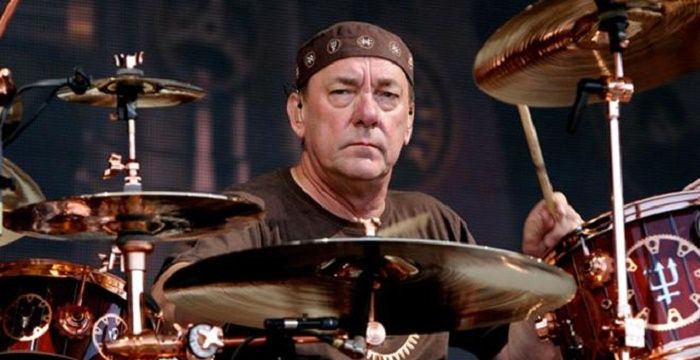
SKF NOTE: During this interview Neil Peart defined “selling out” as playing drums “someone else’s way.” I mentioned Neil’s playing on Jeff Berlin’s album, Champion, specifically the song, Subway Music. To my ears, I said, Neil’s playing there doesn’t sound like the way he plays with Rush.

Neil’s answer is where we begin this excerpt.

Neil Peart: In a situation where there’s a musical empathy I’d bend to the needs of the song. The same as I’d give a Rush song a simpler part. I’d force myself to do it.

There’s a perfect example on Presto. The guys had written one song to a very simple plodding drum machine pattern. I tried everything, but nothing worked as well as that stupid lunkhead beat. If the simple dumb thing works best, it works best.

Philosophically I’ve quarreled my whole life with the less-is-more idea. I think more is more. A beautiful groove played simply is powerfully effective. I admire guys who can do that — plus. That groove is always present, but they have the chops and feel to go on top of it and spark songs.

Transitions are the weakness of many drummers who can lay down a nice feel and move to another feel. The points in-between are where a lot of people fall down. It’s still the thing on which I most focus.

Drummers I admire might play one fill in a song, but the way they set it up, every figure they play is flawless. When they get to that fill it has such impact.

I’ll never be a simple eighth note snare drum-tom-tom fill. Guys that play that well have too much class. A lot of R&B drummers are very exemplary of that quality; devoted to a simplicity of feel, but the rhythm they play needn’t be simple. The way they embellish it — end of measure figures, the big fill, a dynamic sweep into the midsection — that’s where their lights shine. That’s where a truly simple drummer could never rise above the simplicity.

I like hyperactive music that permits a lot of messing around, but still serves the music. Music is designed to be that way.

There are lots of Rush songs, like Tai Shan, that require a very sensitive, simple approach. Maybe a series of simple steps. Remembering them properly constructed, and putting them together, becomes very complex. Reproducing them as a single flow of music becomes the big challenge. As hard to play as any complex part.

Posted in SKF Blog | Tagged , , , , , , | Comments Off on Neil Peart – If the Simple Dumb Thing Works Best