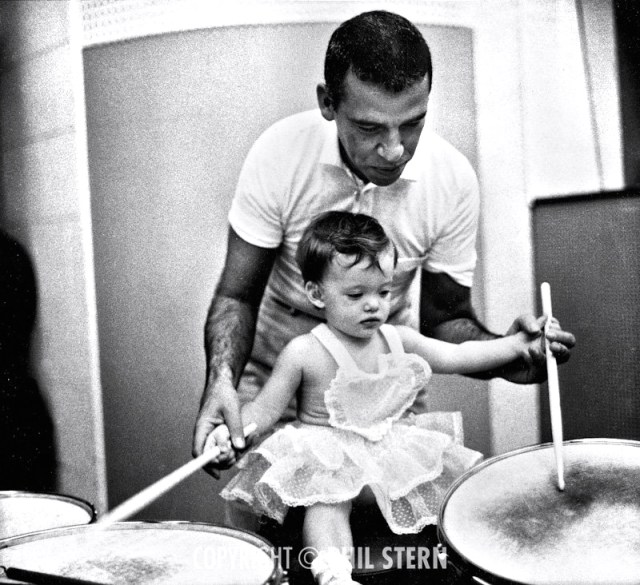
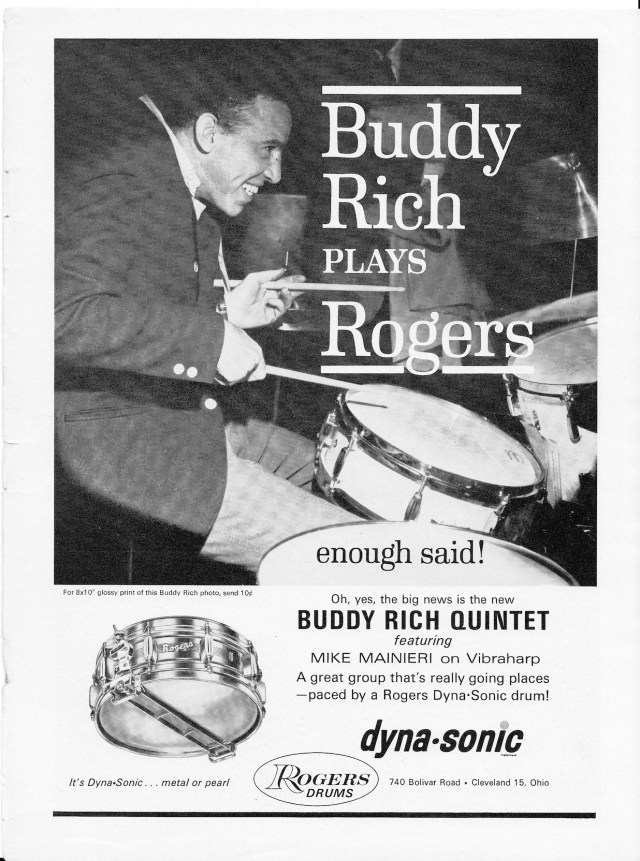
SKF NOTE: Writer Eliot Tiegel interviewed Buddy Rich for the March 1982 Down Beat magazine. One of Tiegel’s questions for Buddy was, What are your goals for the future?
Here’s Buddy’s answer:
Buddy Rich: “I haven’t achieved what I want to do, which is play better, and I’m very sincere about that. I think that once you think you’ve played as good as you’re ever going to play, you’re cheating yourself and everybody else.
“And I have never decided I played so good that I don’t have to worry about it any longer. I concern myself with it every time I sit down behind the drums. I have never attained the kind of expertise that I want.””And I have never decided I played so good that I don’t have to worry about it any longer. I concern myself with it every time I sit down behind the drums. I have never attained the kind of expertise that I want.”
Source: “Rich Raps,” by Eliot Tiegel, Down Beat, March 1982
LikeLoading...
Posted inSKF Blog|Comments Off on Buddy Rich – I Want to Play Better
SKF NOTE: Roland Vazquez is Artist-in-Residence at Bard College in NY State. Here is the lead paragraph from his online Bard biography:
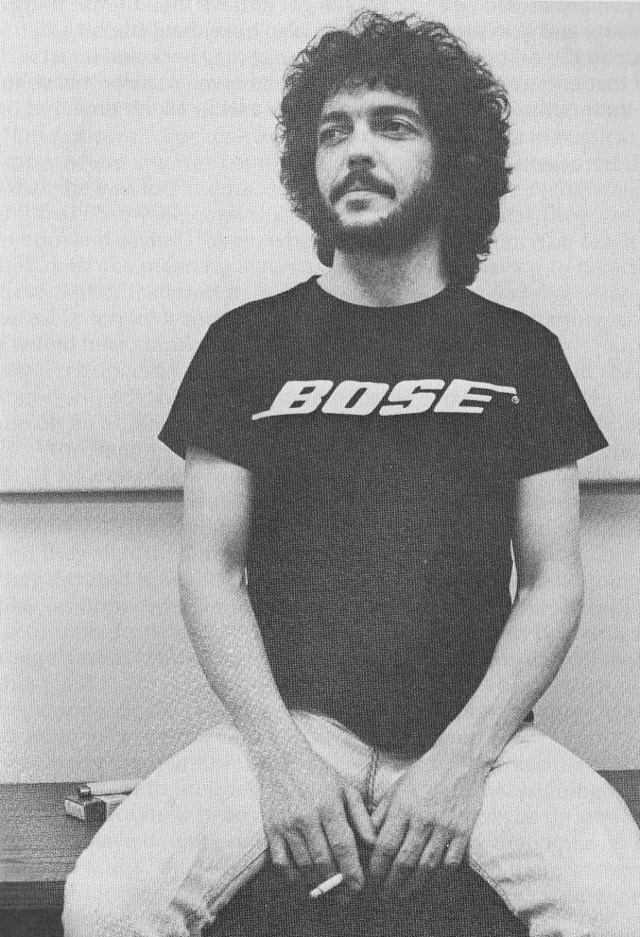
Roland Vazquez is a composer, drummer, producer, and educator who has been performing and recording his original Latin rhythmic chamber jazz for quintet, nonet, big band, and chamber ensembles for more than 40 years. He first worked as a drummer with R&B and rock groups in and around Los Angeles. He began writing for his jazz-fusion bands during the mid-70s, receiving an NEA Jazz Performance Grant in 1977, which led to the production of Urban Ensemble—the Music of Roland Vazquez, which Billboard called “a decade ahead of its time.” During those years, he did multiple studio projects and performed regularly with his band and with other bands in and around California, including the Shirley Walker Trio, Don Randi & Quest, Willie Bobo, and Clare Fischer’s legendary Salsa Picante.
In 1981, drummer Roberto Petaccia introduced me to Vazquez, and his “Feel Your Dream” album, which followed Vazquez’s 1979 “Urban Ensemble” album. I remember listening to Vazquez and his band playing at a venue near Columbia University in NYC, and visiting him in his NYC apartment. It was – and is – unique, cooking music.
Petaccia went on to interview Vazquez for the July 1982 Modern Drummer magazine. This week I came across a few photocopied pages of Petaccia’s original Vazquez manuscript. It included Vazquez’s common sense advice on drummers interested in becoming music writers.
Roland Vazquez: “My suggestion to drummers that want to expand as writers is to pay attention and listen to the kind of music they like, eventually expanding into every area. But, really start out and spend a lot of time with the music they identify with.
“There is really so much to listen to and to play, but we can’t do it all. We have only so many years to spend on this planet, and we should pursue the things that move us, and that we could put movement into.
“Another suggestions is to try to eliminate fear. The first step to take toward achieving that is to not compare, other than to learn. Emotional comparison is bad. Intellectual comparison, for getting perspective on a style of playing or writing, is what we need to exercise.
“If you are emotionally about comparing your music to others, then fear of failing will take over. Once fear exists, you stop growing.
“What you believe in is what you are going to play. What you come up accepting about yourself is what you will express.”
LikeLoading...
Posted inSKF Blog|Comments Off on Roland Vazquez – Try to Eliminate Fear
SKF NOTE: I am sorting through a brown cardboard box full of papers I’ve written, and backgrounder material meant to inform my writing. My stapled photocopy of Eliot Tiegel’s Buddy Rich view is highlighted in several places with my yellow marker. I find it interesting to review my yellow highlights to see what caught my attention years ago.
Buddy describing his drum soloing did NOT catch my eye years ago. But it sure did this time.
“I think of my soloing as a story with a beginning, middle, and a punch line. I construct a solo the same way a trumpeter or saxophonist or pianist does. It’s a musical concept – not a percussive concept – when you bang on the drums for an hour-and-a-half.
“If I have 32 bars to play in a chart, then I’ll make that chorus a musical chorus. If I have an extended solo, I’ll play 10 choruses, but they’ll be 32 bars and 32 bars, and you won’t know they’re 32 bars because maybe the 32nd bar may run into the 33rd or 34th bar. So you can’t just say one and two and one and two. I’ll divide the time, break up the time, divide the time again, and change the tempo. I’ll go into three, go into five, but at the end of 32 bars you’ll know that one starts the next 32 bars. I think of my instrument as a musical instrument – not as something to bang on.”
Source: “Rich Raps,” by Eliot Tiegel, Down Beat, March 1982
Steve Gadd: “I didn’t practice a lot because I hated practicing. But there was a time when I always used to be playing. I’d be playing along with a record, a group, or with other drummers when I was with a drums corps.
“But when it came to working on a thing that I had to do for a lesson…I hated that shit. It took me years to learn how to read music.”
Source: “Gadd About Town,” by Darryl Pitt, Down Beat, July 1982
SKF NOTE: In the summer of 1961, multi-instrumentalist Eric Dolphy joined John Coltrane’s great quartet with Elvin Jones (drums), McCoy Tyler (piano), and Jimmy Garrison (bass), for a summer tour The groups’s “Complete 1961 Copenhagen Concert” album offers us a chance to hear the group in full swing.
Down Beat was the premier jazz magazine of the day. DB Associate Editor John Tynan labeled Coltrane’s and Dolphy’s music as “anti-jazz.” In the November 23, 1961 DB, Tynan wrote, “At Hollywood’s Renaissance club recently.., I heard a good rhythm section go to waste behind the nihilistic exercises of…Coltrane and Dolphy.”
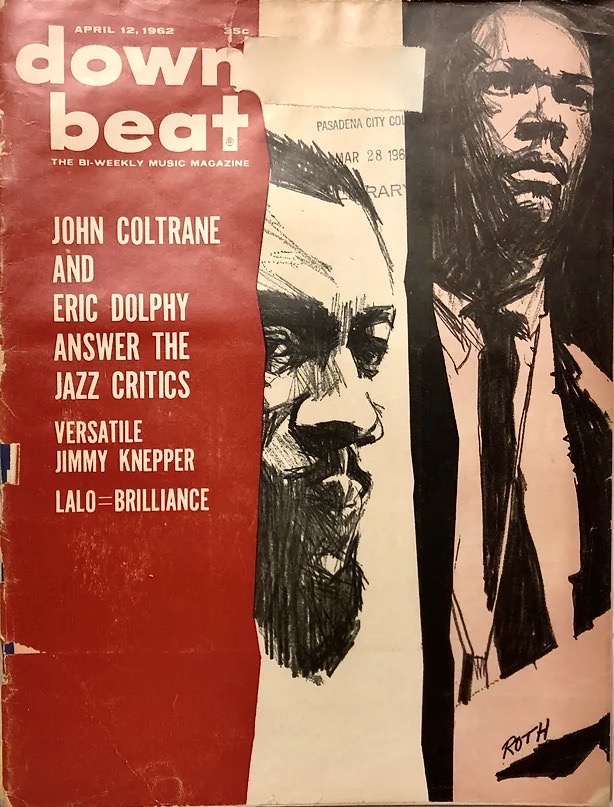
Later, DB Editor-in-Chief Don DeMicheal interviewed Dolphy and Coltrane. He asked them of their music, “What are you trying to do?” Or, “What are you doing?”
Here’s the part of Coltrane’s reply I underscored long ago in my copy of DeMicheal’s Coltrane/Dolphy interview:
“What I’m trying to do I find enjoyable. Inspiring….
“It’s more than beauty that I feel in music-that I think musicians feel in music.
“But, over-all, I think the main thing a musician would like to do is to give a picture to the listener of the many wonderful things he knows of and senses in the universe. That’s what music is to me – It’s just another way of saying this is a big, beautiful universe we live in, that’s been given to us, and here’s an example of just how magnificent and encompassing it is.”
Source: “John Coltrane and Eric Dolphy Answer the Jazz Critics,” by Don DeMicheal, Down Beat, April 12, 1962




You must be logged in to post a comment.