SKF NOTE:This is interview excerpt is drummer Matt Frenette, at the height of ‘Loverboy’s’ hit song, “Working for the Weekend,” describing his mutt drumset. He starts out saying of his kit, “I’ve got so many different things.”
Frenette’s was the cover story for the March 1984 Modern Drummer magazine. Here is my 1984 introduction to his interview.
“Things happen fast in the world of rock ‘n’ roll. The first time Matt Frenette was interviewed for MD, people were raving about ‘Loverboy’ on the West Coast, but the group’s popularity did not yet extend to the East Coast.
“The interview was therefore intended to be a portrait of an up-and-coming new artist.
“However, before we had the chance to publish that interview, ‘Loverboy’s’ success had spread across the country. Since Matt Frenette’s position in the drumming world had skyrocketed along the group’s popularity, we are now presenting an expanded feature interview with ‘Loverboy’s’ drummer.”
SKF NOTE: What a great way to end a day. Reading just before bed I came across this news report of a soon to be released, for the first time, a John Coltrane/Eric Dolphy live date at the Village Gate. Elvin Jones (drums), McCoy Tyner (piano), and Reggie Workman (bass).
=====
Long-Lost John Coltrane and Eric Dolphy Set From 1961 Unearthed for Release
Evenings at the Village Gate, rediscovered in the New York Public Library’s archives, recorded in months prior to saxophonist’s legendary Village Vanguard shows
By Daniel Kreps
Evenings at the Village Gate, out July 14 via Impulse! Records, was recorded in the summer before Coltrane’s legendary slate of Nov. 1961 dates at the Village Vanguard, with a similar quintet lineup: The short-lived tandem of Coltrane and Dolphy alongside drummer Elvin Jones, pianist McCoy Tyner, and bassist Reggie Workman.
According to NPR, a Bob Dylan archivist digging through the New York Public Library for the Performing Arts’ sound archives uncovered the recording, which was made by engineer Richard Alderson to test the sound system he installed for the club.
SKF NOTE: Ben Makinen’s documentary, JazzTown, is a tribute to hometown musical heroes who graced his life in Denver, CO. Makinen tells us in the film’s opening credits, “This film is an ode to my early musical mentors – Masters in the art of improvisation – who gave of themselves to generations of up and coming Young Lions. This is their story.”
I couldn’t help but thinking of the musical hometown heroes in my life while watching JazzTown. They were each a huge help in my musical growth.
Like my memories of music mentors, Makinen’s documentary is part ghost story, starting with the opening mysterious piano music and video of wispy clouds, a full moon, and spectral steam rising from a city street manhole cover. Makinen’s is a transitional film from what was, to what is, to what is to be.
Generation to generation, hometown musical heroes inspire other local musicians. As Makinen shows us in his several profiles, these local mentors sometimes share the stage with nationally and globally famous musicians.
Tenor saxophonist Freddy Rodriguez, Sr performed and made records with jazz legend Rahsaan Roland Kirk.
Pianist Ellyn Rucker shares a handwritten note from great pianist Bill Evans who died in 1980. Evans writes, “You really can play!”
CO Governor and former jazz club owner John Hickenlooper smiles at the memory of “sharing dinner with McCoy Tyner four nights in a row.”
Pianist Billy Wallace played and recorded with Max Roach and Sonny Rollins.
Sometimes JazzTown takes us into the homes of the filmmaker’s mentors. We see neither digital music nor eBooks, but bookshelves of cardboard vinyl album covers, CD jewel cases, well-worn hard and soft cover jazz books. Walls and furniture are decorated with photos of Makinen’s mentors as younger women and men.
“What is jazz?” Makinen asks his mentors.
“It’s the most wonderful music in the world,” answers vocalist Teresa Carroll. “It’s not an easy life, but it’s very satisfying. It’s a wonderful thing to sing and to know that you’re communicating with someone on a different level…like no other,” Carroll said.
“Jazz is, you’re willing to stick your neck out in the moment to find out something,” said multi-instrumentalist Art Lande.
Guitarist Charlie Hunter believes only the wealthy can afford to play jazz, while bassist David Randon defines jazz as, “everybody’s got something to say. But they’re saying it in different ways.”
JazzTown chronicles the changing or disappearing jazz scene once available to Makinen.
Among the mentors we meet in JazzTown, some lament the dwindling number of available gigs. The pay is low, CO Yuppies are more interested in DJ’s and tv sets than in live music. Drummer Gene Bass flat out declares, “Jazz as we knew it is gone.”
Everything changes. That’s true. Two of Makinen’s musical mentors illustrate two sides of change.
We meet multi-instrumentalist Ron Bucknam strumming guitar chords in a darkened room. Bucknam’s basement, perhaps? “To bring new sounds into the world that have never been heard – What a joy!” said Bucknam.
“Life is sad and it’s beautiful,” said Bucknam, playing a favorite chord that “promises to go different places that never get fulfilled.”
He is “trying to create a new world of sound that I’ve never heard,” Bucknam tells Makinen, leafing through a neatly handwritten three-ring binder of “new voices” of sounds “that did not exist and don’t exist anywhere else,” Bucknam said.
His music philosophy is understandable, even admirable. Yet, I doubt Bucknam’s “new sounds” were heard outside his darkened room. He died in 2015.
Then there is drummer Declan Scully, a kid not old enough to vote, wearing an Iggy Pop t-shirt. At first, Scully seems out of place in this documentary. He is the only kid. He’s optimistic about the future of jazz, and about his future playing jazz.
“The future of jazz doesn’t have to have a swing beat. It’s going to be more straight. I think jazz molds to fit the most popular music of the era. Right now that happens to be straight rhythm,” said Scully.
Coming full circle, 96-year old bassist Charles Burrell’s advice to future jazz musicians is, “We have a marvelous world. Thank America for being America. Jazz is not explainable. It’s a feeling. You either have it or you don’t have it. That’s how simple it is.”
Long ago, as Managing Editor of Modern Drummer magazine, I recommended the magazine begin showcasing hometown musical heroes across the country. My idea was rejected, but I still think capturing the stories of hometown musical heroes is important.
Obviously, filmmaker Ben Makinen also thinks it’s important. I am glad he succeeded. JazzTown is a gift to Colorado, and a documentary template for other states’ filmmakers to build on.
SKF NOTE: On October 11, 2021 I bought the digital format of NRBQ’s first album. I owned a vinyl copy of the album when it was first released in 1969.
For the last 52 years, in life moments when I’d sing out loud some song snippet, the snippets were often from NRBQ’s first album recording of “Rocket #9” or “C’mon If You’re Comin’”.
Truth to be told, until 2021 I didn’t know Tom Staley was the drummer on NRBQ’s first album. My affection for NRBQ’s first album was for NRBQ as a many-sided band. It was/is a band of imaginative players sounding as if they were pulled from jazz, traditional country, rockabilly, and country blues bands.
“C’mon Everybody” from NRBQ’s first album. Tom Staley is pictured in the right column.
I caught up with Staley by phone, at his home in Georgia, on May 18, 2023. He was gracious enough to say yes to this interview. We discuss Staley’s work prior to, with, and after NRBQ.
SKF NOTE: I came across this newspaper report yesterday. It contains a nice tip of the hat from NRBQ leader Terry Adams to the great drummer Frankie Dunlop. As far as I know, the only Frankie Dunlop feature interview in existence is available on this blog. The seven part interview begins here.
NRBQ’s Adams remembers Monk, Ludlow Garage, Crosley Field Chris Varias Enquirer contributor September 14, 2016
Terry Adams, founding member of the half-century-old bar-band institution NRBQ, is an otherworldly piano pumper. He can rock like Jerry Lee Lewis, and he can funk like Monk.
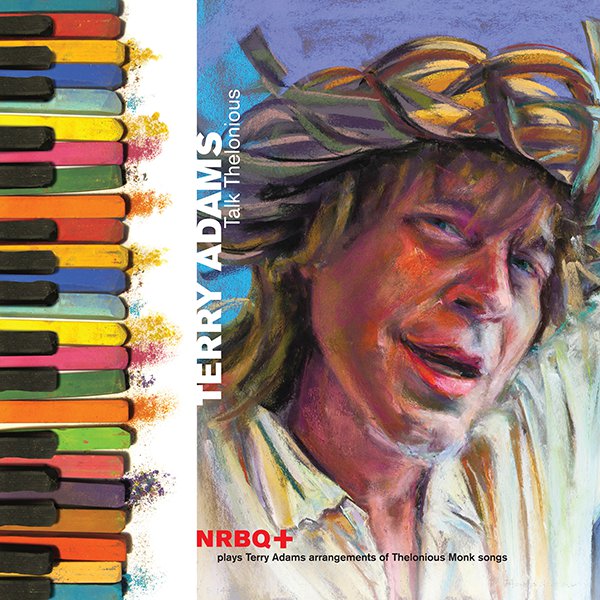
The Adams-Thelonious Monk comparisons have been made time and again. Adams doesn’t shy away from them. Last year he released “Talk Thelonious,” an album of compositions by the late jazz giant, and no live NRBQ show is complete without Adams banging out a Monk phrase or two.
It turns out that the first time Adams attended a Monk performance was here in Cincinnati. Adams, a Louisville native, can recall that show, as well as early NRBQ performances at the original Ludlow Garage.
Terry Adams: I used to come up to the Ohio Valley Jazz Festival….
Q: Do you remember who played that year?
Adams: Well, I do. Thelonious Monk was the reason I went. Roland Kirk was there. Milt Jackson, I remember. That was ’63.
Q: Do you remember Monk’s performance?
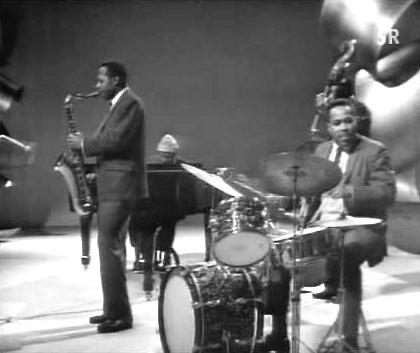
Adams: Yeah. It was one of the best musical performances I’ve ever seen. It certainly was. He had Frankie Dunlop on drums. He was my favorite drummer he ever had.


 Scott K Fish
You must be logged in to post a comment.